
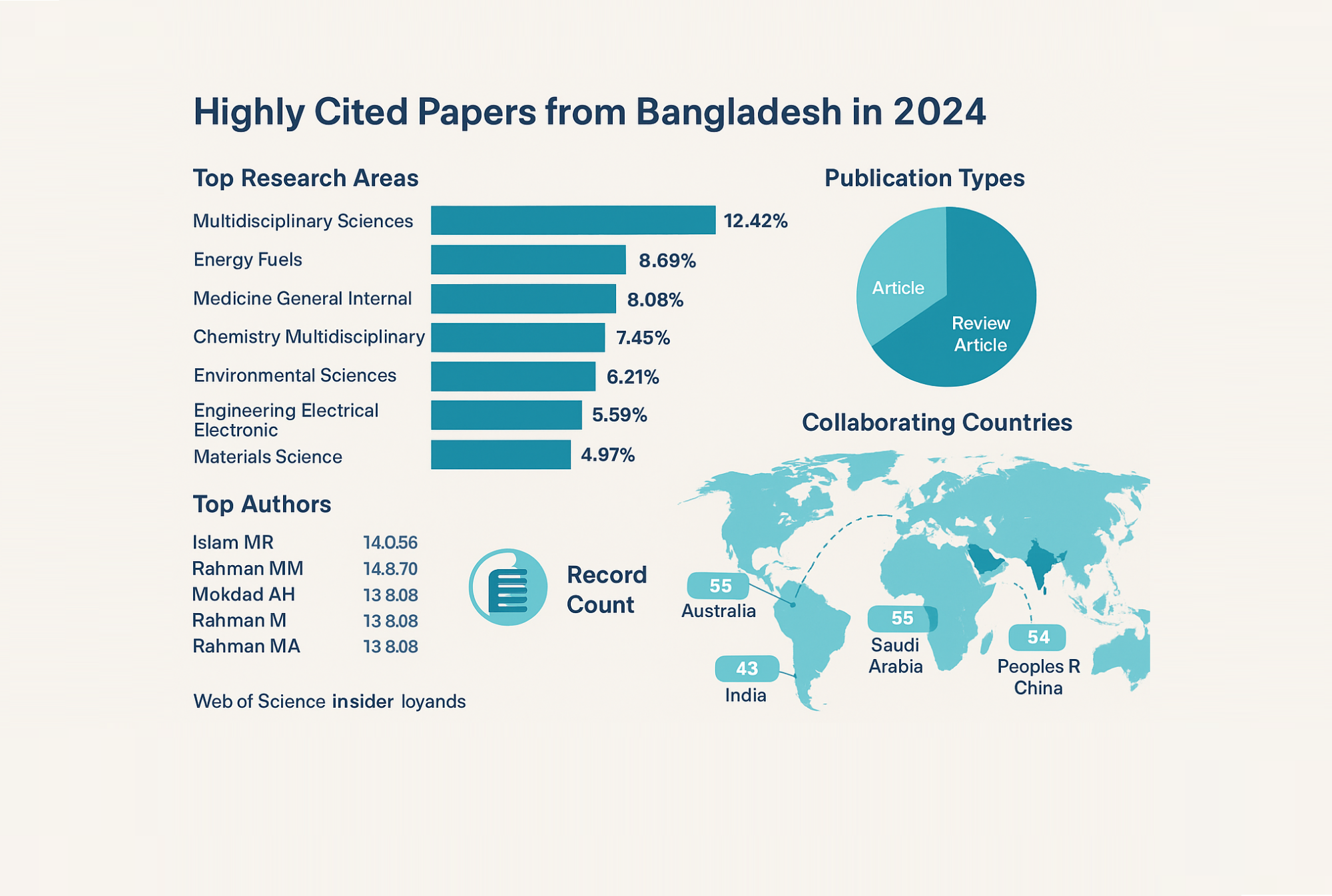
The 2024 highly cited papers from Bangladesh indexed in the Web of Science show strong dominance in multidisciplinary sciences, energy, medicine, and environmental research, with 160 papers involving Bangladeshi affiliations. Articles make up the majority of publications (71%), and the work is concentrated among a recurring group of prolific authors—including Islam MR, Rahman MM, and several global collaborators involved in large-scale health and environmental studies. The research also spans a wide international network, most frequently linked with Australia, Saudi Arabia, the USA, and China. A significant portion (94%) appears in SCI-Expanded journals, indicating a strong leaning toward scientific and technical disciplines. Key topics range from perovskite materials and carbon mitigation to AI ethics, antimicrobial resistance, and microplastics, reflecting Bangladesh’s growing engagement in global, high-impact scientific challenges. Web of Science
The areas of research publication categories in the TreeMap:
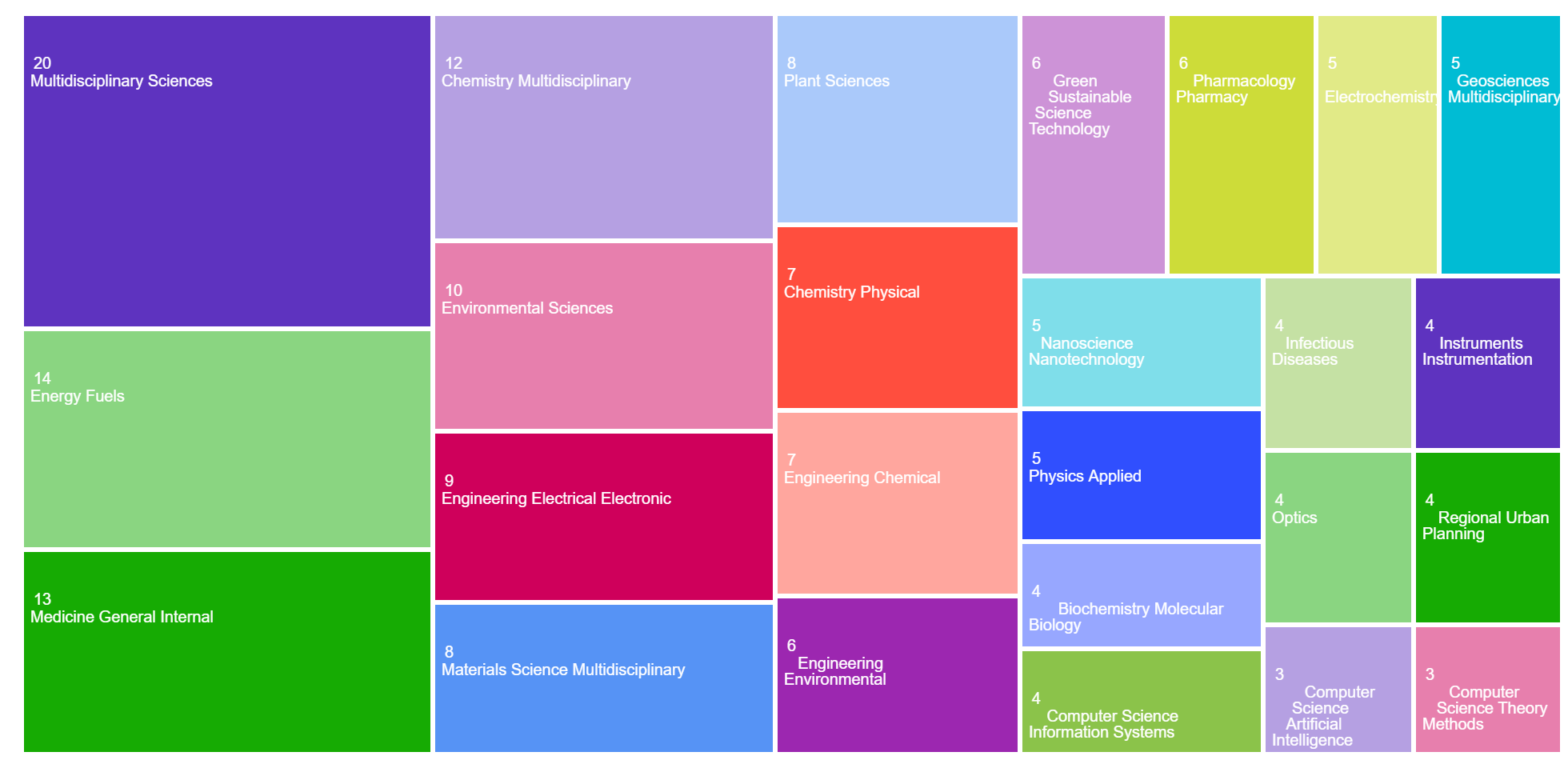
Research contributions in the field:
| Categories | Record Count | % of 161 |
|---|---|---|
| Multidisciplinary Sciences | 20 | 12.422% |
| Energy Fuels | 14 | 8.696% |
| Medicine General Internal | 13 | 8.075% |
| Chemistry Multidisciplinary | 12 | 7.453% |
| Environmental Sciences | 10 | 6.211% |
| Engineering Electrical Electronic | 9 | 5.590% |
| Materials Science Multidisciplinary | 8 | 4.969% |
| Plant Sciences | 8 | 4.969% |
| Chemistry Physical | 7 | 4.348% |
| Engineering Chemical | 7 | 4.348% |
| Engineering Environmental | 6 | 3.727% |
| Green Sustainable Science Technology | 6 | 3.727% |
| Pharmacology Pharmacy | 6 | 3.727% |
| Electrochemistry | 5 | 3.106% |
| Geosciences Multidisciplinary | 5 | 3.106% |
| Nanoscience Nanotechnology | 5 | 3.106% |
| Physics Applied | 5 | 3.106% |
| Biochemistry Molecular Biology | 4 | 2.484% |
| Computer Science Information Systems | 4 | 2.484% |
| Infectious Diseases | 4 | 2.484% |
| Instruments Instrumentation | 4 | 2.484% |
| Optics | 4 | 2.484% |
| Regional Urban Planning | 4 | 2.484% |
| Computer Science Artificial Intelligence | 3 | 1.863% |
| Computer Science Theory Methods | 3 | 1.863% |
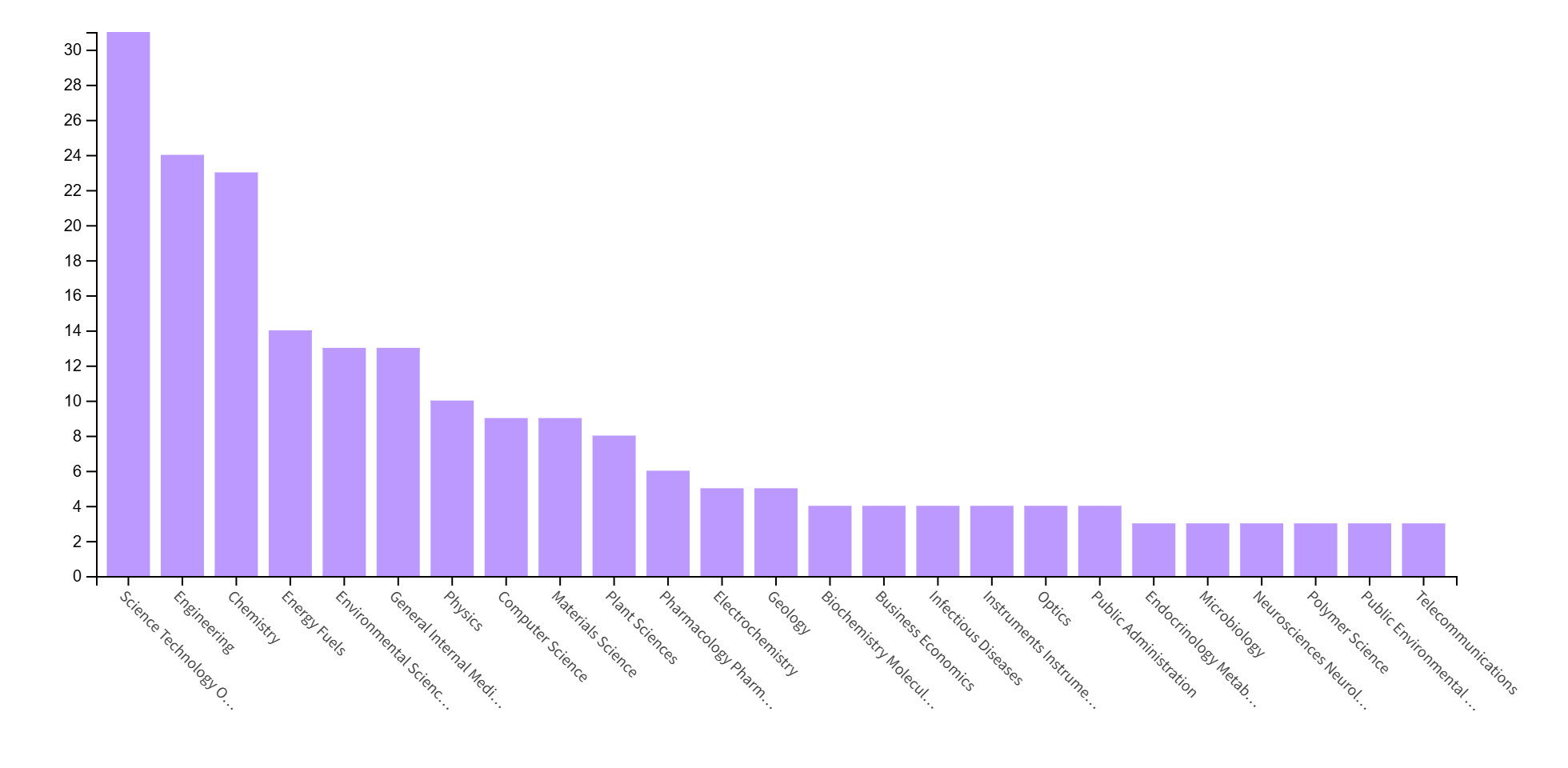
Research areas:
Types of published documents:
| Types | Record Count | % of 161 |
|---|---|---|
| Article | 115 | 71.429% |
| Review Article | 46 | 28.571% |
| Retracted Publication | 1 | 0.621% |
Authors’ infographic (Top 25):
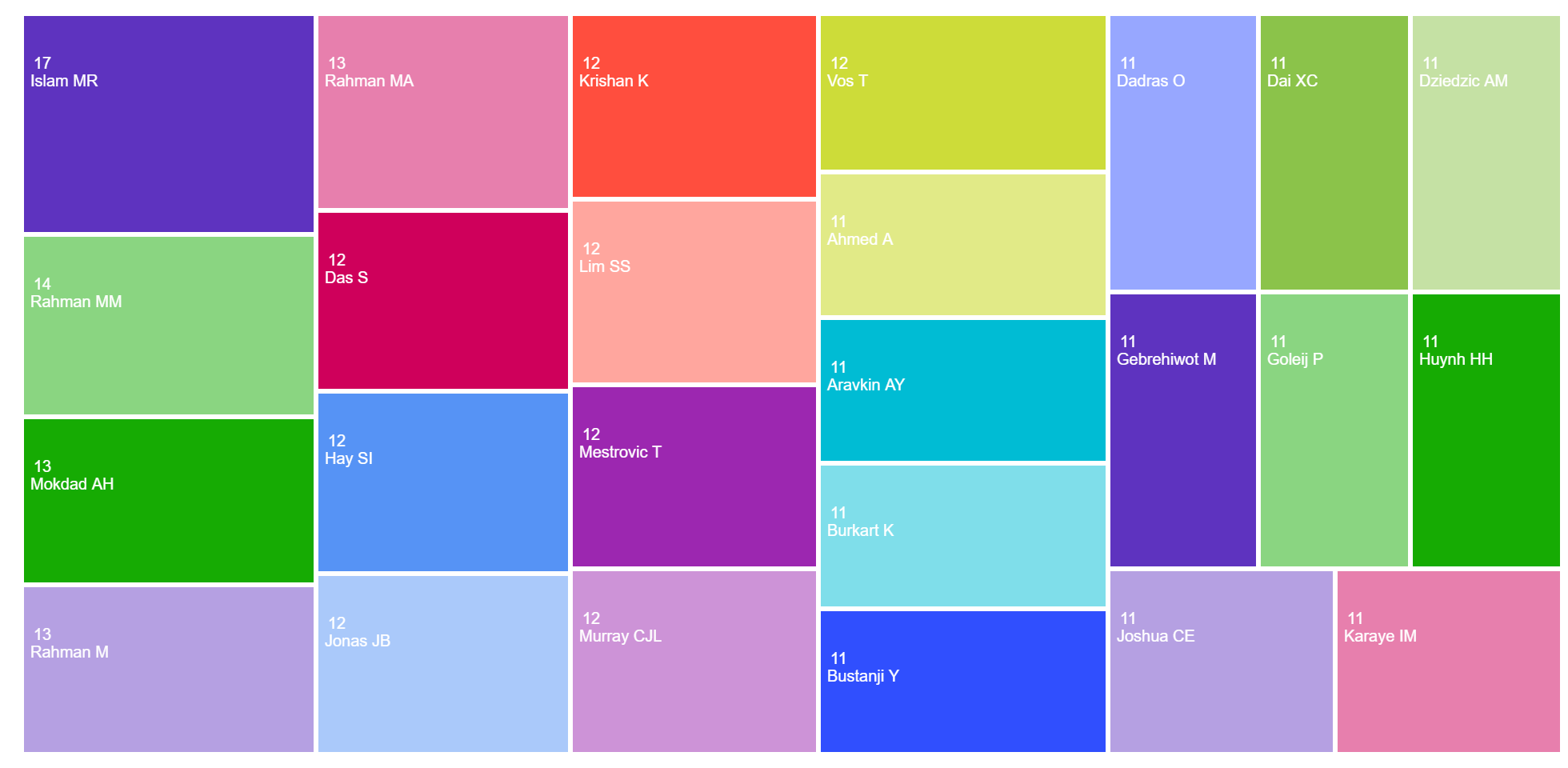
Researcher profiles (Top 25):
| Researcher | Record Count | % of 161 |
|---|---|---|
| Mokdad, Ali H. | 13 | 8.075% |
| Pawar, Shrikant Dilip | 12 | 7.453% |
| Mestrovic, Tomislav | 12 | 7.453% |
| Jonas, Jost | 12 | 7.453% |
| Hay, Simon Iain | 12 | 7.453% |
| Schutte, Aletta E | 11 | 6.832% |
| Bogdan Oancea | 11 | 6.832% |
| Krishan, Kewal | 11 | 6.832% |
| Rawaf, Salman | 11 | 6.832% |
| Hezam, Kamal | 11 | 6.832% |
| Karkhah, Samad | 11 | 6.832% |
| Malhotra, Kashish | 11 | 6.832% |
| Elrashdy M. Redwan | 11 | 6.832% |
| Lee, Seung Won | 11 | 6.832% |
| Dang Nguyen | 11 | 6.832% |
| Aleksandr Y. Aravkin | 11 | 6.832% |
| Shahid, Samiah | 11 | 6.832% |
| Samodra, Yoseph | 11 | 6.832% |
| Joshua, Charity Ehimwenma | 11 | 6.832% |
| Murray, Christopher | 11 | 6.832% |
| Goleij, Pouya | 11 | 6.832% |
| Damtew, Mesfin Gebrehiwot | 11 | 6.832% |
| Ramasamy, Shakthi Kumaran | 11 | 6.832% |
| Bustanji, Yasser | 11 | 6.832% |
| Al-Gheethi, AA | 10 | 6.211% |
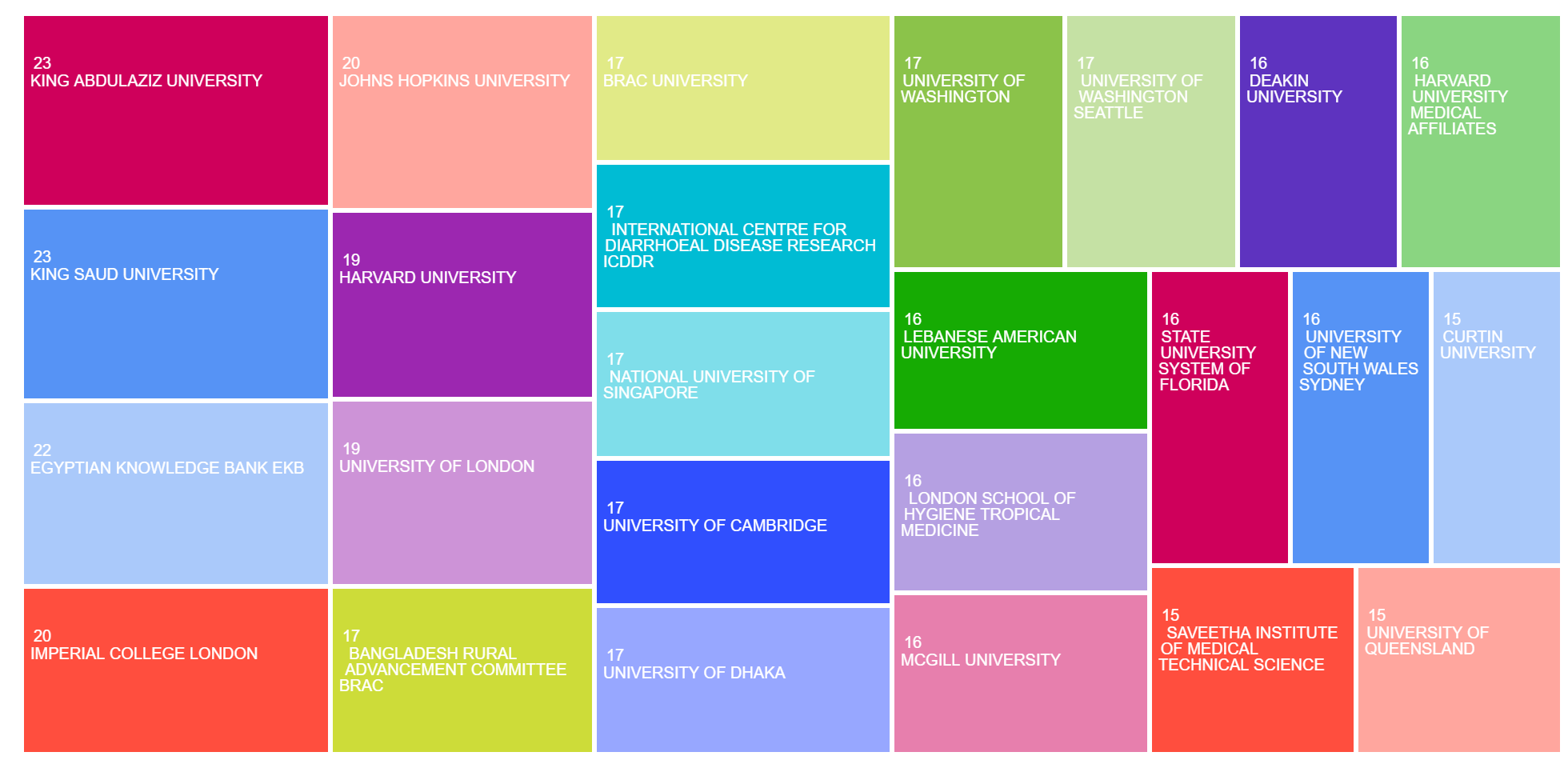
Research-affiliated institutes:
Research collaboration countries:
| Countries/Regions | Record Count | % of 161 |
|---|---|---|
| Bangladesh | 160 | 99.379% |
| Australia | 58 | 36.025% |
| Saudi Arabia | 55 | 34.161% |
| USA | 54 | 33.540% |
| Peoples R China | 43 | 26.708% |
| India | 40 | 24.845% |
| South Korea | 35 | 21.739% |
| England | 34 | 21.118% |
| Japan | 32 | 19.876% |
| Pakistan | 31 | 19.255% |
| Malaysia | 30 | 18.634% |
| Turkiye | 27 | 16.770% |
| Canada | 26 | 16.149% |
| Egypt | 23 | 14.286% |
| Spain | 23 | 14.286% |
| South Africa | 22 | 13.665% |
| Brazil | 21 | 13.043% |
| Iran | 21 | 13.043% |
| Italy | 21 | 13.043% |
| Mexico | 21 | 13.043% |
| Poland | 20 | 12.422% |
| Sweden | 20 | 12.422% |
| Germany | 19 | 11.801% |
| Iraq | 19 | 11.801% |
| Lebanon | 19 | 11.801% |
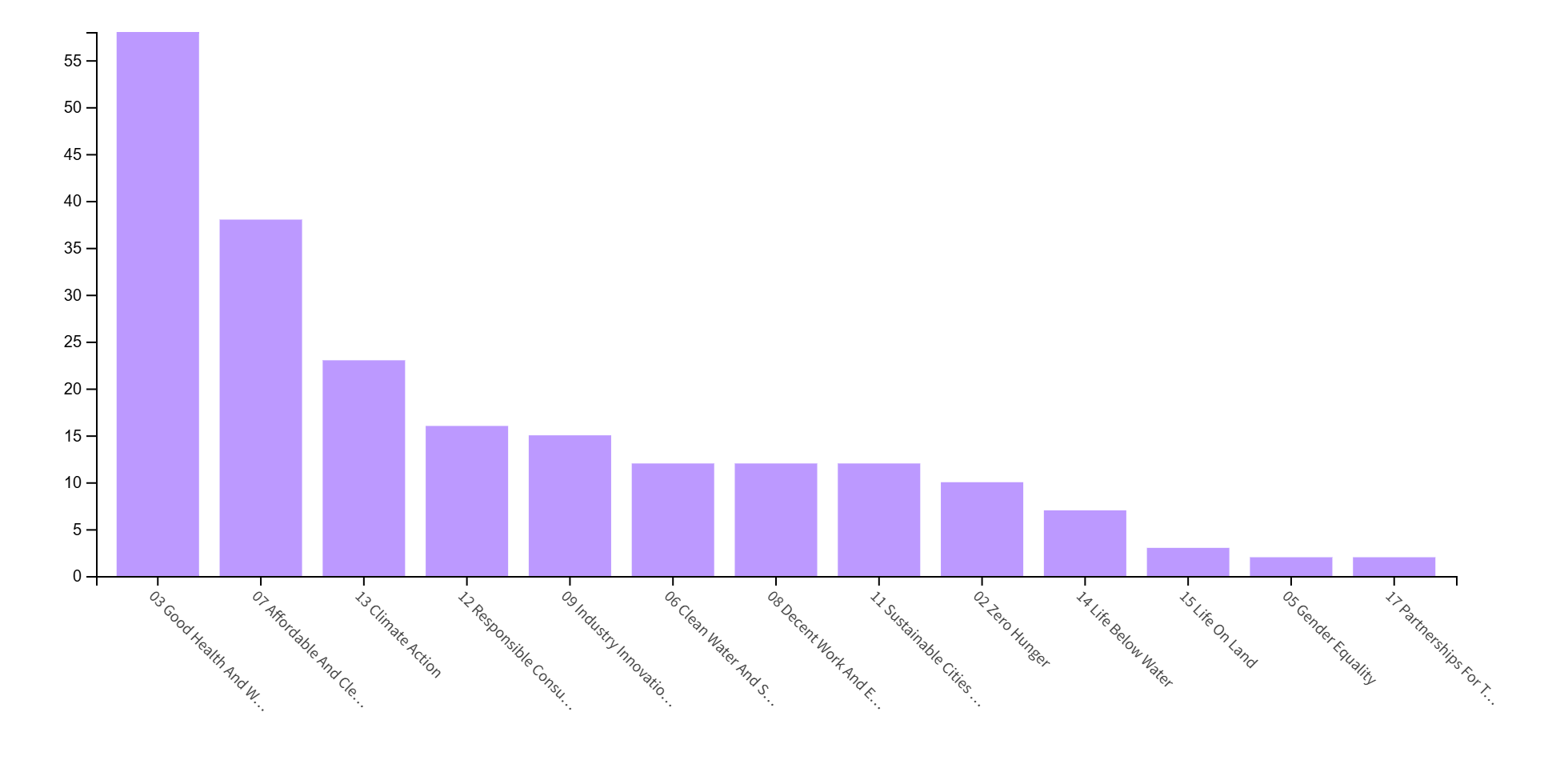
Sustainable Development Goals:
Web of Science Index:
| Index | Record Count | % of 161 |
|---|---|---|
| Science Citation Index Expanded (SCI-EXPANDED) | 151 | 93.789% |
| Social Sciences Citation Index (SSCI) | 13 | 8.075% |
| Arts & Humanities Citation Index (A&HCI) | 1 | 0.621% |
Citation Topics Meso:
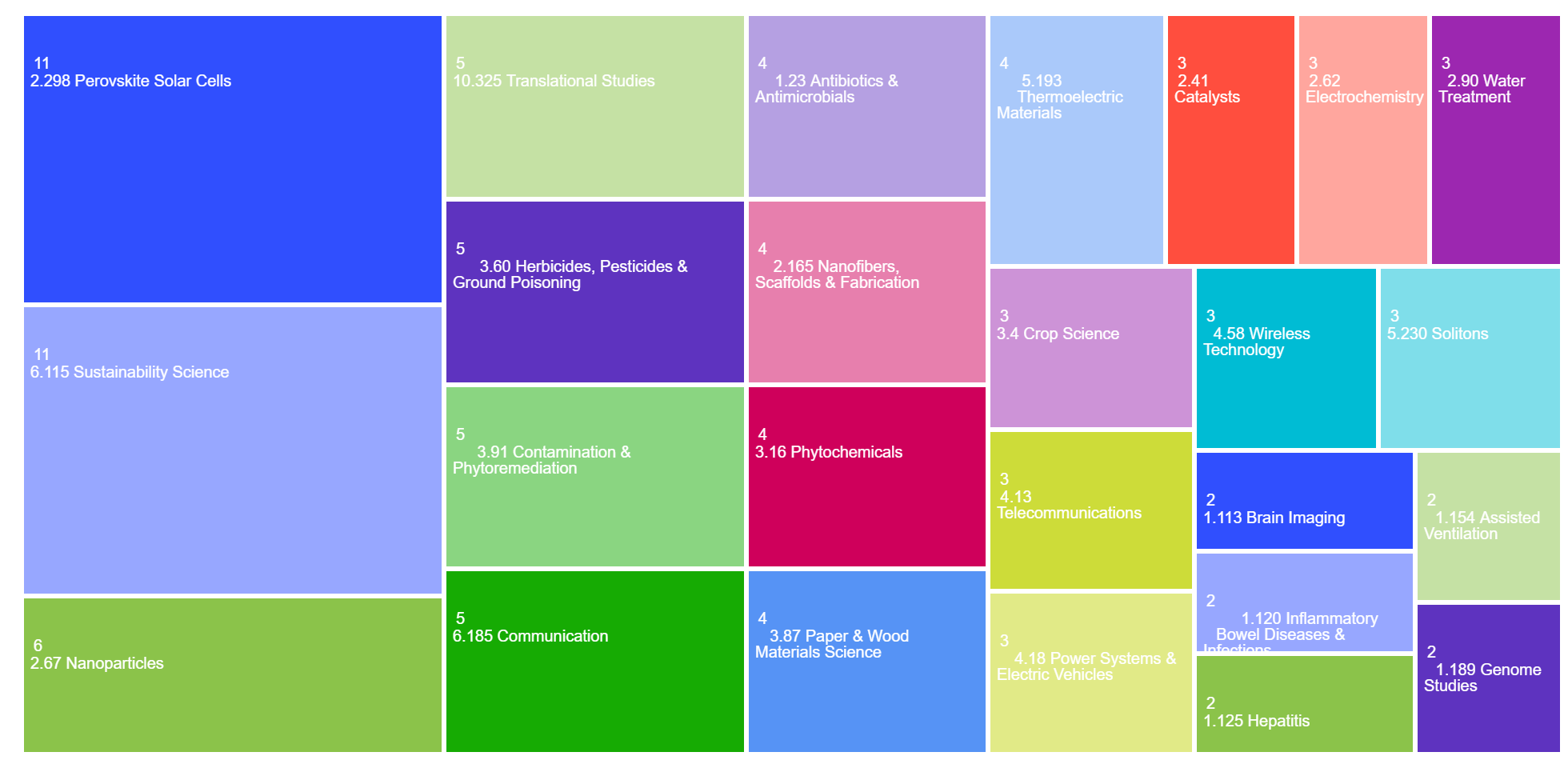
Citation Topics Micro:
| Field | Record Count | % of 161 |
|---|---|---|
| 2.298.761 Perovskite Properties | 11 | 6.832% |
| 6.115.234 Carbon Mitigation | 11 | 6.832% |
| 10.325.2780 Healthcare Communication | 5 | 3.106% |
| 6.185.2797 AI Ethics | 5 | 3.106% |
| 1.23.146 Antimicrobial Resistance | 4 | 2.484% |
| 2.41.546 Catalytic Hydrogenation | 3 | 1.863% |
| 2.67.231 Nanotoxicology | 3 | 1.863% |
| 2.67.47 SERS | 3 | 1.863% |
| 2.90.27 Adsorption | 3 | 1.863% |
| 3.60.2078 Microplastics | 3 | 1.863% |
| 3.87.269 Cellulose Composites | 3 | 1.863% |
| 4.58.253 Metamaterials | 3 | 1.863% |
| 5.193.405 CIGS | 3 | 1.863% |
| 5.230.124 Soliton Dynamics | 3 | 1.863% |
| 1.113.460 Advanced Neuroimaging | 2 | 1.242% |
| 1.120.384 Gut Microbiota | 2 | 1.242% |
| 1.154.360 Procalcitonin | 2 | 1.242% |
| 1.44.29 Nutrition and Obesity | 2 | 1.242% |
| 2.165.679 Additive Manufacturing | 2 | 1.242% |
| 2.53.371 Biomedical Hydrogels | 2 | 1.242% |
| 2.62.52 Electrode Materials | 2 | 1.242% |
| 2.74.5 TiO₂ Photocatalysis | 2 | 1.242% |
| 3.4.49 Plant Stress Responses | 2 | 1.242% |
| 3.91.1064 Sediment Metal Risks | 2 | 1.242% |
| 3.91.172 Phytoremediation Mechanisms | 2 | 1.242% |
Observations:
-
Multidisciplinary sciences lead the output, suggesting wide collaborative and cross-cutting research themes.
-
Many highly cited papers involve global consortium-style authorship, especially in health and environmental fields.
-
The dominance of SCI-Expanded indexing indicates Bangladesh’s strongest presence in STEM-related research.
Questions:
-
What factors are driving Bangladesh’s substantial involvement in global collaborative studies?
-
Are the most prolific authors engaged primarily in consortium-based projects or local research initiatives?
-
How might Bangladesh further expand its presence in underrepresented fields such as social sciences and humanities?
These data highlight Bangladesh’s rapidly strengthening footprint in high-impact scientific publishing, reflecting both national research capacity and integration into global research networks.