

In 2024, Bangladesh accounted for all 51 research publications in the World Scientific Journal, reflecting strong national contributions to international scholarship. The majority of outputs were standard research articles (88.2%), with a smaller share of review articles (9.8%), early access papers (7.8%), and a single correction (1.96%). Dominant subject areas included applied physics (31.4%), condensed matter physics (25.5%), and mathematical physics (23.5%), while other fields, such as materials science, information science, nanotechnology, business, and mathematics, appeared less frequently. Hossain N emerged as the leading contributor, followed by Mobarak MH and Chowdhury MA. Collaborations extended beyond Bangladesh, with co-authors from Saudi Arabia, India, Malaysia, the USA, and other countries, highlighting both regional and global engagement. Web of Science
The areas of research publication categories in the TreeMap:
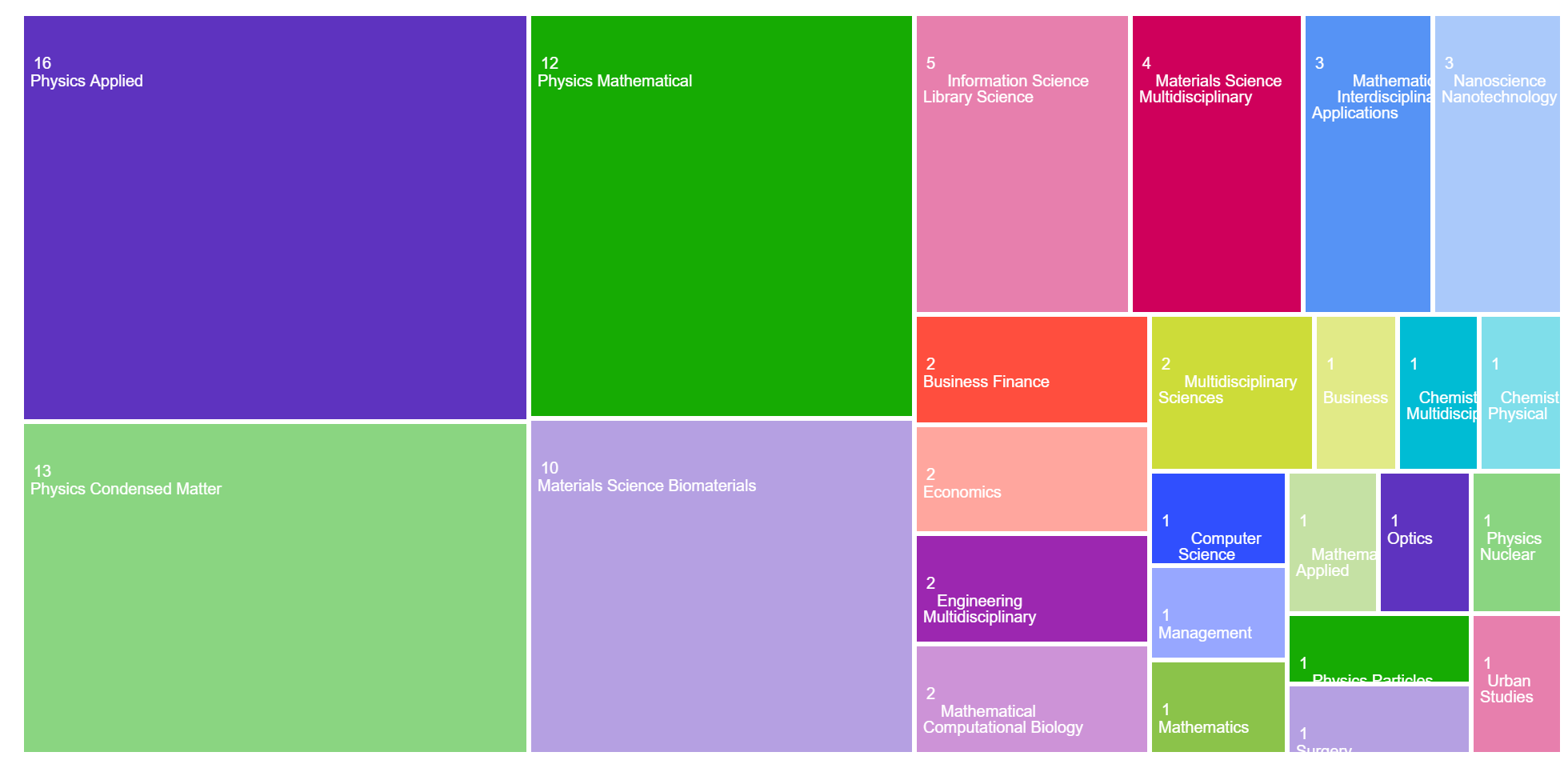
Research contributions in the field:
| Categories | Record Count | % of 51 |
|---|---|---|
| Physics Applied | 16 | 31.373% |
| Physics Condensed Matter | 13 | 25.490% |
| Physics Mathematical | 12 | 23.529% |
| Materials Science Biomaterials | 10 | 19.608% |
| Information Science Library Science | 5 | 9.804% |
| Materials Science Multidisciplinary | 4 | 7.843% |
| Mathematics Interdisciplinary Applications | 3 | 5.882% |
| Nanoscience Nanotechnology | 3 | 5.882% |
| Business Finance | 2 | 3.922% |
| Economics | 2 | 3.922% |
| Engineering Multidisciplinary | 2 | 3.922% |
| Mathematical Computational Biology | 2 | 3.922% |
| Multidisciplinary Sciences | 2 | 3.922% |
| Business | 1 | 1.961% |
| Chemistry Multidisciplinary | 1 | 1.961% |
| Chemistry Physical | 1 | 1.961% |
| Computer Science Artificial Intelligence | 1 | 1.961% |
| Management | 1 | 1.961% |
| Mathematics | 1 | 1.961% |
| Mathematics Applied | 1 | 1.961% |
| Optics | 1 | 1.961% |
| Physics Nuclear | 1 | 1.961% |
| Physics Particles Fields | 1 | 1.961% |
| Surgery | 1 | 1.961% |
| Urban Studies | 1 | 1.961% |
Research areas:
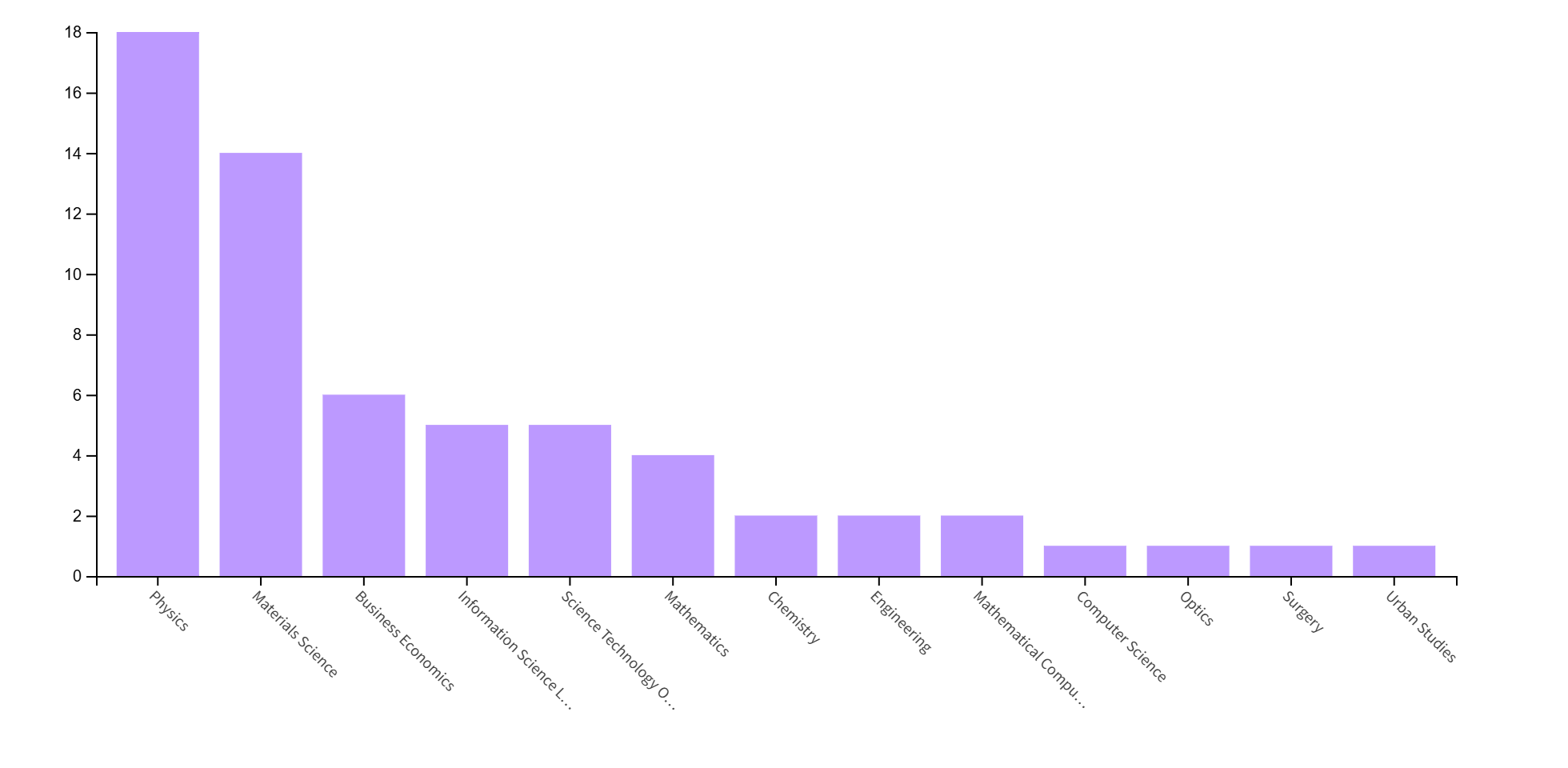
Types of published documents:
| Types | Record Count | % of 51 |
|---|---|---|
| Article | 45 | 88.235% |
| Review Article | 5 | 9.804% |
| Early Access | 4 | 7.843% |
| Correction | 1 | 1.961% |
Authors’ infographic (Top 25):
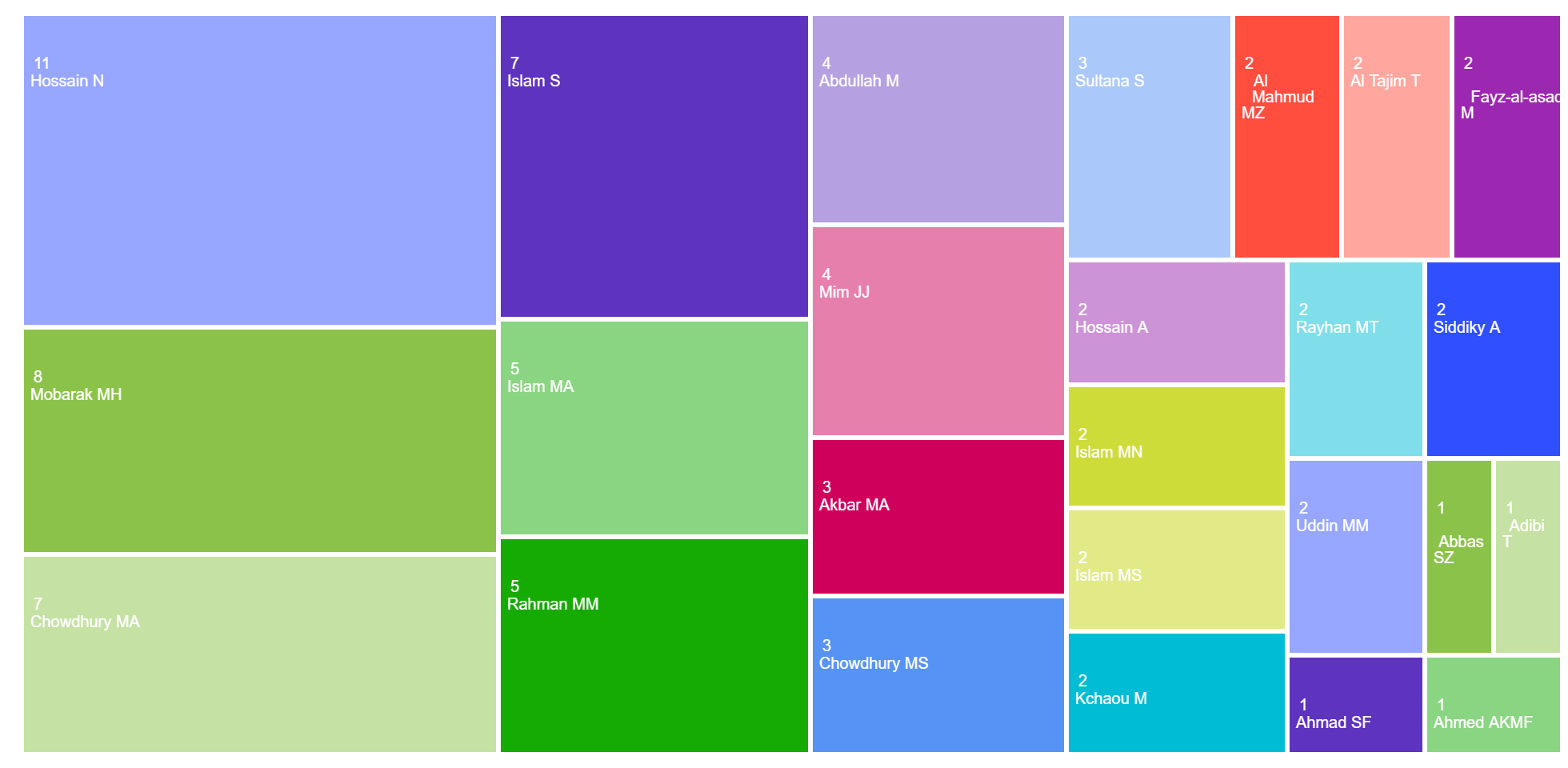
Researcher profiles (Top 25):
| Researcher | Record Count | % of 51 |
|---|---|---|
| Hossain, Nayem | 11 | 21.569% |
| Mobarak, Md Hosne | 8 | 15.686% |
| Chowdhury, Mohammad Asaduzzaman | 7 | 13.725% |
| Islam, Safiul | 5 | 9.804% |
| ISLAM, MD AMINUL | 4 | 7.843% |
| Abdullah, Md. | 4 | 7.843% |
| Mim, JuhiJannat | 4 | 7.843% |
| Rahman, Md. Majibur | 3 | 5.882% |
| Akbar, Prof. Ali | 3 | 5.882% |
| Chowdhury, Md Shakil | 3 | 5.882% |
| Fayz-Al-Asad | 2 | 3.922% |
| Sultana, Sadia | 2 | 3.922% |
| Rayhan, Md. Thohid | 2 | 3.922% |
| Siddiky, Abu Yousouf | 2 | 3.922% |
| Al Tajim, Tanjid | 2 | 3.922% |
| Mahmud, Md. Zobair Al | 2 | 3.922% |
| Kchaou, Mohamed | 2 | 3.922% |
| Amran Hossain | 2 | 3.922% |
| Rahman, Mohammed M. | 2 | 3.922% |
| Chamkha, Ali J. | 1 | 1.961% |
| Emran, Talha Bin | 1 | 1.961% |
| Seadawy, Aly R. | 1 | 1.961% |
| Khoo, Michael B.C. | 1 | 1.961% |
| Tretyakova, Tatiana | 1 | 1.961% |
| Anjum, Shabana | 1 | 1.961% |
Research-affiliated institutes:
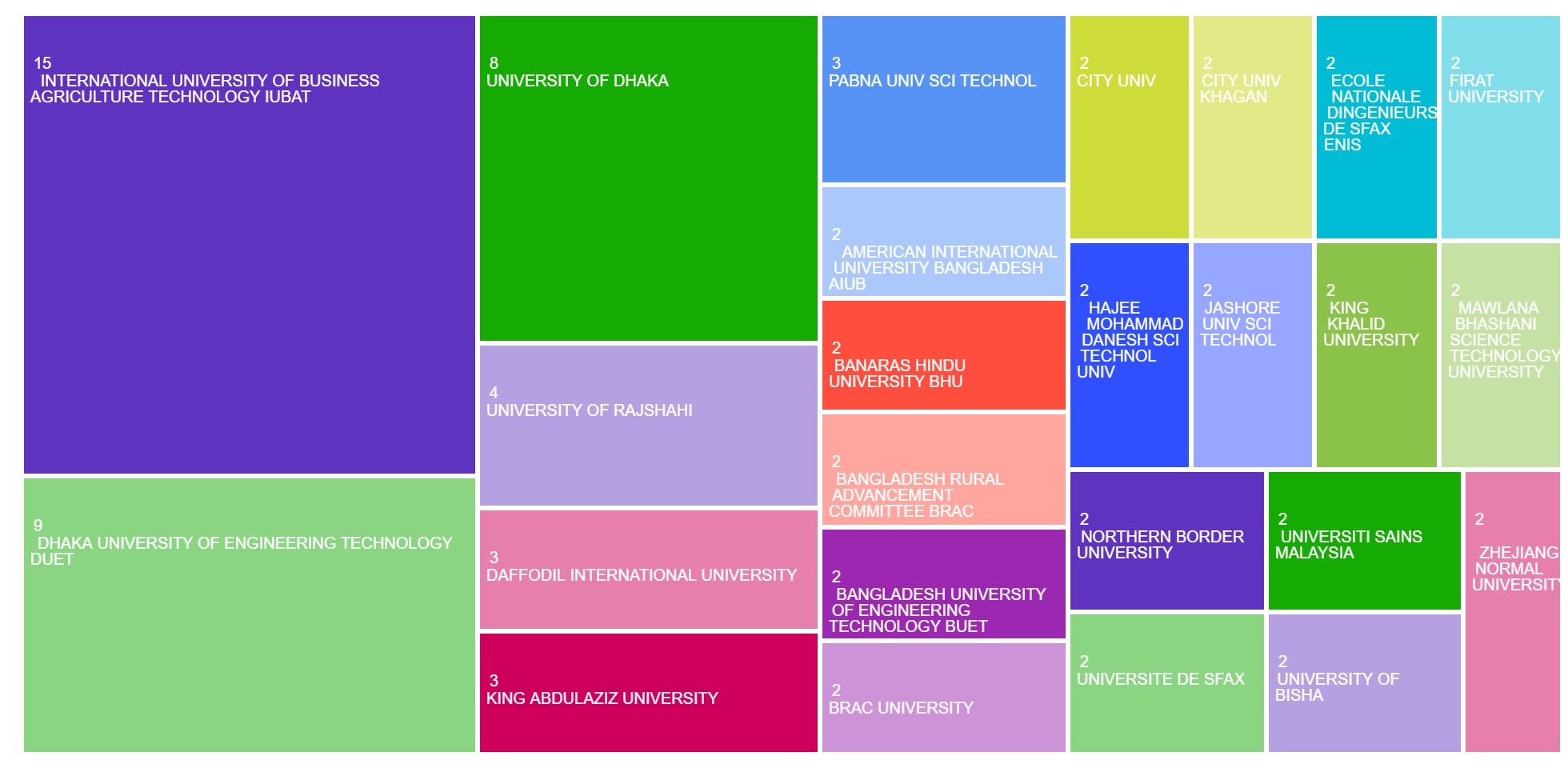
Research collaboration countries:
| Countries/Regions | Record Count | % of 51 |
|---|---|---|
| Bangladesh | 51 | 100.000% |
| Saudi Arabia | 11 | 21.569% |
| India | 8 | 15.686% |
| Malaysia | 6 | 11.765% |
| USA | 5 | 9.804% |
| Peoples R China | 3 | 5.882% |
| Tunisia | 3 | 5.882% |
| Australia | 2 | 3.922% |
| Pakistan | 2 | 3.922% |
| Turkiye | 2 | 3.922% |
| Azerbaijan | 1 | 1.961% |
| Bulgaria | 1 | 1.961% |
| Canada | 1 | 1.961% |
| Egypt | 1 | 1.961% |
| Indonesia | 1 | 1.961% |
| Iran | 1 | 1.961% |
| Japan | 1 | 1.961% |
| Jordan | 1 | 1.961% |
| Kuwait | 1 | 1.961% |
| Nigeria | 1 | 1.961% |
| Russia | 1 | 1.961% |
| South Africa | 1 | 1.961% |
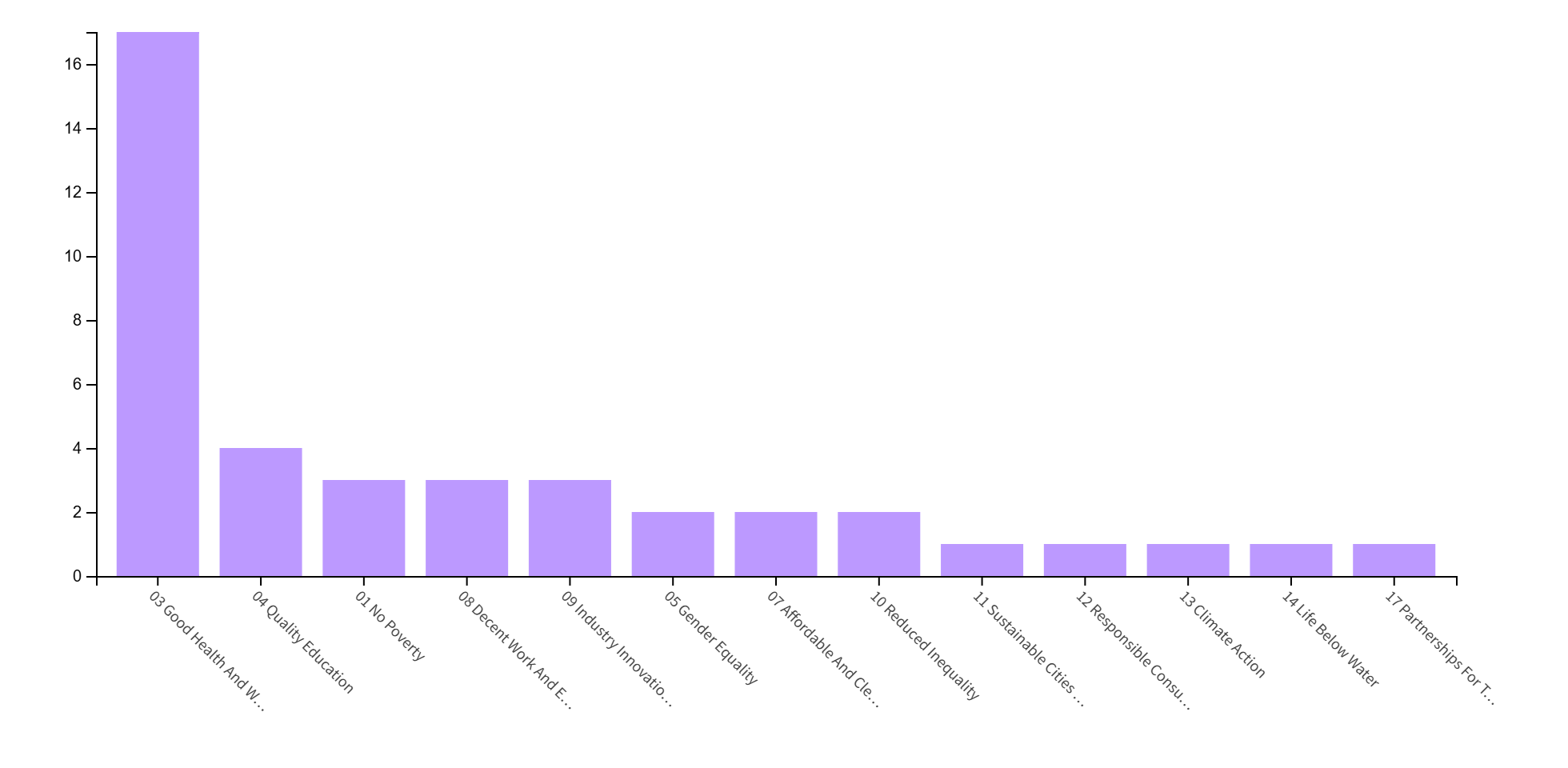
Sustainable Development Goals:
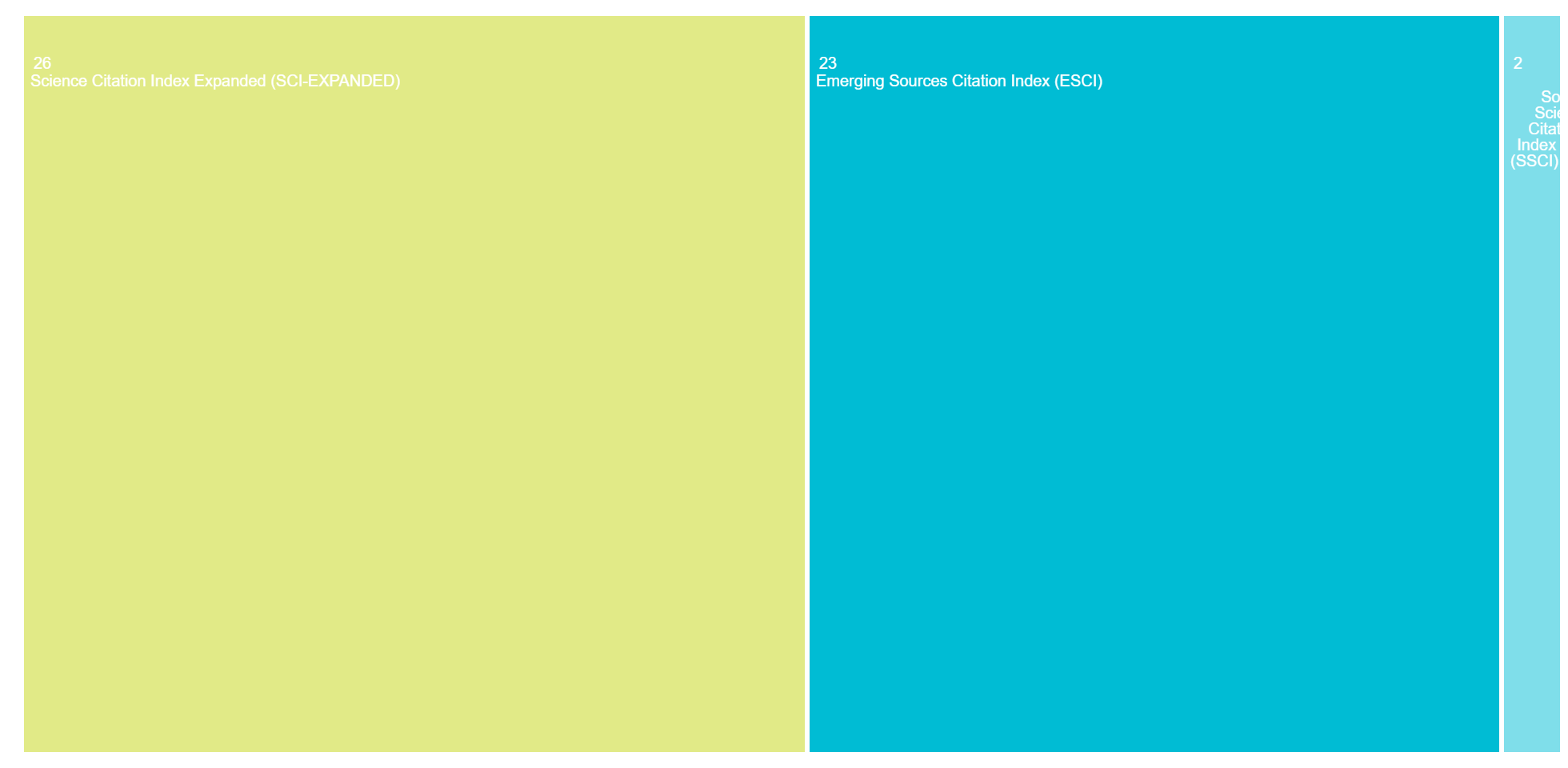
Web of Science Index:
Research highlights of World Scientific publications from Bangladesh:
Here is the table you requested:
| Type | Result |
|---|---|
| Review Article | 5 |
| Early Access | 4 |
| Open Access | 2 |
| Enriched Cited References | 15 |
Observations:
-
Applied and theoretical physics dominate Bangladeshi research outputs in this journal.
-
A small number of authors contribute disproportionately, with Hossain N leading with 21.6% of publications.
-
International collaboration is evident, particularly with Saudi Arabia and India, indicating cross-border research networks.
Questions:
-
What factors contribute to the high concentration of research in physics-related fields compared to other disciplines?
-
How do the visibility and citation impact of Bangladeshi publications in World Scientific compare to other journals?
-
What strategies could enhance contributions in underrepresented areas like business, engineering, and interdisciplinary sciences?
The dataset highlights Bangladesh’s concentrated strengths in physics and the leadership of a few prolific researchers, but it also reveals opportunities for diversifying research focus and expanding international collaboration to enhance global impact.