
The analysis of 166 research publications from Bangladesh in Royal Society of Chemistry (RSC) journals reveals a strong focus on multidisciplinary chemistry, materials science, and nanoscience, with articles comprising the vast majority of outputs (84.94%) and review articles accounting for 13.25%. Key contributors include Ahmed Samina, Hossain Md Sahadat, and Bahadur Newaz Mohammed, collectively responsible for a significant portion of publications. All publications involved Bangladeshi authors, but substantial international collaborations were evident with the USA, Saudi Arabia, and Japan. Research themes are heavily centered on chemistry and materials sciences, while other fields such as biochemistry, environmental sciences, and polymer science appear less represented. Web of Science
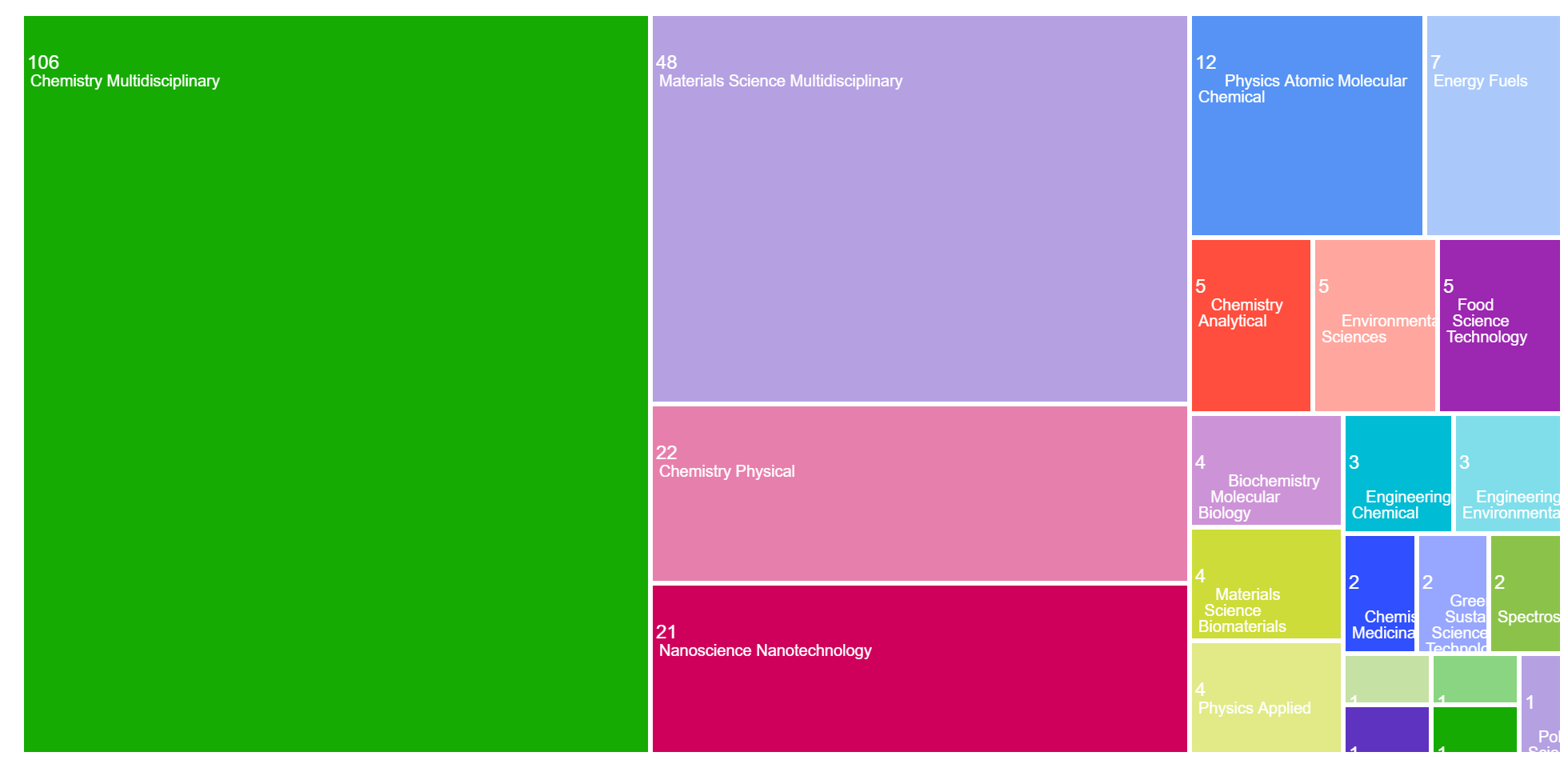
The areas of research publication categories in the TreeMap:
Research contributions in the field:
| Categories | Record Count | % of 166 |
|---|---|---|
| Chemistry Multidisciplinary | 106 | 63.855% |
| Materials Science Multidisciplinary | 48 | 28.916% |
| Chemistry Physical | 22 | 13.253% |
| Nanoscience Nanotechnology | 21 | 12.651% |
| Physics Atomic Molecular Chemical | 12 | 7.229% |
| Energy Fuels | 7 | 4.217% |
| Chemistry Analytical | 5 | 3.012% |
| Environmental Sciences | 5 | 3.012% |
| Food Science Technology | 5 | 3.012% |
| Biochemistry Molecular Biology | 4 | 2.410% |
| Materials Science Biomaterials | 4 | 2.410% |
| Physics Applied | 4 | 2.410% |
| Engineering Chemical | 3 | 1.807% |
| Engineering Environmental | 3 | 1.807% |
| Chemistry Medicinal | 2 | 1.205% |
| Green Sustainable Science Technology | 2 | 1.205% |
| Spectroscopy | 2 | 1.205% |
| Chemistry Inorganic Nuclear | 1 | 0.602% |
| Meteorology Atmospheric Sciences | 1 | 0.602% |
| Pharmacology Pharmacy | 1 | 0.602% |
| Physics Multidisciplinary | 1 | 0.602% |
| Polymer Science | 1 | 0.602% |
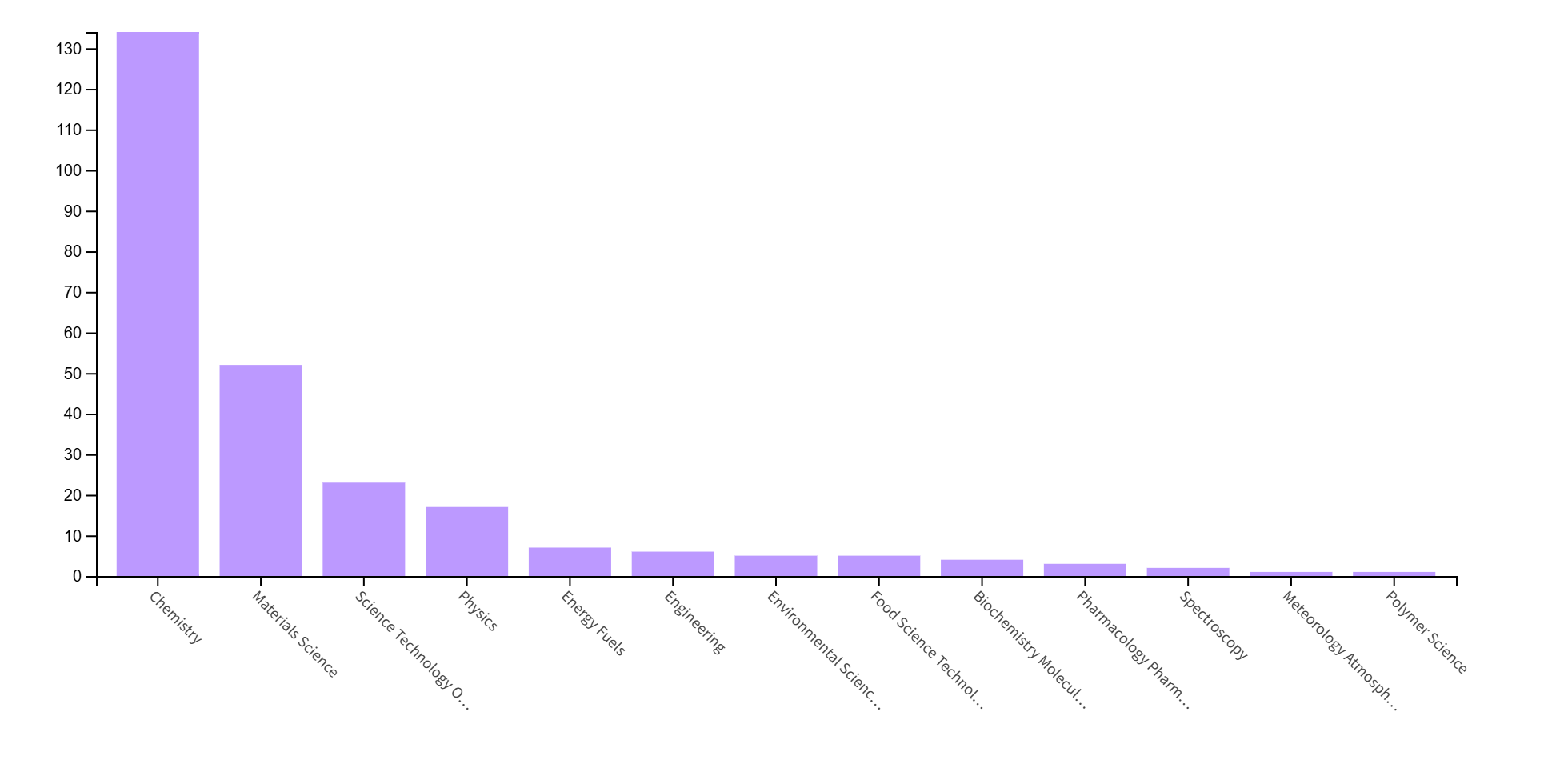
Research areas:
Types of published documents:
| Types | Record Count | % of 166 |
|---|---|---|
| Article | 141 | 84.940% |
| Review Article | 22 | 13.253% |
| Correction | 2 | 1.205% |
| Letter | 1 | 0.602% |
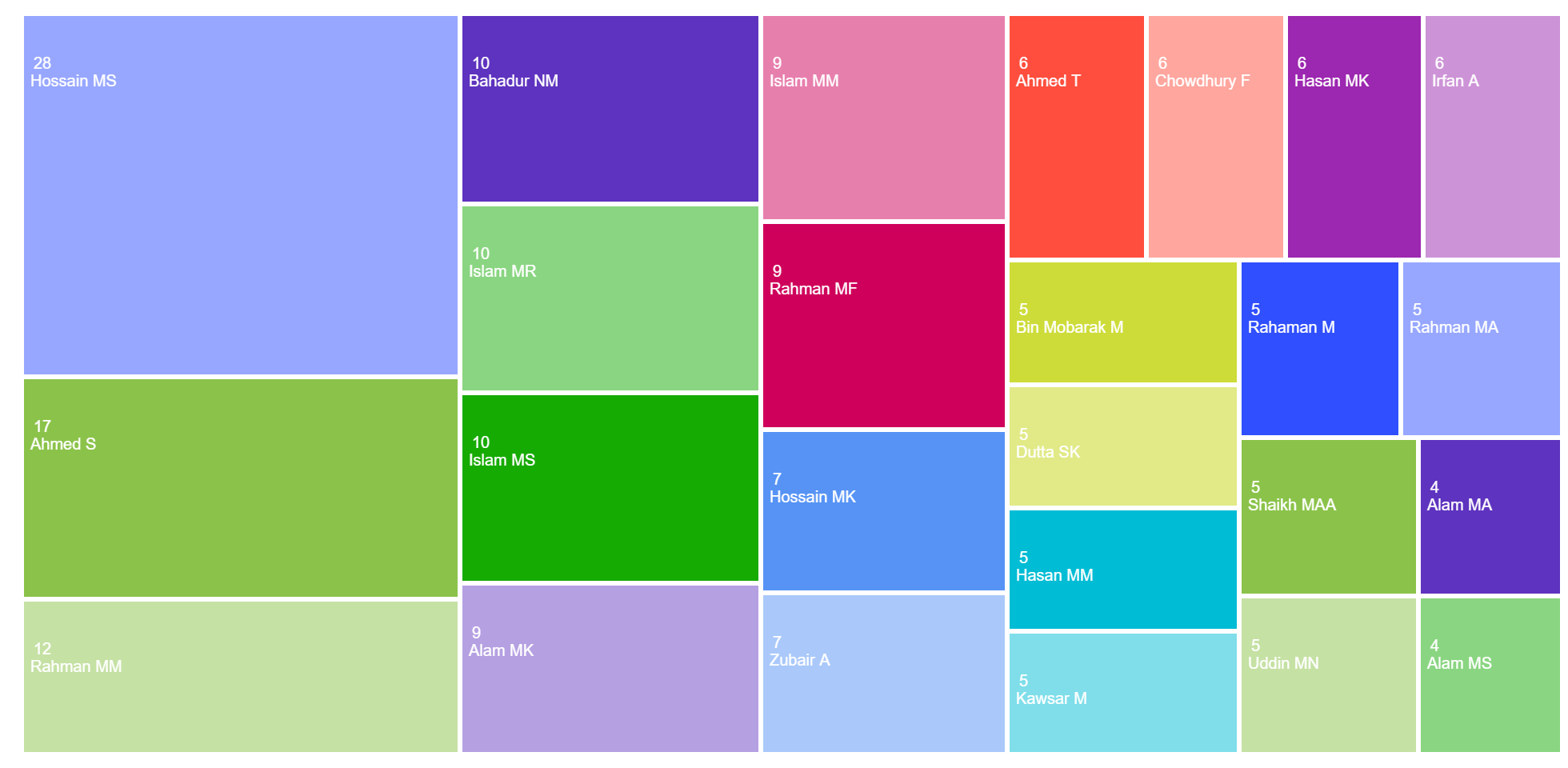
Authors’ infographic (Top 25):
Researcher profiles (Top 25):
| Researcher | Record Count | % of 166 |
|---|---|---|
| Ahmed, Samina | 15 | 9.036% |
| Hossain, Md Sahadat | 13 | 7.831% |
| Bahadur, Newaz Mohammed | 10 | 6.024% |
| Rahman, Md. Ferdous | 9 | 5.422% |
| Ahmed, Zubair | 7 | 4.217% |
| Hossain, Muhammad Sarwar | 6 | 3.614% |
| Mobarak, Mashrafi Bin | 6 | 3.614% |
| Hossain, M. Khalid | 6 | 3.614% |
| Kawsar, Md. | 5 | 3.012% |
| Hasan, Dr. Md. Kamrul | 5 | 3.012% |
| Shaikh, Md. Aftab Ali | 5 | 3.012% |
| Alam, Md. Kawcher | 5 | 3.012% |
| Dutta, Sagar Kumar | 5 | 3.012% |
| Rasheduzzaman, Md | 4 | 2.410% |
| Piya, Afiya Akter | 4 | 2.410% |
| Alam, Dr. Md. Ashraful | 4 | 2.410% |
| Marasamy, Latha | 4 | 2.410% |
| Dhar, Palash | 4 | 2.410% |
| Islam, Dipa | 4 | 2.410% |
| Khandaker, Tasmina | 4 | 2.410% |
| Islam, Muhammad Rakibul | 4 | 2.410% |
| Ghosh, Avijit | 4 | 2.410% |
| Yasmin, Dr. Sabina | 4 | 2.410% |
| Chowdhury, Fariha | 4 | 2.410% |
| Irfan, Ahmad | 4 | 2.410% |
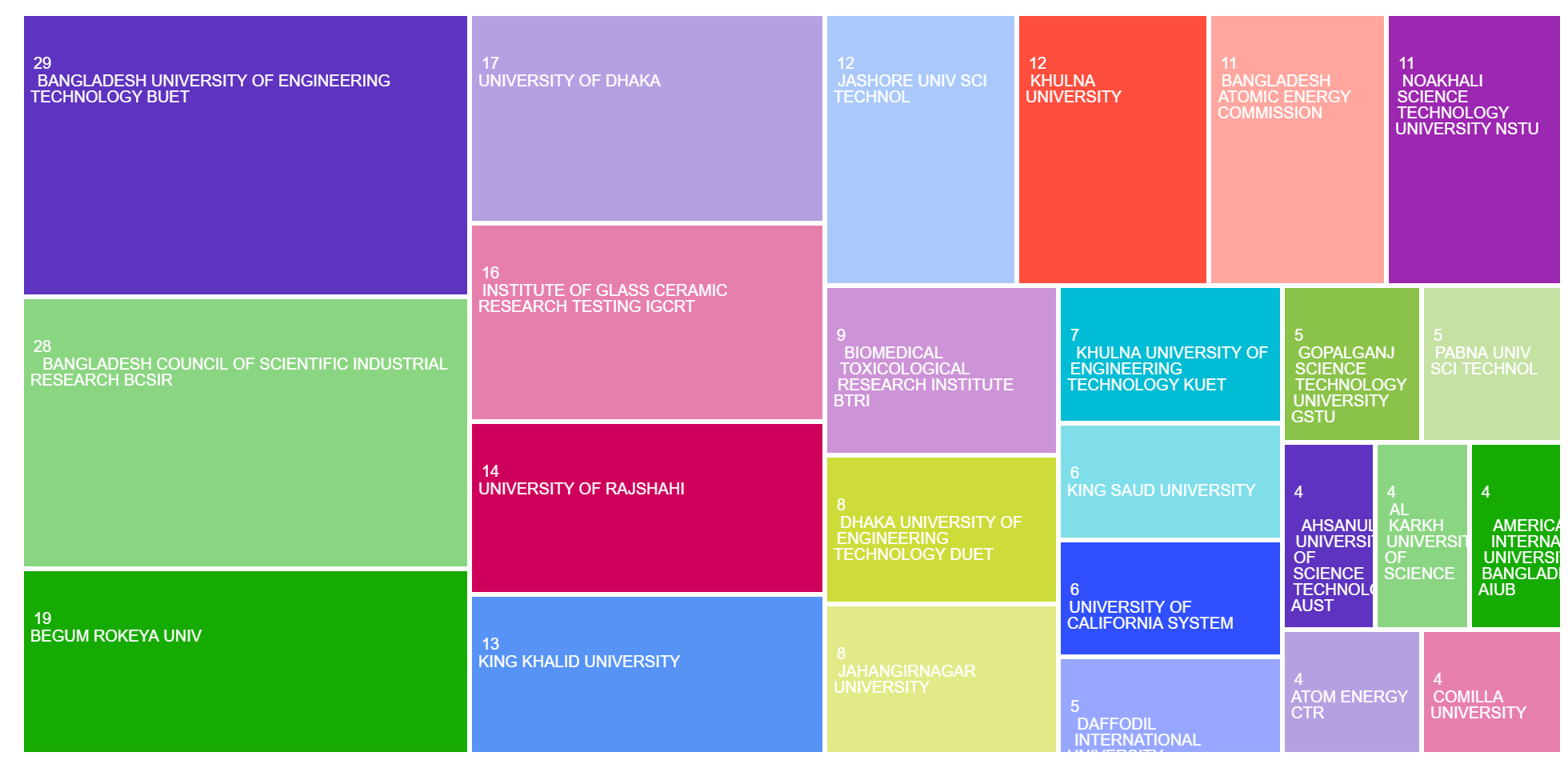
Research-affiliated institutes:
Research collaboration countries:
| Countries | Record Count | % of 166 |
|---|---|---|
| BANGLADESH | 166 | 100.000% |
| USA | 31 | 18.675% |
| SAUDI ARABIA | 29 | 17.470% |
| JAPAN | 18 | 10.843% |
| INDIA | 9 | 5.422% |
| PEOPLES R CHINA | 9 | 5.422% |
| SOUTH KOREA | 9 | 5.422% |
| AUSTRALIA | 8 | 4.819% |
| CANADA | 7 | 4.217% |
| IRAQ | 6 | 3.614% |
| MALAYSIA | 6 | 3.614% |
| EGYPT | 5 | 3.012% |
| BRAZIL | 4 | 2.410% |
| MEXICO | 4 | 2.410% |
| ALGERIA | 3 | 1.807% |
| PAKISTAN | 3 | 1.807% |
| ENGLAND | 2 | 1.205% |
| IRAN | 2 | 1.205% |
| ITALY | 2 | 1.205% |
| JORDAN | 2 | 1.205% |
| SOUTH AFRICA | 2 | 1.205% |
| TURKIYE | 2 | 1.205% |
| UZBEKISTAN | 2 | 1.205% |
| ARGENTINA | 1 | 0.602% |
| BELGIUM | 1 | 0.602% |
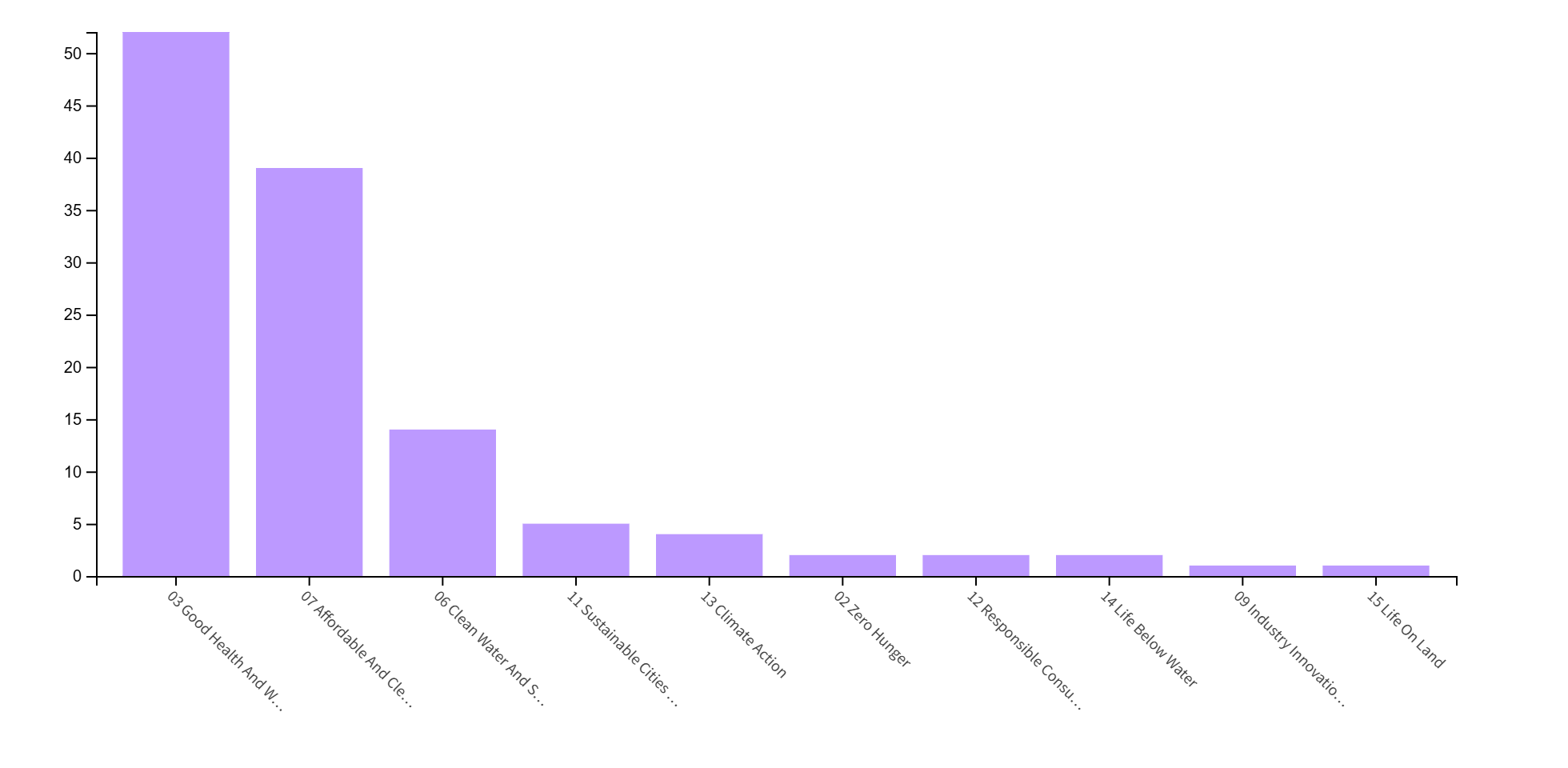
Sustainable Development Goals:
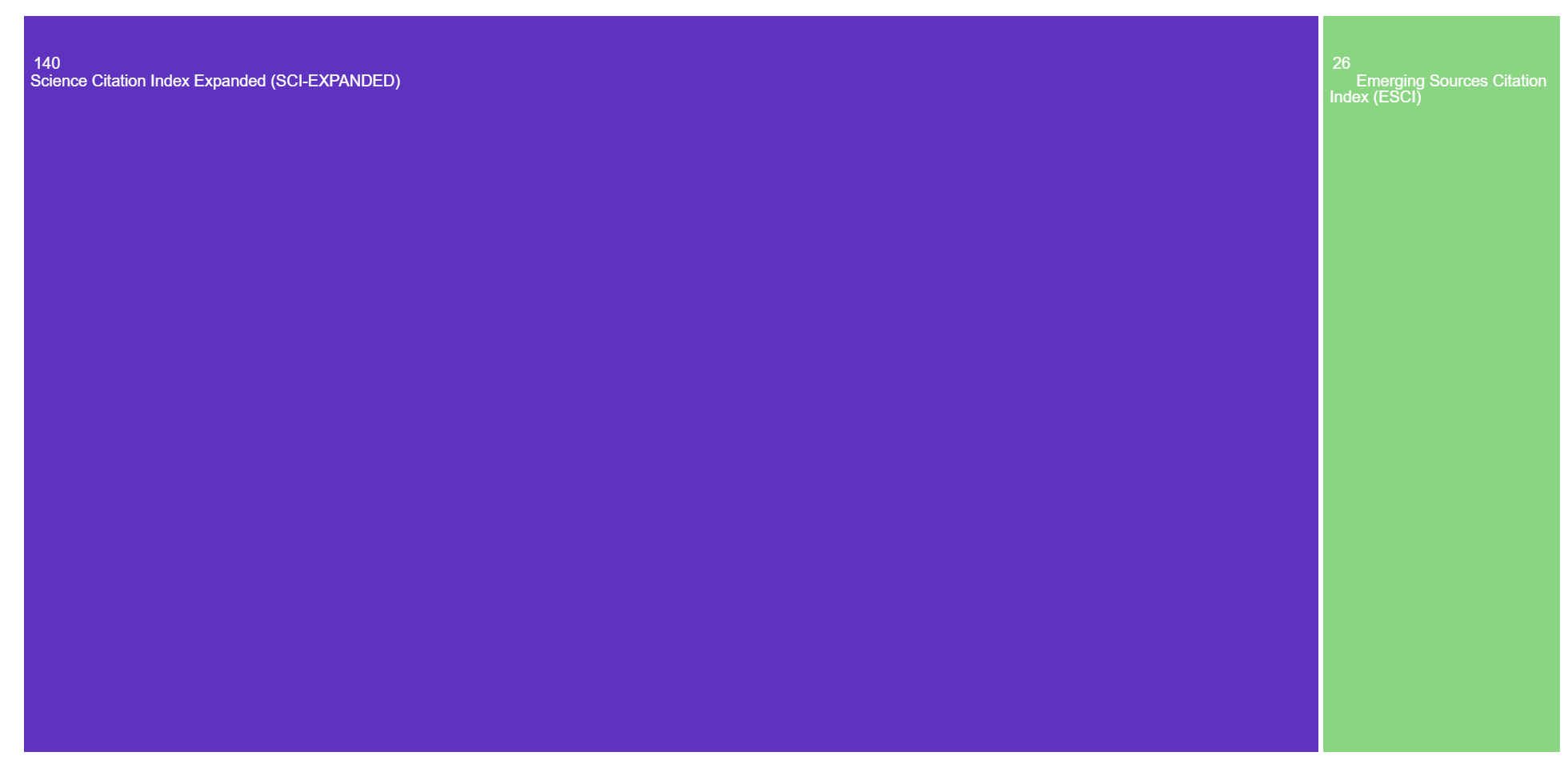
Web of Science Index:
Research highlights in Royal Society of Chemistry Journals from Bangladesh:
| Type | Result |
|---|---|
| Review Article | 22 |
| Open Access | 119 |
| Enriched Cited References | 125 |
| Open Publisher-Invited Reviews | 39 |
Observations:
-
The majority of publications (63.86%) are in multidisciplinary chemistry, highlighting a strong emphasis on versatile chemical research.
-
A small group of prolific researchers contributes disproportionately to the output, indicating concentration of expertise and leadership in certain labs.
-
Bangladesh maintains notable international collaborations, particularly with the USA, Saudi Arabia, and Japan, reflecting increasing global engagement.
Questions:
-
What factors drive the concentration of publications in multidisciplinary chemistry over other fields?
-
How can less represented areas like polymer science or environmental sciences be promoted among Bangladeshi researchers?
-
Does the collaboration pattern with specific countries reflect targeted partnerships or shared funding initiatives?
Bangladesh’s research presence in RSC journals shows promising growth and international collaboration, yet there is room to diversify research areas and expand the pool of contributing authors to strengthen the country’s global scientific footprint.