

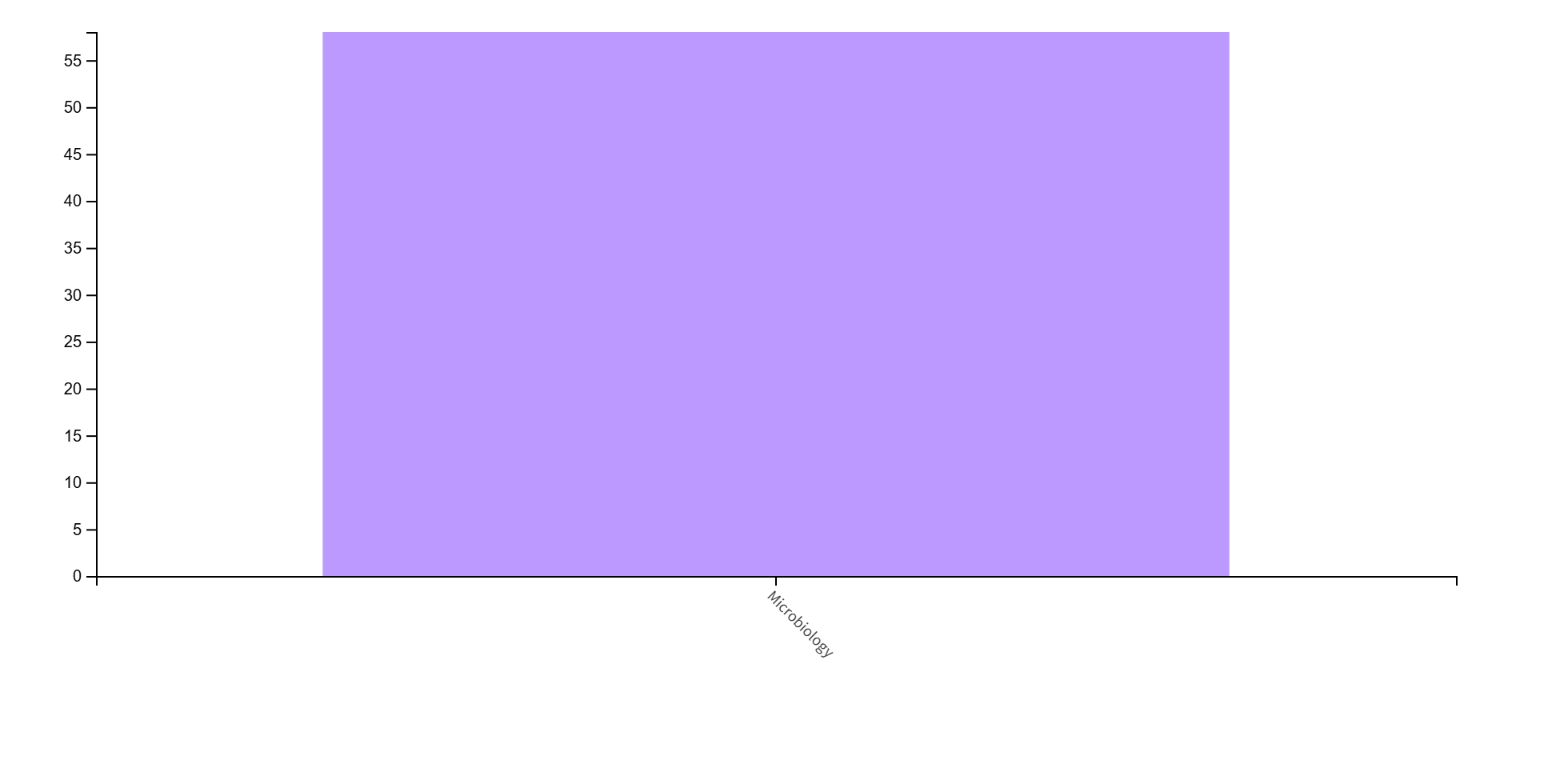
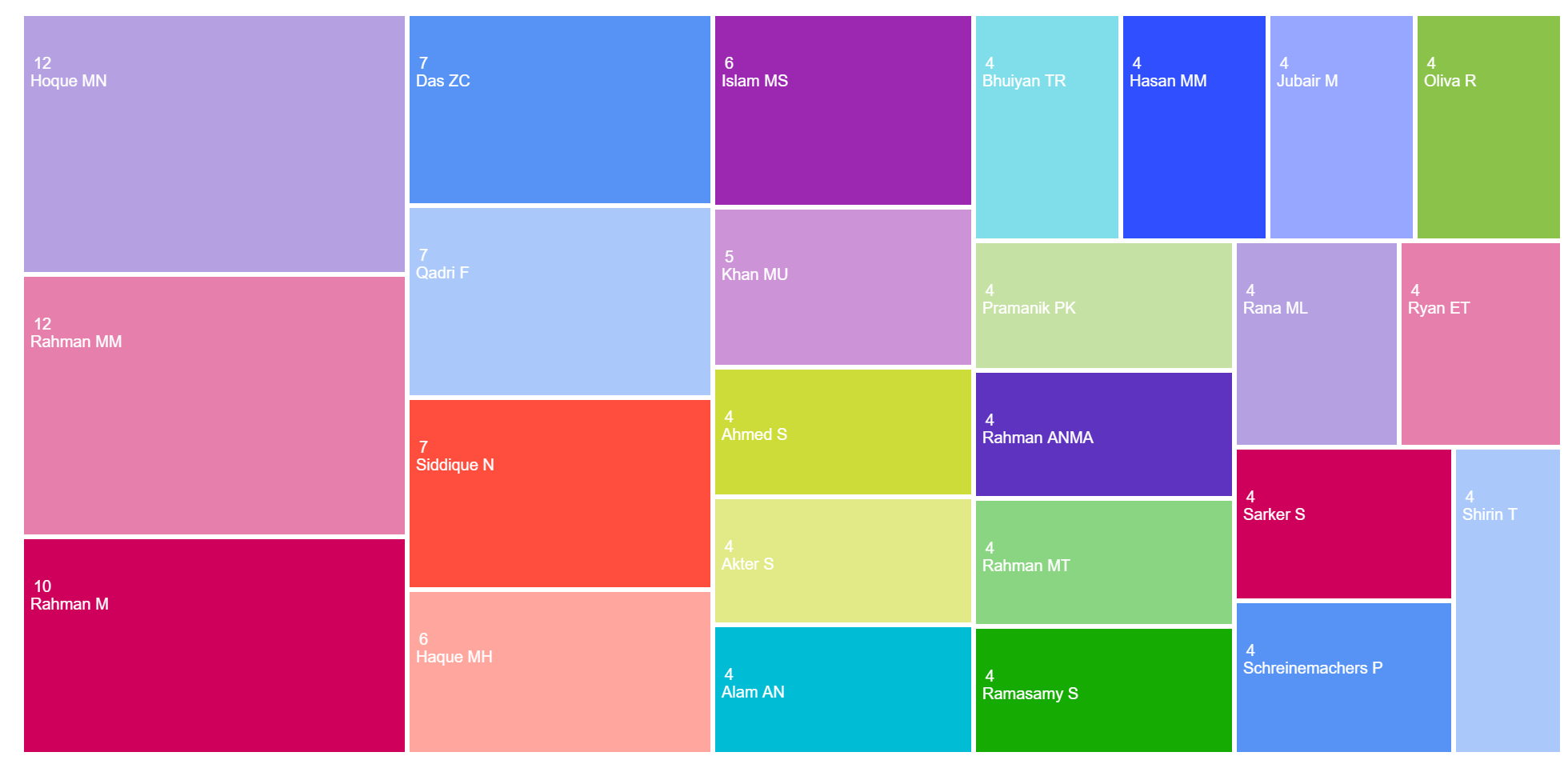
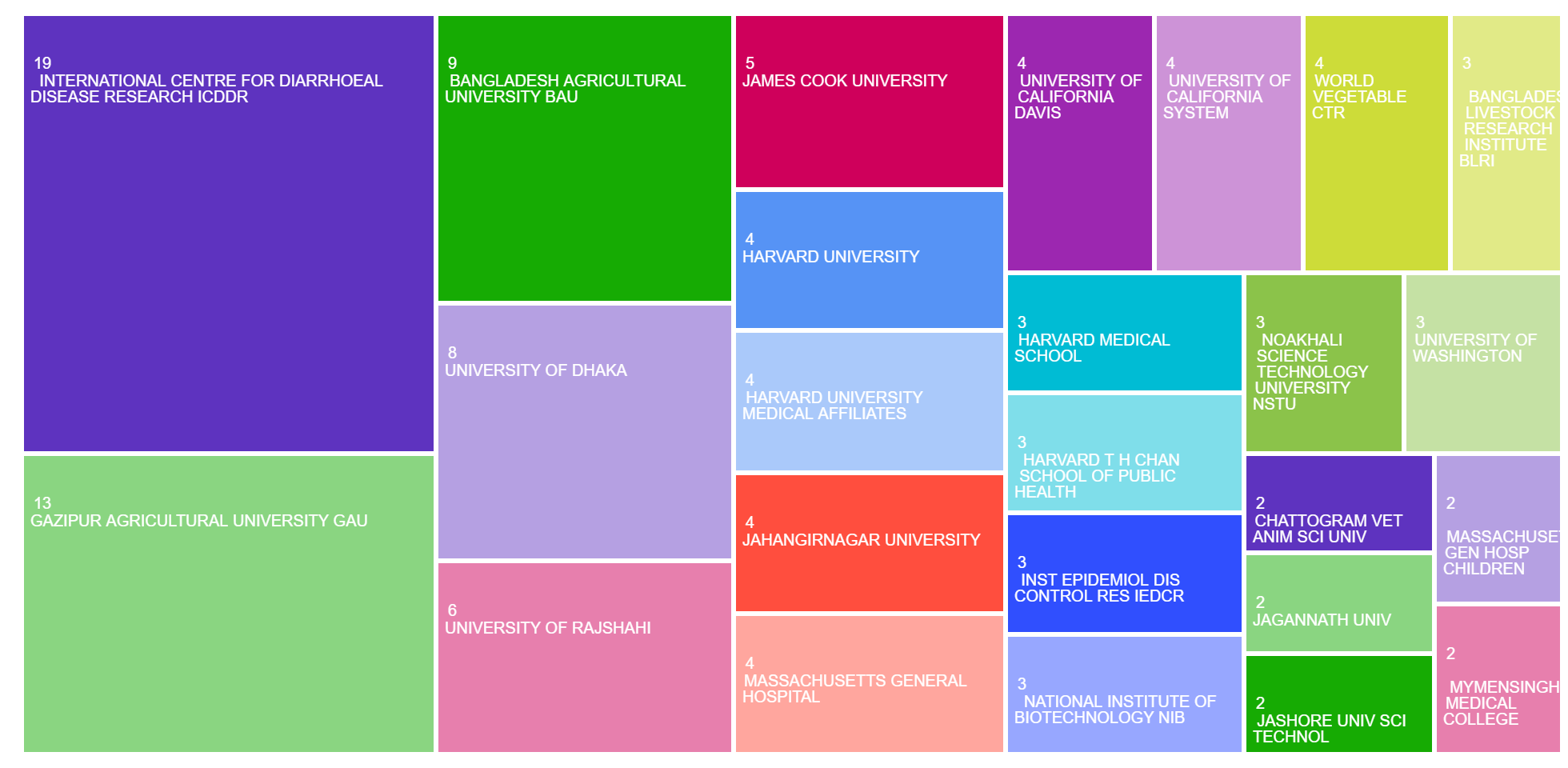
In 2024, Bangladesh contributed a total of 58 research publications to the American Society for Microbiology journal, with all publications classified under microbiology. The vast majority were articles (100%), while 2 data papers were also present. The most prolific authors included Hoque MN and Rahman MM, each contributing 12 publications, highlighting a concentrated authorship. Major institutional affiliations were dominated by the International Centre for Diarrhoeal Disease Research (ICDDR) with 19 publications (32.8%), followed by Gazipur Agricultural University (22.4%) and Bangladesh Agricultural University (15.5%). International collaboration is evident with contributions from researchers in the USA, Australia, Japan, and other countries, although Bangladesh accounted for all publications in the dataset. Web of Science
The areas of research publication categories in the TreeMap:

Research contributions in the field:
| Areas | Record Count | % of 58 |
|---|---|---|
| Microbiology | 58 | 100.000% |
Research areas:
Types of published documents:
| Types | Record Count | % of 58 |
|---|---|---|
| Article | 58 | 100.000% |
| Data Paper | 2 | 3.448% |
Authors’ infographic (Top 25):
Researcher profiles (Top 25):
| Researcher | Record Count | % of 58 |
|---|---|---|
| M. Nazmul Hoque | 12 | 20.690% |
| Haque, Md Hakimul | 8 | 13.793% |
| Naim Siddique | 7 | 12.069% |
| Ziban Chandra Das | 7 | 12.069% |
| Momotazur Rahman | 7 | 12.069% |
| Khan, Muhib Ullah | 5 | 8.621% |
| Edward T. Ryan | 4 | 6.897% |
| Tahmina Shirin | 4 | 6.897% |
| Schreinemachers, Pepijn | 4 | 6.897% |
| Islam, Saiful | 4 | 6.897% |
| Firdausi Qadri | 4 | 6.897% |
| Pramanik, Pritom Kumar | 4 | 6.897% |
| Rana, Md. Liton | 4 | 6.897% |
| Alam, Ahmed Nawsher | 4 | 6.897% |
| Zahan, Nusrat | 4 | 6.897% |
| Md T. R. Bhuiyan | 4 | 6.897% |
| Tofazzal Islam | 4 | 6.897% |
| Rahman, Md.Tanvir, PhD (UK) | 4 | 6.897% |
| Ramasamy, Srinivasan | 4 | 6.897% |
| Tanni, Afroza Akter | 3 | 5.172% |
| Qadri, Firdausi | 3 | 5.172% |
| Mahbubur Rahman | 3 | 5.172% |
| Ana A. Weil | 3 | 5.172% |
| Rahman, Marzia | 3 | 5.172% |
| Arifuzzaman Khan | 3 | 5.172% |
Research-affiliated institutes:
Research collaboration countries:
| Countries/Regions | Record Count | % of 58 |
|---|---|---|
| Bangladesh | 58 | 100.000% |
| USA | 19 | 32.759% |
| Australia | 7 | 12.069% |
| Japan | 5 | 8.621% |
| Taiwan | 4 | 6.897% |
| Thailand | 4 | 6.897% |
| Canada | 3 | 5.172% |
| England | 3 | 5.172% |
| Germany | 2 | 3.448% |
| Peoples R China | 2 | 3.448% |
| India | 1 | 1.724% |
| Kenya | 1 | 1.724% |
| Malaysia | 1 | 1.724% |
| South Africa | 1 | 1.724% |
| Spain | 1 | 1.724% |
| Sweden | 1 | 1.724% |
| Tanzania | 1 | 1.724% |
Sustainable Development Goals:

Web of Science Index:
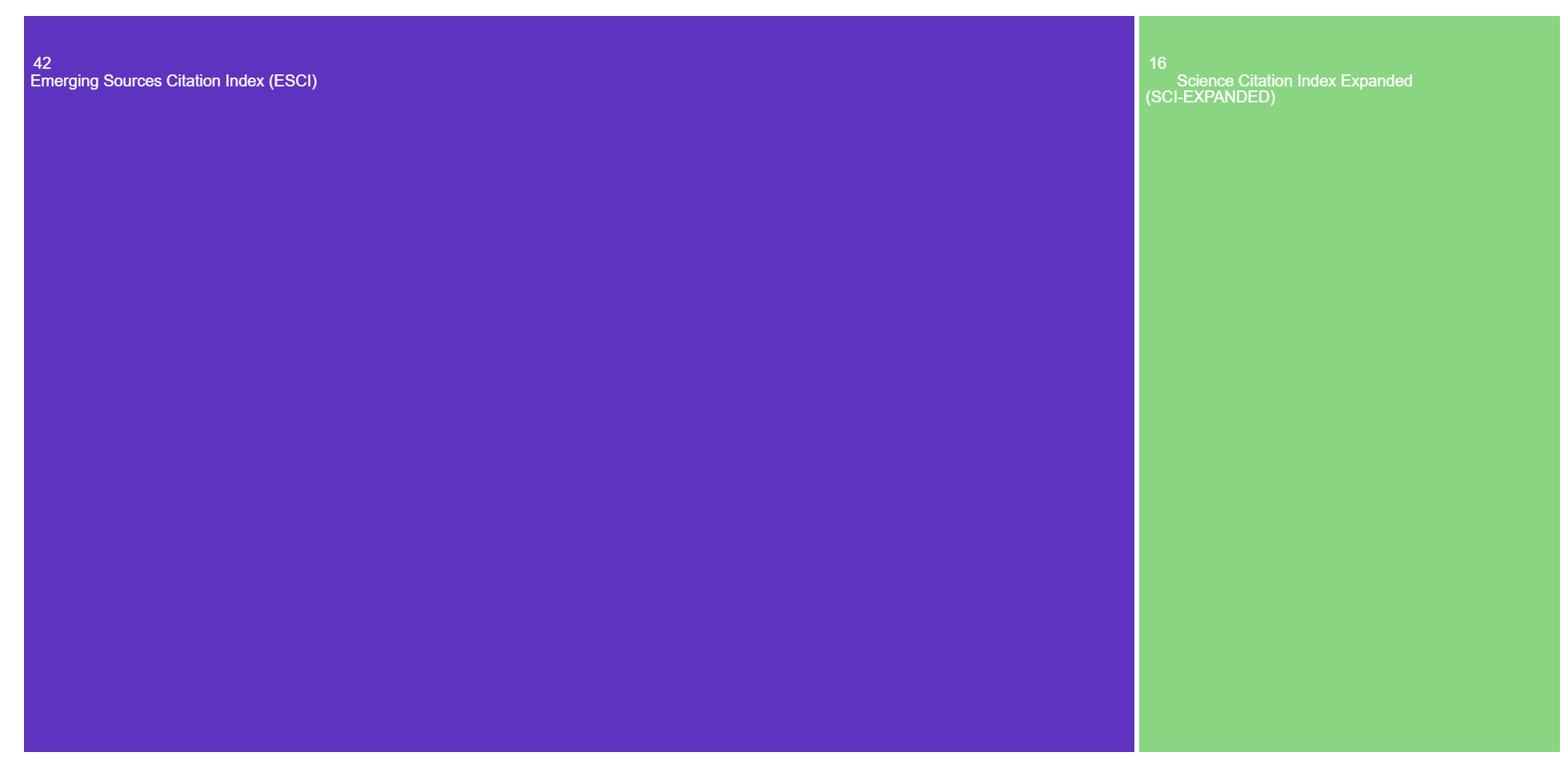
Research highlights from Bangladesh in the American Society for Microbiology journal:
| Type | Result |
|---|---|
| Open Access | 58 |
| Enriched Cited References | 51 |
Observations:
-
Microbiology is the sole research area represented, indicating a focused expertise.
-
ICDDR leads as the primary institutional contributor, suggesting strong organizational research capacity.
-
International collaboration is notable, with contributions from at least 16 other countries.
Questions:
-
Why are data papers minimally represented compared to research articles?
-
What factors contribute to the concentration of publications among a few leading authors?
-
How does international collaboration influence research quality and impact?
The dataset reflects Bangladesh’s concentrated strength in microbiology research, driven by key institutions and authors, but there is potential to diversify research areas and expand the production of data papers to enhance global scientific impact.