
Bangladeshi researchers contributed to 18613 scientific publications in Scopus-indexed journals, conference proceedings, and book series in 2025 (data taken on January 4, 2026). The top three research areas are engineering, computer science, and medicine. There was no patent in 2025. Publications(70) from National University researchers appeared for the first time on the list. The University of Dhaka (DU), Daffodil International University (DIU), and Bangladesh University of Engineering and Technology(BUET) are among the top three universities.Dr. M. Firoz Mridha from the Department of Computer Science, American International University, Dr. Ahmed Wasif Reza, Department of Computer Science & Engineering , East West University and Dr. Muhammad Torequl Islam from Khulna University are the top three most productive researchers in 2025.
Accessibility of the documents : What can we deduct about our publications from this accessibility information?
1) All open access 9,557 2) Gold 7,780
Language of the Publications:
Bangladeshi researchers published in 11 Languages, mostly in English though. None in Bengali.
Top Ten Key word: Among the 168 keywords, top ten are as follows which gives glimpse of our research subject matter.
- The Top 15 Most Productive Researchers
New researchers have appeared at the top from private universities and computer science subject area,
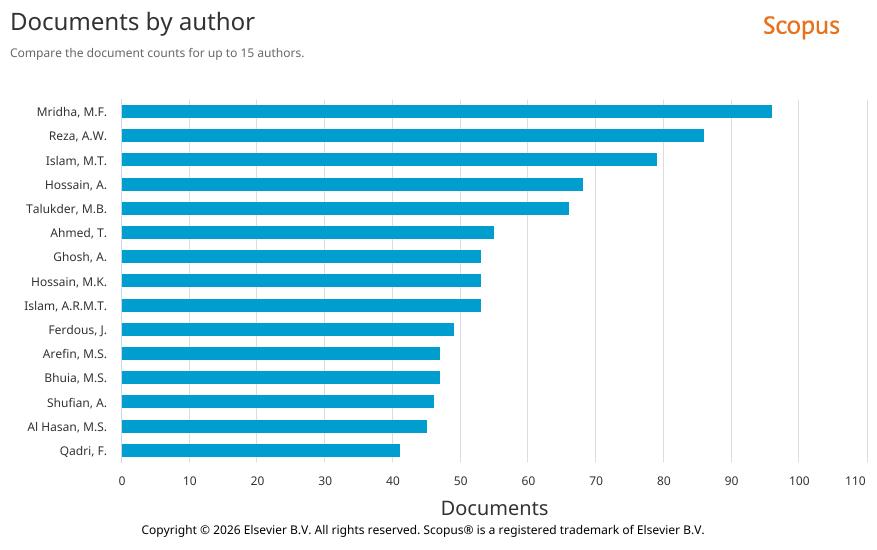
| 96 | |
| 86 | |
| 79 | |
| 68 | |
| 66 | |
| 55 | |
| 53 | |
| 53 | |
| 53 | |
| 49 | |
| 47 | |
| 47 | |
| 46 | |
| 45 | |
2. The Top 5 Most Productive and Collaborative NRB Researchers
Bangladeshi researchers working in Malaysia, USA, Australia and Qatar are among the top five NRB researchers having collaboration with Bangladeshi counterparts.
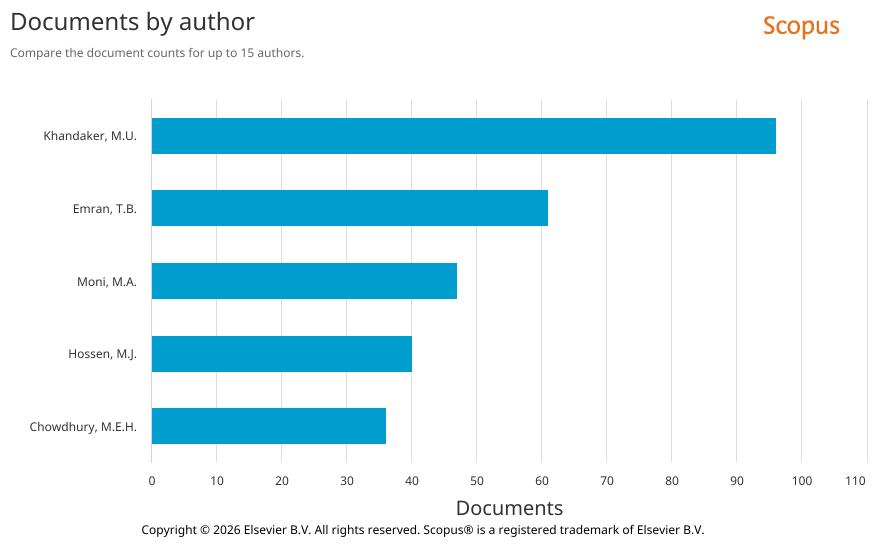
- Khandaker, Mayeen Uddin is working at Sunway University, Sunway City, Malaysia
- Emran, Talha Bin is working at Brown University, Providence, United States
- Moni, Mohammad Ali is working at Charles Sturt University, Bathurst, Australia
- Hossen, Md Jakir working at Multimedia University, Cyberjaya, Malaysia
-
Chowdhury, Muhammad E.H., College of Engineering, Qatar University, Doha, Qatar
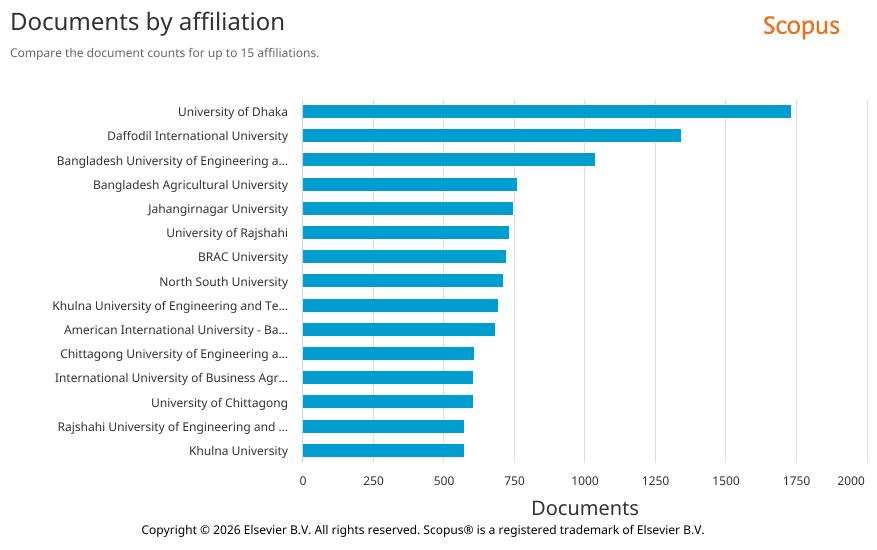
3. The Top 15 Most Productive Institutes
With 2000+ faculties, University of Dhaka is at the top with 1731 publications. The publication rate/faculty is less than 1. How are the publication/faculty rates for other university?
Among the top 15 Institutes, 1/3, that is, five are private universities. Daffodil International University has maintained second position for consecutive 4 years.
4. The Top 15 Most Productive Public Universities
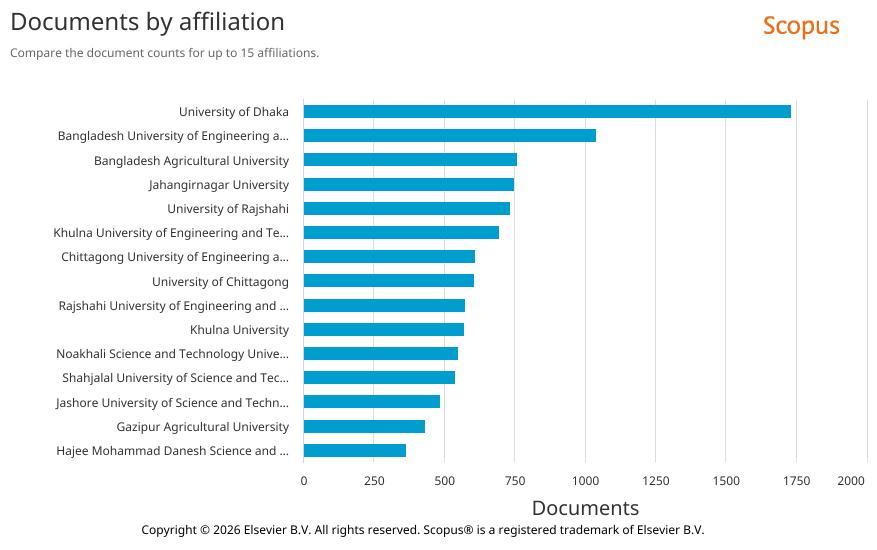
5. The Top 15 Most Productive Private Universities
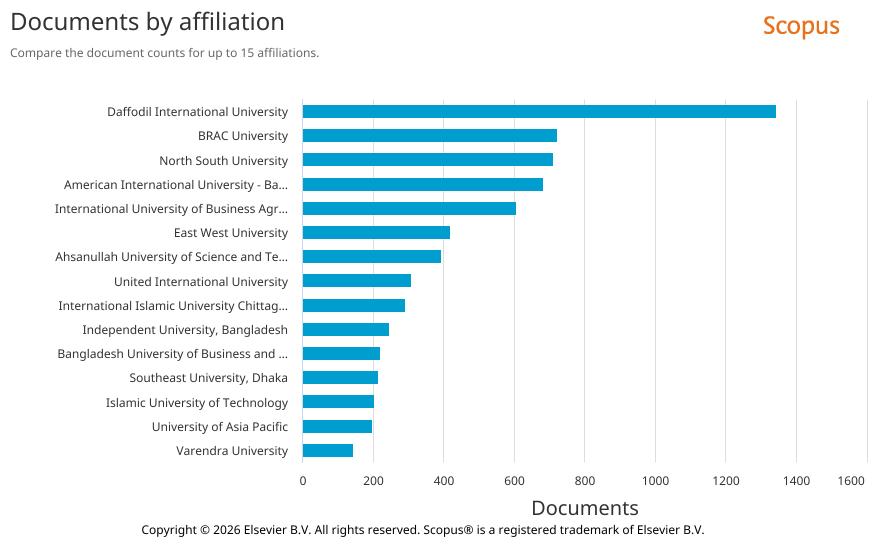
6. The Top 15 Collaborative Foreign Universities/Institutes
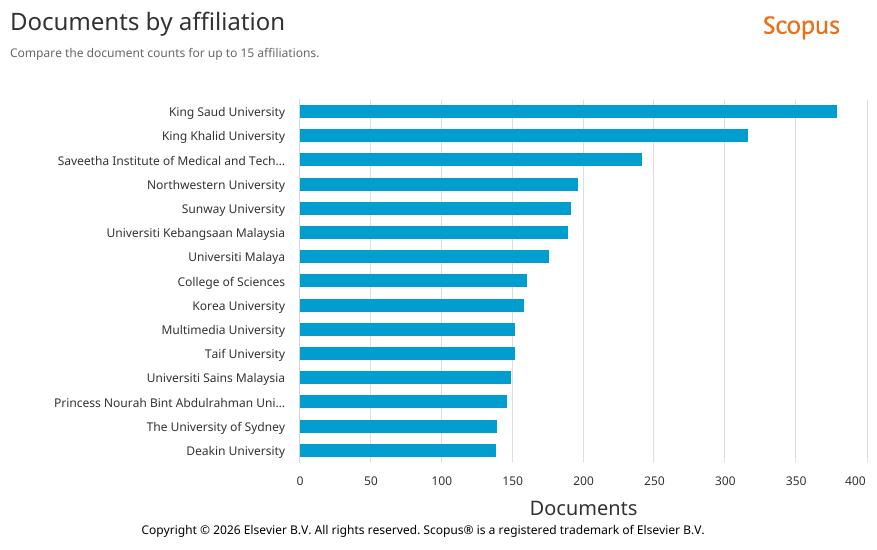
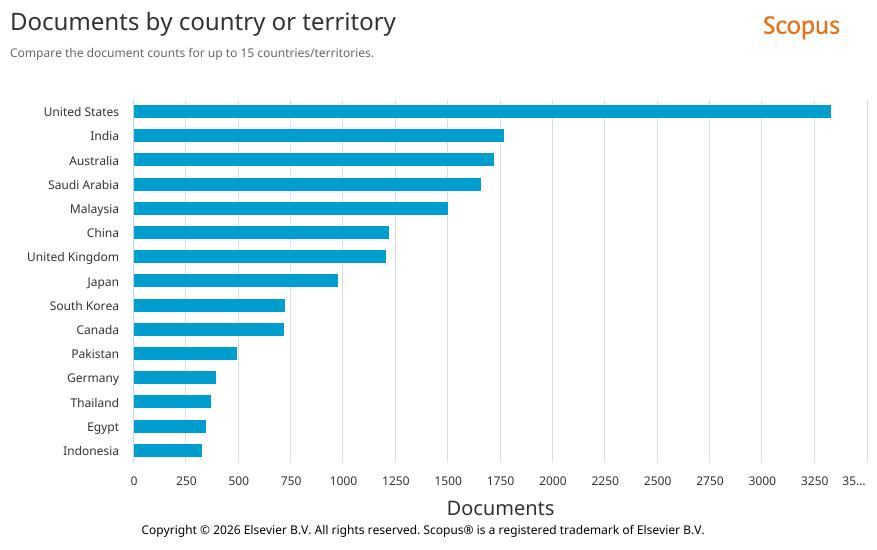
Bangladeshi researchers are publishing their research in collaboration with researchers in Saudi and Malaysian universities in a big number. Is it good news or something alarming?
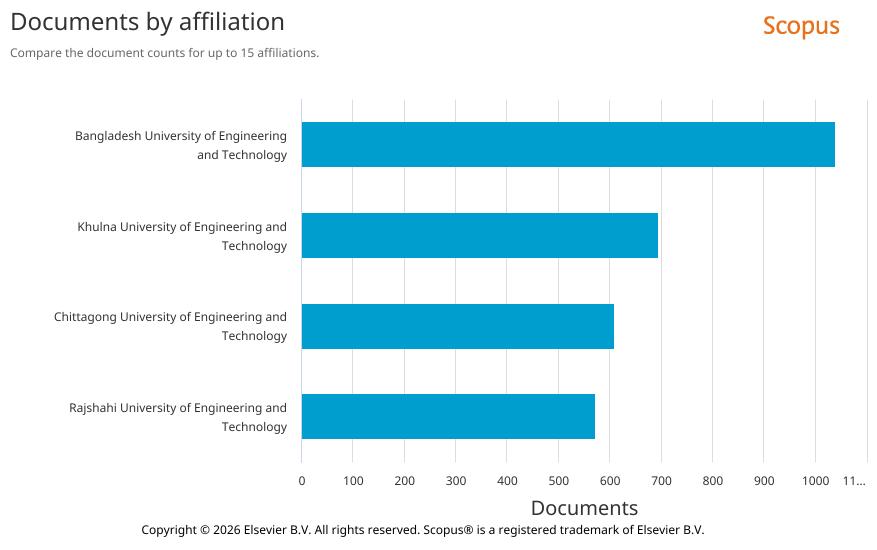
7. The Publication Scenario of Engineering and Technology Universities
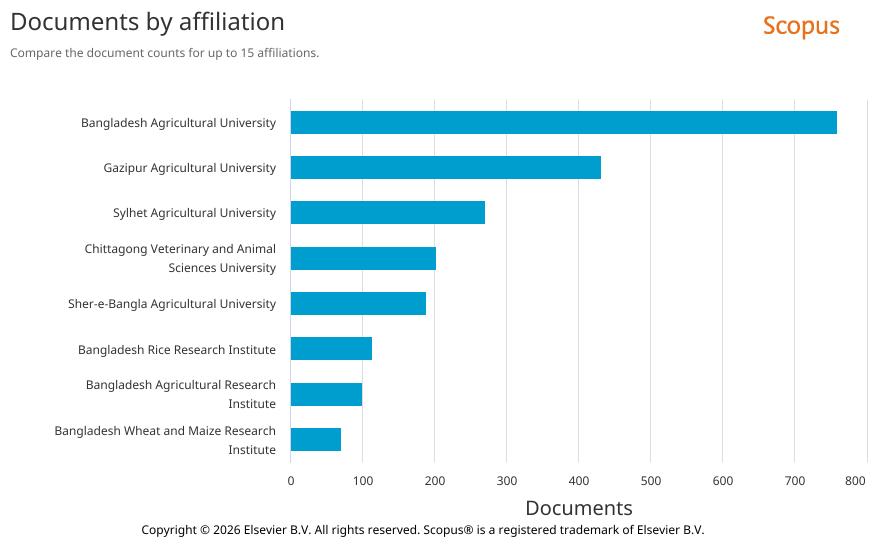
8. The Publication Scenario of Agricultural Universities and Institutes
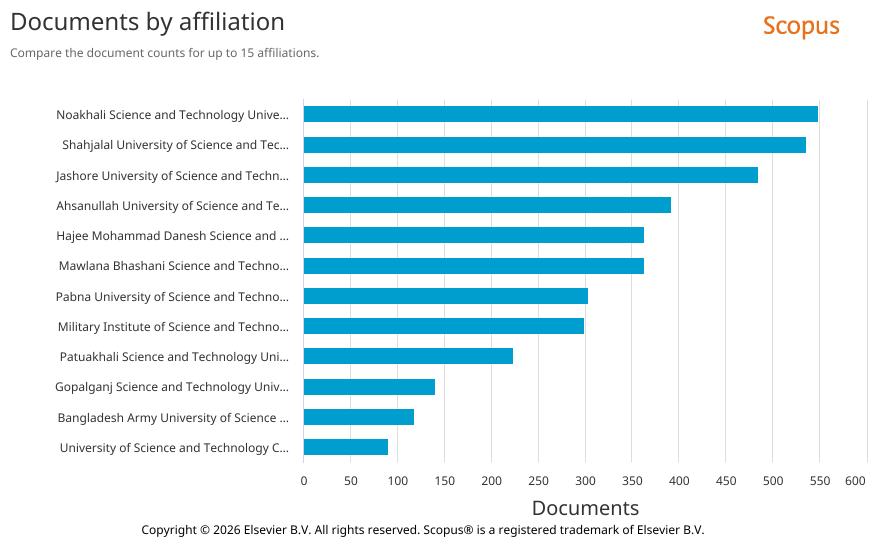
9. The Publication Scenario of The Science and Technology Universities/Institutes
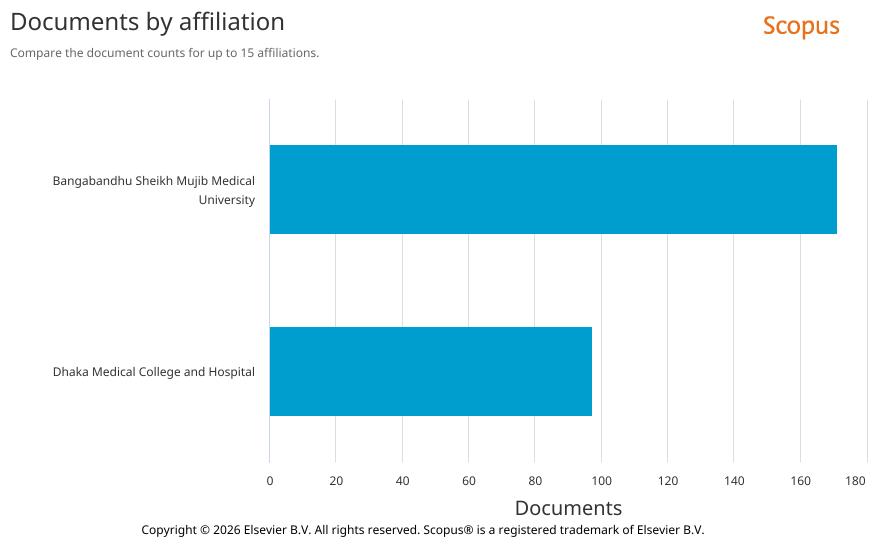
10. The Publication Scenario of Medical Universities/ Colleges ( Bangladeshi and Foreign )
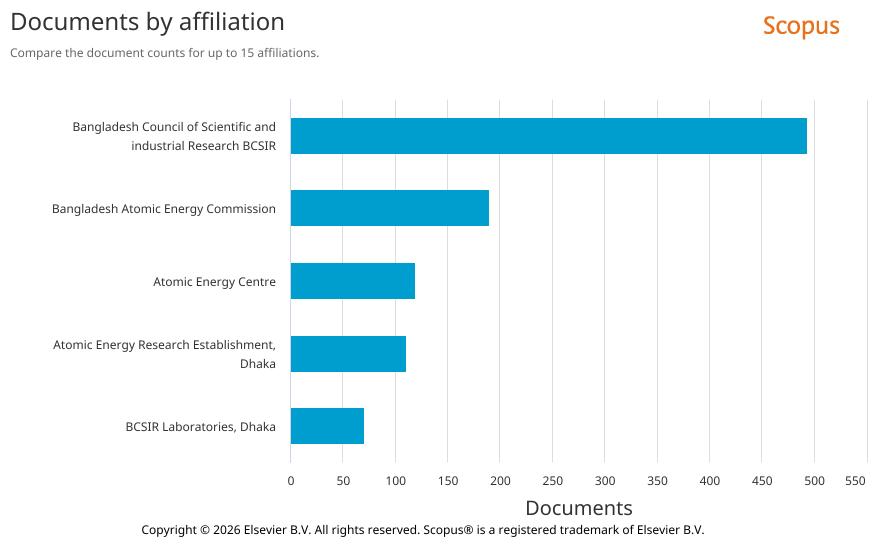
11. Publication Scenario of Multidisciplinary Government Research Organization
Researchers from these two government and multidisciplinary research organizations don’t follow single format in affiliation. As a result, their publications appear divided. Relevant authority should instruct researcher to use one single affiliation format.
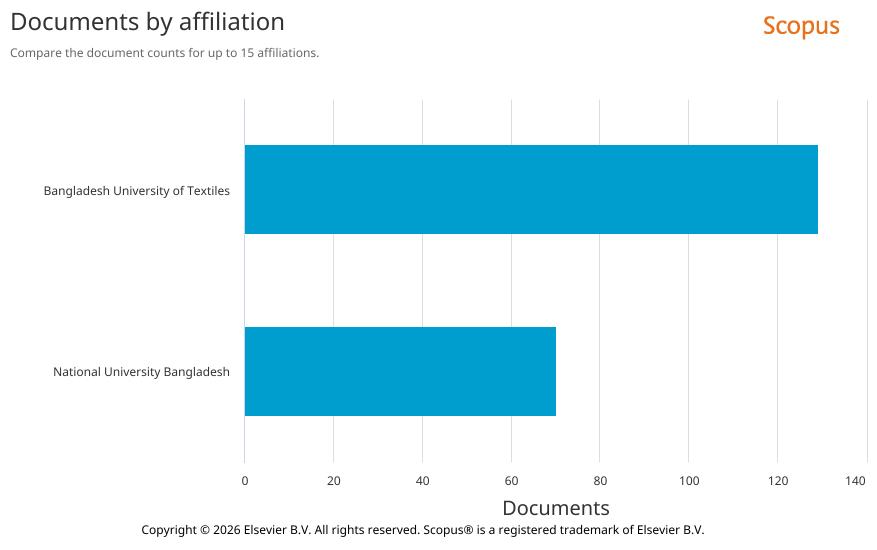
12. The Publication Scenario of Textile University and National University
For the first time, publications from the National University have been listed in large numbers. But the National Institute of Biotechnology could not publish enough articles to be listed
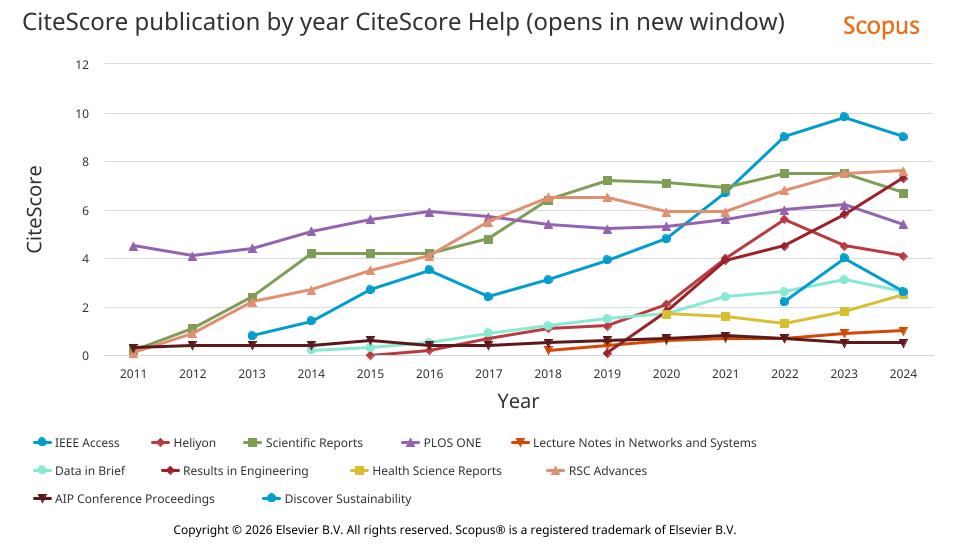
13. The Top 10 Popular A) Journals/Conference Proceedings of Bangladeshi Researchers and B) their Cite score
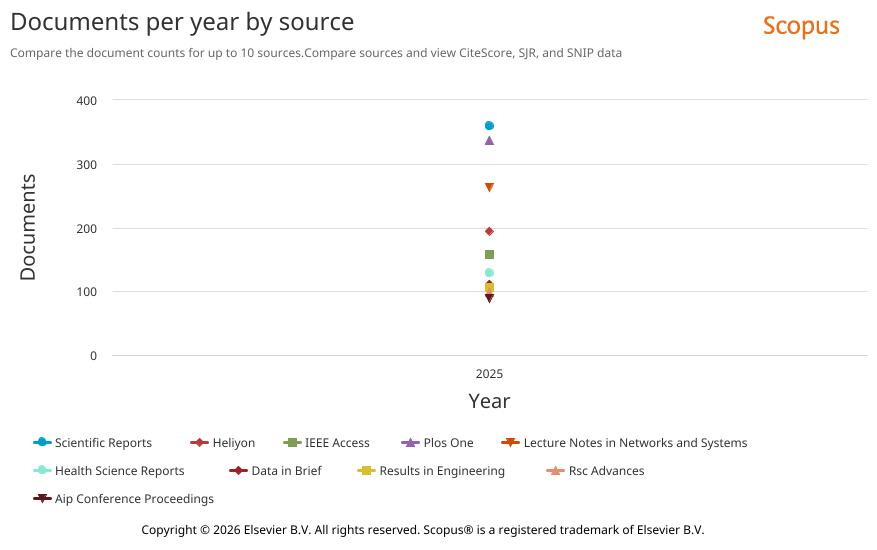
A.B. Cite Scores of the most popular journals/ conference proceedings
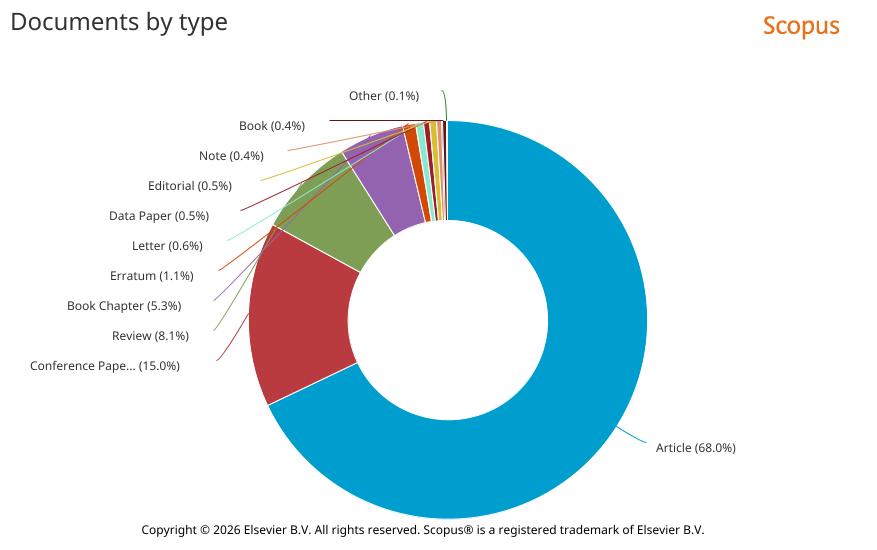
14. The Ratio of the Different Types of Scientific Documents Published by Bangladeshi Researchers
Around 1000(992) book chapters and 67 books. There were more than 600 book chapters and 47 books in 2024.
15. The publication Ratio of Different Subject Areas
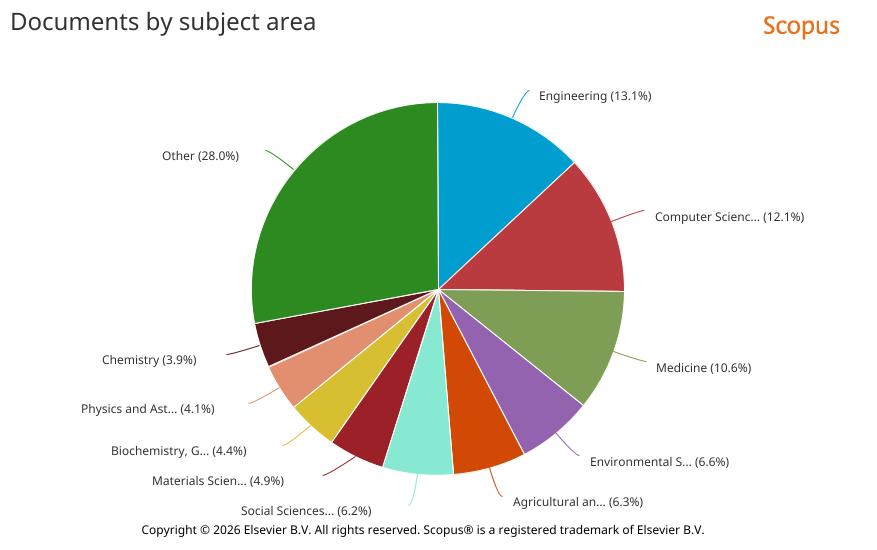
Top Ten Subject Areas:
| subject area | Documents |
|---|---|
| Engineering | 4685 |
| Computer Science | 4322 |
| Medicine | 3784 |
| Environmental Science | 2346 |
| Agricultural and Biological Sciences | 2258 |
| Social Sciences | 2202 |
| Materials Science | 1738 |
| Biochemistry, Genetics and Molecular Biology | 1574 |
| Physics and Astronomy | 1453 |
| Chemistry | 138 |
16. The Top 15 Collaborative Research Partner Countries
17. The Top 15 Funding Agencies
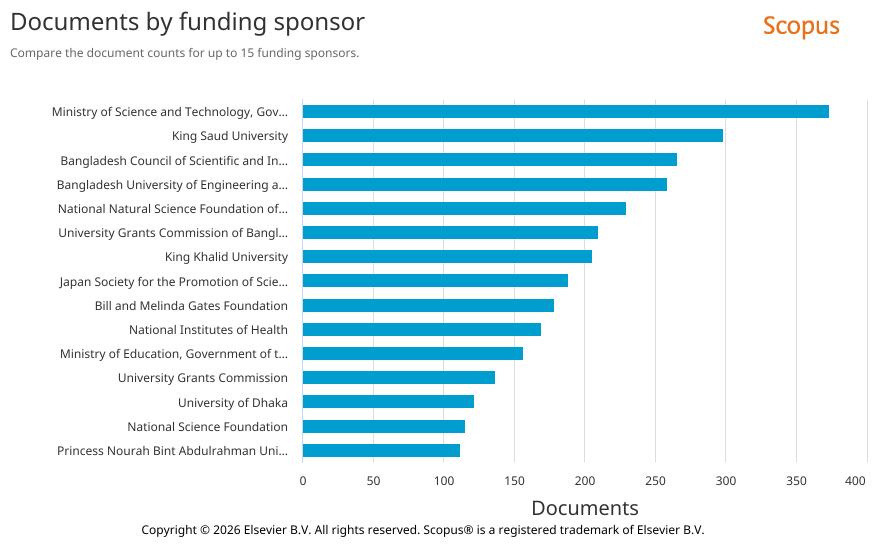
| Funding sponsor | Documents |
|---|---|
| 373 | |
| 298 | |
| 265 | |
| 258 | |
| 229 | |
| 209 | |
| 205 | |
| 188 | |
| 178 | |
| 169 | |
| 156 | |
| 136 | |
| 121 | |
| 115 | |
| 111 |
Among the top 15 funding agencies,9 are foreign agencies. Among the national funding agencies, the Ministry of Science and Technology is the top agency. Ministry of education is another national funding agency. Where are other ministries, particularly Ministry of Industry and Ministry of Agriculture in funding?
19. Patent
No patents were registered with any international authority by Bangladeshi researchers in 2024.
20. Publication Scenario in South Asia
Maldives have highest growth rate, followed by Afghanistan and Bangladesh.
Country 2023 2024 2025 Publication growth (%)
Afghanistan 616 770 1136 47.53 %
Bangladesh 15028 15413 18613 20.76 %
Bhutan 277 267 272 1.87 %
India 318691 334,617 364,782 9.01%
Maldives 146 184 281 52.7 %
Nepal 3628 3997 4,458 11.53%
Pakistan 41088 42353 45,260 6.80%
Sri lanka 4426 4107 4,635 12.85%
The table above shows our performance in scientific research and publications relative to our South Asian neighbors over the last three years.
Concluding Remarks
Based on the scientific and technological capacity, the countries of the world are divided into four groups:
- Scientifically advanced countries
- Scientifically proficient countries
- Scientifically developing countries
- Scientifically lagging countries.
At present, Bangladesh is one of the 66 lagging countries in science. Without significant scientific progress, becoming a scientifically advanced country, Bangladesh cannot achieve:
- Food safety and security
- Environmental security(protection)
- Cybersecurity
- Biosecurity
- Climate security and resilience
- Health Security
- Military security(strength)
- Border security and Safety
- Economic security and stability
Scientific advancement is also essential for creating job opportunities for the youth and meeting the material needs of a growing population.
To achieve this, the government of Bangladesh 2.0 must prioritize education and research, aiming to raise investment in these sectors to 5% of GDP by 2040. This will enable Bangladesh to transition from a lagging nation in science to a science-advanced one by 2050.
Until and unless research and innovation policy is an election issue, we can not get sufficient investment in this area and make progress. So, Bangladeshi voters must consider what the political parties are promising for research and innovation in their election manifesto before voting.