
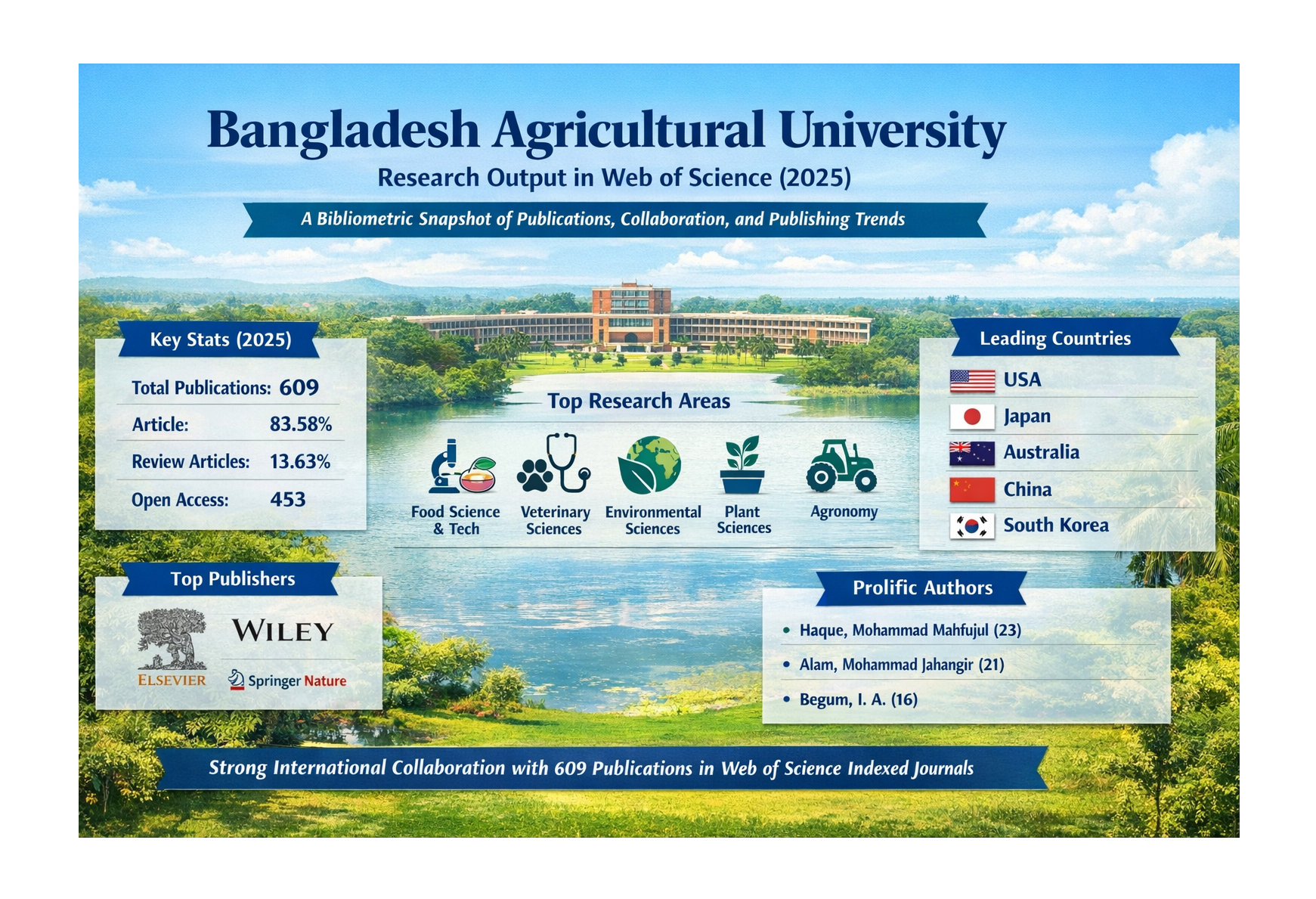
In 2025, Bangladesh Agricultural University (BAU) demonstrated a strong research presence in Web of Science–indexed journals with a total of 609 publications, dominated by original research articles (83.58%) and supported by a notable share of review articles (13.63%). Research outputs were concentrated in agriculture- and life-science–oriented categories, particularly Food Science & Technology, Veterinary Sciences, Environmental Sciences, Plant Sciences, and Agronomy, reflecting the university’s core disciplinary strengths. While all records were affiliated with Bangladesh, substantial international collaboration was evident, especially with the USA, Japan, Australia, China, and South Korea. Elsevier, Wiley, and Springer Nature emerged as the leading publishers, collectively accounting for a major proportion of outputs, and open-access publications formed a significant component of the total research visibility. A relatively small group of highly productive researchers contributed repeatedly, indicating both leadership concentration and potential mentorship hubs within the institution. Web of Science
The areas of research publication categories in the TreeMap:
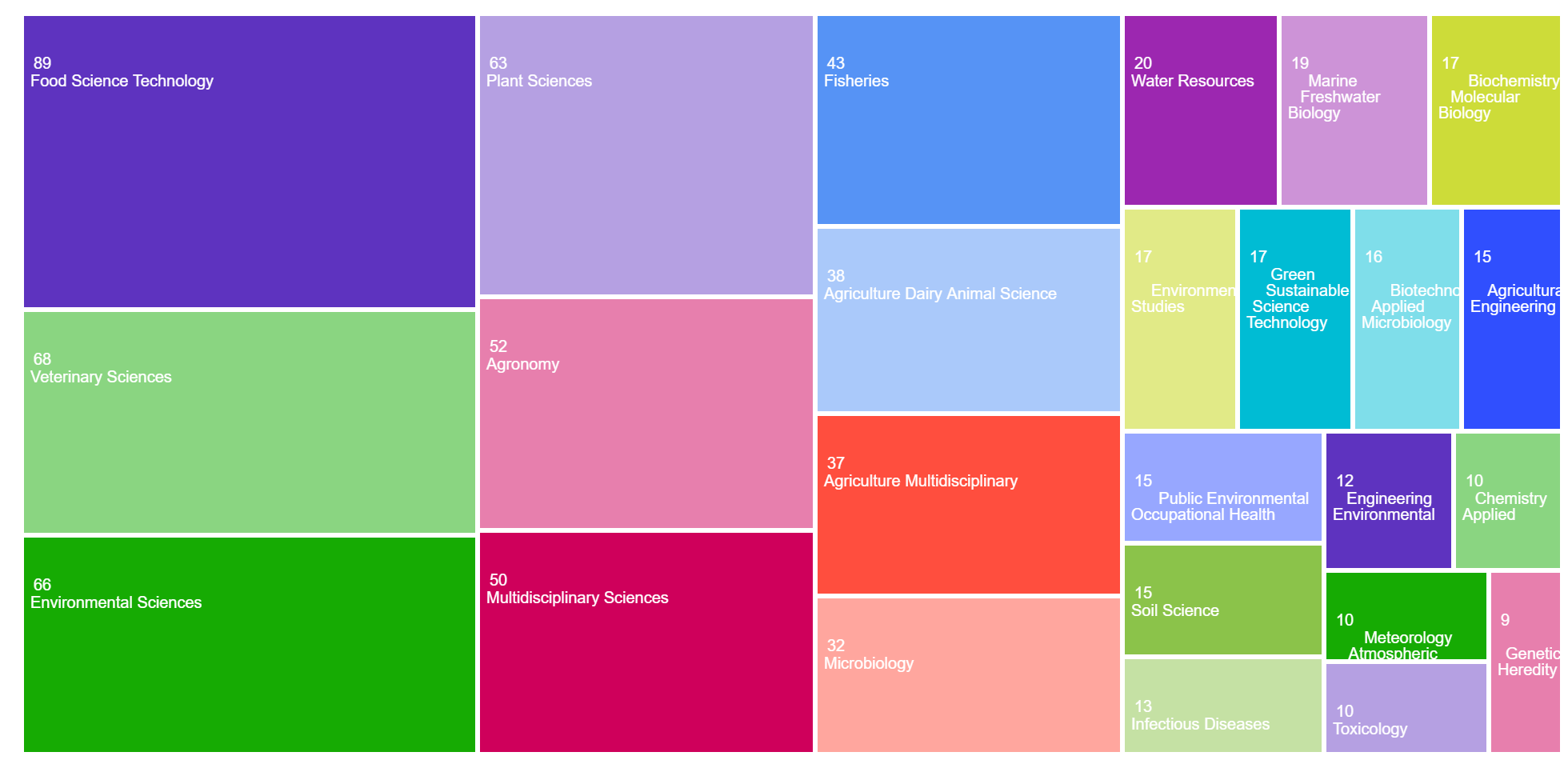
Research contributions in the field:
| Categories | Record Count | % of 609 |
|---|---|---|
| Food Science Technology | 89 | 14.614% |
| Veterinary Sciences | 68 | 11.166% |
| Environmental Sciences | 66 | 10.837% |
| Plant Sciences | 63 | 10.345% |
| Agronomy | 52 | 8.539% |
| Multidisciplinary Sciences | 50 | 8.210% |
| Fisheries | 43 | 7.061% |
| Agriculture Dairy Animal Science | 38 | 6.240% |
| Agriculture Multidisciplinary | 37 | 6.076% |
| Microbiology | 32 | 5.255% |
| Water Resources | 20 | 3.284% |
| Marine Freshwater Biology | 19 | 3.120% |
| Biochemistry Molecular Biology | 17 | 2.791% |
| Environmental Studies | 17 | 2.791% |
| Green Sustainable Science Technology | 17 | 2.791% |
| Biotechnology Applied Microbiology | 16 | 2.627% |
| Agricultural Engineering | 15 | 2.463% |
| Public Environmental Occupational Health | 15 | 2.463% |
| Soil Science | 15 | 2.463% |
| Infectious Diseases | 13 | 2.135% |
| Engineering Environmental | 12 | 1.970% |
| Chemistry Applied | 10 | 1.642% |
| Meteorology Atmospheric Sciences | 10 | 1.642% |
| Toxicology | 10 | 1.642% |
| Genetics Heredity | 9 | 1.478% |
Research areas:
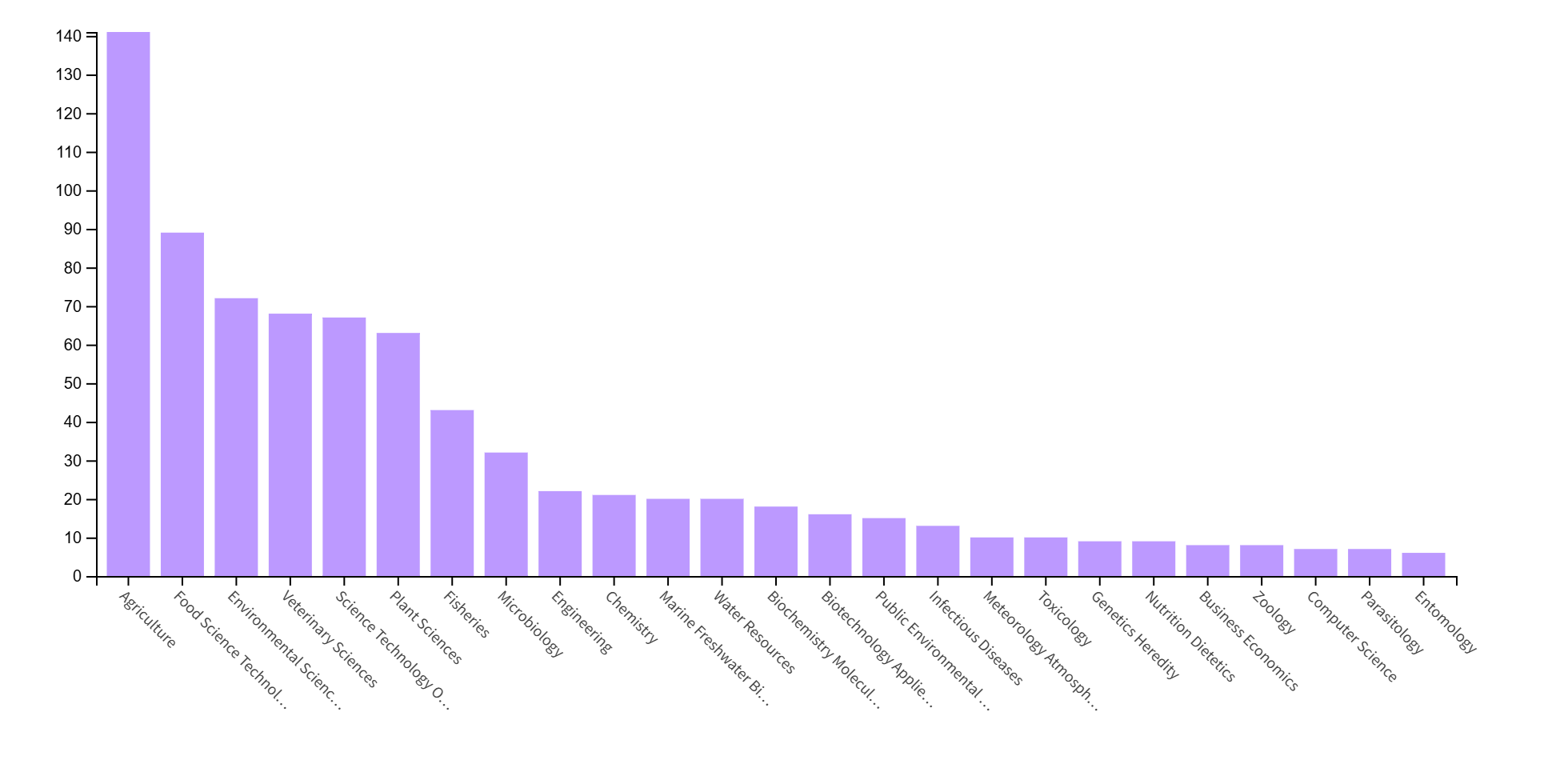
Types of published documents:
| Types | Record Count | % of 609 |
|---|---|---|
| Article | 509 | 83.580% |
| Review Article | 83 | 13.629% |
| Early Access | 20 | 3.284% |
| Correction | 9 | 1.478% |
| Editorial Material | 6 | 0.985% |
| Data Paper | 1 | 0.164% |
| Letter | 1 | 0.164% |
| Meeting Abstract | 1 | 0.164% |
Authors’ infographic (Top 25):
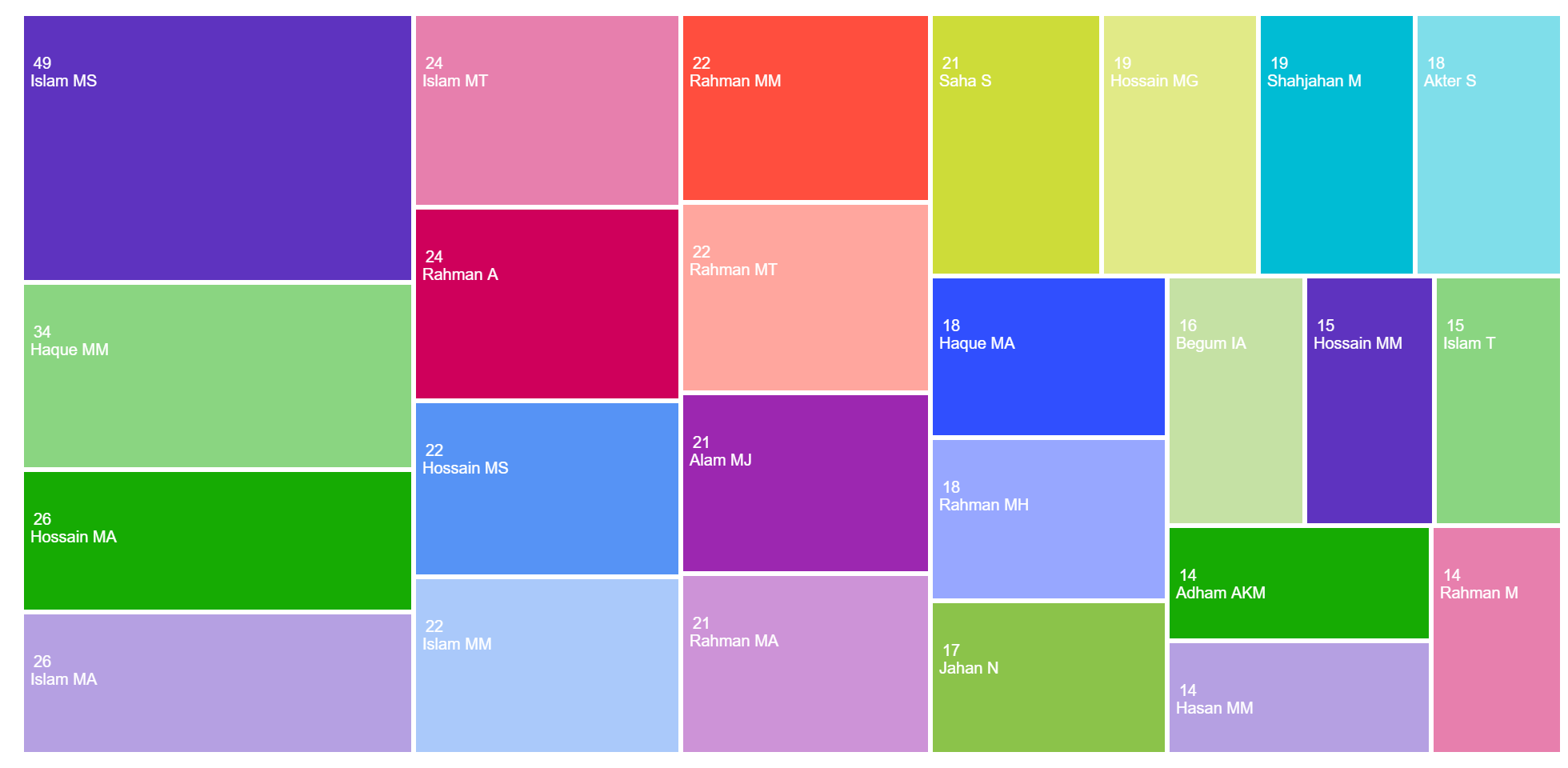
Researcher profiles (Top 25):
| Researchers | Record Count | % of 609 |
|---|---|---|
| Haque, Mohammad Mahfujul | 23 | 3.777% |
| Alam, Mohammad Jahangir | 21 | 3.448% |
| Begum, I. A. | 16 | 2.627% |
| Saha, Sukumar | 16 | 2.627% |
| Hossain, Golzar | 16 | 2.627% |
| Shahjahan, Md | 15 | 2.463% |
| Islam, Md Touhidul | 13 | 2.135% |
| Adham, A. K. M. | 13 | 2.135% |
| Jahan, Nusrat | 12 | 1.970% |
| Saha, Chayan K | 11 | 1.806% |
| Jannat, Dr. Arifa | 11 | 1.806% |
| Hossain, Muhammad Tofazzal | 11 | 1.806% |
| Mckenzie, Andrew M. | 10 | 1.642% |
| Rahman, Md. Tanvir, PhD (UK) | 10 | 1.642% |
| hasan, ahmed | 9 | 1.478% |
| Parvin, Rokshana | 9 | 1.478% |
| Zahangir, Md. Mahiuddin | 9 | 1.478% |
| Rahman, Md. Tanvir | 9 | 1.478% |
| Yeasmen, Nushrat | 9 | 1.478% |
| Bhuiyan, Md. Hafizur Rahman | 9 | 1.478% |
| Mazumder, Md. Anisur Rahman | 9 | 1.478% |
| Rhaman, Dr. Mohammad Saidur | 8 | 1.314% |
| Ahammad, Prof. Dr. A. K. Shakur | 8 | 1.314% |
| Neaz Al Hasan | 8 | 1.314% |
| Islam, Tofazzal | 8 | 1.314% |
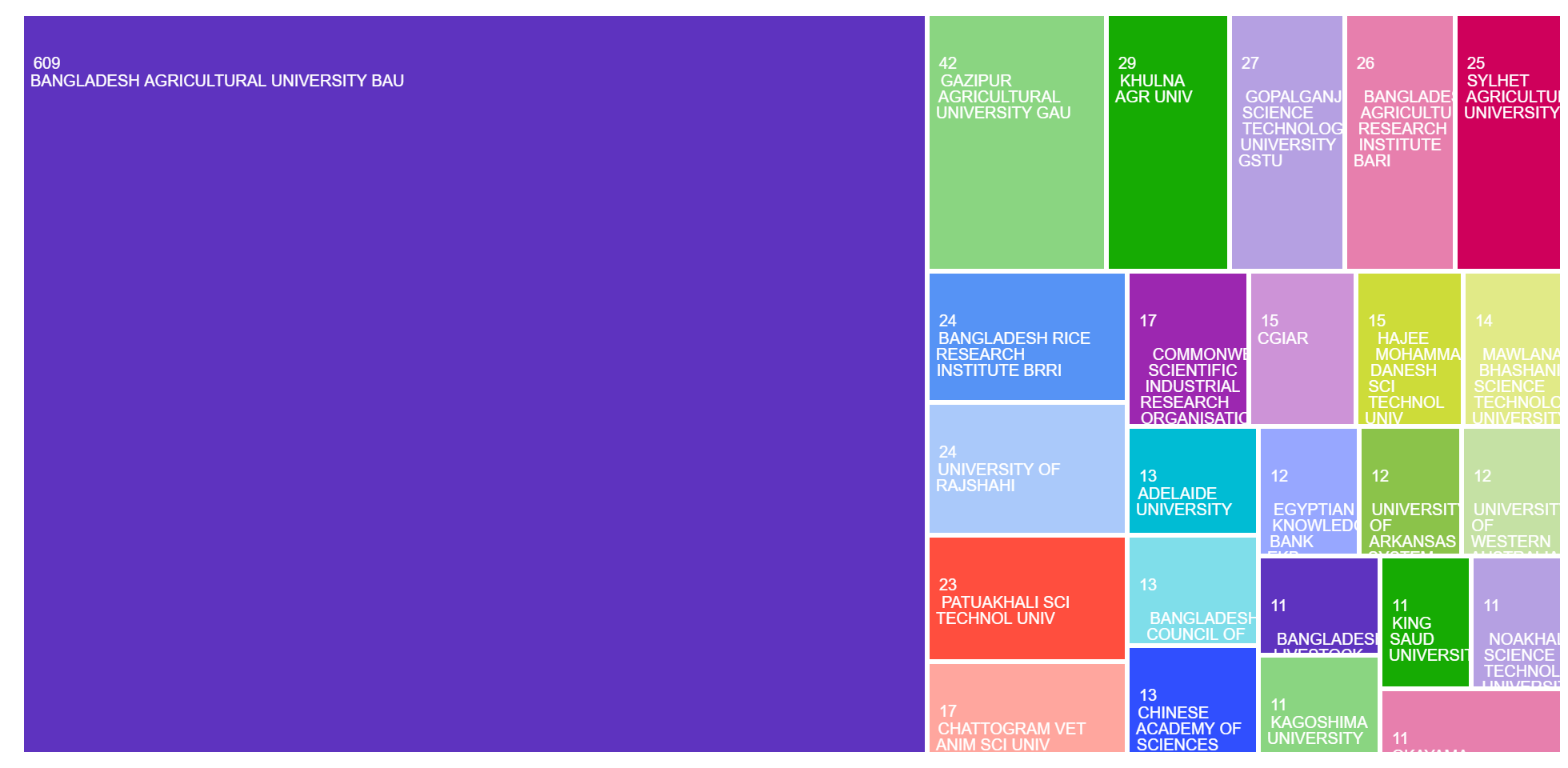
Research-affiliated institutes:
Research collaboration countries:
| Countries/Regions | Record Count | % of 609 |
|---|---|---|
| BANGLADESH | 609 | 100.000% |
| USA | 91 | 14.943% |
| JAPAN | 87 | 14.286% |
| AUSTRALIA | 74 | 12.151% |
| PEOPLES R CHINA | 54 | 8.867% |
| SOUTH KOREA | 31 | 5.090% |
| CANADA | 30 | 4.926% |
| SAUDI ARABIA | 27 | 4.433% |
| GERMANY | 25 | 4.105% |
| ENGLAND | 24 | 3.941% |
| INDIA | 23 | 3.777% |
| MALAYSIA | 13 | 2.135% |
| PAKISTAN | 13 | 2.135% |
| EGYPT | 12 | 1.970% |
| INDONESIA | 12 | 1.970% |
| BRAZIL | 11 | 1.806% |
| THAILAND | 11 | 1.806% |
| DENMARK | 10 | 1.642% |
| SCOTLAND | 8 | 1.314% |
| IRAN | 7 | 1.149% |
| ITALY | 7 | 1.149% |
| NEPAL | 7 | 1.149% |
| NORWAY | 7 | 1.149% |
| AUSTRIA | 6 | 0.985% |
| BELGIUM | 6 | 0.985% |
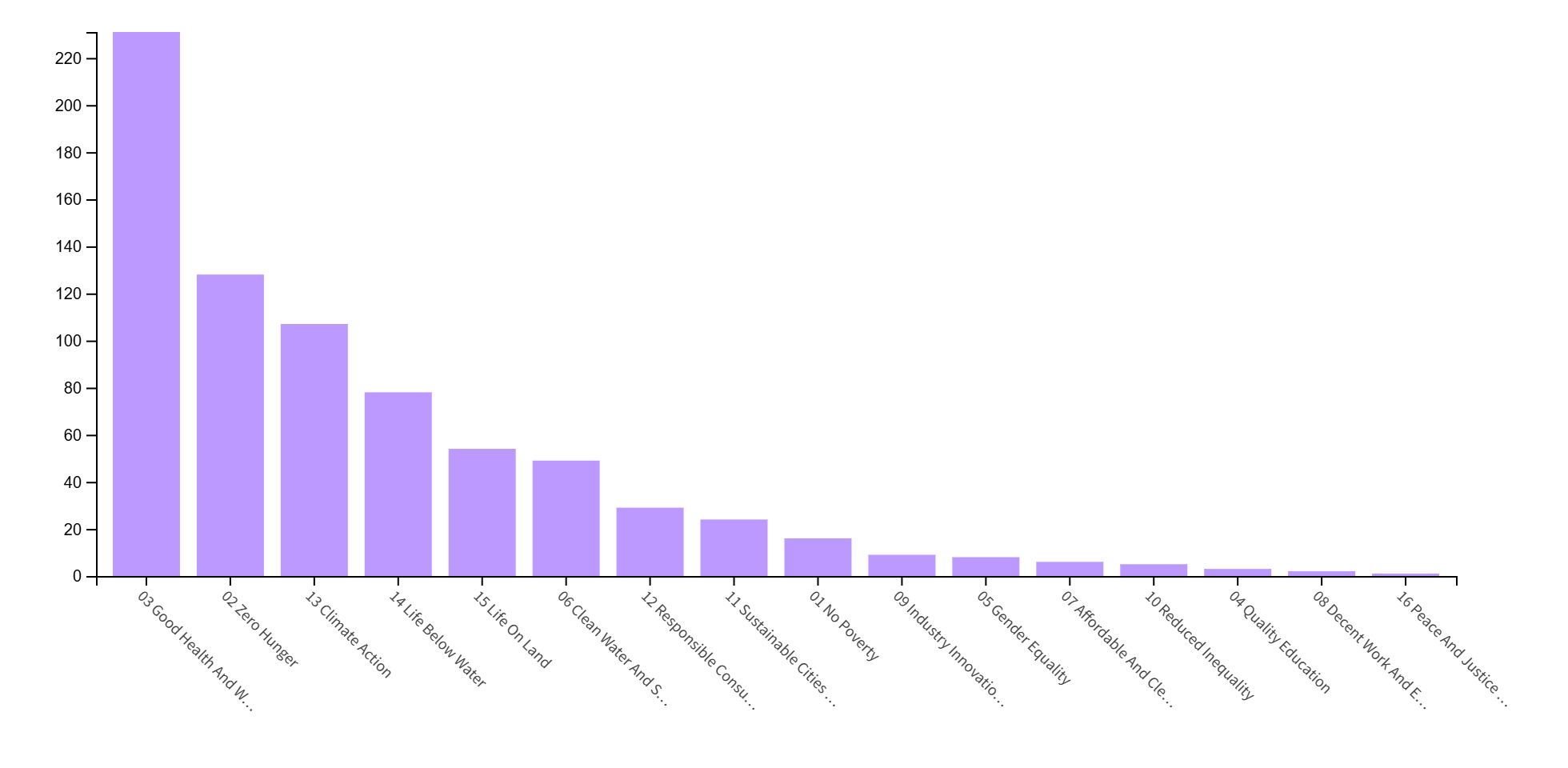
Sustainable Development Goals:
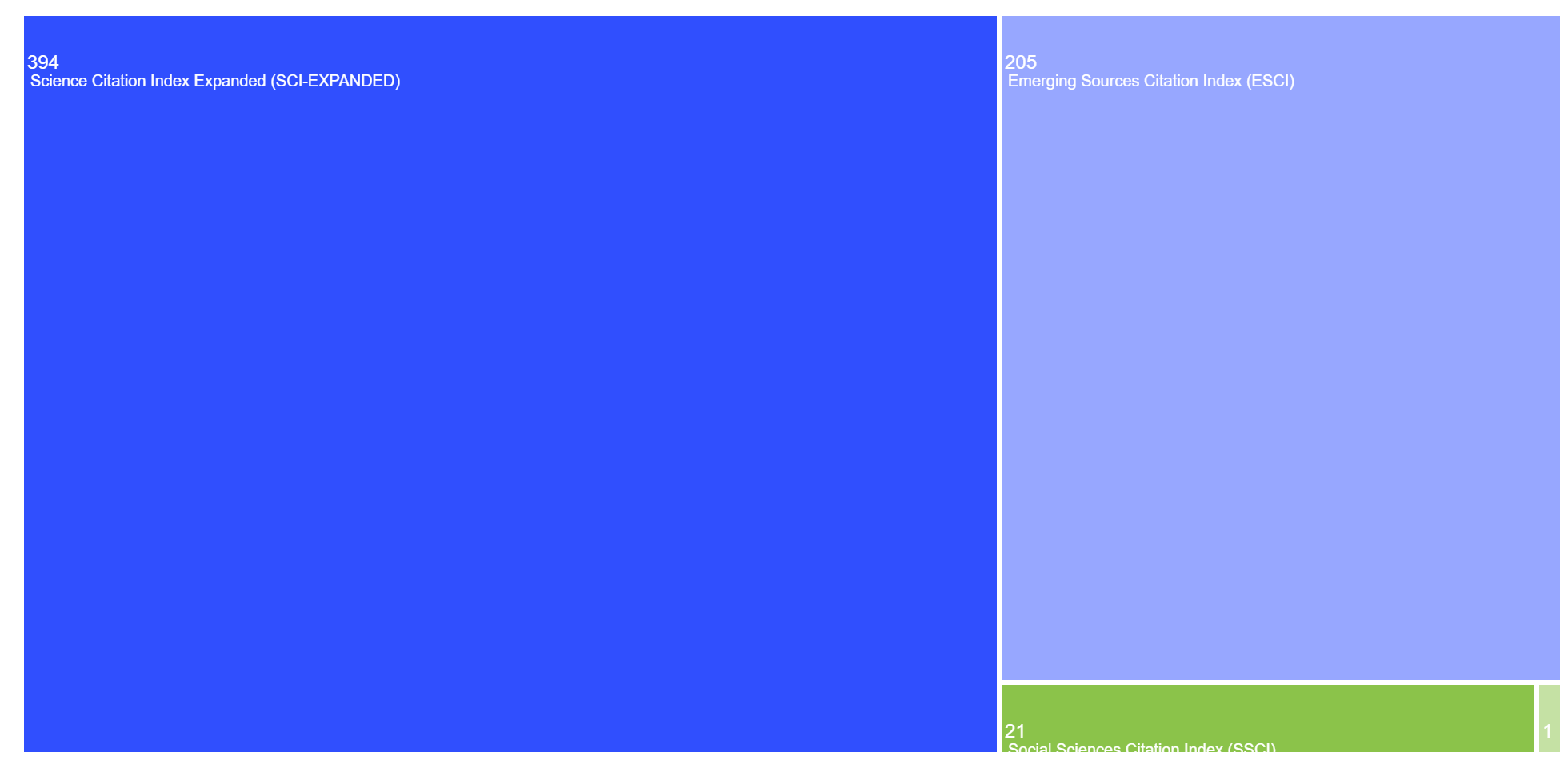
Web of Science Index:
Research highlights of BAU in Web of Science:
| Type | Result |
|---|---|
| Review Article | 83 |
| Early Access | 20 |
| Open Access | 453 |
| Enriched Cited References | 295 |
| Open publisher-invited reviews | 18 |
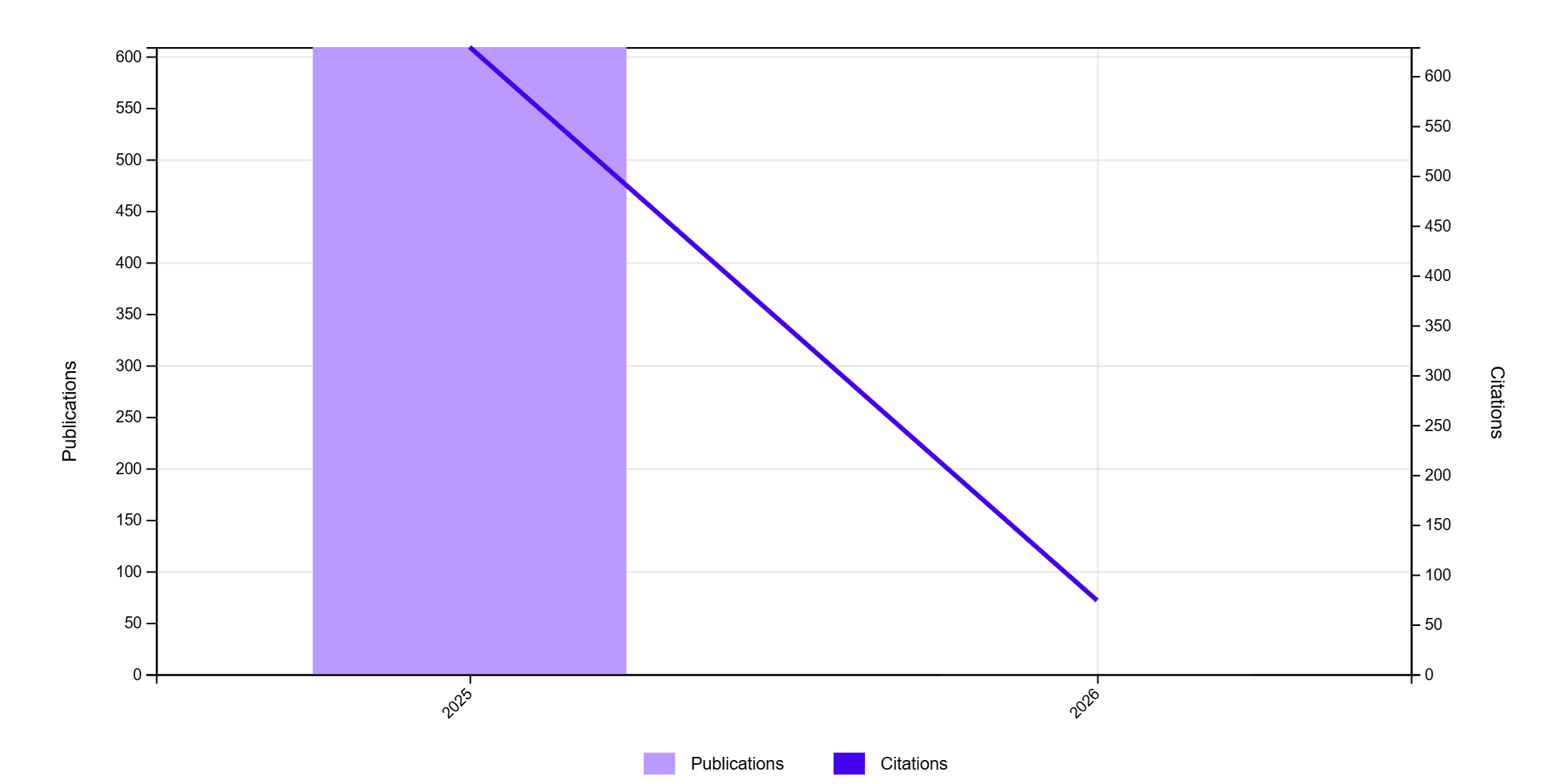
Citation Index:
Publishers:
| Publishers | Record Count | % of 609 |
|---|---|---|
| Elsevier | 184 | 30.213% |
| Wiley | 103 | 16.913% |
| Springer Nature | 75 | 12.315% |
| Mdpi | 47 | 7.718% |
| Public Library Science | 25 | 4.105% |
| NATURE PORTFOLIO | 19 | 3.120% |
| Amer Soc Microbiology | 17 | 2.791% |
| Frontiers Media Sa | 12 | 1.970% |
| Network Veterinarians Bangladesh | 12 | 1.970% |
| Taylor & Francis | 11 | 1.806% |
| Horizon E-Publishing Group | 8 | 1.314% |
| Iwa Publishing | 7 | 1.149% |
| Natl Information Documentation Cent, Acad Scientific Research & Technology | 7 | 1.149% |
| Oxford Univ Press | 7 | 1.149% |
| SPRINGER INT PUBL AG | 7 | 1.149% |
| Sage | 6 | 0.985% |
| Univ Tripoli, Fac Vet Med | 5 | 0.821% |
| Keai Publishing Ltd | 4 | 0.657% |
| Tech Science Press | 4 | 0.657% |
| Brill | 2 | 0.328% |
| Cambridge Univ Press | 2 | 0.328% |
| Chem Soc Ethiopia | 2 | 0.328% |
| German Multidisciplinary Publishing Center—GMPC | 2 | 0.328% |
| IEEE | 2 | 0.328% |
| Japan Soc Vet Sci | 2 | 0.328% |
Observations:
-
Research output is heavily aligned with BAU’s traditional strengths in agriculture, veterinary, and environmental sciences.
-
International collaboration is strong, particularly with developed research economies, enhancing global visibility.
-
Publications are concentrated among a limited number of publishers, with Elsevier leading by a wide margin.
Questions:
-
How can BAU further diversify its research output into emerging interdisciplinary and high-impact fields?
-
What institutional strategies could increase publications in top-tier journals beyond the dominant publishers?
-
How can early-career researchers be more evenly integrated into high-output research networks?
Overall, BAU’s 2025 Web of Science publication profile reflects a mature and internationally connected research ecosystem, though targeted policies could further broaden disciplinary reach, balance author participation, and enhance global impact.