

Daffodil International University demonstrated a strong and diversified research presence in 2025 through its publications in Web of Science–indexed journals. With a total of 851 records, the output is dominated by original research articles, highlighting a clear emphasis on primary knowledge generation rather than derivative work. The research portfolio spans a wide range of disciplines, led by multidisciplinary sciences, environmental sciences, pharmacology, chemistry, engineering, and computer science, indicating a robust interdisciplinary research culture. Collaboration patterns show extensive international engagement, particularly with institutions and researchers from Malaysia, Saudi Arabia, India, the USA, and several other regions, while maintaining a firm national foundation in Bangladesh. The presence of prolific authors and contributions across reputable global publishers further reflects the university’s growing research capacity and visibility. Overall, DIU’s 2025 Web of Science output suggests an institution that is consolidating its research productivity, expanding international collaboration, and positioning itself as an increasingly active contributor to the global scientific community. Web of Science
The areas of research publication categories in the TreeMap:
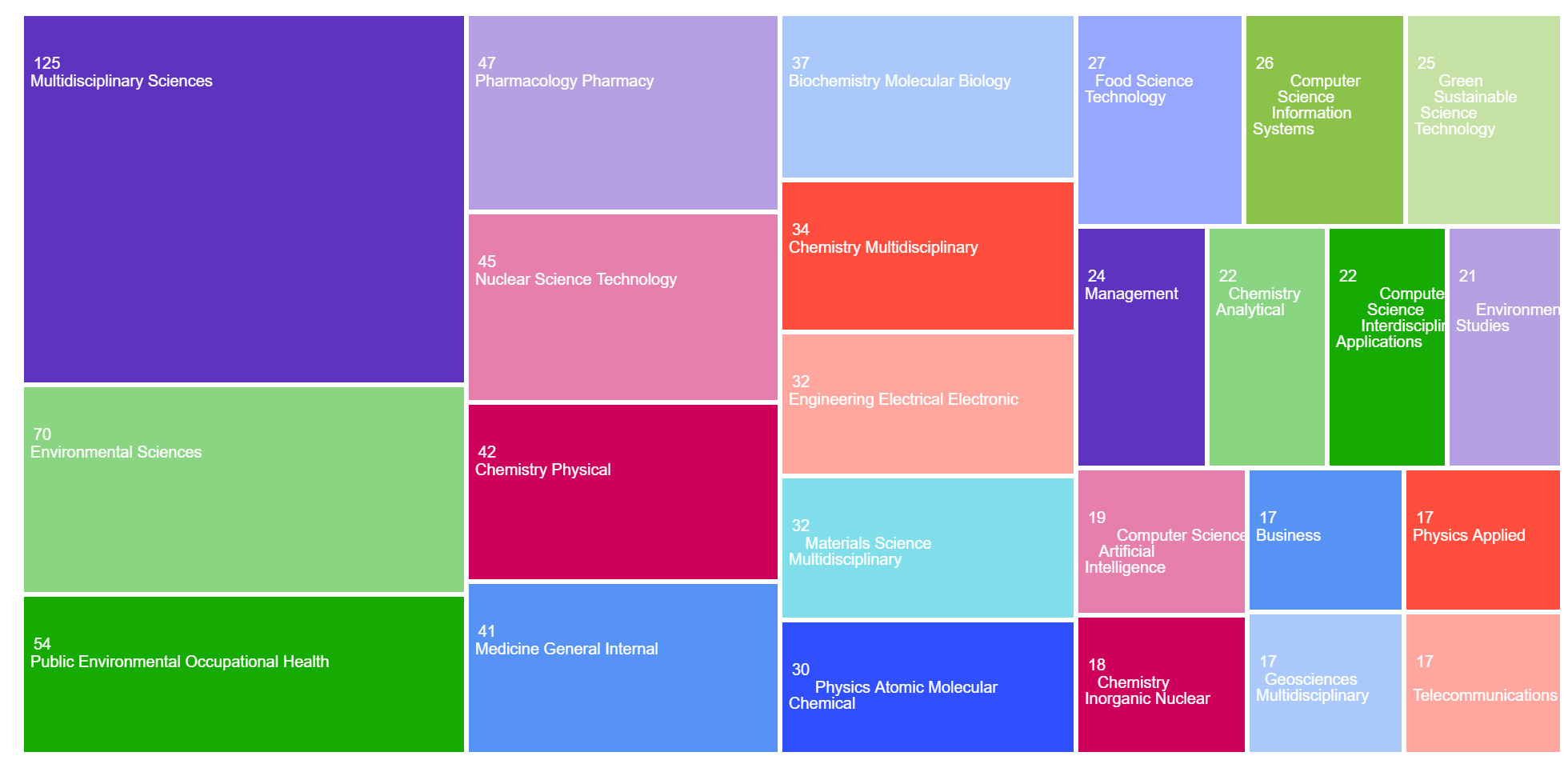
Research contributions in the field:
| Category | Record Count | % of 851 |
|---|---|---|
| Multidisciplinary Sciences | 125 | 14.689% |
| Environmental Sciences | 70 | 8.226% |
| Public Environmental Occupational Health | 54 | 6.345% |
| Pharmacology Pharmacy | 47 | 5.523% |
| Nuclear Science Technology | 45 | 5.288% |
| Chemistry Physical | 42 | 4.935% |
| Medicine General Internal | 41 | 4.818% |
| Biochemistry Molecular Biology | 37 | 4.348% |
| Chemistry Multidisciplinary | 34 | 3.995% |
| Engineering Electrical Electronic | 32 | 3.760% |
| Materials Science Multidisciplinary | 32 | 3.760% |
| Physics Atomic Molecular Chemical | 30 | 3.525% |
| Food Science Technology | 27 | 3.173% |
| Computer Science Information Systems | 26 | 3.055% |
| Green Sustainable Science Technology | 25 | 2.938% |
| Management | 24 | 2.820% |
| Chemistry Analytical | 22 | 2.585% |
| Computer Science Interdisciplinary Applications | 22 | 2.585% |
| Environmental Studies | 21 | 2.468% |
| Computer Science Artificial Intelligence | 19 | 2.233% |
| Chemistry Inorganic Nuclear | 18 | 2.115% |
| Business | 17 | 1.998% |
| Geosciences Multidisciplinary | 17 | 1.998% |
| Physics Applied | 17 | 1.998% |
| Telecommunications | 17 | 1.998% |
Research areas:
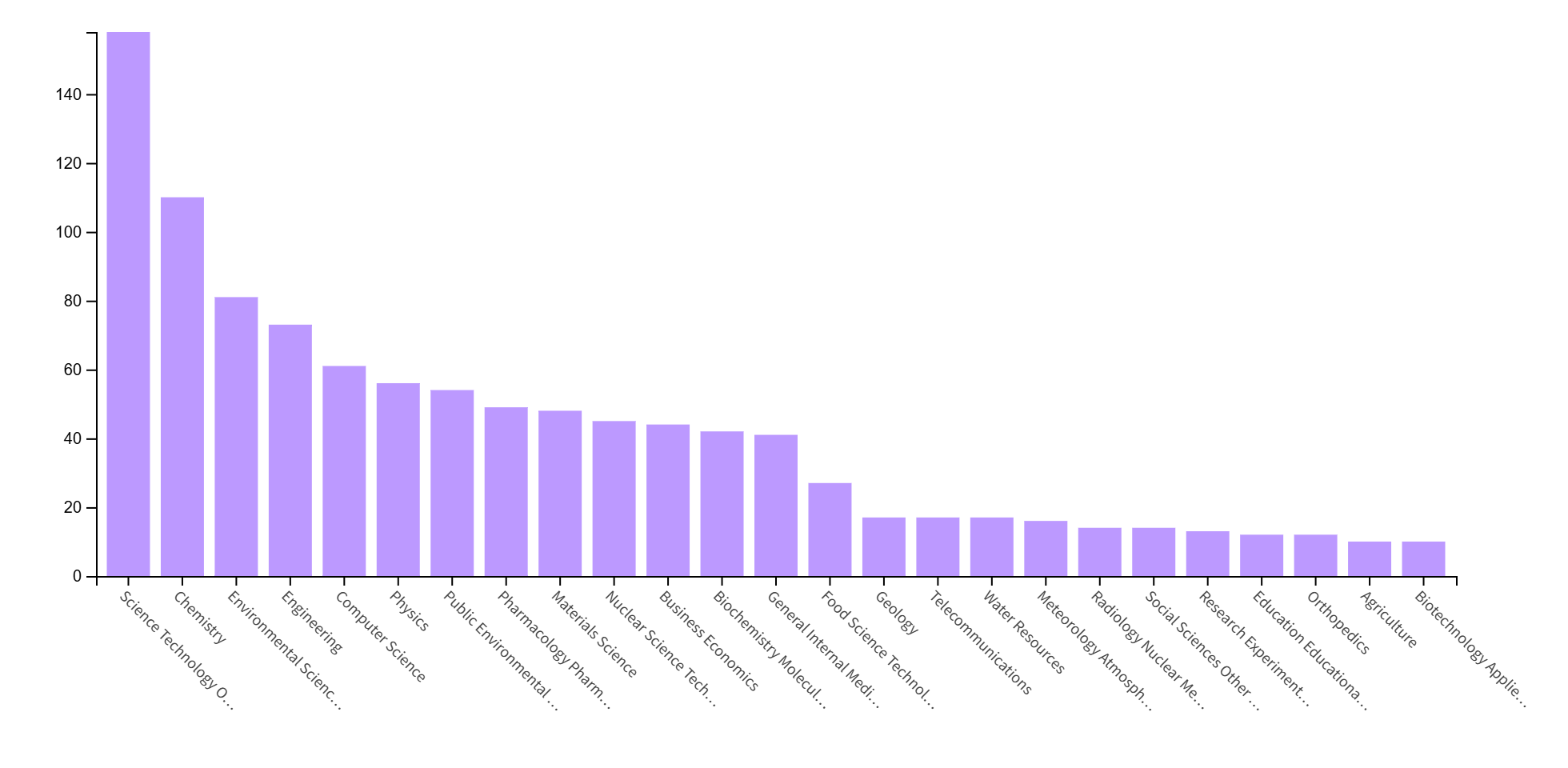
Types of published documents:
| Type | Record Count | % of 851 |
|---|---|---|
| Article | 711 | 83.549% |
| Review Article | 99 | 11.633% |
| Early Access | 71 | 8.343% |
| Data Paper | 20 | 2.350% |
| Letter | 20 | 2.350% |
| Editorial Material | 8 | 0.940% |
| Proceeding Paper | 6 | 0.705% |
| Book Review | 3 | 0.353% |
| Correction | 2 | 0.235% |
| Meeting Abstract | 1 | 0.118% |
| Retracted Publication | 1 | 0.118% |
| Retraction | 1 | 0.118% |
Authors’ infographic (Top 25):
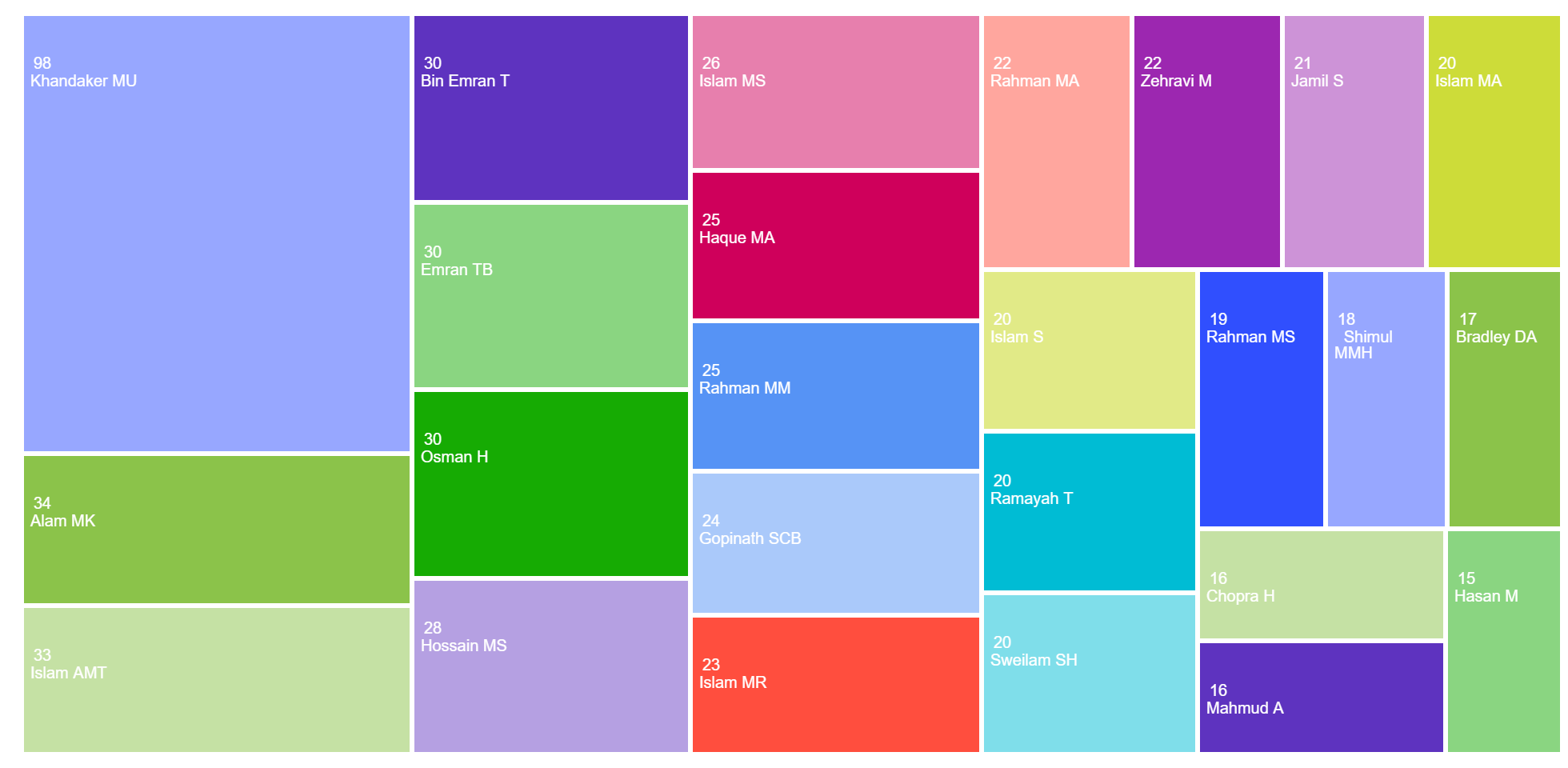
Researcher profiles (Top 25):
| Researchers | Record Count | % of 851 |
|---|---|---|
| Khandaker, Mayeen Uddin | 98 | 11.516% |
| Emran, Talha Bin | 54 | 6.345% |
| Islam, Abu Reza Md. Towfiqul | 36 | 4.230% |
| Alam, Mohammad Khursheed | 33 | 3.878% |
| Osman, Hamid | 32 | 3.760% |
| T., Ramayah | 26 | 3.055% |
| Gopinath, Subash | 24 | 2.820% |
| Sweilam, Sherouk Hussein | 22 | 2.585% |
| Zehravi, Mehrukh | 21 | 2.468% |
| Jamil, Safayet | 21 | 2.468% |
| Chopra, Hitesh | 16 | 1.880% |
| Shimul, Md Monir Hossain | 16 | 1.880% |
| Haque, Dr Md Ashraful | 15 | 1.763% |
| Mayen Uddin Mojumdar | 15 | 1.763% |
| Khandker, Salamat | 14 | 1.645% |
| Kamal, Mohammad Amjad | 14 | 1.645% |
| Sawaran Singh, Narinderjit Singh | 14 | 1.645% |
| Pal, Subodh Chandra | 13 | 1.528% |
| Hanfi, Mohamed | 13 | 1.528% |
| Rashid, Bazlar | 13 | 1.528% |
| Siraz, M.M. Mahfuz | 13 | 1.528% |
| Alam, Mohammad Shafiqul | 13 | 1.528% |
| Mahmud, Araf | 13 | 1.528% |
| Bijoy, Md. Hasan Imam | 12 | 1.410% |
| Yeasmin, Selina | 11 | 1.293% |
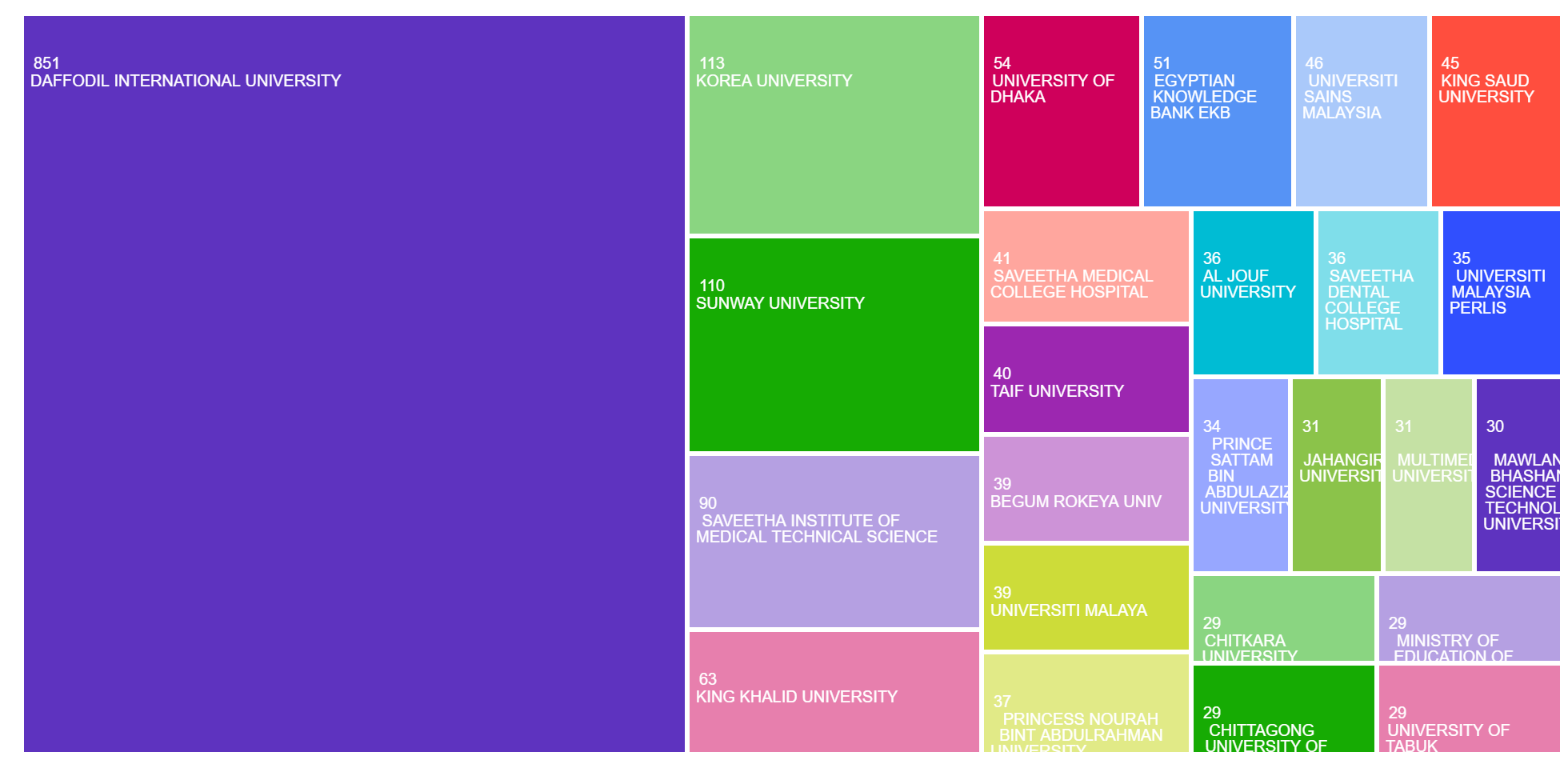
Research-affiliated institutes:
Research collaboration countries:
| Country/Region | Record Count | % of 851 |
|---|---|---|
| Bangladesh | 851 | 100.000% |
| Malaysia | 282 | 33.137% |
| Saudi Arabia | 269 | 31.610% |
| India | 225 | 26.439% |
| USA | 136 | 15.981% |
| South Korea | 133 | 15.629% |
| People’s R China | 89 | 10.458% |
| Australia | 75 | 8.813% |
| Egypt | 71 | 8.343% |
| Pakistan | 51 | 5.993% |
| England | 48 | 5.640% |
| Nigeria | 41 | 4.818% |
| Jordan | 40 | 4.700% |
| Indonesia | 35 | 4.113% |
| U Arab Emirates | 34 | 3.995% |
| Canada | 33 | 3.878% |
| Thailand | 32 | 3.760% |
| Oman | 30 | 3.525% |
| Azerbaijan | 29 | 3.408% |
| Russia | 26 | 3.055% |
| Japan | 24 | 2.820% |
| Somalia | 22 | 2.585% |
| Iraq | 21 | 2.468% |
| Turkiye | 18 | 2.115% |
| Hungary | 17 | 1.998% |
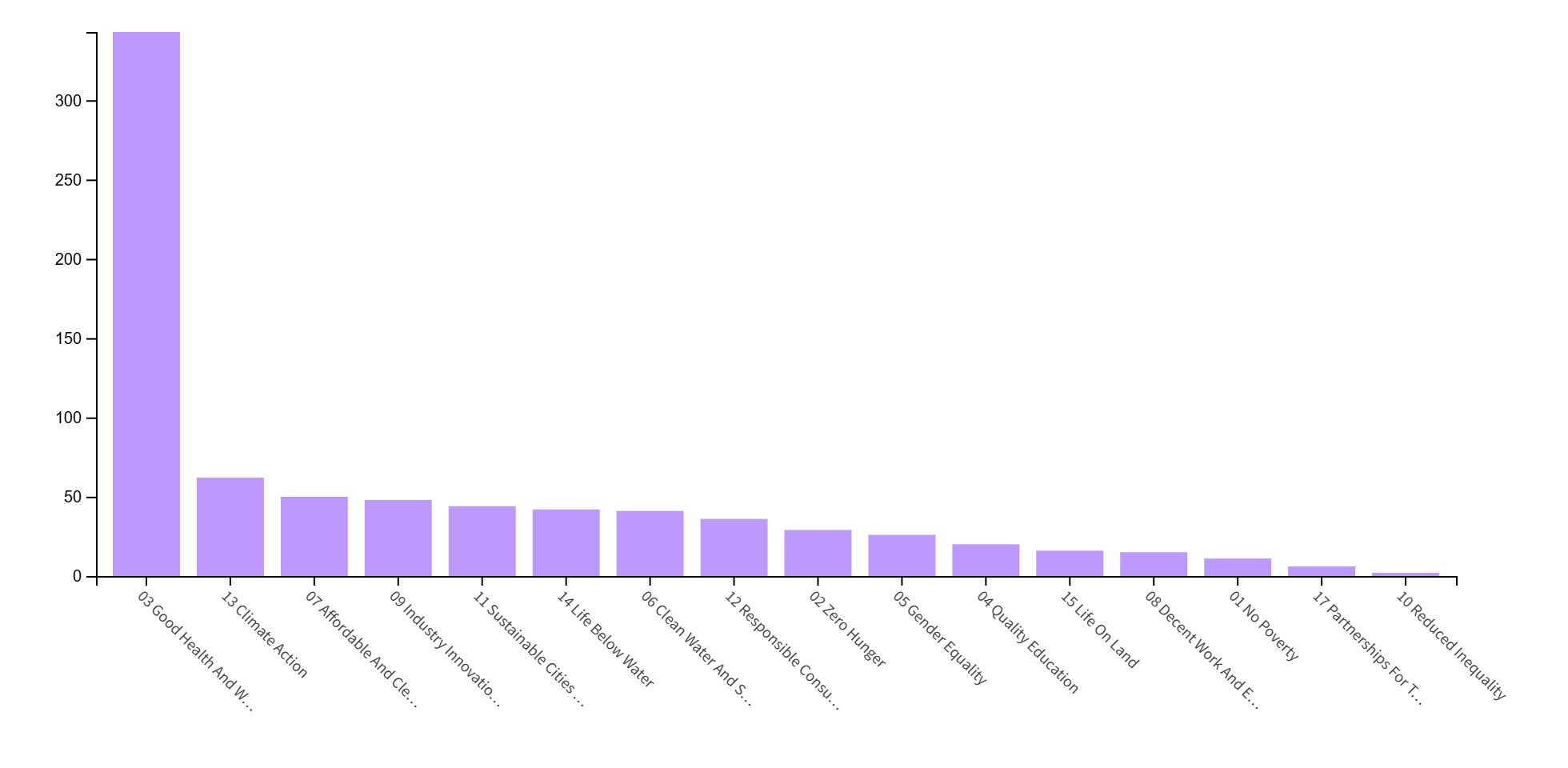
Sustainable Development Goals:
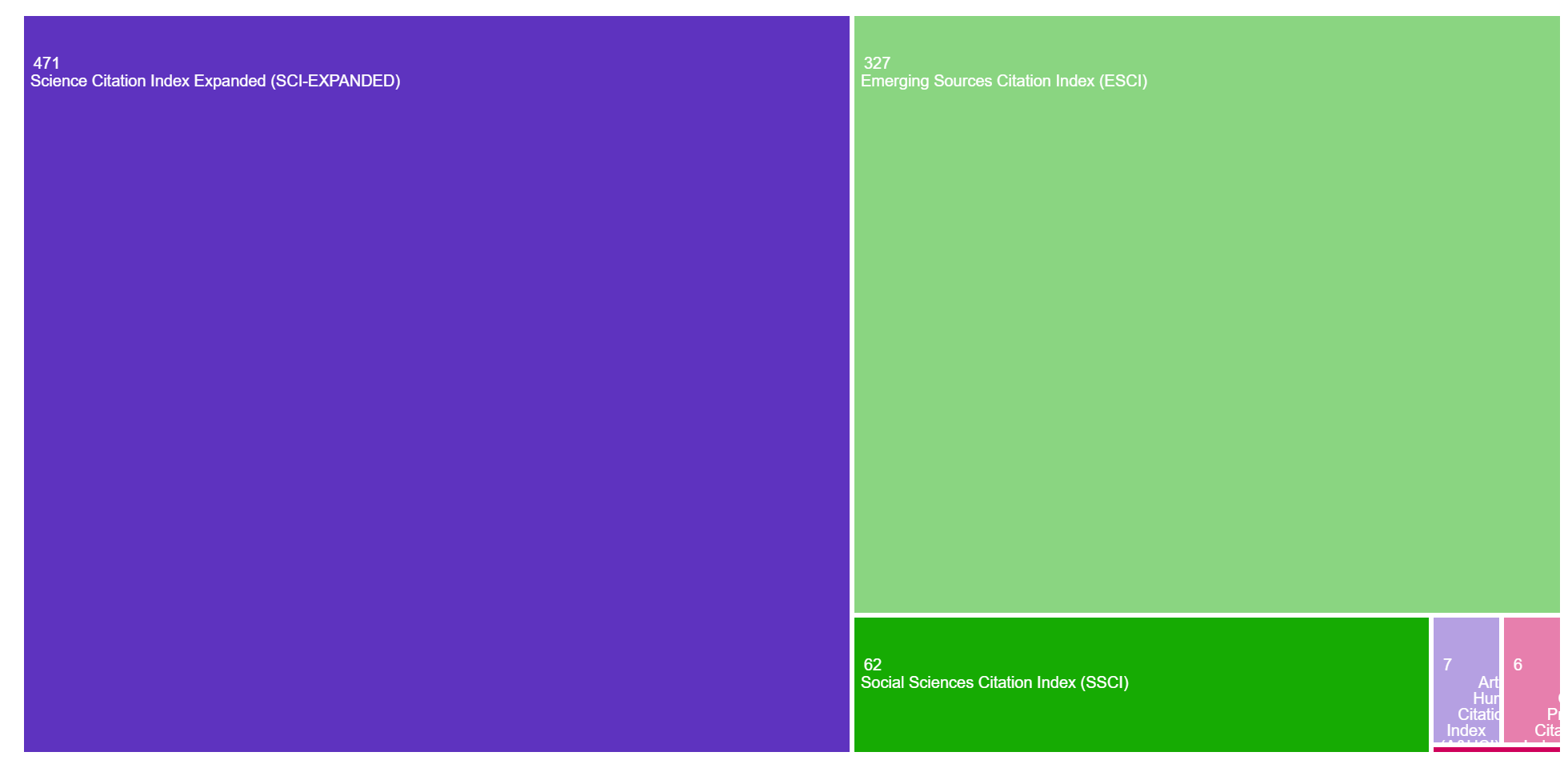
Web of Science Index:
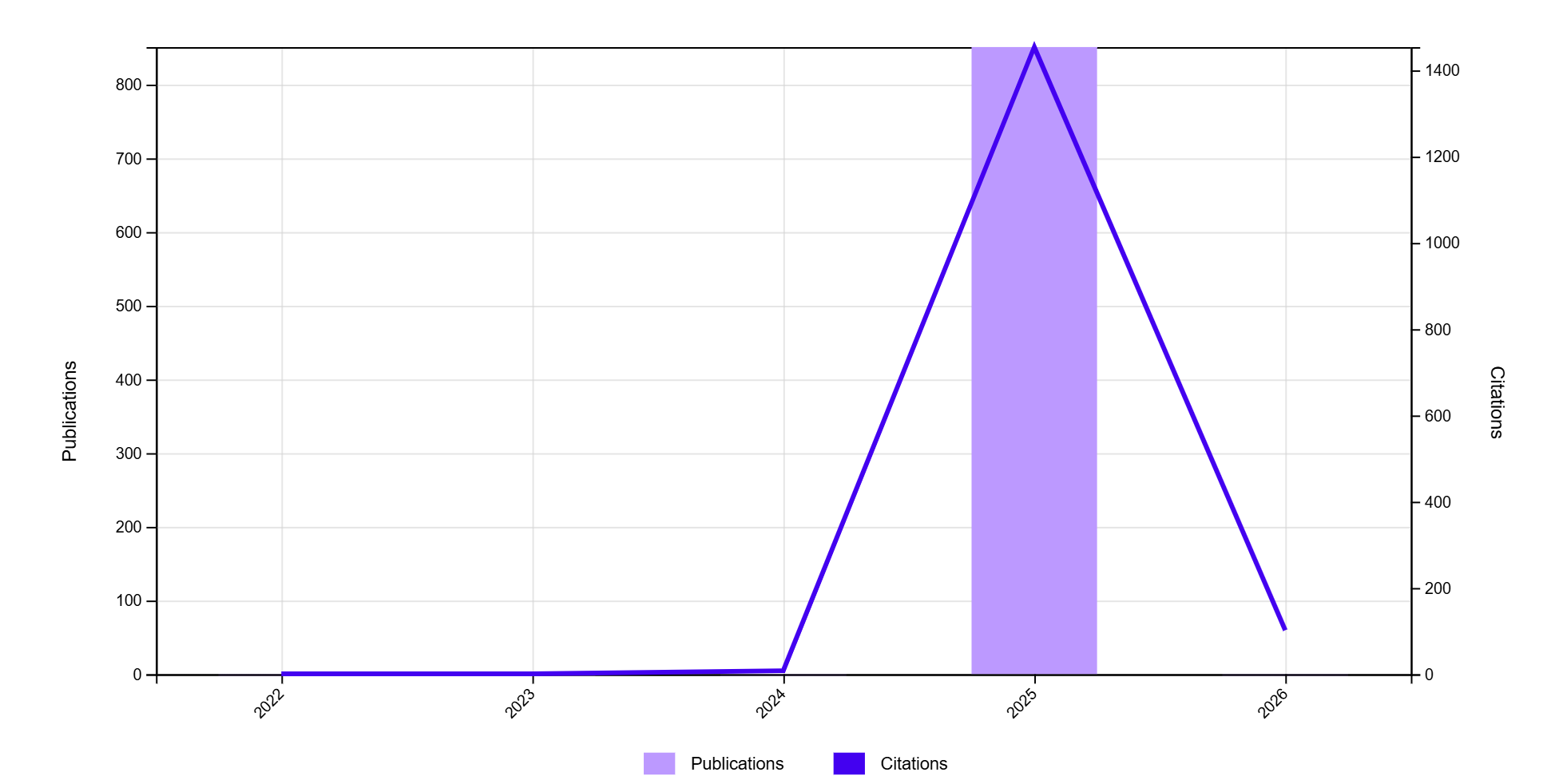
Research highlights of Daffodil International University:
| Type | Result |
|---|---|
| Review Article | 99 |
| Early Access | 71 |
| Open Access | 536 |
| Enriched Cited References | 428 |
| Open publisher-invited reviews | 6 |
Citation Index:
Publishers:
| Publisher | Record Count | % of 851 |
|---|---|---|
| Elsevier | 252 | 29.612% |
| Springer Nature | 116 | 13.631% |
| Wiley | 93 | 10.928% |
| Emerald Group Publishing | 37 | 4.348% |
| NATURE PORTFOLIO | 34 | 3.995% |
| Taylor & Francis | 34 | 3.995% |
| IEEE | 25 | 2.938% |
| MDPI | 24 | 2.820% |
| Public Library of Science | 24 | 2.820% |
| Bentham Science Publ Ltd | 19 | 2.233% |
| Lippincott Williams & Wilkins | 19 | 2.233% |
| SAGE | 18 | 2.115% |
| Royal Society of Chemistry | 14 | 1.645% |
| Ibn Sina Trust | 13 | 1.528% |
| Wolters Kluwer Medknow Publications | 12 | 1.410% |
| Frontiers Media SA | 9 | 1.058% |
| Korean Nuclear Society | 8 | 0.940% |
| IOP Publishing Ltd | 6 | 0.705% |
| Oxford University Press | 6 | 0.705% |
| American Chemical Society | 5 | 0.588% |
| North Carolina State Univ Dept Wood & Paper Science | 5 | 0.588% |
| BMJ Publishing Group | 4 | 0.470% |
| Humana Press Inc | 3 | 0.353% |
| KeAi Publishing Ltd | 3 | 0.353% |
| Optica Publishing Group | 3 | 0.353% |
Observations:
-
High National Contribution: All 851 publications in the dataset are affiliated with Bangladesh, showing that Daffodil International University’s research in Web of Science journals in 2025 is strongly rooted in its home country’s academic and scientific landscape.
-
Dominance of Articles: The majority of publications are original Articles (83.5%), with smaller proportions of Review Articles (11.6%) and Early Access entries (8.3%), indicating a focus on primary research outputs.
-
Diverse Collaborations and Categories: Research spans multidisciplinary sciences, environmental sciences, pharmacology, and nuclear science technology, among others, reflecting interdisciplinary interests and international collaborator involvement (e.g., Malaysia, Saudi Arabia, USA).
Questions:
-
What are the principal research themes or topics driving the high volume of multidisciplinary science publications from DIU in 2025?
-
How does DIU’s citation impact compare to regional and global benchmarks for universities with similar research output?
-
What strategies has DIU employed to engage international co-authors, particularly from countries like Malaysia, Saudi Arabia, and the USA?
The 2025 Web of Science indexed output for Daffodil International University highlights a strong commitment to producing original research with international collaboration. The breadth of subject categories and global co-authorship suggests DIU is enhancing its research visibility beyond national borders. Continued focus on high-impact journals and strategic partnerships could further elevate its academic standing.

For more info: https://research.daffodilvarsity.edu.bd/scopus-article