

In 2024, IFST (Institute of Food Science & Technology) produced 49 research articles indexed in Web of Science, with a strong national focus (Bangladesh, 100%). Publications predominantly fall under Food Science Technology (34.7%) and Multidisciplinary Sciences (18.4%). Elsevier emerged as the leading publisher (59.2%), while all outputs were classified as articles. A significant portion of the work (59.2%) appeared in the Science Citation Index Expanded, with the remainder in ESCI. Key contributors included Bhuiyan, Mohammad Nuruzzaman (20.4%) and Uddin, Md Naizm (14.3%).
The areas of research publication categories in the TreeMap:
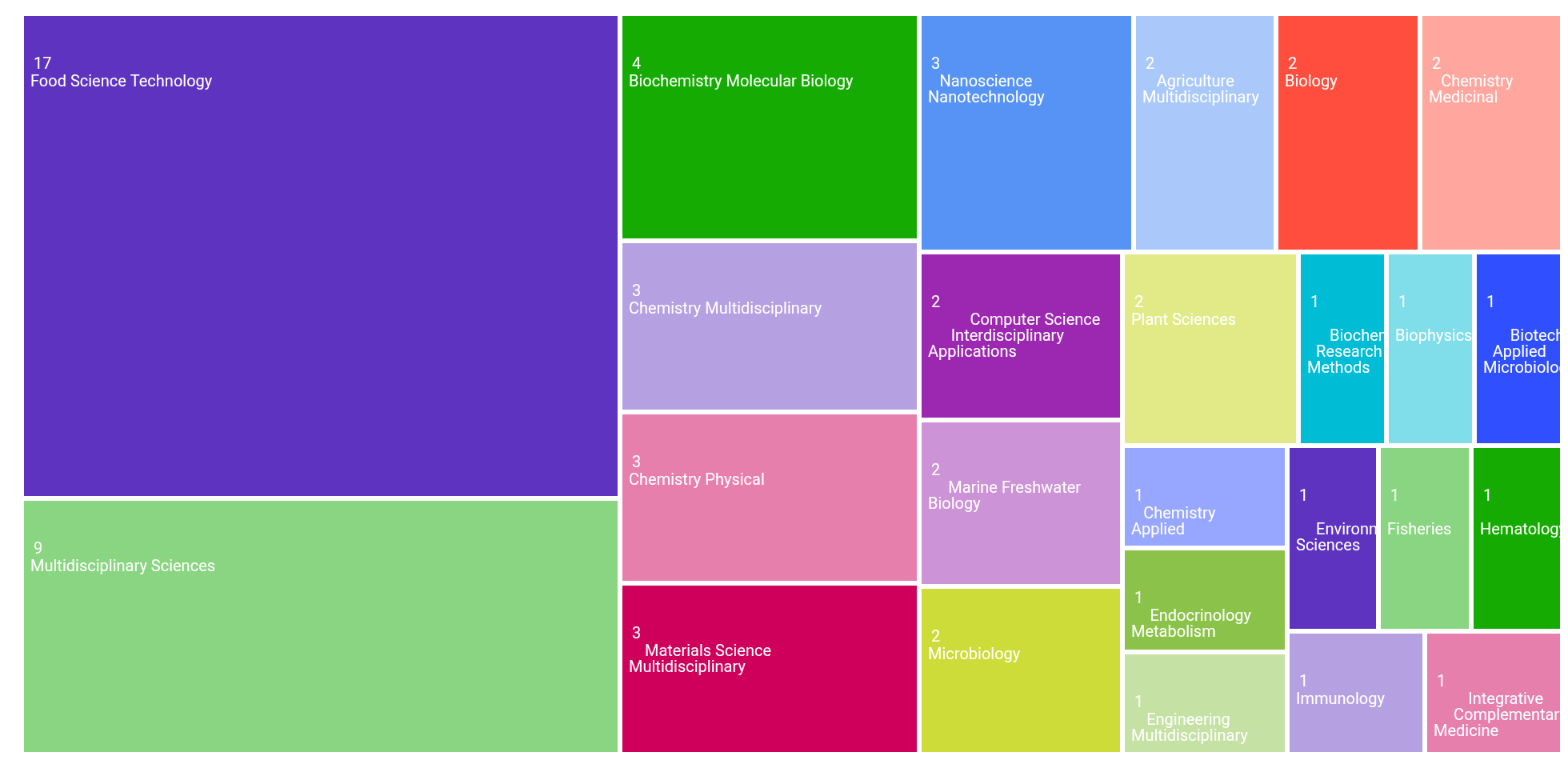
Research contributions in the field (25):
| Categories | Record Count | % of 49 |
|---|---|---|
| Food Science Technology | 17 | 34.694% |
| Multidisciplinary Sciences | 9 | 18.367% |
| Biochemistry Molecular Biology | 4 | 8.163% |
| Chemistry Multidisciplinary | 3 | 6.122% |
| Chemistry Physical | 3 | 6.122% |
| Materials Science Multidisciplinary | 3 | 6.122% |
| Nanoscience Nanotechnology | 3 | 6.122% |
| Agriculture Multidisciplinary | 2 | 4.082% |
| Biology | 2 | 4.082% |
| Chemistry Medicinal | 2 | 4.082% |
| Computer Science Interdisciplinary Applications | 2 | 4.082% |
| Marine Freshwater Biology | 2 | 4.082% |
| Microbiology | 2 | 4.082% |
| Plant Sciences | 2 | 4.082% |
| Biochemical Research Methods | 1 | 2.041% |
| Biophysics | 1 | 2.041% |
| Biotechnology Applied Microbiology | 1 | 2.041% |
| Chemistry Applied | 1 | 2.041% |
| Endocrinology Metabolism | 1 | 2.041% |
| Engineering Multidisciplinary | 1 | 2.041% |
| Environmental Sciences | 1 | 2.041% |
| Fisheries | 1 | 2.041% |
| Hematology | 1 | 2.041% |
| Immunology | 1 | 2.041% |
| Integrative Complementary Medicine | 1 | 2.041% |
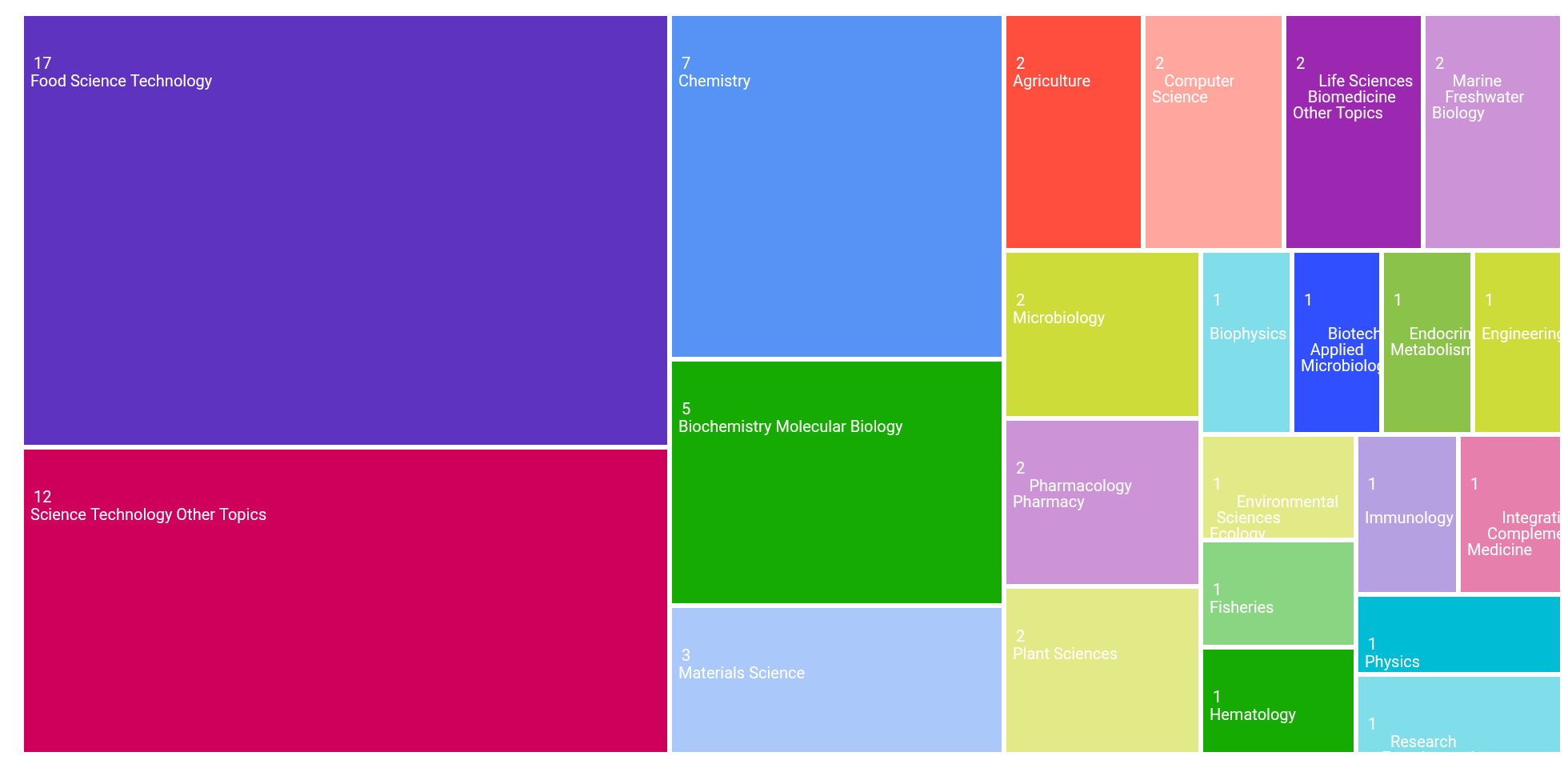
Research areas:
Types of published documents:
| Types | Record Count | % of 49 |
|---|---|---|
| Article | 49 | 100.000% |
Authors’ infographic:
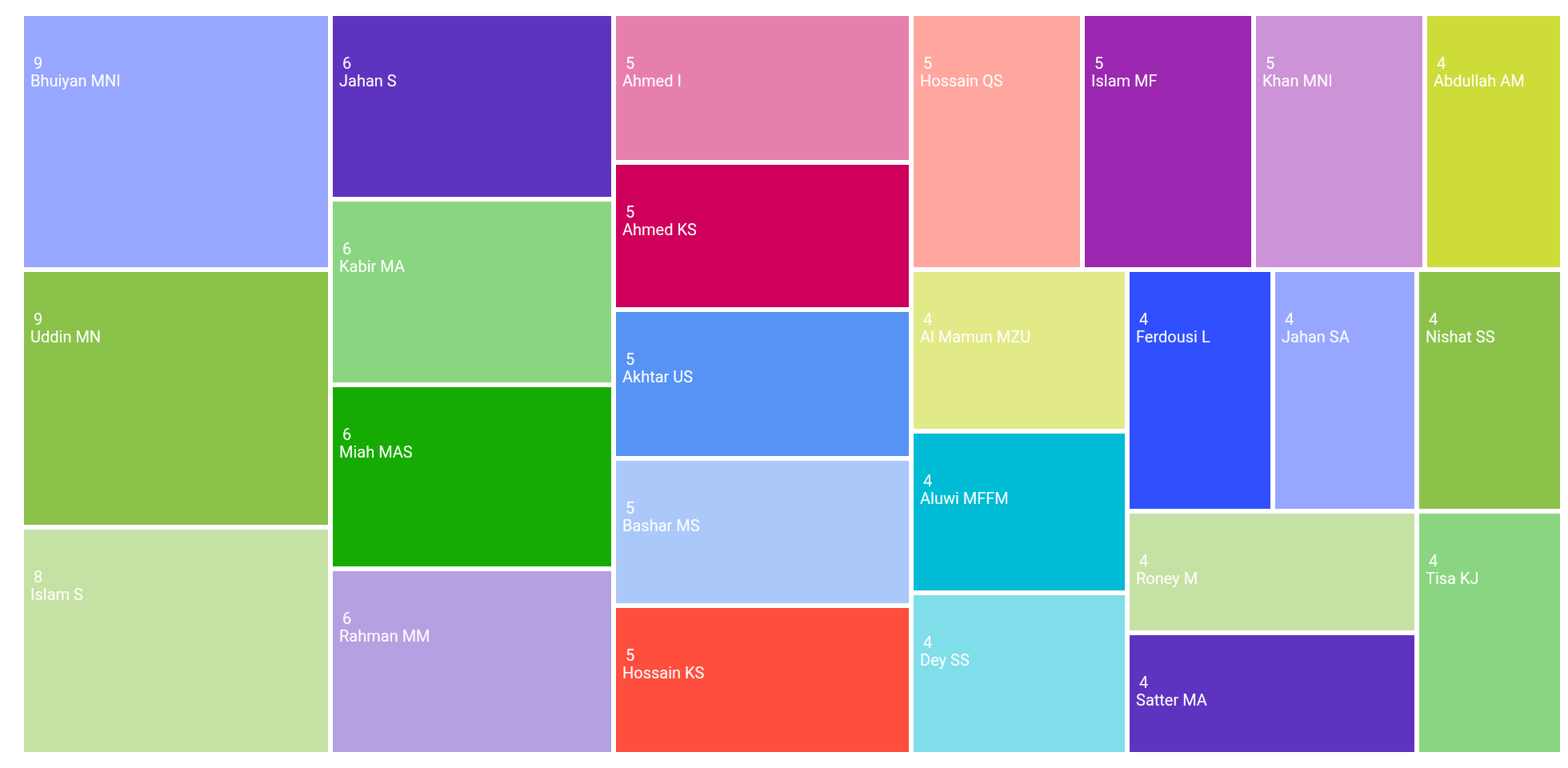
Researcher profiles:
| Researcher | Record Count | % of 49 |
|---|---|---|
| Bhuiyan, Mohammad Nuruzzaman | 10 | 20.408% |
| Uddin, Md Naizm | 7 | 14.286% |
| Islam, Shariful | 7 | 14.286% |
| Akhtar, Umme Sarmeen | 5 | 10.204% |
| Hossain, Khandker Saadat | 5 | 10.204% |
| Khan, M. N. I. | 5 | 10.204% |
| Bashar, M. S. | 5 | 10.204% |
| Hossain, Quazi Shafayat | 5 | 10.204% |
| Miah, Md. Abdus Satter | 5 | 10.204% |
| Islam, Md. Faridul | 5 | 10.204% |
| Ahmed, Imtiaz | 5 | 10.204% |
| Yeasmin, Mst Sarmina | 4 | 8.163% |
| Abdullah, Abu Tareq Mohammad | 4 | 8.163% |
| Kabir, Md. Alamgir | 4 | 8.163% |
| Nishat, Sadiq Shahriyar | 4 | 8.163% |
| Roney, Miah | 4 | 8.163% |
| Al Mamun, Md. | 4 | 8.163% |
| Jahan, Shirin Akter | 4 | 8.163% |
| Tisa, K | 4 | 8.163% |
| Dey, Subarna Sandhani | 4 | 8.163% |
| Shahin, Khondoker | 4 | 8.163% |
| Uddin, Md. Jasim | 4 | 8.163% |
| Ferdousi, Lailatul | 4 | 8.163% |
| Aluwi, Mohd Fadhlizil Fasihi Mohd | 4 | 8.163% |
| Siddique, Md. Abu Bakar | 3 | 6.122% |
Research affiliations of IFST with other institutes:
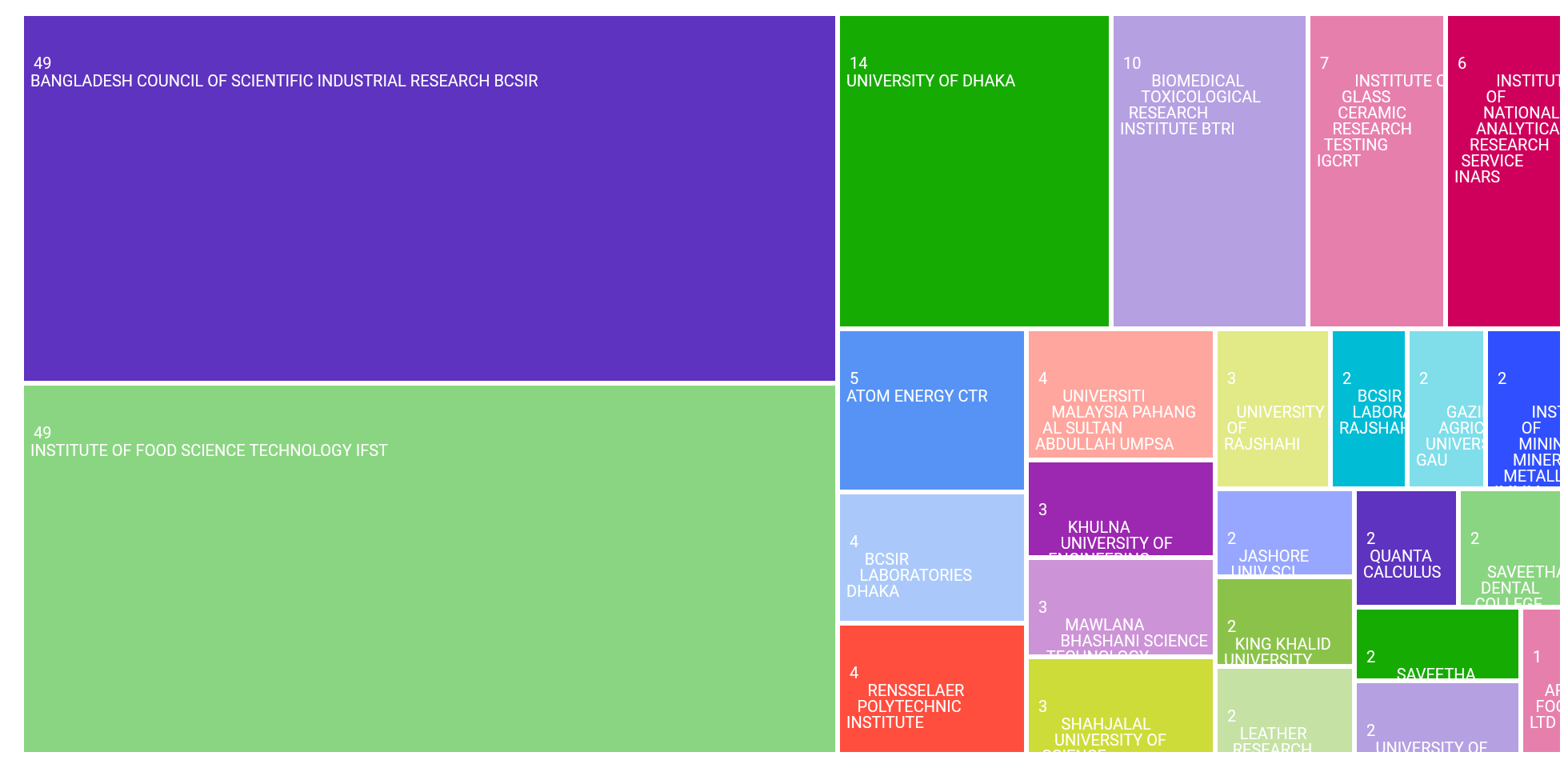
Research collaboration countries (25):
| Countries | Record Count | % of 49 |
|---|---|---|
| Bangladesh | 49 | 100.000% |
| Malaysia | 5 | 10.204% |
| USA | 5 | 10.204% |
| Saudi Arabia | 4 | 8.163% |
| India | 2 | 4.082% |
| Australia | 1 | 2.041% |
| Canada | 1 | 2.041% |
| Indonesia | 1 | 2.041% |
| Peoples R China | 1 | 2.041% |
| South Africa | 1 | 2.041% |
| South Korea | 1 | 2.041% |
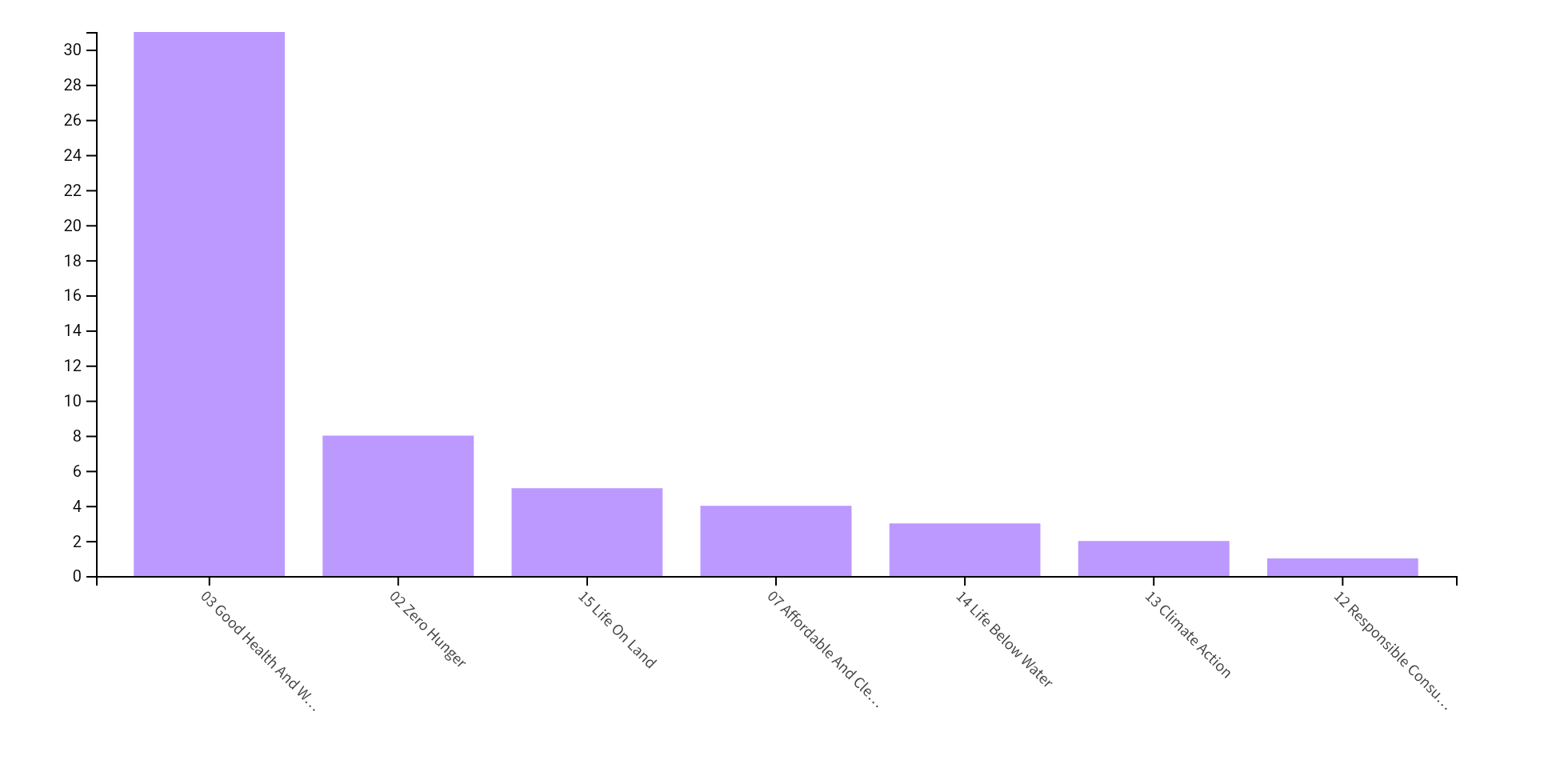
Sustainable Development Goals:
The publishers:
| Publishers | Record Count | % of 49 |
|---|---|---|
| Elsevier | 29 | 59.184% |
| Springer Nature | 6 | 12.245% |
| Amer Chemical Soc | 4 | 8.163% |
| Public Library Science | 2 | 4.082% |
| Taylor & Francis | 2 | 4.082% |
| Wiley | 2 | 4.082% |
| AIP Publishing | 1 | 2.041% |
| Bangladesh Botanical Soc | 1 | 2.041% |
| Dr M N Khan | 1 | 2.041% |
| Japan Oil Chemists Soc | 1 | 2.041% |
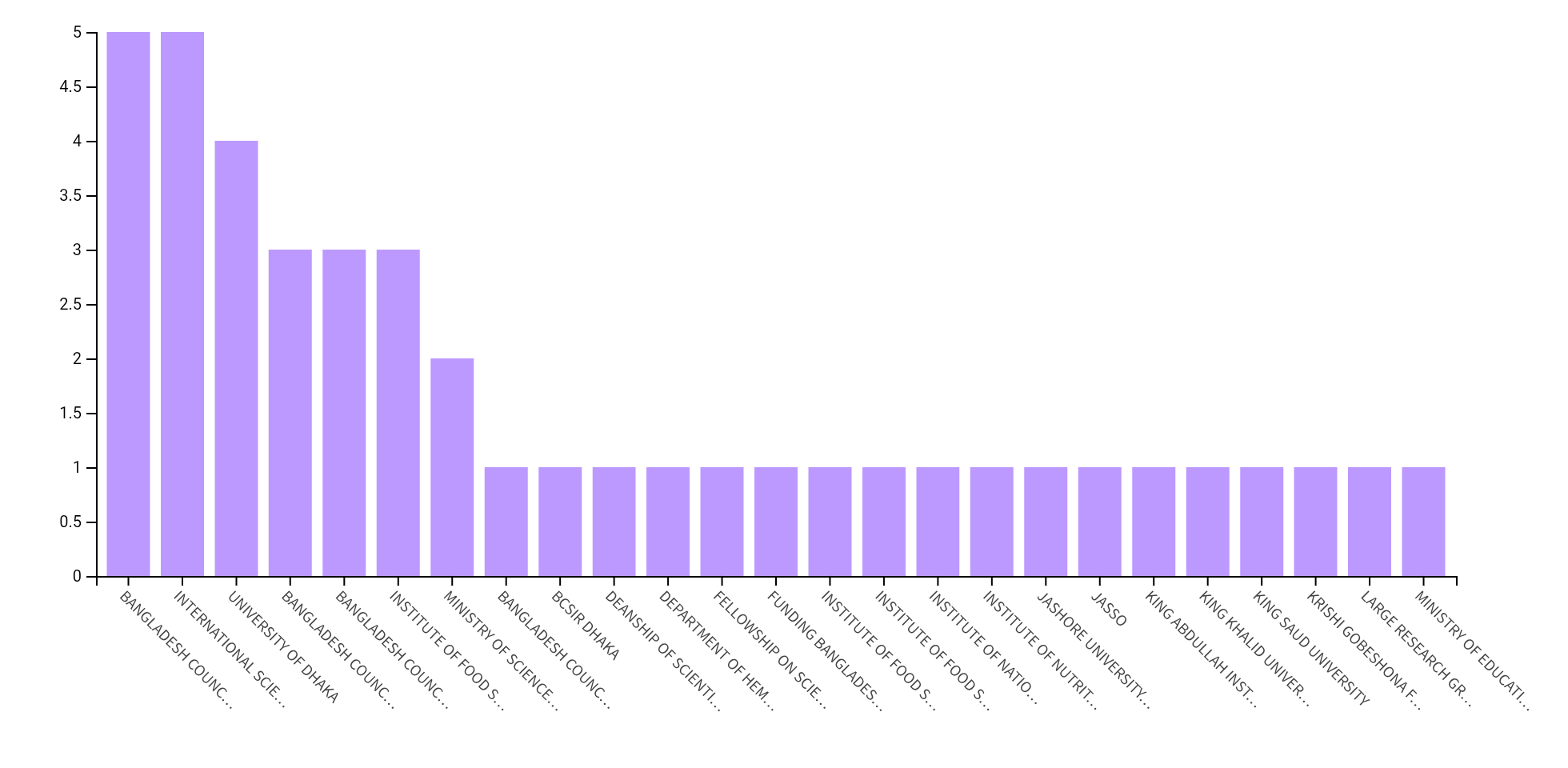
Funding Agencies:
Web of Science Index:
| Index | Record Count | % of 49 |
|---|---|---|
| Science Citation Index Expanded (SCI-EXPANDED) | 29 | 59.184% |
| Emerging Sources Citation Index (ESCI) | 20 | 40.816% |
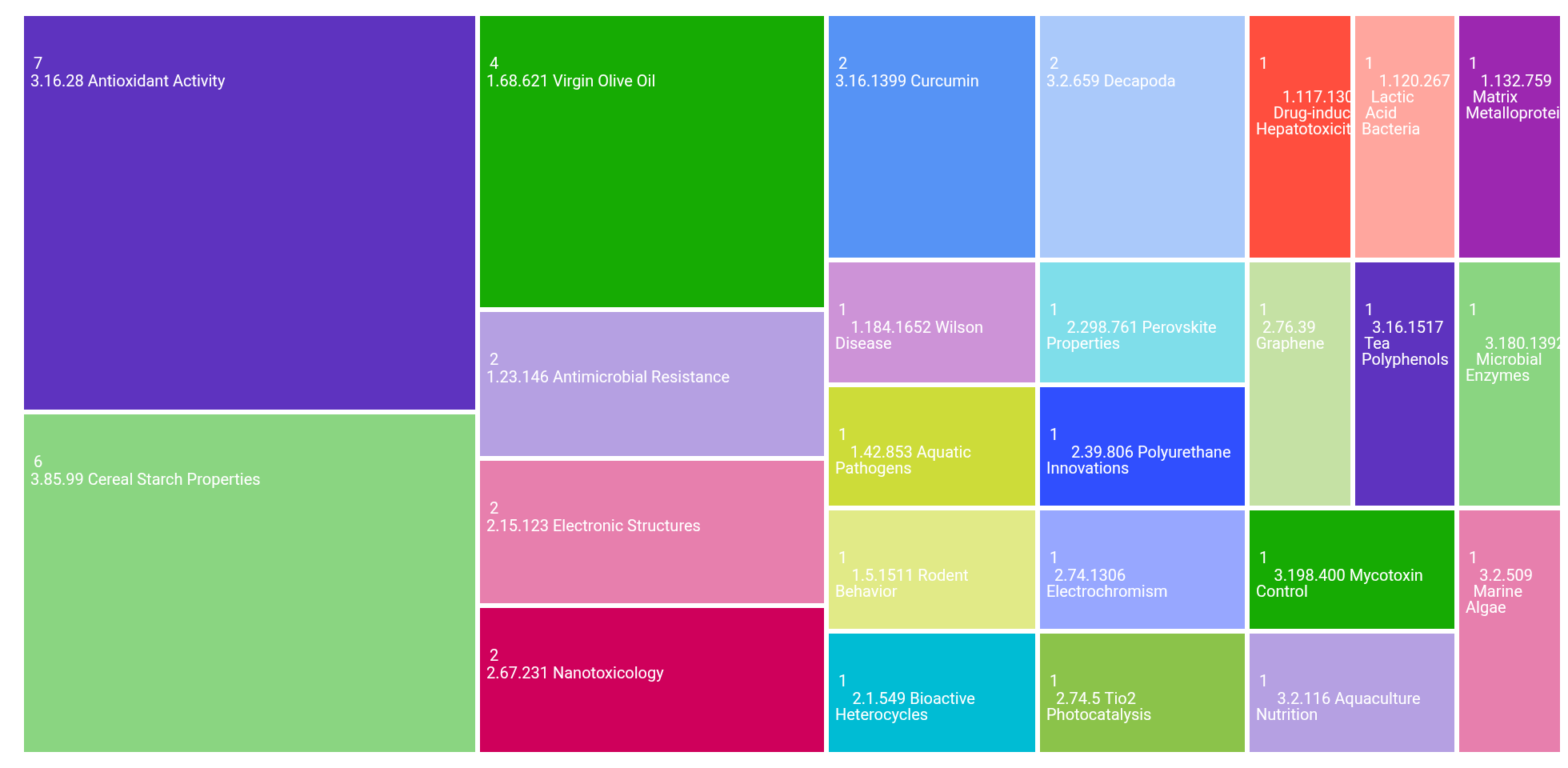
Citation topics micro:
Research highlights of IFST:
| Category | Count |
|---|---|
| Open Access | 31 |
| Enriched Cited References | 25 |
Observations:
1. Research is heavily concentrated in Food Science Technology, reflecting the institute’s core focus.
2. All publications are in article format, indicating a preference for original research outputs.
3. Collaboration appears limited internationally, with Bangladesh dominating the author affiliations.
Questions:
1. What strategies could IFST adopt to increase international collaborations?
2. How does the citation impact of SCI-indexed vs. ESCI-indexed articles compare?
3. Are there efforts to diversify research topics beyond food science?
IFST shows strong productivity in its core field, but international visibility and topic diversity could be enhanced to increase global impact.