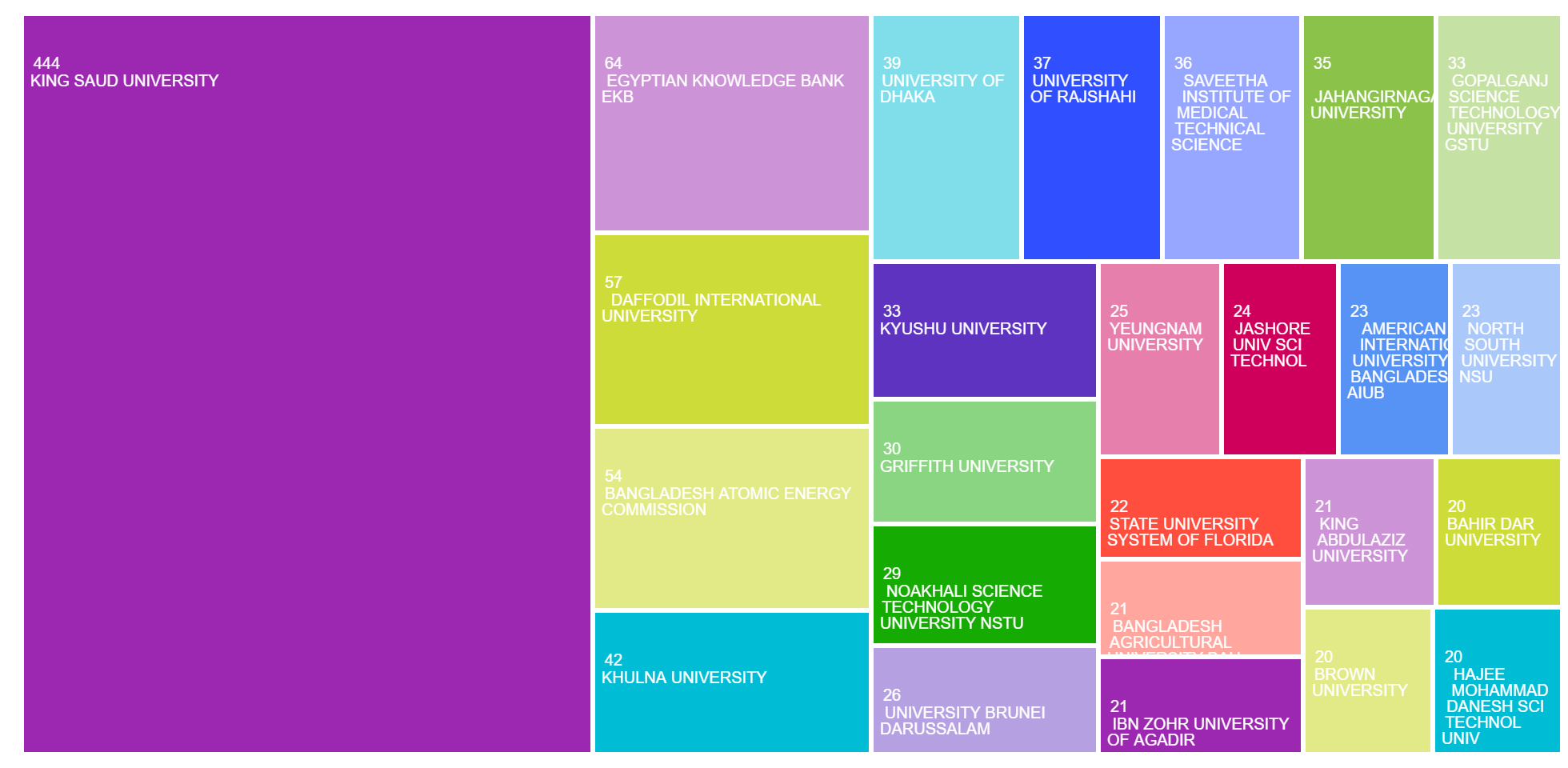
In 2024, research publications indexed in the Web of Science that involved Bangladeshi contributions showed a remarkably strong collaboration with King Saud University, with all 444 records listing King Saud University as an affiliated institution, underscoring it as the most significant single university partner. Bangladeshi scholars dominated the authorship landscape, while King Saud University’s universal presence in the affiliation data suggests extensive co‑authorship or co‑supervision across disciplines. The majority of these outputs were traditional research articles (96.85%), and key subject areas included multidisciplinary sciences, chemistry, and environmental sciences, reflecting a broad interdisciplinary engagement. This collaborative pattern highlights both the volume and diversity of research activities linked to Bangladeshi researchers and King Saud University. The partnership spanned contributions from prominent authors like Hossain, M. Khalid, and Siddique Akber Ansari, with geographical ties extending to numerous countries beyond Saudi Arabia and Bangladesh, including India, the USA, and Australia. Overall, the data suggest a highly productive and globally interconnected research network with King Saud University at its collaborative core for Bangladeshi scholars in 2024. Web of Science
The areas of research publication categories in the TreeMap:
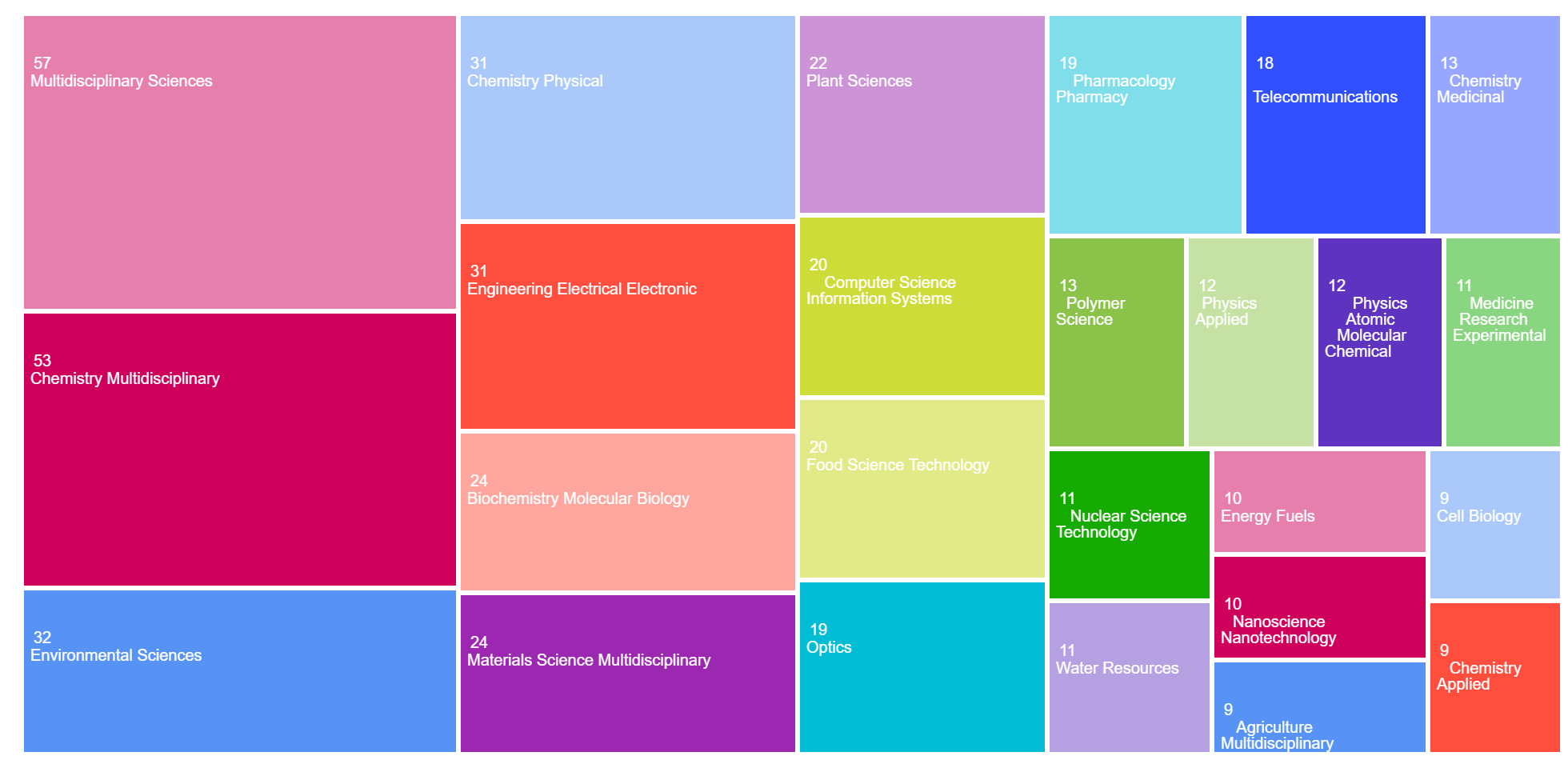
Research contributions in the field:
| Categories | Record Count | % of 444 |
|---|---|---|
| Multidisciplinary Sciences | 57 | 12.838% |
| Chemistry Multidisciplinary | 53 | 11.937% |
| Environmental Sciences | 32 | 7.207% |
| Chemistry Physical | 31 | 6.982% |
| Engineering Electrical Electronic | 31 | 6.982% |
| Biochemistry Molecular Biology | 24 | 5.405% |
| Materials Science Multidisciplinary | 24 | 5.405% |
| Plant Sciences | 22 | 4.955% |
| Computer Science Information Systems | 20 | 4.505% |
| Food Science Technology | 20 | 4.505% |
| Optics | 19 | 4.279% |
| Pharmacology Pharmacy | 19 | 4.279% |
| Telecommunications | 18 | 4.054% |
| Chemistry Medicinal | 13 | 2.928% |
| Polymer Science | 13 | 2.928% |
| Physics Applied | 12 | 2.703% |
| Physics Atomic Molecular Chemical | 12 | 2.703% |
| Medicine Research Experimental | 11 | 2.477% |
| Nuclear Science Technology | 11 | 2.477% |
| Water Resources | 11 | 2.477% |
| Energy Fuels | 10 | 2.252% |
| Nanoscience Nanotechnology | 10 | 2.252% |
| Agriculture Multidisciplinary | 9 | 2.027% |
| Cell Biology | 9 | 2.027% |
| Chemistry Applied | 9 | 2.027% |
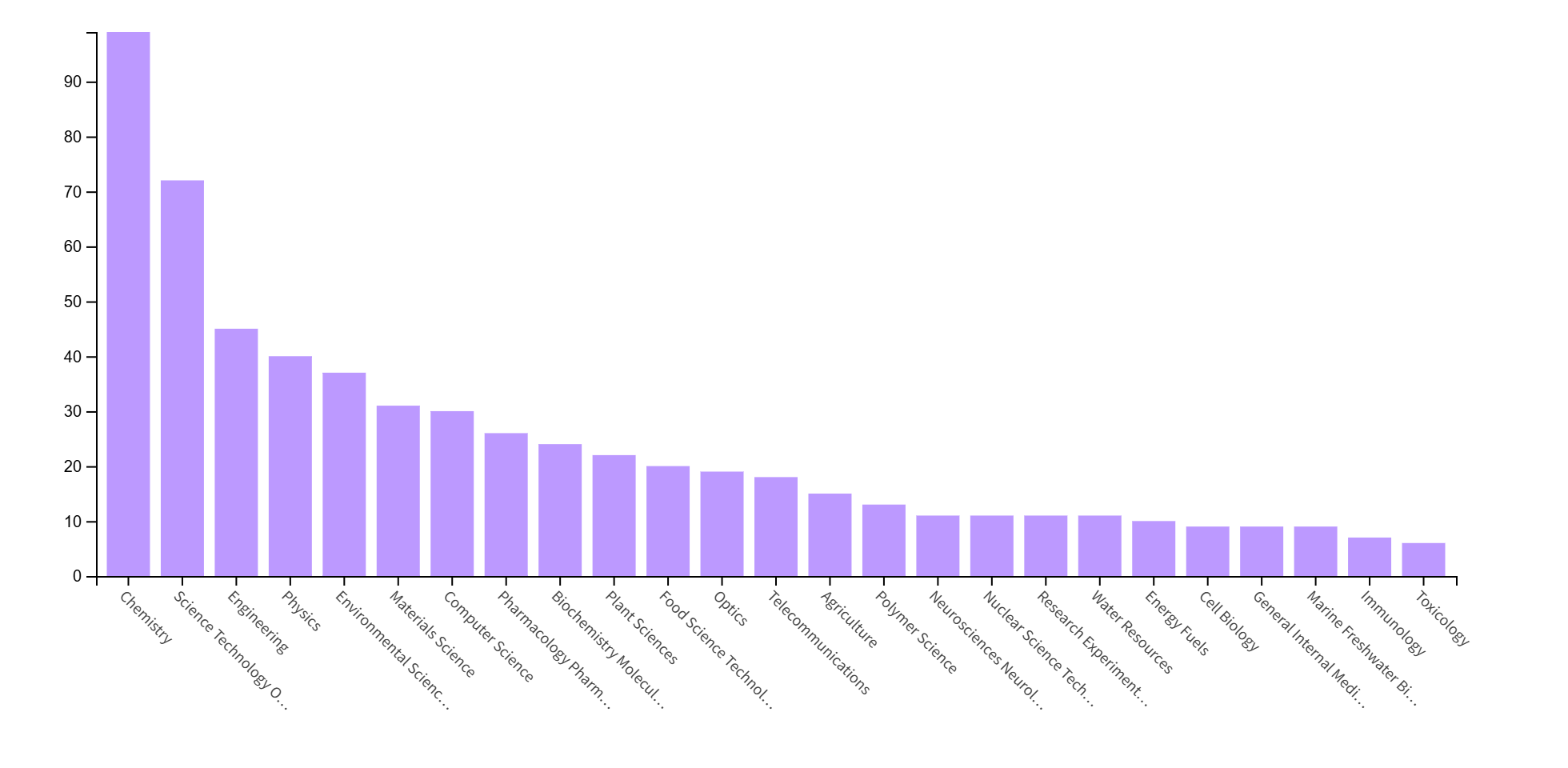
Research areas:
Types of published documents:
| Type | Record Count | % of 444 |
|---|---|---|
| Article | 430 | 96.847% |
| Early Access | 7 | 1.577% |
| Correction | 6 | 1.351% |
| Review Article | 3 | 0.676% |
| Proceeding Paper | 2 | 0.450% |
| Retracted Publication | 2 | 0.450% |
| Retraction | 2 | 0.450% |
| Editorial Material | 1 | 0.225% |
Authors’ infographic (Top 25):
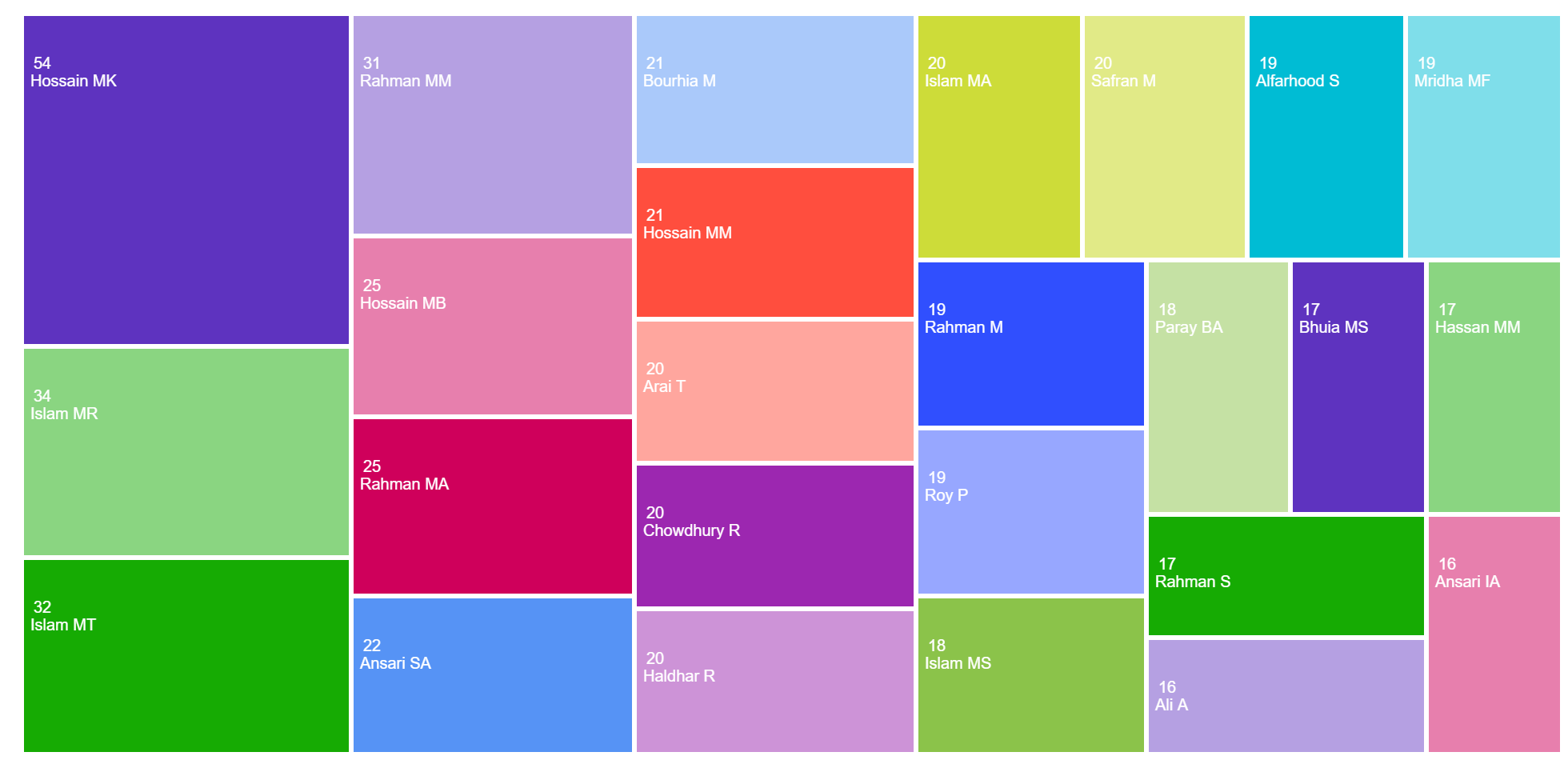
Researcher profiles (Top 25):
| Researchers | Record Count | % of 444 |
|---|---|---|
| Hossain, M. Khalid | 47 | 10.586% |
| Siddique Akber Ansari | 22 | 4.955% |
| Haldhar, Rajesh | 20 | 4.505% |
| Bourhia, Mohammed | 19 | 4.279% |
| Dr. M. F Mridha | 19 | 4.279% |
| Safran, Mejdl | 19 | 4.279% |
| Bhuia, Md. Shimul | 18 | 4.054% |
| Paray, Bilal Ahamad | 18 | 4.054% |
| Hossain, M. Belal | 16 | 3.604% |
| Emran, Talha Bin | 16 | 3.604% |
| Ansari, Irfan Aamer | 16 | 3.604% |
| Mokdad, Ali H. | 15 | 3.378% |
| Alfarhood, Sultan | 15 | 3.378% |
| Nargus, Shumaila | 15 | 3.378% |
| Goleij, Pouya | 15 | 3.378% |
| Hoque, Md. Anamul | 15 | 3.378% |
| Chowdhuury, Raihan | 15 | 3.378% |
| Krishan, Kewal | 14 | 3.153% |
| Hezam, Kamal | 14 | 3.153% |
| Mohamad-Hani Temsah | 14 | 3.153% |
| Alodhayb, Abdullah N. | 14 | 3.153% |
| Dang Nguyen | 14 | 3.153% |
| Saeed, Umar | 14 | 3.153% |
| Bustanji, Yasser | 14 | 3.153% |
| Elhadi, Muhammed | 14 | 3.153% |
Research-affiliated institutes:
Research collaboration countries:
| Country/Region | Record Count | % of 444 |
|---|---|---|
| Bangladesh | 444 | 100.000% |
| Saudi Arabia | 444 | 100.000% |
| India | 155 | 34.910% |
| USA | 147 | 33.108% |
| Australia | 77 | 17.342% |
| Japan | 77 | 17.342% |
| South Korea | 71 | 15.991% |
| Malaysia | 70 | 15.766% |
| Peoples R China | 66 | 14.865% |
| Egypt | 64 | 14.414% |
| Pakistan | 63 | 14.189% |
| Italy | 45 | 10.135% |
| Canada | 42 | 9.459% |
| Türkiye | 41 | 9.234% |
| Iraq | 40 | 9.009% |
| England | 39 | 8.784% |
| Morocco | 34 | 7.658% |
| Brazil | 32 | 7.207% |
| Brunei | 31 | 6.982% |
| Algeria | 29 | 6.532% |
| Germany | 28 | 6.306% |
| Jordan | 27 | 6.081% |
| Ethiopia | 25 | 5.631% |
| Indonesia | 25 | 5.631% |
| Mexico | 25 | 5.631% |
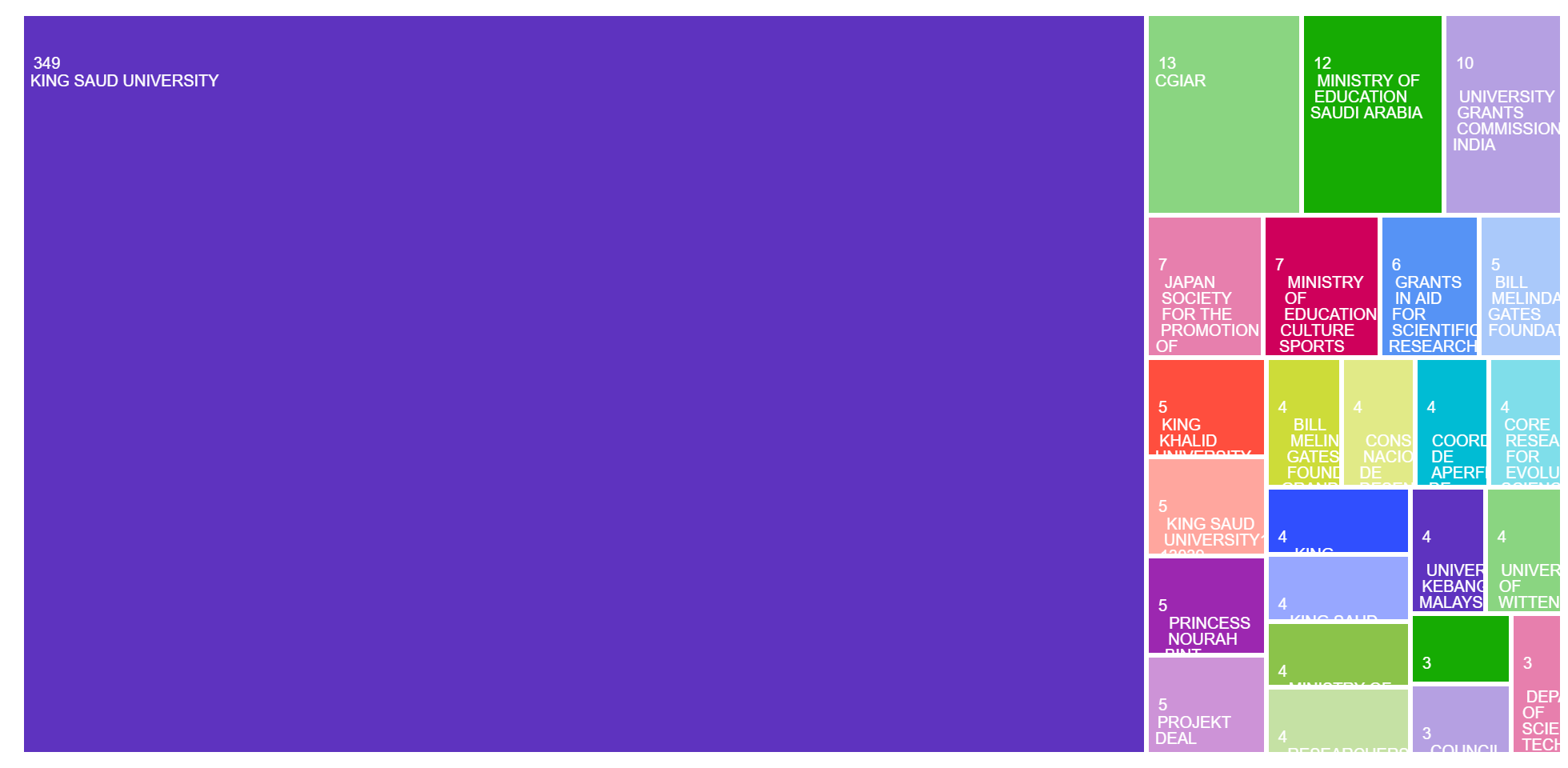
Funding Agencies:
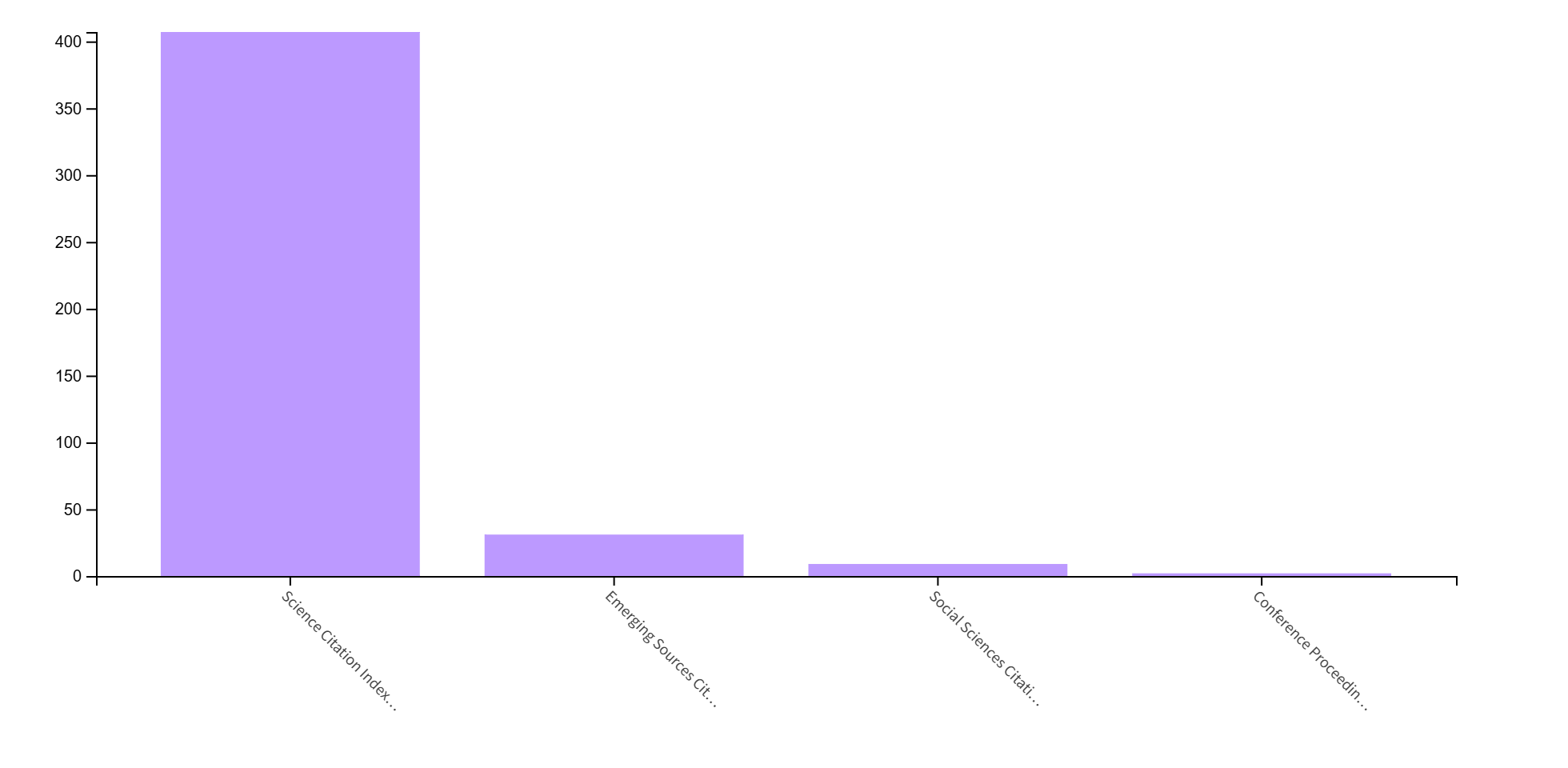
Web of Science Index:
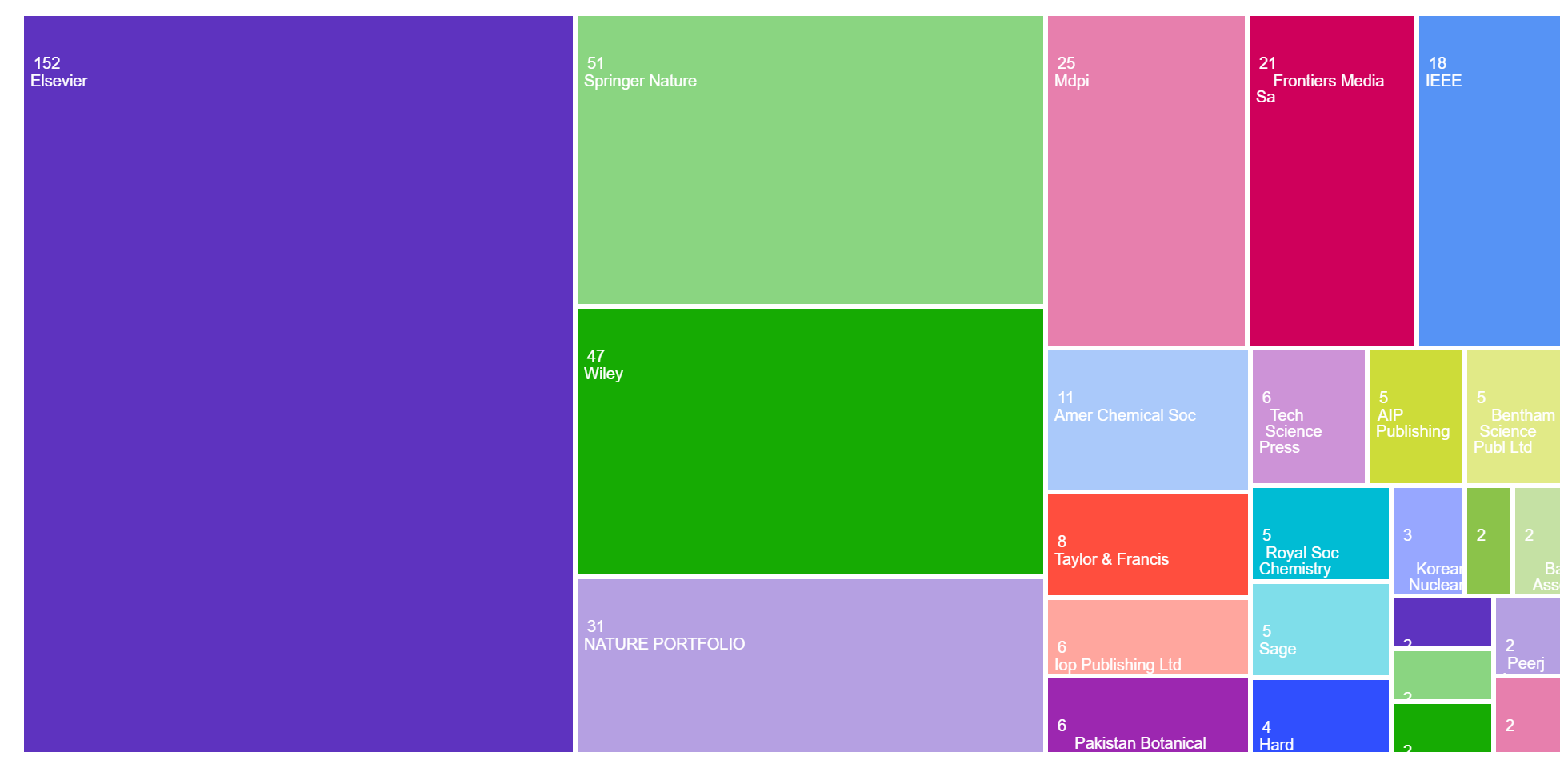
Publishers:
Research highlights from Bangladesh affiliated with King Saud University:
| Type | Result |
|---|---|
| Highly Cited Papers | 23 |
| Hot Papers | 8 |
| Review Article | 3 |
| Early Access | 7 |
| Open Access | 251 |
| Enriched Cited References | 266 |
| Open publisher-invited reviews | 1 |
Observations:
-
King Saud University appeared as an affiliation on 100% of the 444 Bangladeshi‑associated Web of Science records, indicating an unusually strong or possibly coordinated collaborative initiative.
-
The overwhelming majority of outputs were research articles (96.85%), far outweighing reviews or editorial content, suggesting a focus on primary research.
-
The research spanned diverse subject areas, with multidisciplinary sciences and chemistry being particularly prominent among the categories represented.
Questions:
-
What mechanisms or formal programs might explain why King Saud University appears on every single record involving Bangladeshi research output in 2024?
-
To what extent are these collaborations driven by joint funding, faculty exchanges, or co‑supervised graduate projects between Bangladesh and King Saud University?
-
How do the quality and citation impact of these jointly affiliated publications compare with other collaborative networks involving Bangladeshi researchers?
The complete saturation of King Saud University across all Bangladeshi‑linked Web of Science records in 2024 is striking and unusual; it suggests either an institutional reporting artifact or a very intensive structured partnership, meriting closer inquiry into the nature of this collaboration and its implications for research capacity building in Bangladesh.