
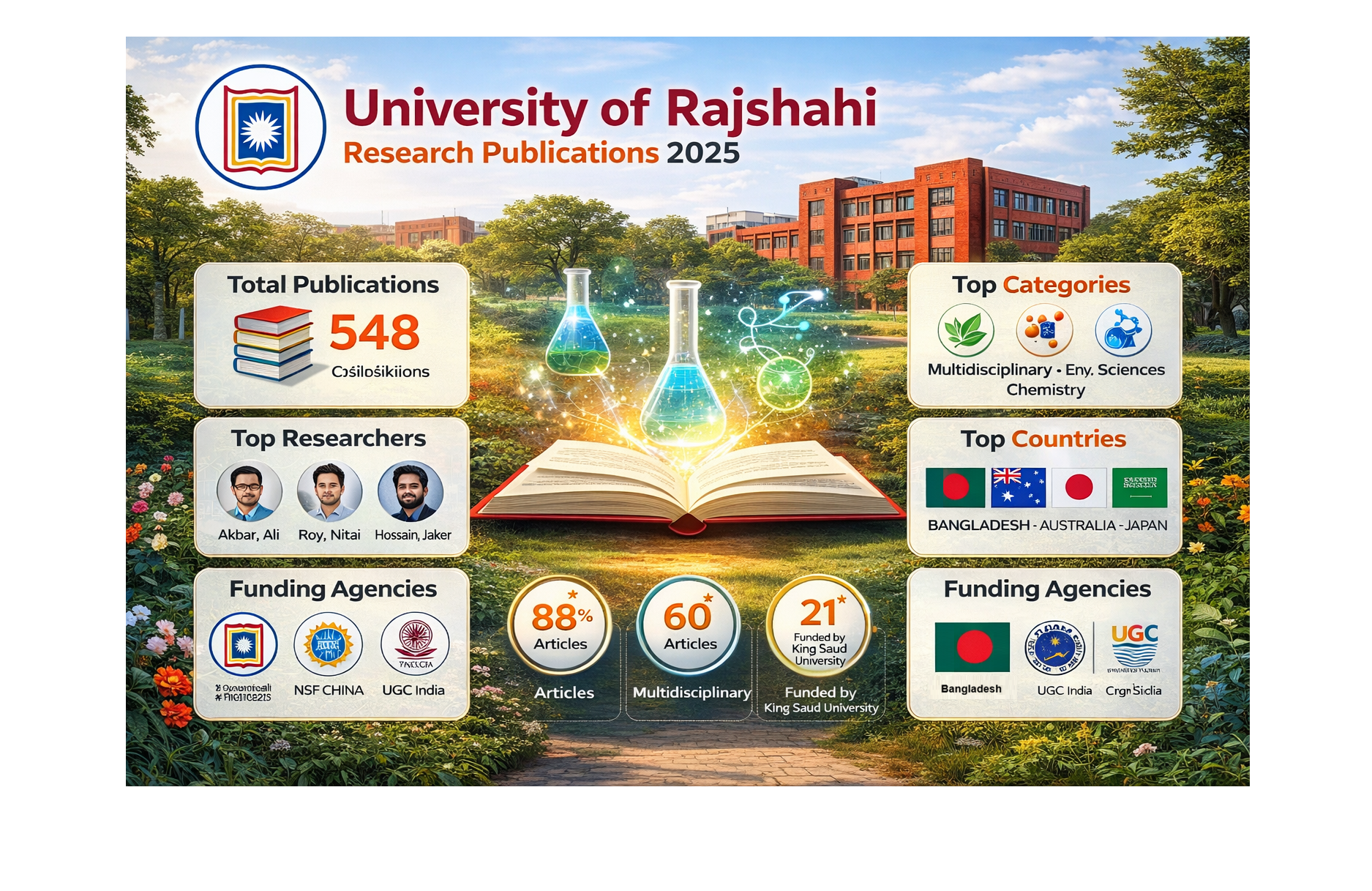
In 2025, the University of Rajshahi demonstrated a robust presence in Web of Science-indexed publications, contributing significantly to global research output with involvement across multidisciplinary and science-centric fields. The institution’s faculty and affiliated researchers appeared prominently among key authors, and the university also featured among notable funding agencies supporting scholarly work. A wide array of research categories—from environmental sciences and materials science to public health and chemistry—reflected the university’s diverse research engagement. The publication types were dominated by original articles, with review articles and early access pieces also present, and Bangladesh was the principal country of affiliation for these outputs. Funding support from the University of Rajshahi itself, alongside international and national agencies, underpinned much of this research activity, indicating both local and external investment in scholarly productivity. Web of Science
The areas of research publication categories in the TreeMap:
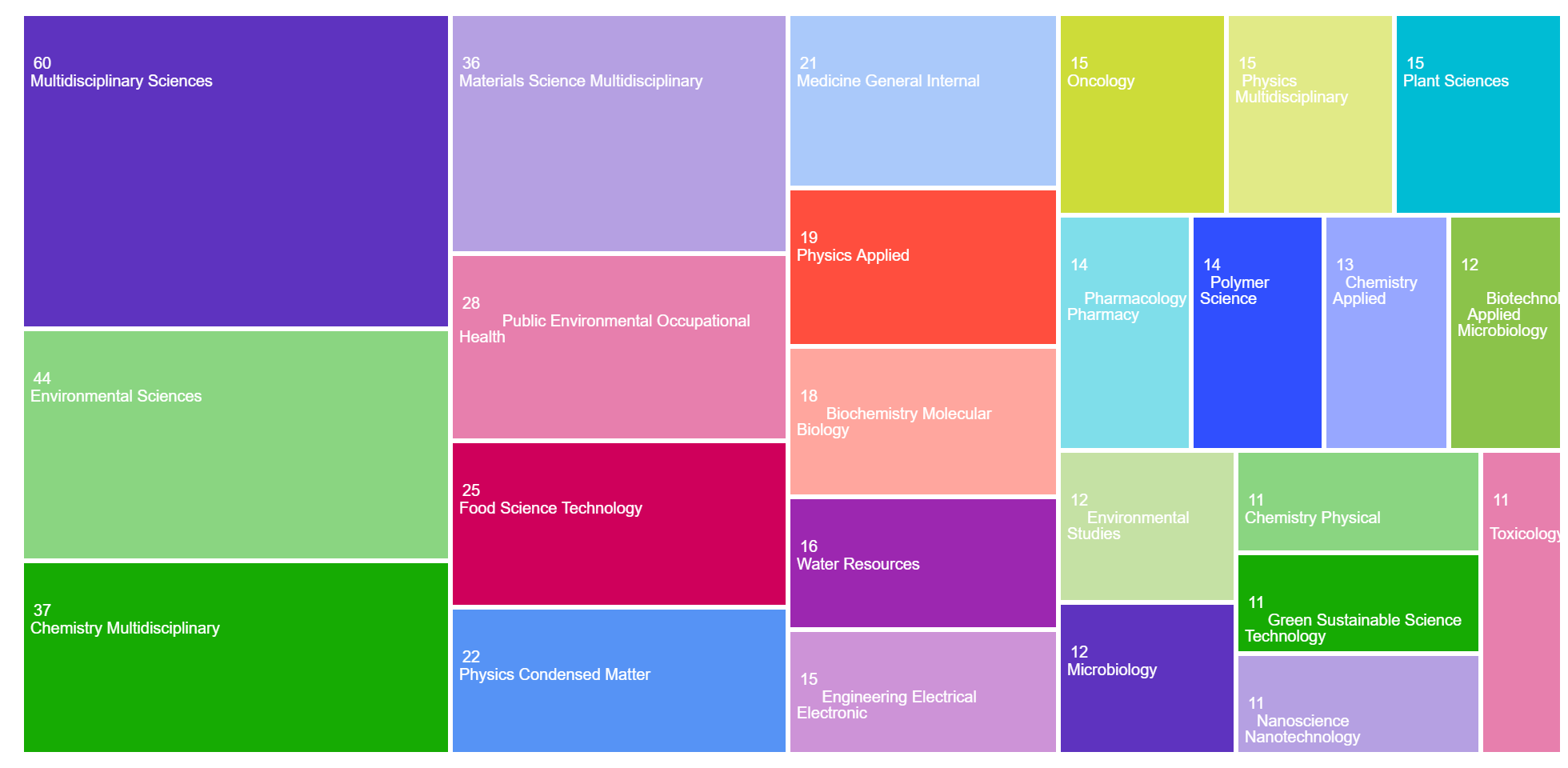
Research contributions in the field:
| Categories | Record Count | % of 548 |
|---|---|---|
| Multidisciplinary Sciences | 60 | 10.949% |
| Environmental Sciences | 44 | 8.029% |
| Chemistry Multidisciplinary | 37 | 6.752% |
| Materials Science Multidisciplinary | 36 | 6.569% |
| Public Environmental Occupational Health | 28 | 5.109% |
| Food Science Technology | 25 | 4.562% |
| Physics Condensed Matter | 22 | 4.015% |
| Medicine General Internal | 21 | 3.832% |
| Physics Applied | 19 | 3.467% |
| Biochemistry Molecular Biology | 18 | 3.285% |
| Water Resources | 16 | 2.920% |
| Engineering Electrical Electronic | 15 | 2.737% |
| Oncology | 15 | 2.737% |
| Physics Multidisciplinary | 15 | 2.737% |
| Plant Sciences | 15 | 2.737% |
| Pharmacology Pharmacy | 14 | 2.555% |
| Polymer Science | 14 | 2.555% |
| Chemistry Applied | 13 | 2.372% |
| Biotechnology Applied Microbiology | 12 | 2.190% |
| Environmental Studies | 12 | 2.190% |
| Microbiology | 12 | 2.190% |
| Chemistry Physical | 11 | 2.007% |
| Green Sustainable Science Technology | 11 | 2.007% |
| Nanoscience Nanotechnology | 11 | 2.007% |
| Toxicology | 11 | 2.007% |
Research areas:
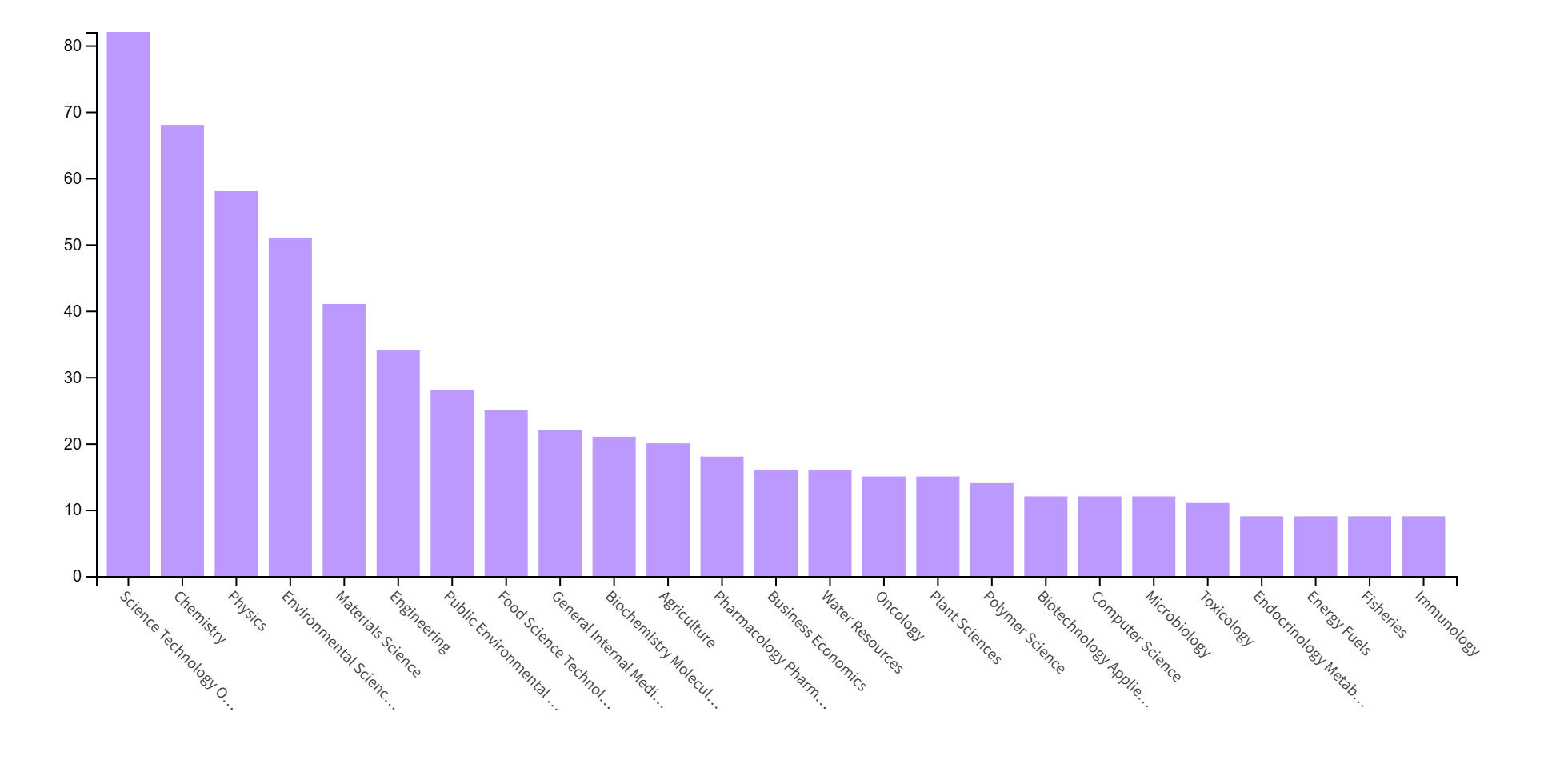
Types of published documents:
| Types | Record Count | % of 548 |
|---|---|---|
| Article | 485 | 88.504% |
| Review Article | 53 | 9.672% |
| Early Access | 39 | 7.117% |
| Correction | 4 | 0.730% |
| Editorial Material | 2 | 0.365% |
| Letter | 2 | 0.365% |
| Book Review | 1 | 0.182% |
| Data Paper | 1 | 0.182% |
| Meeting Abstract | 1 | 0.182% |
Authors’ infographic (Top 25):
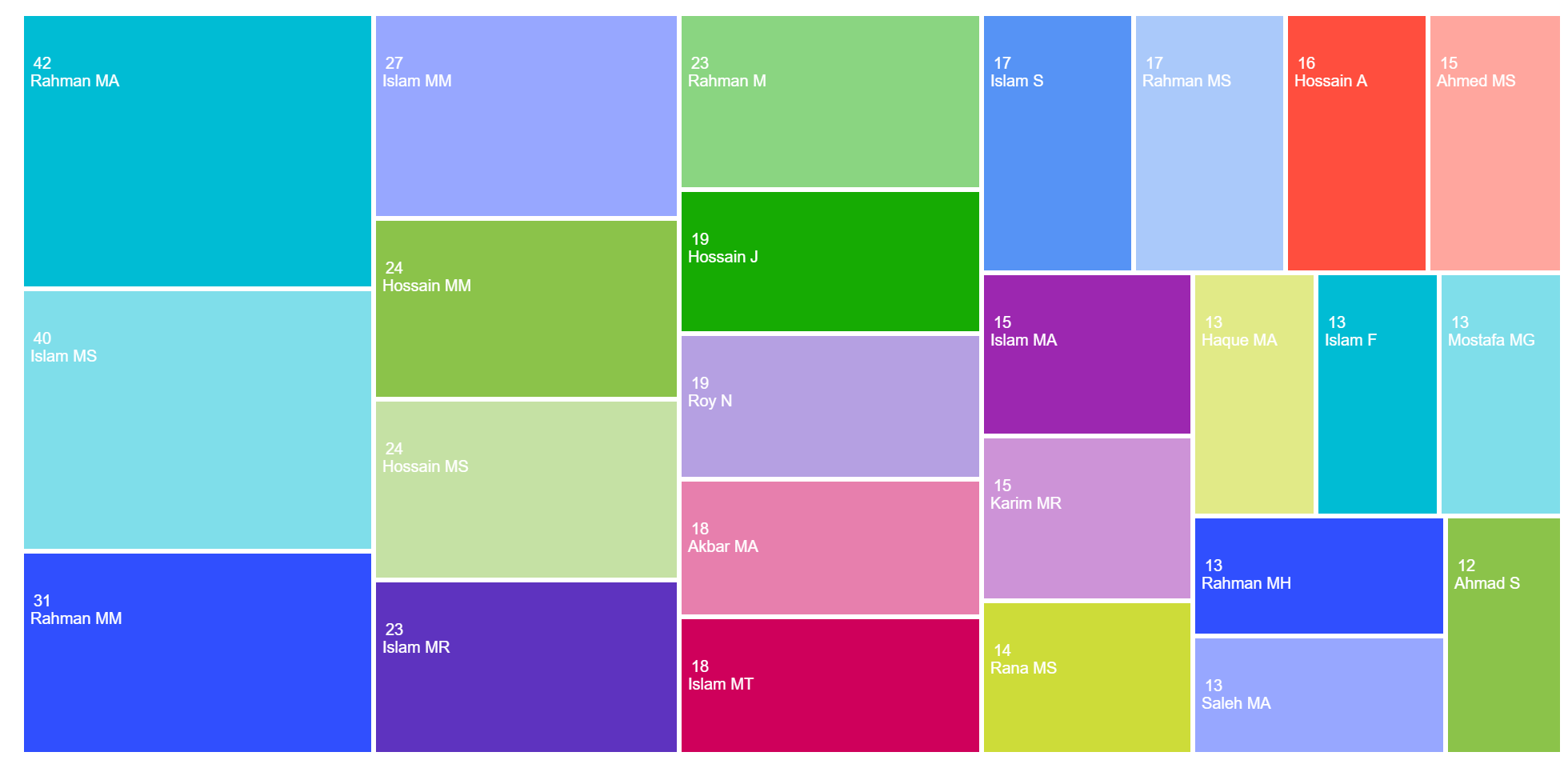
Researcher profiles (Top 25):
| Researchers | Record Count | % of 548 |
|---|---|---|
| Akbar, Prof. Ali | 18 | 3.285% |
| Roy, Nitai | 18 | 3.285% |
| Hossain, Jaker | 17 | 3.102% |
| MOLLAH, Md. Nurul Haque | 13 | 2.372% |
| Islam, Farhadul | 13 | 2.372% |
| Chattu, Vijay Kumar | 11 | 2.007% |
| Bhaskar, Sonu | 11 | 2.007% |
| Mokdad, Ali H. | 11 | 2.007% |
| Matin, M. Nurul | 11 | 2.007% |
| Joseph, Nitin | 11 | 2.007% |
| Hossain, Md Golam | 11 | 2.007% |
| Malik, Ahmad Azam | 10 | 1.825% |
| Padubidri, Jagadish Rao | 10 | 1.825% |
| Samy, Abdallah M. | 10 | 1.825% |
| Naohiro, Yonemoto | 10 | 1.825% |
| Dadras, Omid | 10 | 1.825% |
| Kulimbet, Mukhtar | 10 | 1.825% |
| Yon, Dong Keon | 10 | 1.825% |
| Saeed, Umar | 10 | 1.825% |
| Nargus, Shumaila | 10 | 1.825% |
| Areda, Demelash | 10 | 1.825% |
| Samodra, Yoseph Leonardo | 10 | 1.825% |
| Niazi, Robina Khan | 10 | 1.825% |
| Sethi, Yashendra | 10 | 1.825% |
| Shorofi, Seyed Afshin | 9 | 1.642% |
Research-affiliated institutes:
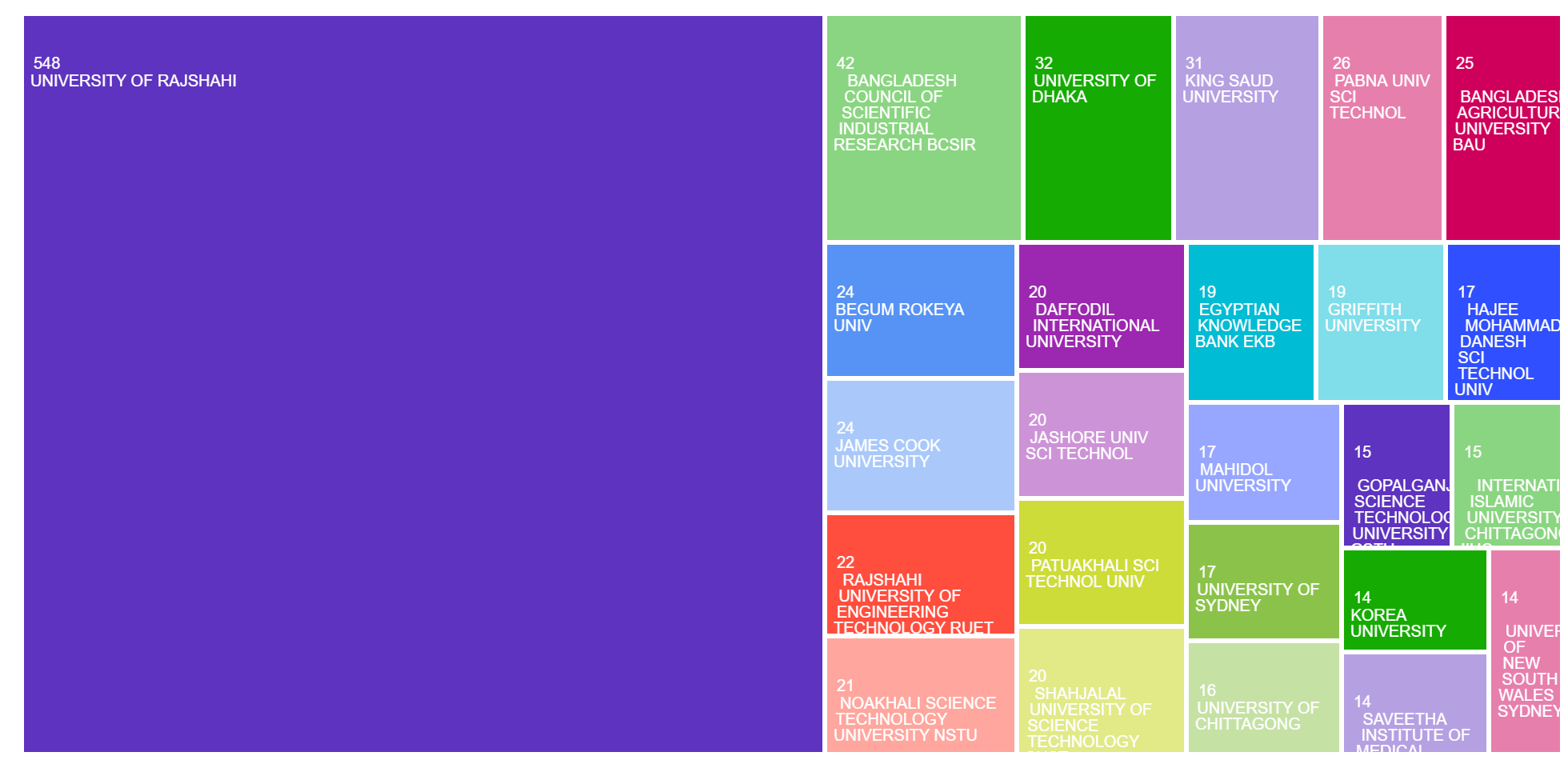
Research collaboration countries:
| Countries/Regions | Record Count | % of 548 |
|---|---|---|
| BANGLADESH | 548 | 100.000% |
| AUSTRALIA | 83 | 15.146% |
| JAPAN | 78 | 14.234% |
| SAUDI ARABIA | 71 | 12.956% |
| USA | 61 | 11.131% |
| MALAYSIA | 47 | 8.577% |
| PEOPLES R CHINA | 47 | 8.577% |
| SOUTH KOREA | 38 | 6.934% |
| INDIA | 33 | 6.022% |
| ENGLAND | 27 | 4.927% |
| THAILAND | 24 | 4.380% |
| ITALY | 21 | 3.832% |
| CANADA | 19 | 3.467% |
| EGYPT | 19 | 3.467% |
| PAKISTAN | 18 | 3.285% |
| GERMANY | 17 | 3.102% |
| INDONESIA | 17 | 3.102% |
| FINLAND | 15 | 2.737% |
| IRAN | 15 | 2.737% |
| OMAN | 15 | 2.737% |
| SPAIN | 15 | 2.737% |
| NETHERLANDS | 14 | 2.555% |
| SOUTH AFRICA | 14 | 2.555% |
| SWEDEN | 14 | 2.555% |
| TURKIYE | 14 | 2.555% |
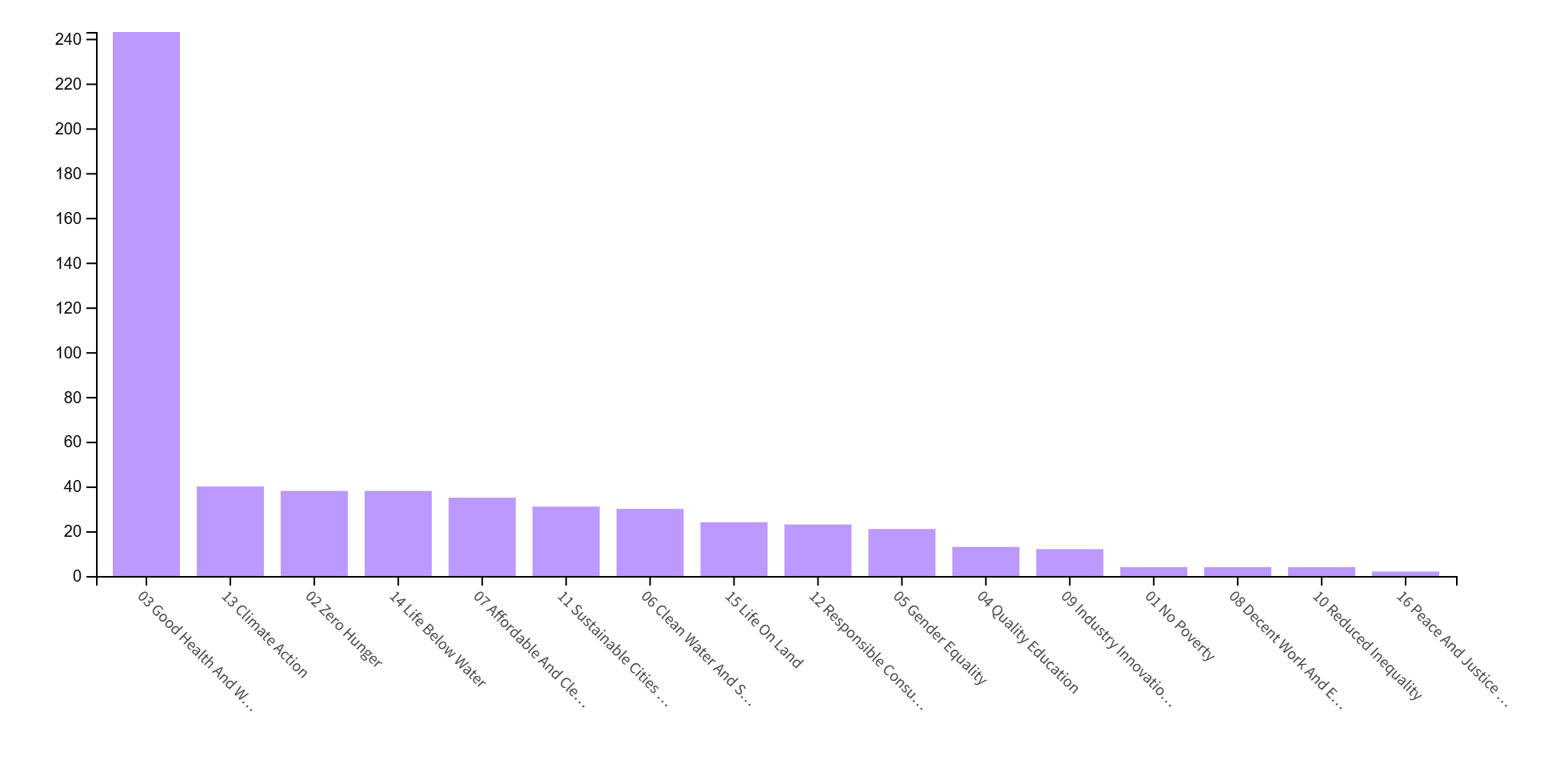
Sustainable Development Goals:
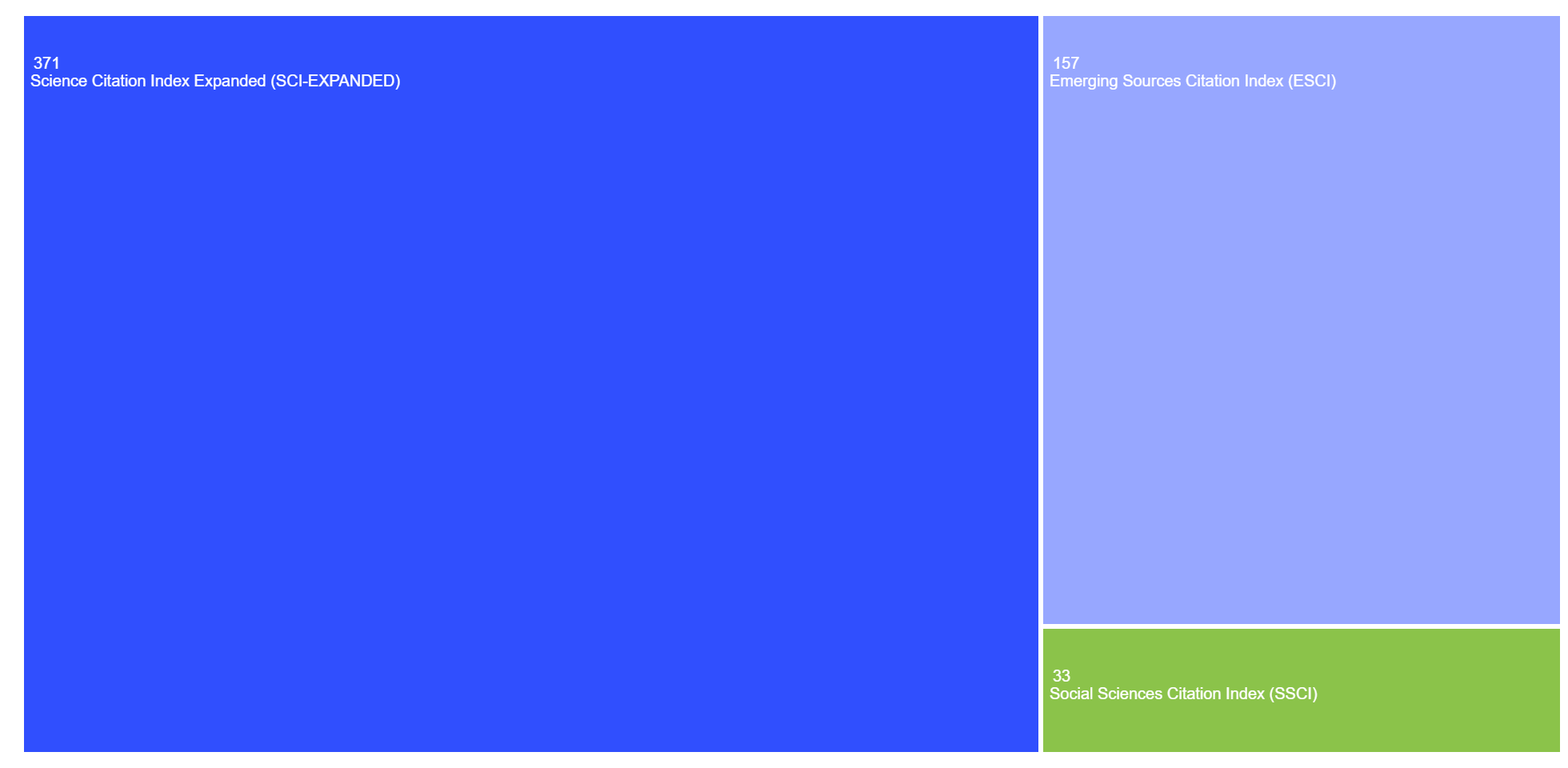
Web of Science Index:
Research highlights of RU:
| Types | Results |
|---|---|
| Review Article | 53 |
| Early Access | 39 |
| Open Access | 336 |
| Enriched Cited References | 311 |
| Open publisher-invited reviews | 10 |
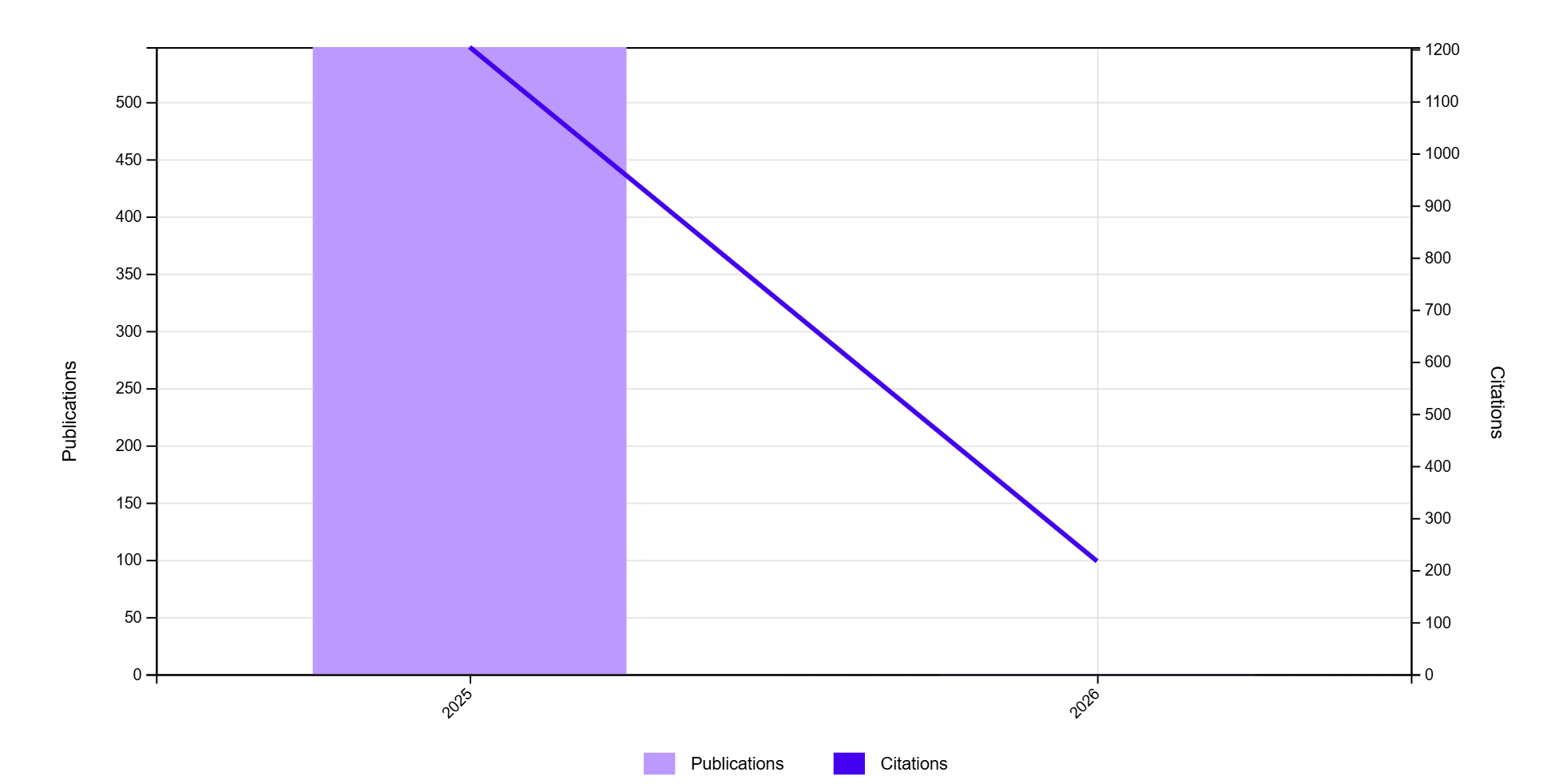
Citation Index:
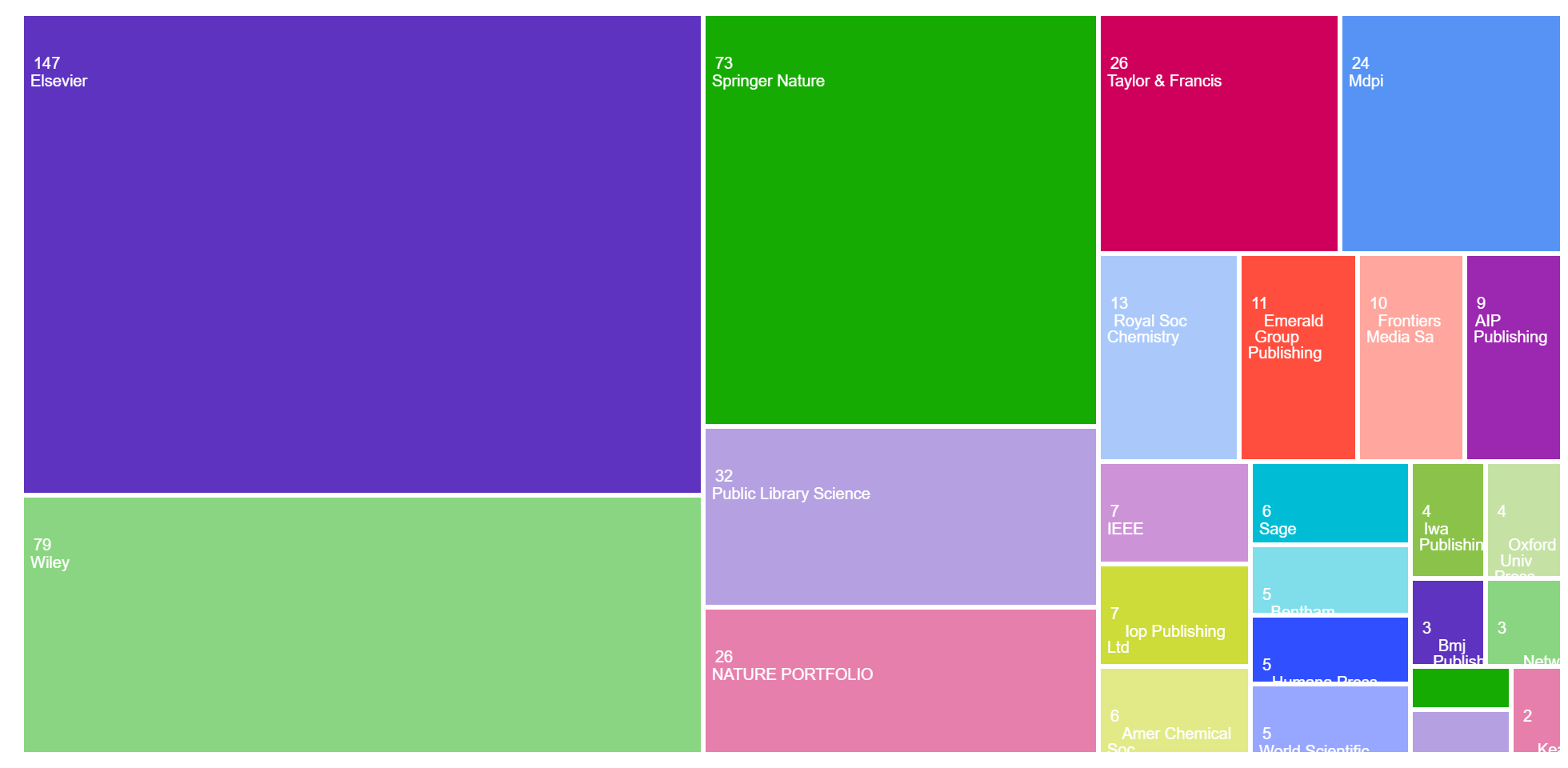
Publishers:
Funding Agencies:
| Agencies | Record Count | % of 548 |
|---|---|---|
| KING SAUD UNIVERSITY | 21 | 3.832% |
| UNIVERSITY GRANTS COMMISSION INDIA | 12 | 2.190% |
| MINISTRY OF EDUCATION CULTURE SPORTS SCIENCE AND TECHNOLOGY JAPAN (MEXT) | 11 | 2.007% |
| JAPAN SOCIETY FOR THE PROMOTION OF SCIENCE | 10 | 1.825% |
| UNIVERSITY OF RAJSHAHI | 10 | 1.825% |
| GRANTS IN AID FOR SCIENTIFIC RESEARCH KAKENHI | 9 | 1.642% |
| THE AUTHORS RECEIVED NO SPECIFIC FUNDING FOR THIS WORK | 8 | 1.460% |
| BILL MELINDA GATES FOUNDATION | 7 | 1.277% |
| TAIF UNIVERSITY | 7 | 1.277% |
| AUSTRALIAN GOVERNMENT | 6 | 1.095% |
| MINISTRY OF SCIENCE AND TECHNOLOGY BANGLADESH | 6 | 1.095% |
| NATIONAL NATURAL SCIENCE FOUNDATION OF CHINA (NSFC) | 6 | 1.095% |
| LABORATORY OF FUNCTIONAL GENOMICS AND PROTEOMICS DEPARTMENT OF GENETIC ENGINEERING AND BIOTECHNOLOGY FACULTY OF BIOLOGICAL SCIENCE AND TECHNOLOGY | 5 | 0.912% |
| AUSTRALIAN RESEARCH COUNCIL | 4 | 0.730% |
| BANGLADESH COUNCIL OF SCIENTIFIC AND INDUSTRIAL RESEARCH (BCSIR) | 4 | 0.730% |
| BANGLADESH COUNCIL OF SCIENTIFIC AND INDUSTRIAL RESEARCH (BCSIR) DHAKA, BANGLADESH | 4 | 0.730% |
| CGIAR | 4 | 0.730% |
| EDUCATION AND RESEARCH SUPPORT FUND FROM SHINSHU UNIVERSITY | 4 | 0.730% |
| FACULTY OF ENGINEERING UNIVERSITY OF RAJSHAHI, BANGLADESH | 4 | 0.730% |
| FACULTY OF SCIENCE UNIVERSITY OF RAJSHAHI | 4 | 0.730% |
| FACULTY OF SCIENCE UNIVERSITY OF RAJSHAHI, BANGLADESH | 4 | 0.730% |
| KING KHALID UNIVERSITY | 4 | 0.730% |
| KING SALMAN CENTRE FOR DISABILITY RESEARCH | 4 | 0.730% |
| MINISTRY OF SCIENCE AND TECHNOLOGY GOVERNMENT OF THE PEOPLE’S REPUBLIC OF BANGLADESH | 4 | 0.730% |
| PRINCESS NOURAH BINT ABDULRAHMAN UNIVERSITY | 4 | 0.730% |
Observations:
-
Broad Disciplinary Reach: Research from the University of Rajshahi spanned numerous subject areas, with strong representation in multidisciplinary sciences, environmental sciences, and chemistry, illustrating wide engagement across scientific domains.
-
High Output in Original Research: The overwhelming majority of university publications were original research articles, suggesting a focus on generating novel research contributions.
-
Institutional and External Funding: The University of Rajshahi appeared not only as a principal affiliation but also as a funding source, complemented by national and international funding agencies supporting its research endeavors.
Questions:
-
What strategies has the University of Rajshahi implemented to maintain or increase its research visibility and impact in global indexed journals?
-
How does the research output distribution across disciplines at Rajshahi compare to peer institutions in Bangladesh and the South Asian region?
-
To what extent do international collaborations influence the citation impact and global reach of Rajshahi’s Web of Science publications?
The research footprint of the University of Rajshahi in 2025 in Web of Science-indexed journals reflects a developing institution with broad scholarly engagement and a solid base of original research, but further analysis of citation impact, collaboration networks, and funding trends will provide deeper insight into research quality and global influence.