

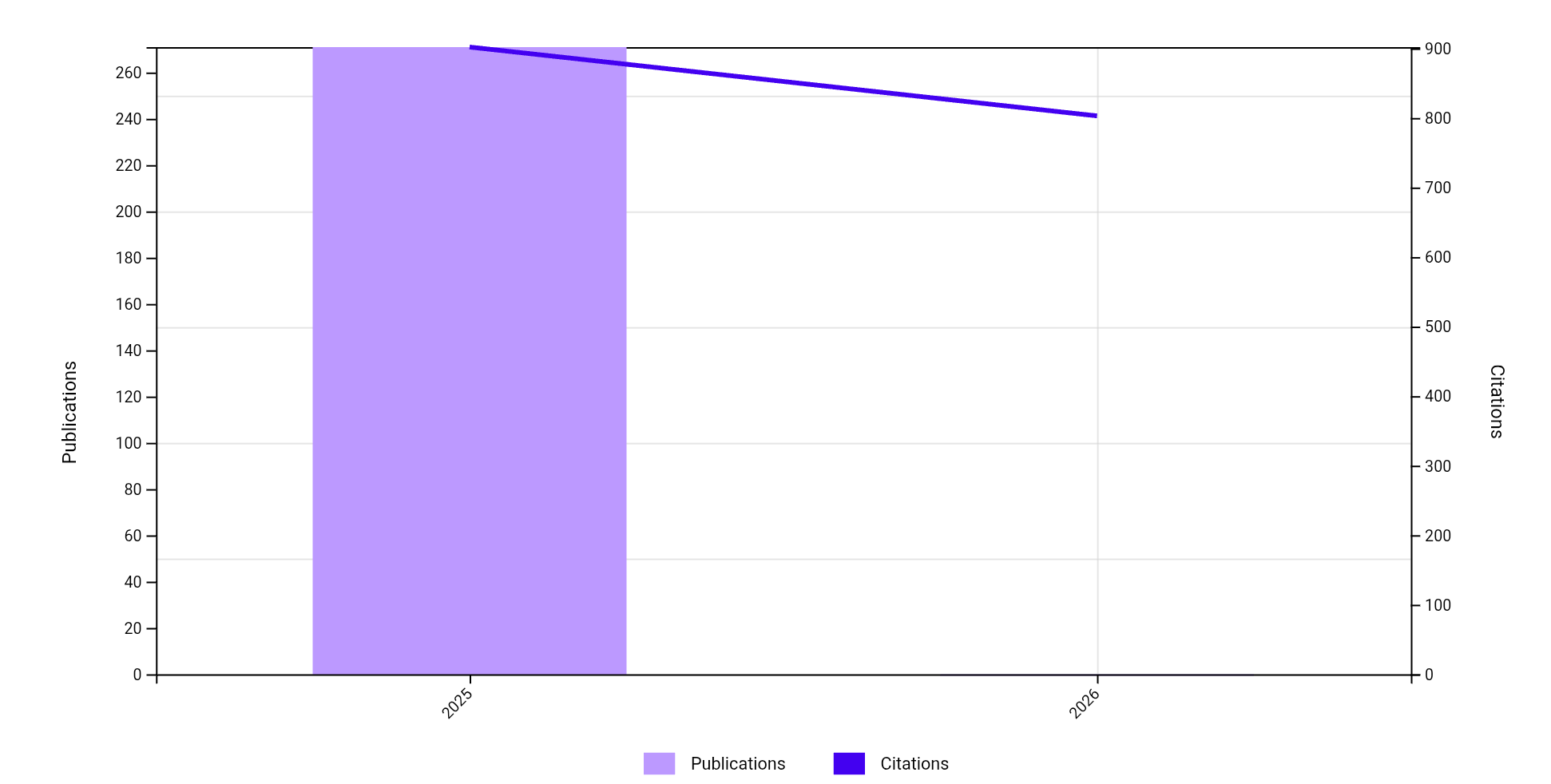
In 2025, Begum Rokeya University, Rangpur demonstrated a strong research presence in Web of Science with 271 publications, overwhelmingly dominated by articles (92.99%), alongside smaller contributions from review articles and early access papers. The research output reflects a highly multidisciplinary orientation, with leading contributions in materials science, chemistry, environmental sciences, and condensed matter physics. Collaboration patterns show complete national representation (Bangladesh at 100%) complemented by substantial international partnerships, particularly with Saudi Arabia, India, the USA, and South Korea. Leading researchers such as Islam, Abu Reza Md. Towfiqul and Rahman, Md. Ferdous contributed significantly to publication volume. Major global publishers like Elsevier, Springer Nature, and Wiley accounted for the majority of outputs, indicating publication in widely recognized journals. Open access availability is also notable, enhancing research visibility. Overall, the data highlights a rapidly expanding, collaborative, and discipline-diverse research ecosystem at the university. Web of Science
The areas of research publication categories in the TreeMap:
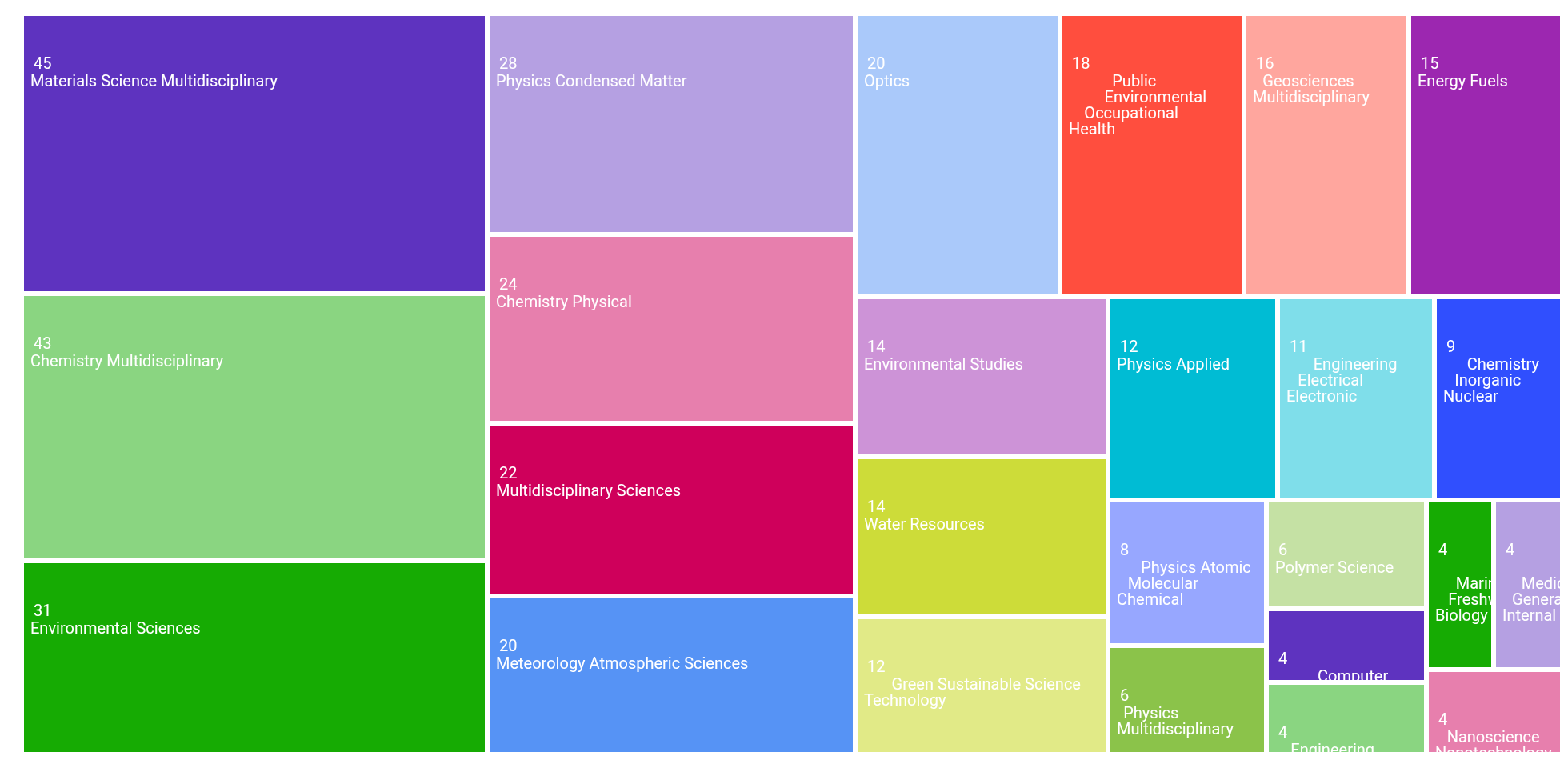
Research contributions in the field:
| Categories | Record Count | % of 271 |
|---|---|---|
| Materials Science Multidisciplinary | 45 | 16.605% |
| Chemistry Multidisciplinary | 43 | 15.867% |
| Environmental Sciences | 31 | 11.439% |
| Physics Condensed Matter | 28 | 10.332% |
| Chemistry Physical | 24 | 8.856% |
| Multidisciplinary Sciences | 22 | 8.118% |
| Meteorology Atmospheric Sciences | 20 | 7.380% |
| Optics | 20 | 7.380% |
| Public Environmental Occupational Health | 18 | 6.642% |
| Geosciences Multidisciplinary | 16 | 5.904% |
| Energy Fuels | 15 | 5.535% |
| Environmental Studies | 14 | 5.166% |
| Water Resources | 14 | 5.166% |
| Green Sustainable Science Technology | 12 | 4.428% |
| Physics Applied | 12 | 4.428% |
| Engineering Electrical Electronic | 11 | 4.059% |
| Chemistry Inorganic Nuclear | 9 | 3.321% |
| Physics Atomic Molecular Chemical | 8 | 2.952% |
| Physics Multidisciplinary | 6 | 2.214% |
| Polymer Science | 6 | 2.214% |
| Computer Science Interdisciplinary Applications | 4 | 1.476% |
| Engineering Environmental | 4 | 1.476% |
| Marine Freshwater Biology | 4 | 1.476% |
| Medicine General Internal | 4 | 1.476% |
| Nanoscience Nanotechnology | 4 | 1.476% |
Research areas:
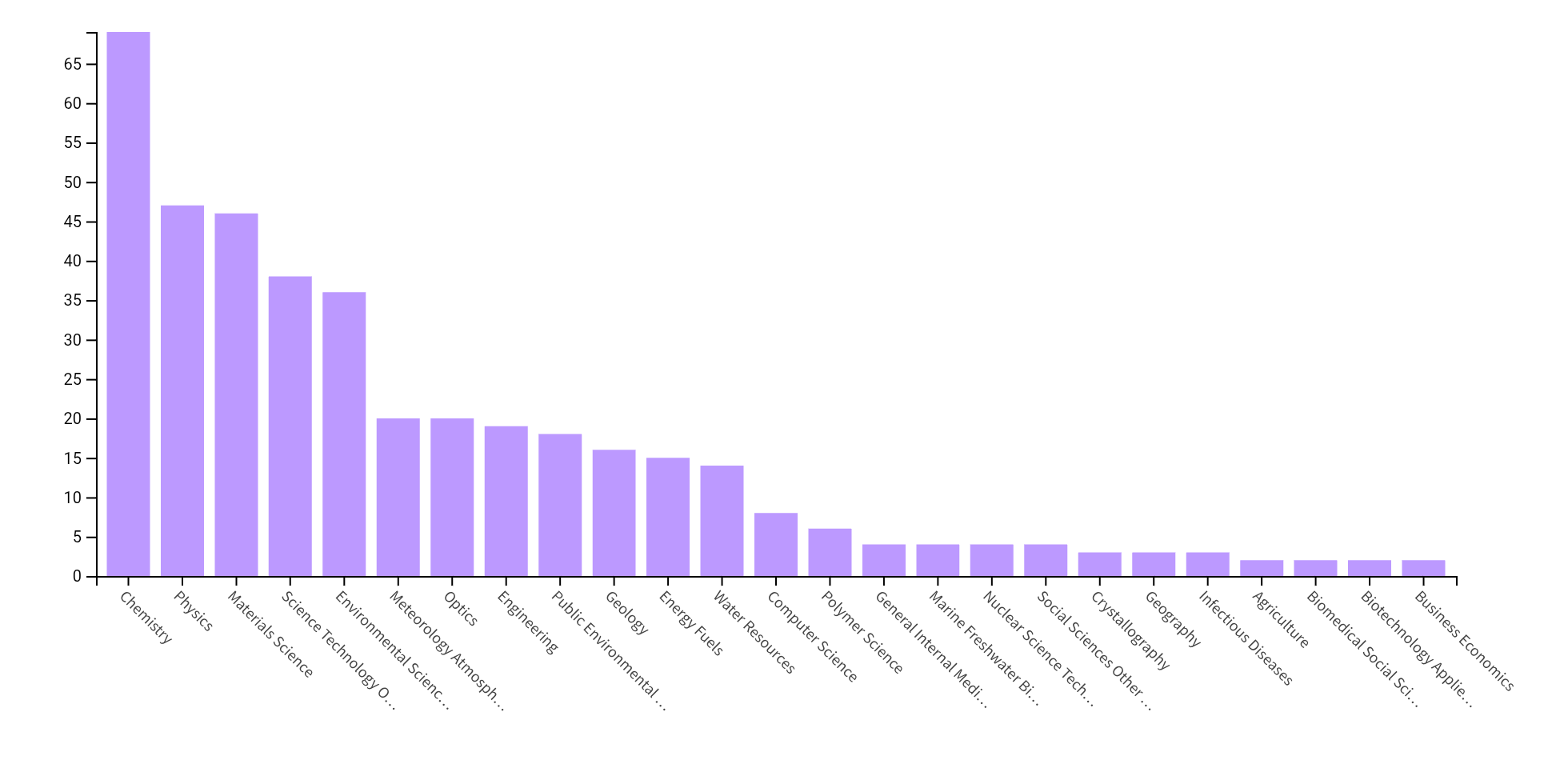
Types of published documents:
| Types | Record Count | % of 271 |
|---|---|---|
| Article | 252 | 92.989% |
| Review Article | 15 | 5.535% |
| Early Access | 10 | 3.690% |
| Correction | 1 | 0.369% |
| Editorial Material | 1 | 0.369% |
| Proceeding Paper | 1 | 0.369% |
| Retraction | 1 | 0.369% |
Authors’ infographic (Top 25):
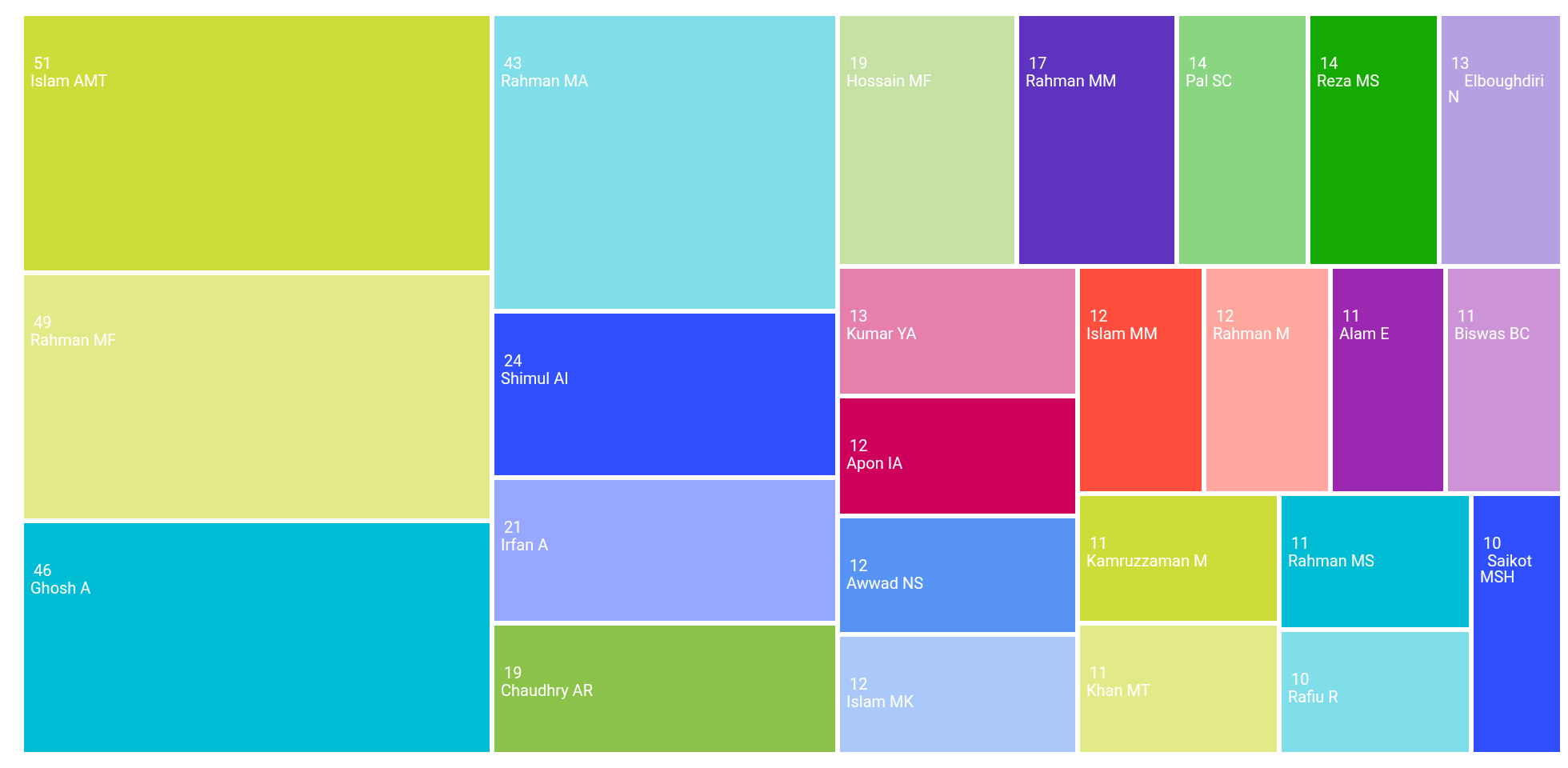
Researcher profiles (Top 25)
| Researchers | Record Count | % of 271 |
|---|---|---|
| Islam, Abu Reza Md. Towfiqul | 52 | 19.188% |
| Rahman, Md. Ferdous | 47 | 17.343% |
| Ghosh, Avijit | 44 | 16.236% |
| Rahman, Azizur | 27 | 9.963% |
| Shimul, Asadul Islam | 24 | 8.856% |
| Irfan, Ahmad | 21 | 7.749% |
| CHAUDHRY, AIJAZ RASOOL | 20 | 7.380% |
| Hossain, Faruk | 15 | 5.535% |
| Pal, Subodh Chandra | 14 | 5.166% |
| Elboughdiri, Noureddine | 13 | 4.797% |
| Awwad, Nasser S | 12 | 4.428% |
| Anil Kumar, Yedluri | 12 | 4.428% |
| Apon, ImtiazAhamed | 12 | 4.428% |
| Alam, Edris | 11 | 4.059% |
| Khan, Mohd Taukeer | 11 | 4.059% |
| Chandra Biswas, Bipul | 11 | 4.059% |
| Reza, Md. Selim | 10 | 3.690% |
| Rahman, Md. Azizur | 10 | 3.690% |
| Rafiu, Rifat | 10 | 3.690% |
| Rahman, Md. Siddikur | 9 | 3.321% |
| Islam, Aznarul | 8 | 2.952% |
| Kareem, Mustafa | 8 | 2.952% |
| kriaa, karim | 8 | 2.952% |
| ISLAM, KAMRUL | 8 | 2.952% |
| Ramachandran, Tholkappiyan | 8 | 2.952% |
Research-affiliated institutes:
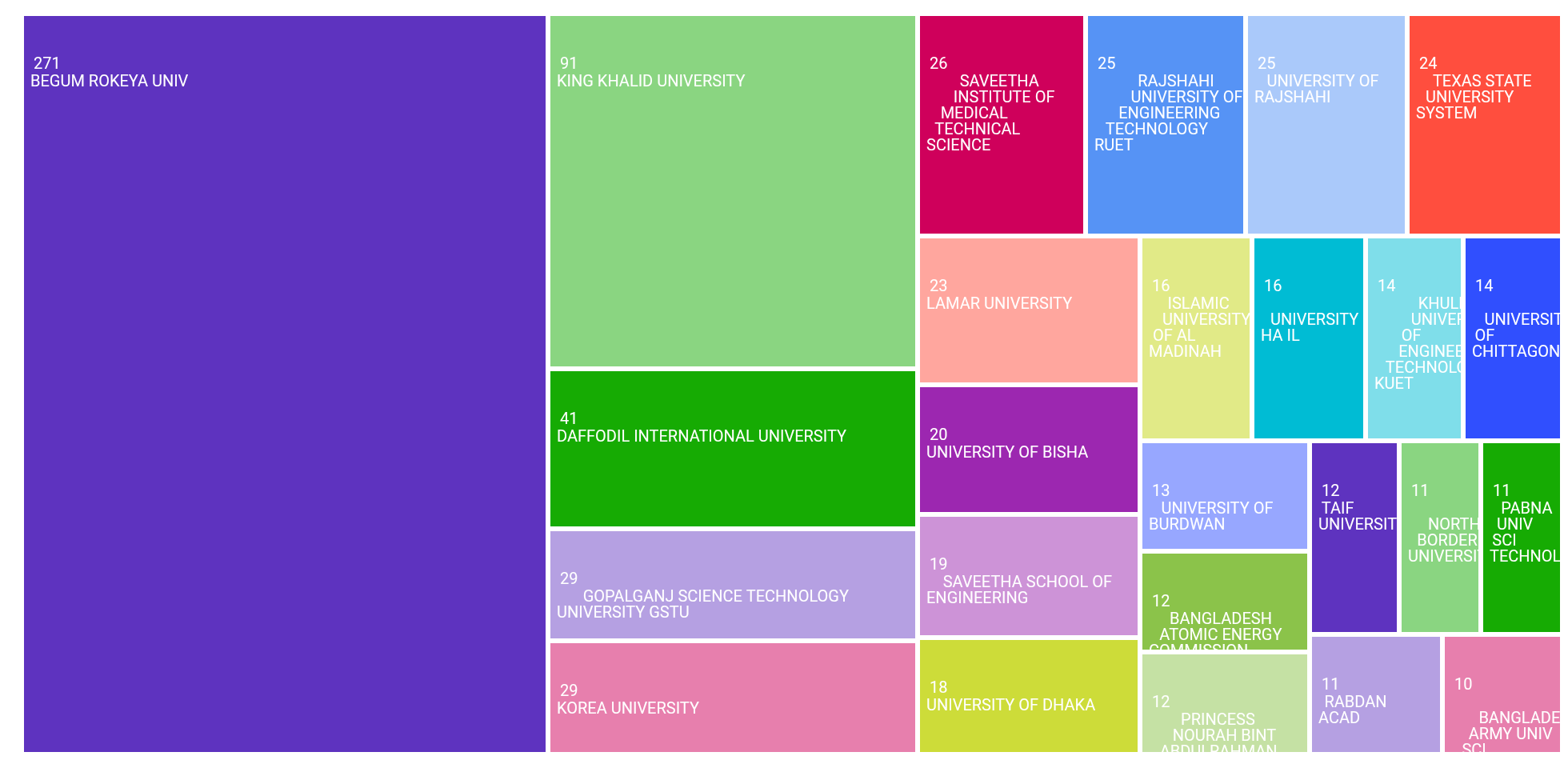
Research collaboration countries:
| Countries/Regions | Record Count | % of 271 |
|---|---|---|
| BANGLADESH | 271 | 100.000% |
| SAUDI ARABIA | 133 | 49.077% |
| INDIA | 61 | 22.509% |
| USA | 52 | 19.188% |
| SOUTH KOREA | 39 | 14.391% |
| PEOPLES R CHINA | 31 | 11.439% |
| U ARAB EMIRATES | 22 | 8.118% |
| IRAQ | 17 | 6.273% |
| MALAYSIA | 17 | 6.273% |
| ALGERIA | 11 | 4.059% |
| AUSTRALIA | 11 | 4.059% |
| TURKIYE | 11 | 4.059% |
| ENGLAND | 10 | 3.690% |
| JAPAN | 10 | 3.690% |
| MOROCCO | 9 | 3.321% |
| THAILAND | 9 | 3.321% |
| EGYPT | 8 | 2.952% |
| INDONESIA | 7 | 2.583% |
| POLAND | 7 | 2.583% |
| IRAN | 6 | 2.214% |
| JORDAN | 6 | 2.214% |
| SINGAPORE | 6 | 2.214% |
| CANADA | 5 | 1.845% |
| FINLAND | 5 | 1.845% |
| GERMANY | 5 | 1.845% |
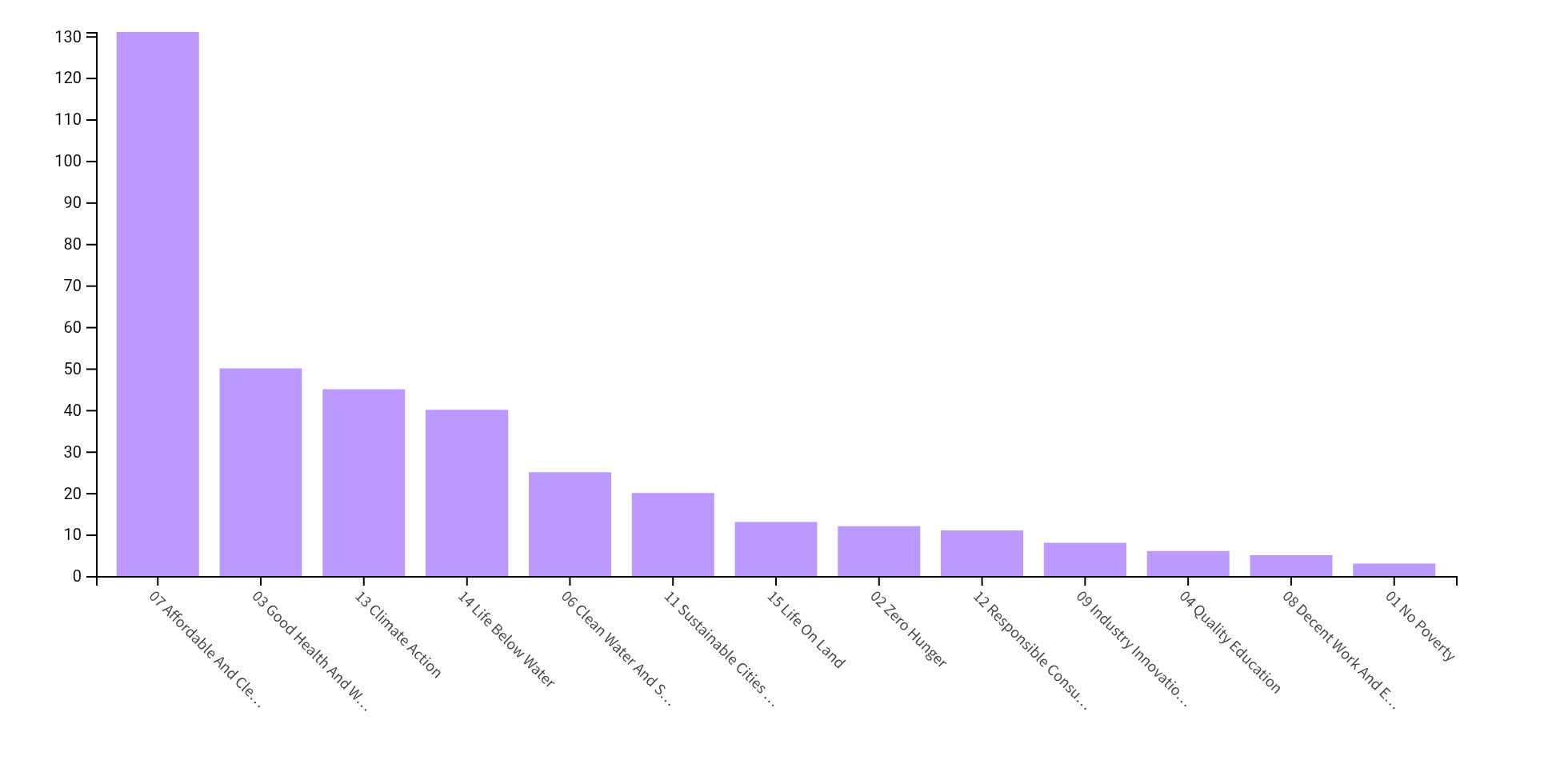
Sustainable Development Goals:
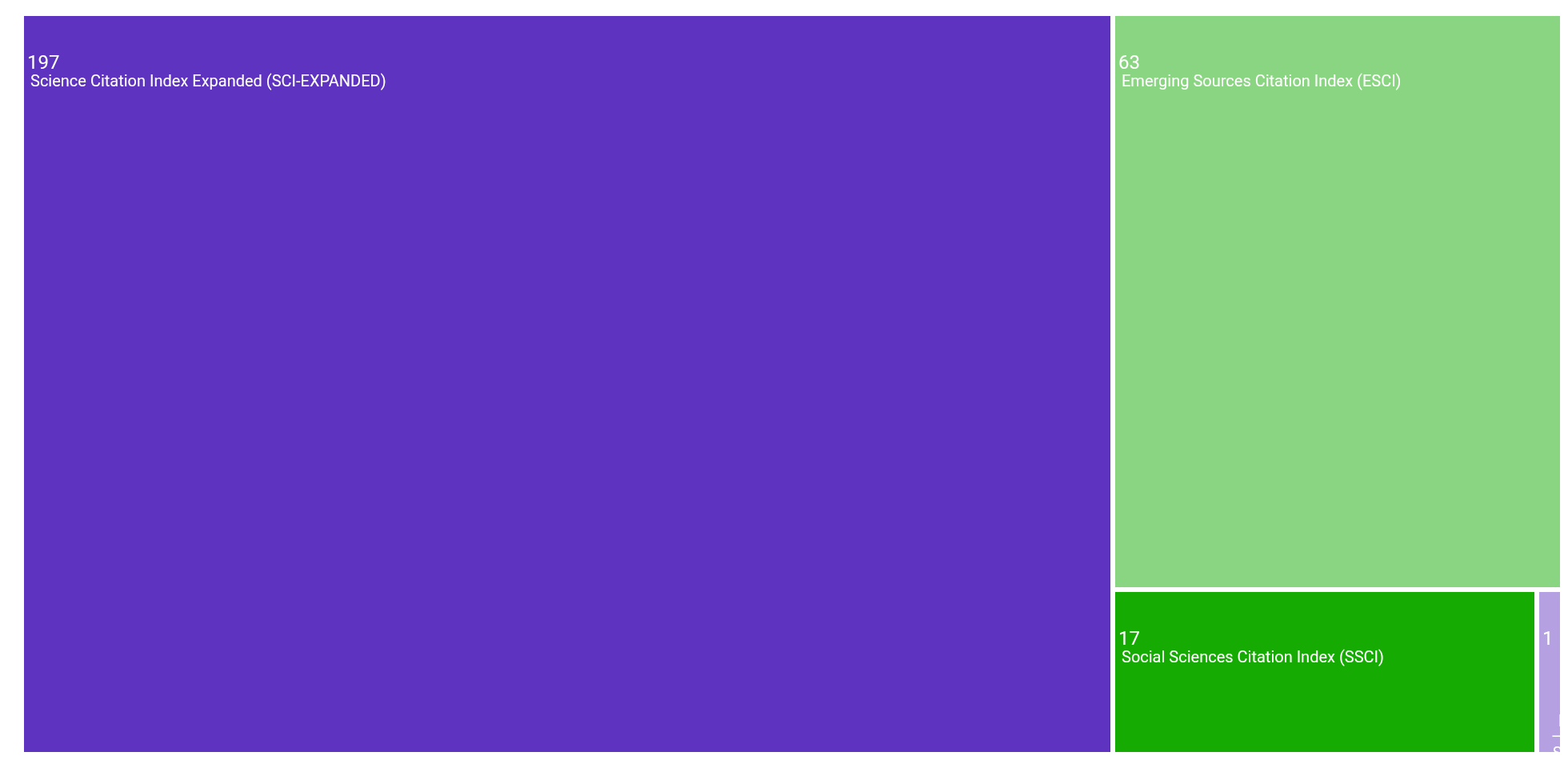
Web of Science Index:
Research highlights of BRU,R:
| Types | Results |
|---|---|
| Review Article | 15 |
| Early Access | 10 |
| Open Access | 122 |
| Enriched Cited References | 156 |
| Open publisher-invited reviews | 14 |
Citation Index:
Publishers:
| Publishers | Record Count | % of 271 |
|---|---|---|
| Elsevier | 103 | 38.007% |
| Springer Nature | 40 | 14.760% |
| Wiley | 26 | 9.594% |
| Royal Soc Chemistry | 25 | 9.225% |
| Amer Chemical Soc | 8 | 2.952% |
| Optica Publishing Group | 8 | 2.952% |
| Taylor & Francis | 8 | 2.952% |
| NATURE PORTFOLIO | 7 | 2.583% |
| Frontiers Media Sa | 6 | 2.214% |
| Public Library Science | 5 | 1.845% |
| Emerald Group Publishing | 4 | 1.476% |
| Keai Publishing Ltd | 4 | 1.476% |
| Mdpi | 4 | 1.476% |
| SPRINGER INT PUBL AG | 4 | 1.476% |
| IEEE | 3 | 1.107% |
| World Scientific | 3 | 1.107% |
| Csiro Publishing | 2 | 0.738% |
| Korean Nuclear Soc | 2 | 0.738% |
| Bmj Publishing Group | 1 | 0.369% |
| Indian Assoc Cultivation Science | 1 | 0.369% |
| Iop Publishing Ltd | 1 | 0.369% |
| Iwa Publishing | 1 | 0.369% |
| PLEIADES PUBLISHING LTD | 1 | 0.369% |
| Paradigm Publishing Services-De Gruyter Brill Sp Zoo | 1 | 0.369% |
| SPIE-INTERNATIONAL SOCIETY FOR OPTICAL ENGINEERING | 1 | 0.369% |
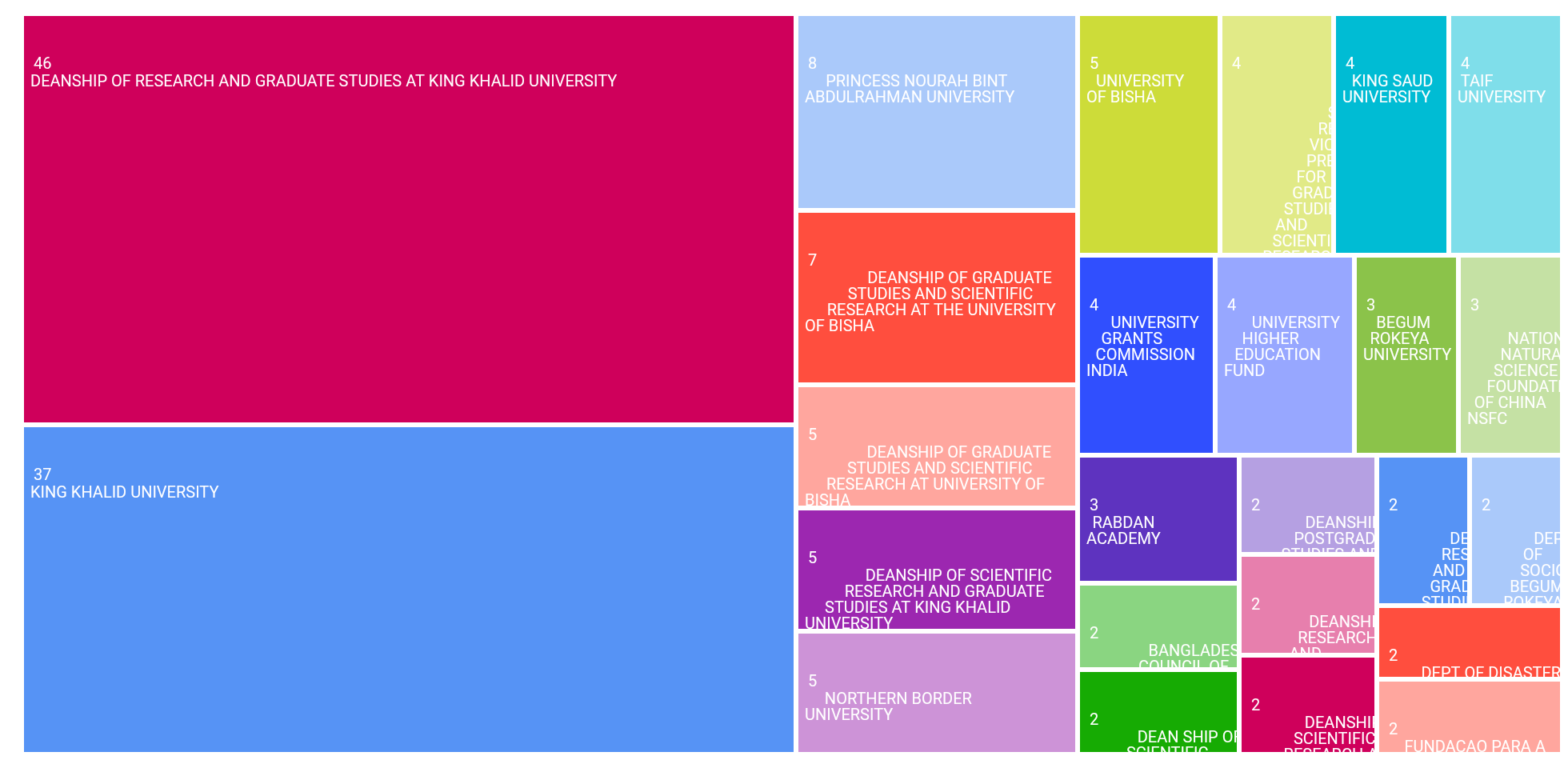
Funding Agencies:
Observations:
- Journal articles overwhelmingly dominate the publication types, indicating a strong focus on standard research dissemination.
- Materials science and chemistry-related fields together account for a large share of total research output.
- International collaboration is particularly strong with Saudi Arabia, contributing to nearly half of the publications.
Questions:
- What factors are driving the high level of collaboration with Saudi Arabian institutions?
- Why is there comparatively lower output in emerging fields like nanotechnology and interdisciplinary computer science?
- How can the university further increase its share of high-impact review articles?
The publication profile suggests a solid and growing research foundation, but strategic diversification into emerging and high-impact areas, along with increased review-based scholarship, could further elevate the university’s global academic standing.