
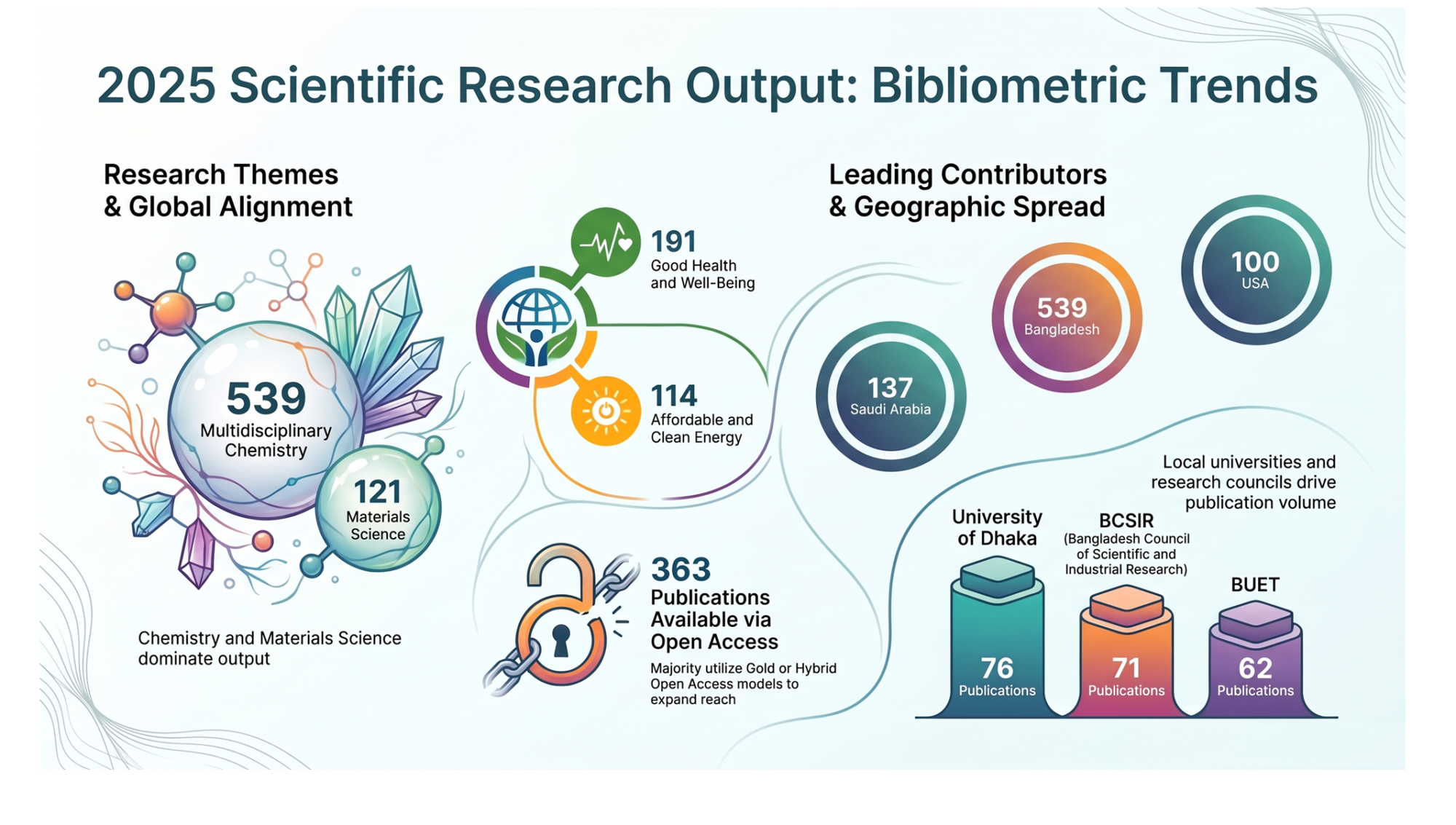
Multidisciplinary chemistry has increasingly been connected with materials science, nanotechnology, energy, environmental science, biochemistry, and biomedical research. In Bangladesh, this interdisciplinary integration was reflected in the 539 Web of Science-indexed publications recorded in the Chemistry Multidisciplinary category in 2025. Research was particularly focused on emerging areas such as perovskite solar cells, nanoparticles, electrochemistry, 2D materials, photocatalysts, phytochemicals, and water treatment. Significant international collaboration was also established, particularly with Saudi Arabia, the United States, India, and Japan. Against this background, the present report examines the major researchers, institutions, funding agencies, research fields, international collaborations, journals, and Sustainable Development Goal (SDG) linkages associated with Bangladesh’s multidisciplinary chemistry research in 2025. Web of Science
Publication Profile
A total of 539 Web of Science-indexed publications was identified in the supplied dataset under the Web of Science category Chemistry Multidisciplinary in 2025. The output consisted of 447 Articles, 82 Review Articles, 7 Corrections, 3 Editorial Materials, and 1 Retracted Publication.
| Document type | Publications |
|---|---|
| Articles | 447 |
| Review Articles | 82 |
| Corrections | 7 |
| Editorial Materials | 3 |
| Retracted Publication | 1 |
| Total | 539 |
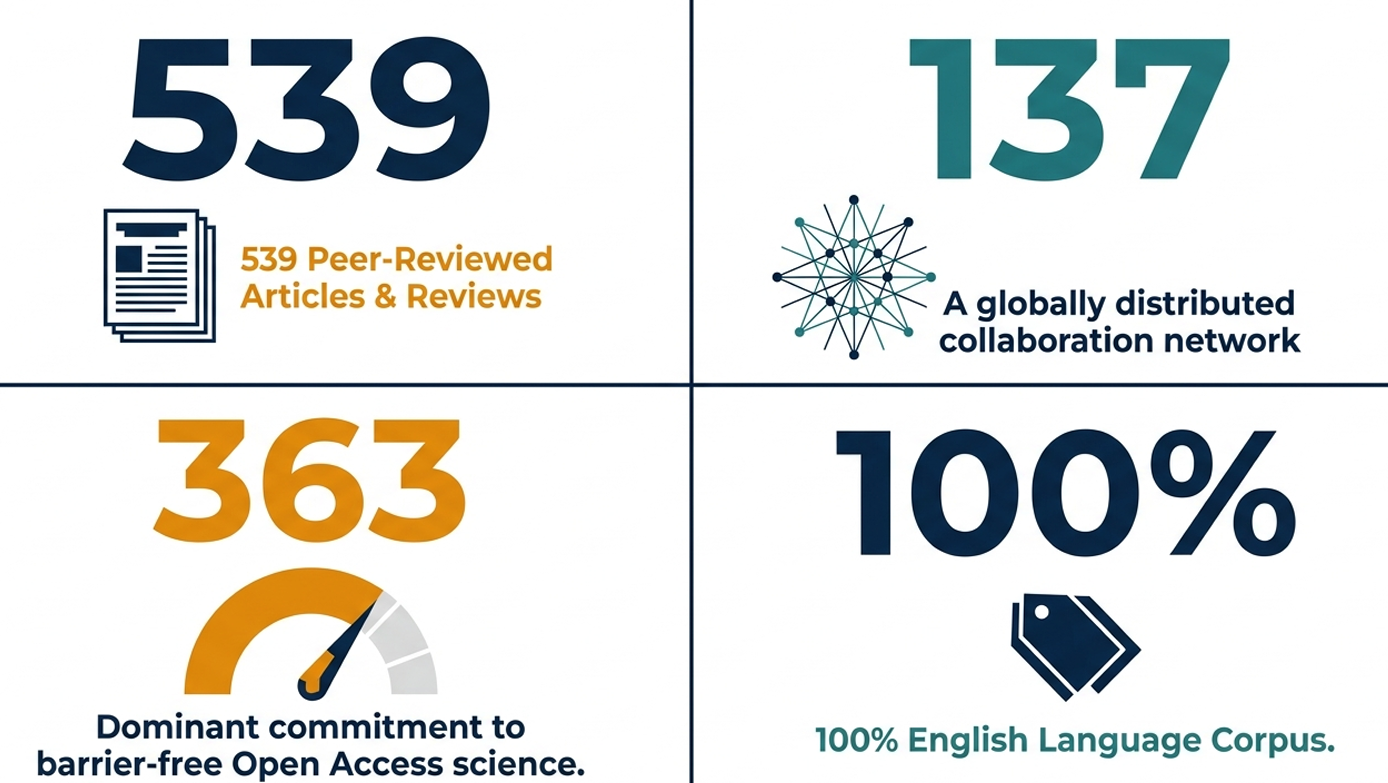
Approximately 83% of the records were Articles, while approximately 15% were Review Articles. Thus, original research constituted the principal form of scholarly output, while substantial attention was also given to reviews and synthesis of existing knowledge.
Major Web of Science Research Categories
The multidisciplinary character of the research was demonstrated by the substantial representation of materials science, biochemistry, nanotechnology, physics, and engineering alongside chemistry multidisciplinary.
| Rank | Web of Science category | Publications |
|---|---|---|
| 1 | Chemistry Multidisciplinary | 539 |
| 2 | Materials Science Multidisciplinary | 121 |
| 3 | Biochemistry Molecular Biology | 57 |
| 4 | Nanoscience Nanotechnology | 53 |
| 5 | Physics Condensed Matter | 37 |
| 6 | Physics Applied | 21 |
| 7 | Engineering Chemical | 18 |
| 8 | Chemistry Physical | 16 |
| 9 | Green Sustainable Science Technology | 12 |
| 10 | Engineering Multidisciplinary | 10 |
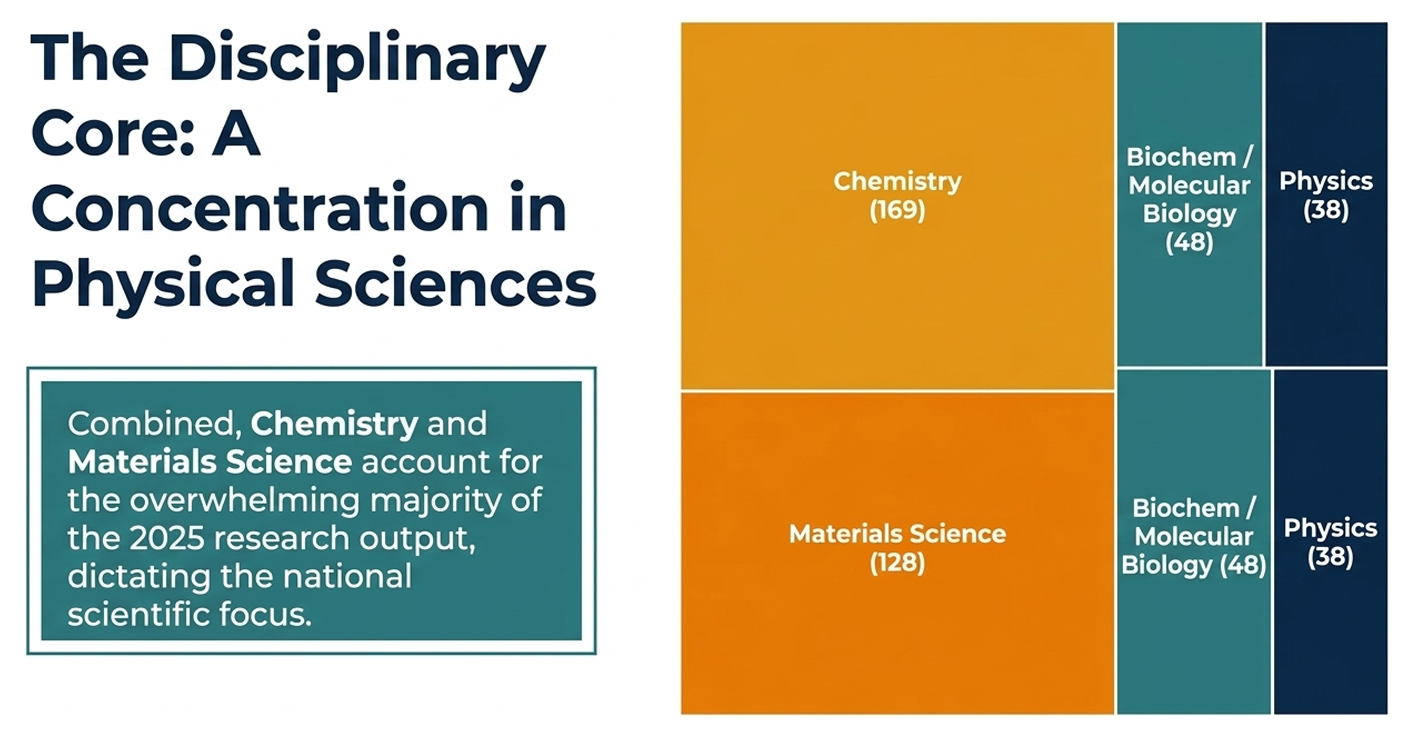
The strong representation of Materials Science Multidisciplinary, Nanoscience Nanotechnology, Physics Condensed Matter, and Engineering Chemical indicates that chemistry research was frequently integrated with materials development, nanoscale science, energy technologies, and engineering applications.
Major Research Hotspots
The strongest research concentration was observed around emerging materials and applied chemical technologies. Perovskite Solar Cells constituted the largest identified citation-topic cluster, with 75 publications. Research in this area was associated with material stability, efficiency improvement, device architecture, computational prediction, and energy applications. Nanoparticle research was represented by 45 publications, while electrochemistry accounted for 29 publications. The presence of 25 publications related to 2D materials further demonstrates the connection between chemistry, condensed-matter physics, electronics, catalysis, and energy technologies.
| Rank | Citation topic | Publications |
|---|---|---|
| 1 | Perovskite Solar Cells | 75 |
| 2 | Nanoparticles | 45 |
| 3 | Electrochemistry | 29 |
| 4 | 2D Materials | 25 |
| 5 | Phytochemicals | 23 |
| 6 | Photocatalysts | 20 |
| 7 | Protein Structure, Folding & Modelling | 17 |
| 8 | Water Treatment | 17 |
| 9 | Biobased Materials & Bioenergy | 16 |
| 10 | Synthesis | 16 |
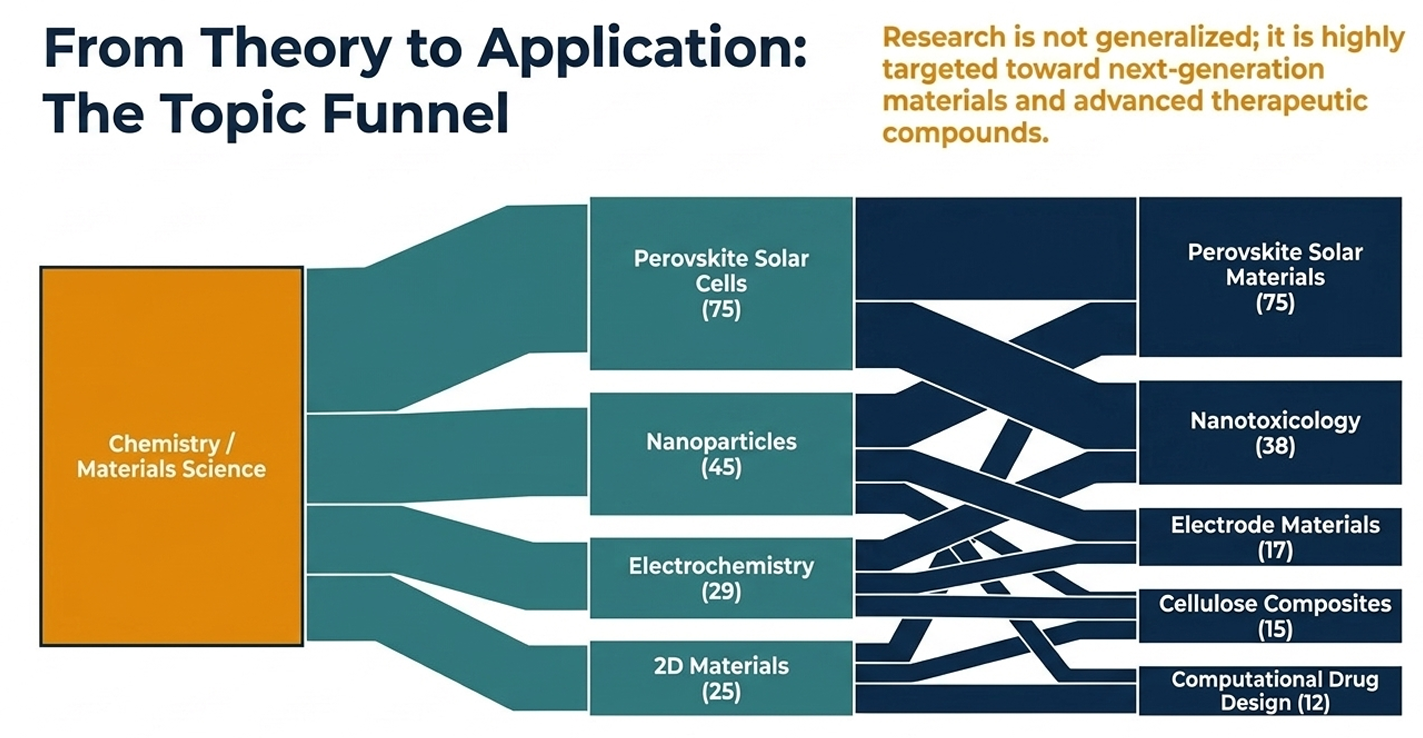
Photocatalysts and water treatment were represented by 20 and 17 publications, respectively, linking chemical materials research with pollutant degradation, adsorption, and water purification.
Top Researchers
The following publication counts have been reproduced from the supplied 2025 Web of Science dataset.
| Rank | Researcher | Publications |
|---|---|---|
| 1 | Md. Ferdous Rahman | 16 |
| 2 | Azizur Rahman | 15 |
| 3 | Avijit Ghosh | 13 |
| 4 | M. Khalid Hossain | 11 |
| 5 | Md. Sahadat Hossain | 10 |
| 6 | Md. Zahid Hasan | 8 |
| 7 | Samina Ahmed | 8 |
| 8 | Abu Bin Hasan Susan | 8 |
| 9 | Mayeen Uddin Khandaker | 8 |
| 10 | Tarikul Islam | 8 |
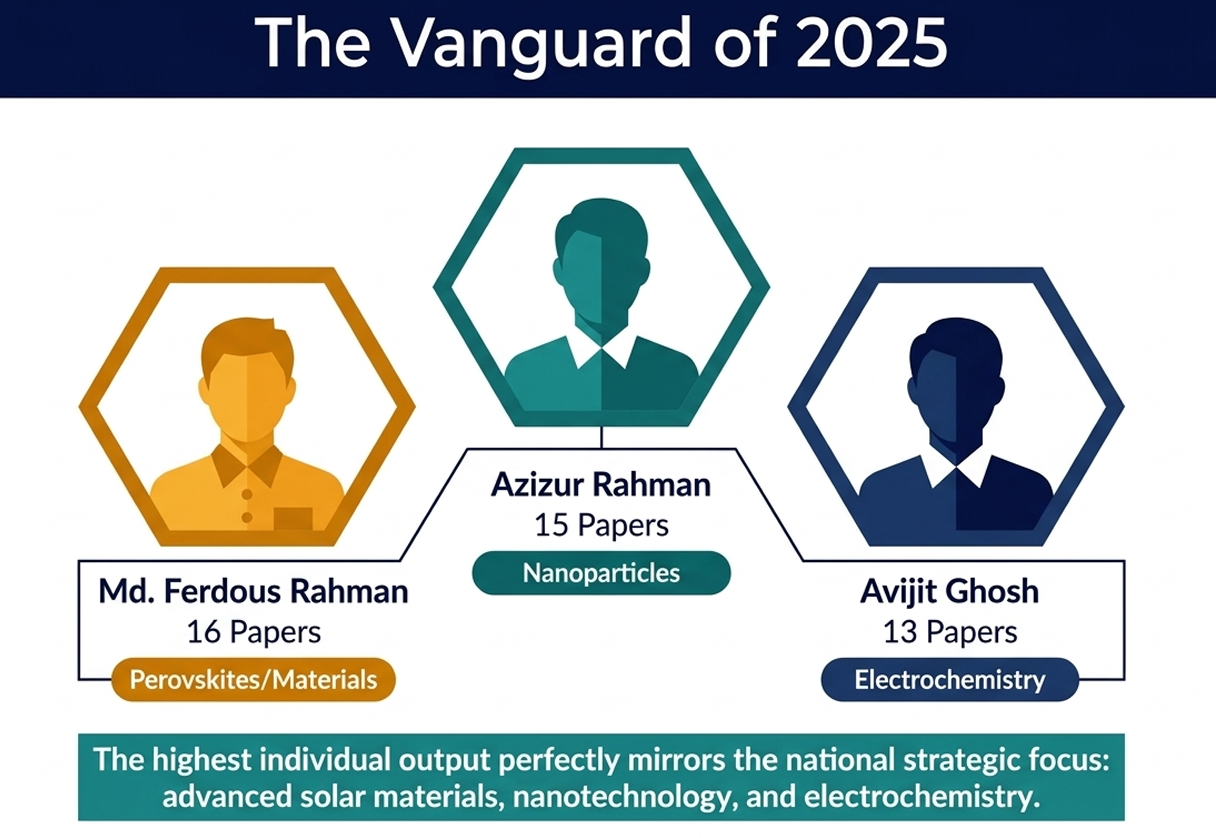
The distribution indicates that identifiable research clusters contributed substantially to the multidisciplinary chemistry output. Research associated with these researchers covered areas including advanced materials, nanotechnology, energy materials, computational chemistry, biomaterials, and environmental applications.
Leading Institutions and Affiliations
| Rank | Institution/Affiliation | Publications |
|---|---|---|
| 1 | University of Dhaka | 76 |
| 2 | Bangladesh Council of Scientific and Industrial Research (BCSIR) | 71 |
| 3 | Bangladesh University of Engineering and Technology (BUET) | 62 |
| 4 | Begum Rokeya University | 43 |
| 5 | King Khalid University, Saudi Arabia | 41 |
| 6 | Khulna University of Engineering and Technology (KUET) | 38 |
| 7 | King Saud University, Saudi Arabia | 37 |
| 8 | University of Rajshahi | 37 |
| 9 | Jashore University of Science and Technology | 36 |
| 10 | Daffodil International University | 34 |
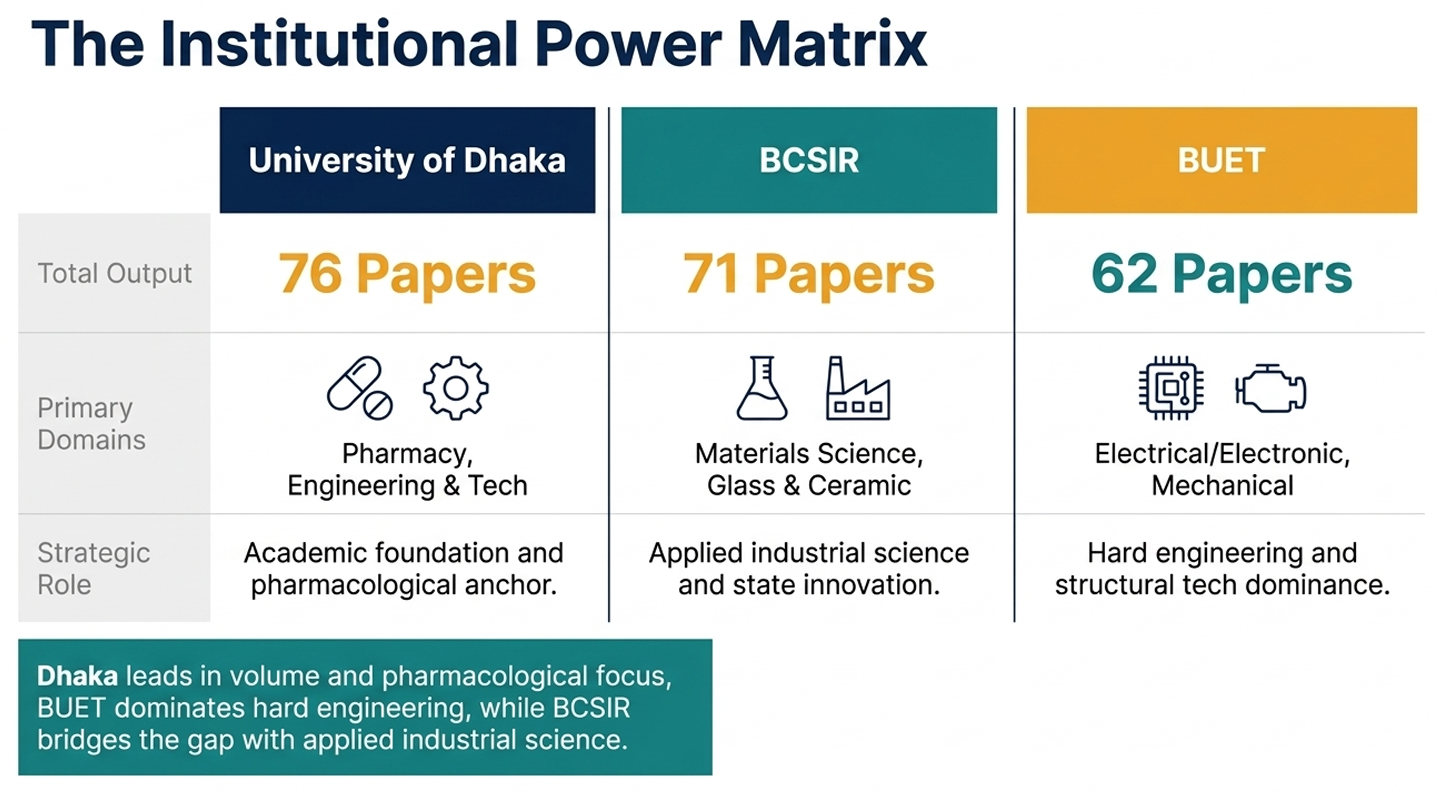
The University of Dhaka was the most frequently represented affiliation, followed by BCSIR and BUET. The appearance of King Khalid University and King Saud University among the leading affiliations demonstrates the substantial international dimension of the research network.
International Collaboration
| Rank | Country/Region | Publications |
|---|---|---|
| 1 | Bangladesh | 539 |
| 2 | Saudi Arabia | 137 |
| 3 | United States | 100 |
| 4 | India | 60 |
| 5 | Japan | 57 |
| 6 | South Korea | 39 |
| 7 | Malaysia | 34 |
| 8 | People’s Republic of China | 33 |
| 9 | Australia | 20 |
| 10 | Canada | 14 |
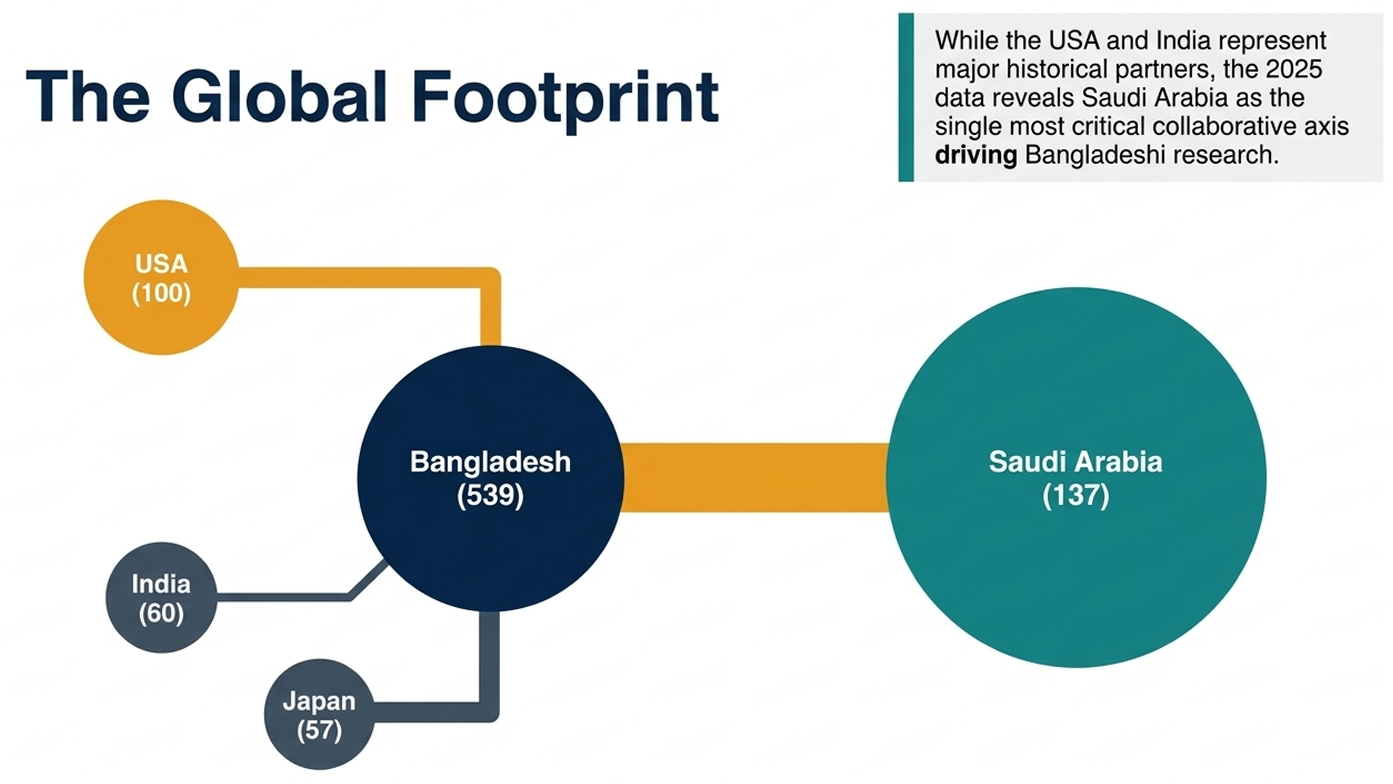
The collaboration pattern was particularly extensive with Saudi Arabia and the United States. India and Japan also constituted important research partners, followed by South Korea, Malaysia, China, Australia, and Canada. Saudi Arabia was associated with 137 publications, while the United States was associated with 100. These counts should not be interpreted as mutually exclusive publication shares because a single publication can contain affiliations from several countries.
Top Funding Agencies
| Rank | Funding agency/organization | Supported publications |
|---|---|---|
| 1 | King Saud University | 29 |
| 2 | University Grants Commission India | 28 |
| 3 | Deanship of Research and Graduate Studies, King Khalid University | 23 |
| 4 | King Khalid University | 21 |
| 5 | Bangladesh Council of Scientific and Industrial Research (BCSIR) | 15 |
| 6 | MEXT, Japan | 14 |
| 7 | Japan Society for the Promotion of Science (JSPS) | 13 |
| 8 | Princess Nourah Bint Abdulrahman University | 13 |
| 9 | Bangladesh Council of Scientific and Industrial Research | 13 |
| 10 | Bangladesh University of Engineering and Technology (BUET) | 12 |
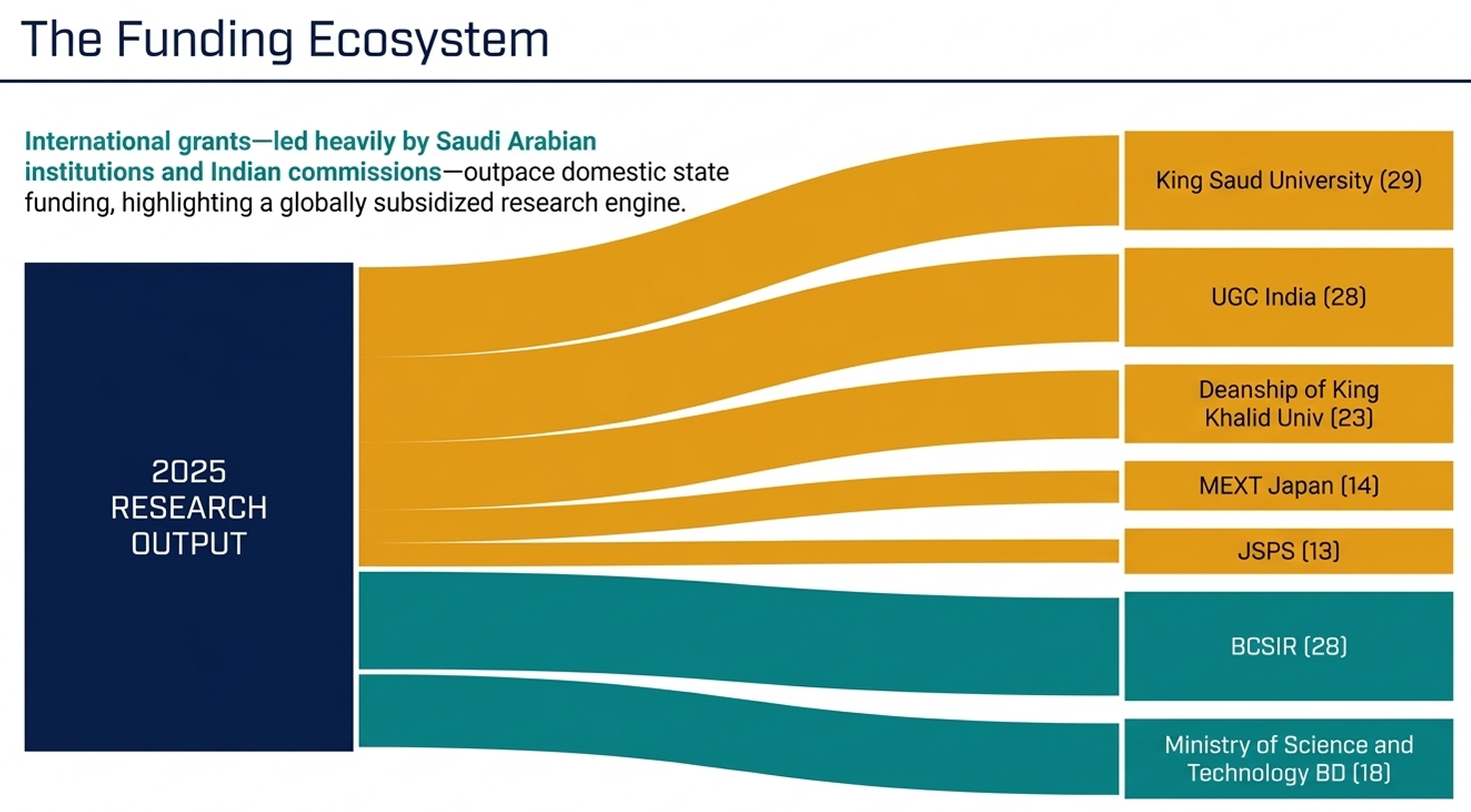
The funding profile demonstrates that both domestic and international funding mechanisms were involved in supporting multidisciplinary chemistry research. Saudi Arabian organizations were particularly prominent, while Japanese agencies such as MEXT and JSPS also contributed substantially.
Sustainable Development Goals
| Rank | SDG | Publications |
|---|---|---|
| 1 | SDG 3 – Good Health and Well-Being | 191 |
| 2 | SDG 7 – Affordable and Clean Energy | 114 |
| 3 | SDG 6 – Clean Water and Sanitation | 37 |
| 4 | SDG 2 – Zero Hunger | 15 |
| 5 | SDG 12 – Responsible Consumption and Production | 13 |
| 6 | SDG 11 – Sustainable Cities and Communities | 11 |
| 7 | SDG 13 – Climate Action | 11 |
| 8 | SDG 14 – Life Below Water | 10 |
| 9 | SDG 15 – Life on Land | 8 |
| 10 | SDG 5 – Gender Equality | 2 |
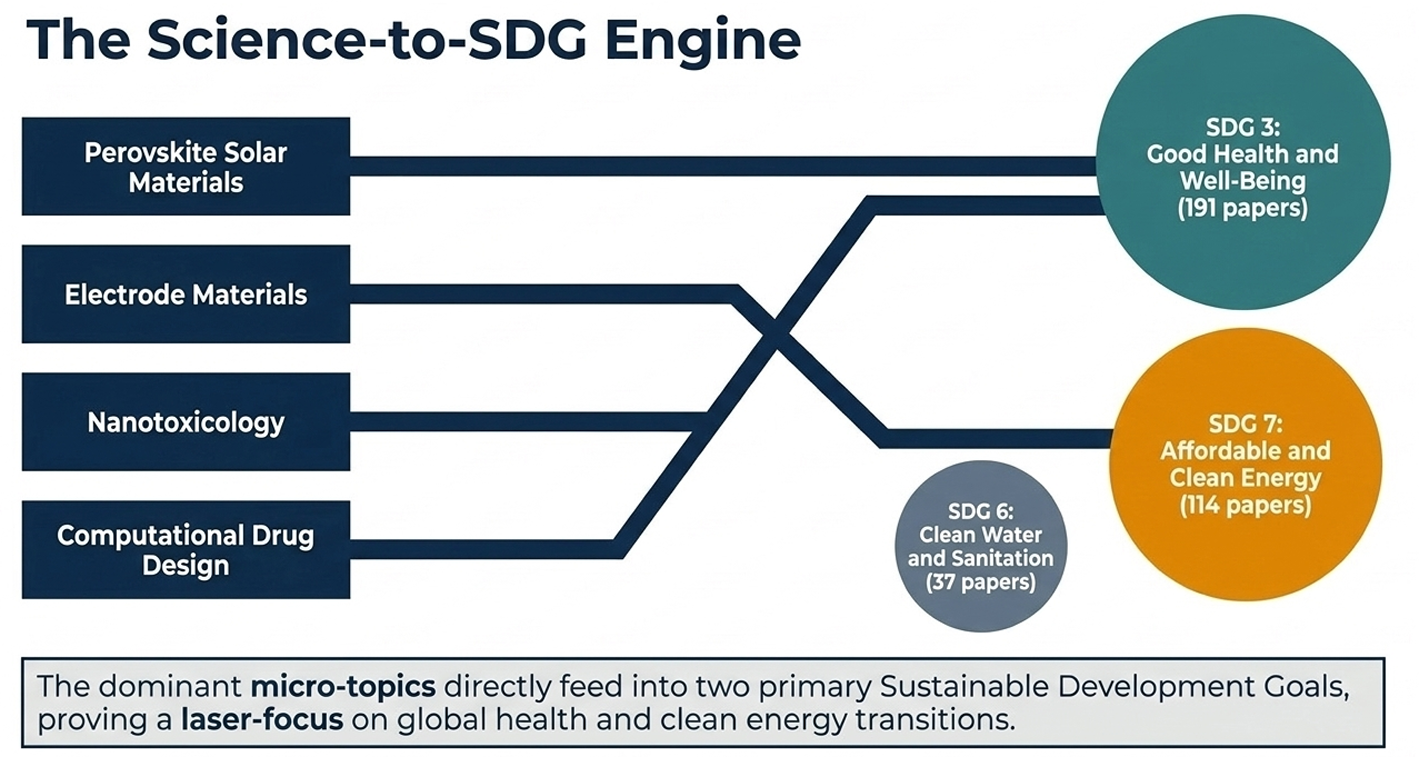
SDG 3: Good Health and Well-Being was associated with the largest number of publications, with 191 records. This was followed by SDG 7: Affordable and Clean Energy, with 114 publications, and SDG 6: Clean Water and Sanitation, with 37 publications. The distribution demonstrates that multidisciplinary chemistry was being connected with major societal challenges involving health, renewable energy, water quality, sustainable production, and environmental protection.
Leading Journals
| Rank | Journal | Publications |
|---|---|---|
| 1 | RSC Advances | 122 |
| 2 | Next Materials | 49 |
| 3 | ChemistrySelect | 47 |
| 4 | Journal of Physics and Chemistry of Solids | 34 |
| 5 | ACS Omega | 26 |
| 6 | Chemistry & Biodiversity | 24 |
| 7 | Nanoscale Advances | 22 |
| 8 | International Journal of Molecular Sciences | 21 |
| 9 | New Journal of Chemistry | 15 |
| 10 | Langmuir / Next Nanotechnology | 13 each |
RSC Advances was the most frequently represented journal in the supplied dataset, with 122 publications. The other leading journals demonstrate the broad disciplinary scope of the research, encompassing chemistry, nanotechnology, materials science, physics, molecular science, and environmental research.
Clean Energy and Advanced Materials
A major feature of the 2025 research landscape was the convergence between chemistry and renewable-energy materials. Perovskite solar-cell research was represented by 75 publications and constituted the largest citation-topic cluster. Research in this area was connected with material composition, electronic and optical properties, structural stability, defect engineering, charge transport, computational modelling, and device performance. The integration of chemistry with materials science and physics was therefore strongly demonstrated. The substantial representation of electrochemistry and 2D materials further reinforced this energy-oriented research direction. Electrode materials, electrocatalysis, energy conversion, and advanced nanoscale materials were incorporated into the broader multidisciplinary chemistry ecosystem.
Nanotechnology, Biomaterials, and Environmental Research
Nanotechnology represented another major component of the research portfolio. Nanoparticles accounted for 45 publications, while nanoscience and nanotechnology were represented by 53 records as a Web of Science category. Biomaterials and environmental materials were also connected with this research. Hydroxyapatite-based materials, photocatalysts, adsorption materials, and other functional nanomaterials provided examples of research in which chemical synthesis was linked with biomedical and environmental applications. The combination of nanotechnology, photocatalysis, water treatment, and biomaterials indicates that research outputs were being directed toward both technological development and environmental or health-related applications.
Bangladesh–Saudi Arabia Research Connection
The Bangladesh–Saudi Arabia research connection was particularly prominent in the dataset.
| Indicator | Saudi Arabia-related count |
|---|---|
| Collaborating publications | 137 |
| King Khalid University affiliation | 41 |
| King Saud University affiliation | 37 |
| King Saud University-funded publications | 29 |
| Deanship of Research and Graduate Studies at King Khalid University | 23 |
| King Khalid University funding | 21 |
The simultaneous presence of Saudi Arabian institutions in the affiliation and funding datasets suggests that the relationship was supported through multiple forms of scientific cooperation, including co-authorship, institutional association, and research funding.
Overall Bibliometric Profile
| Indicator | Finding |
|---|---|
| Bangladesh-originating publications | 539 |
| Articles | 447 |
| Review Articles | 82 |
| Materials Science Multidisciplinary | 121 |
| Biochemistry Molecular Biology | 57 |
| Nanoscience Nanotechnology | 53 |
| Perovskite Solar Cells | 75 |
| Nanoparticles | 45 |
| Electrochemistry | 29 |
| SDG 3 | 191 |
| SDG 7 | 114 |
| SDG 6 | 37 |
| Saudi Arabia collaboration | 137 |
| USA collaboration | 100 |
| University of Dhaka | 76 |
| BCSIR | 71 |
| BUET | 62 |
| RSC Advances | 122 |
Conclusion
The 2025 Web of Science-indexed research profile demonstrates that multidisciplinary chemistry in Bangladesh was characterized by interdisciplinary integration, international collaboration, advanced materials research, and strong connections with sustainability-related applications. The 539 publications were distributed across chemistry, materials science, nanotechnology, biochemistry, physics, and engineering. Particular research concentrations were observed in perovskite solar cells, nanoparticles, electrochemistry, 2D materials, phytochemicals, photocatalysis, water treatment, and biobased materials. The leading researchers included Md. Ferdous Rahman, Azizur Rahman, Avijit Ghosh, M. Khalid Hossain, and Md. Sahadat Hossain, while the principal institutional contributors included the University of Dhaka, BCSIR, BUET, Begum Rokeya University, and KUET.