

In 2024, Bangladesh produced 247 research publications in Nature Portfolio journals, marking a strong global presence with contributions spanning multiple disciplines. The vast majority (91.1%) of works fall under Multidisciplinary Sciences, reflecting engagement with high-impact, cross-cutting research themes. A remarkable 92.7% of publications were full research articles, and 100% were indexed in the Science Citation Index Expanded (SCI-EXPANDED). International collaboration was notable, particularly with the USA (32.8%), Saudi Arabia (24.7%), India (19.4%), and Australia (18.6%). Leading contributors included Tahmeed Ahmed, Dr. M. F. Mridha, and Edris Alam, among others. This publication trend underscores Bangladesh’s growing scientific influence, particularly in collaborative and multidisciplinary research. Web of Science
The areas of research publication categories in the TreeMap:
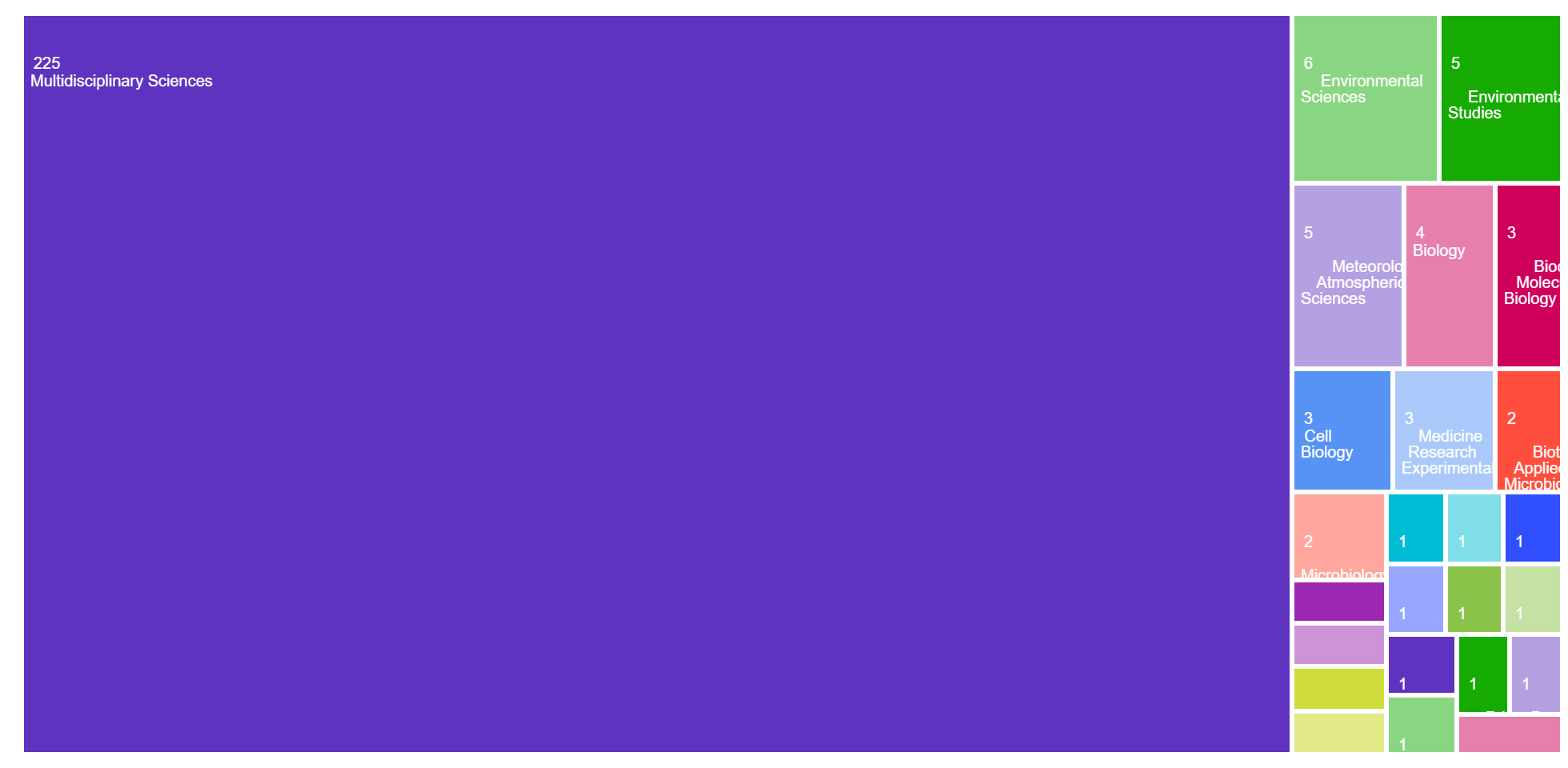
Research contributions in the field:
| Categories | Record Count | % of 247 |
|---|---|---|
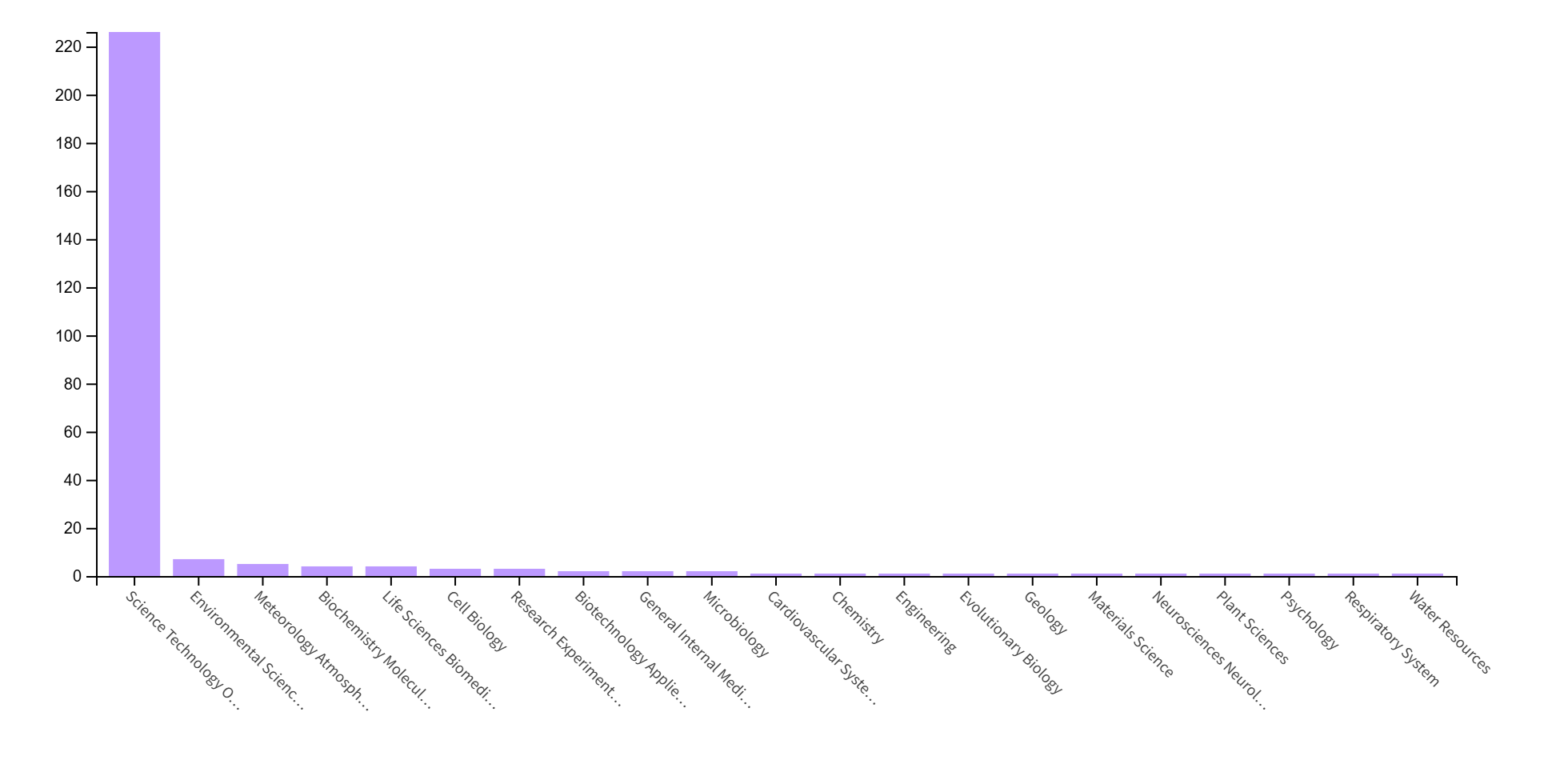
| Multidisciplinary Sciences | 225 | 91.093% |
| Environmental Sciences | 6 | 2.429% |
| Environmental Studies | 5 | 2.024% |
| Meteorology Atmospheric Sciences | 5 | 2.024% |
| Biology | 4 | 1.619% |
| Biochemistry Molecular Biology | 3 | 1.215% |
| Cell Biology | 3 | 1.215% |
| Medicine Research Experimental | 3 | 1.215% |
| Biotechnology Applied Microbiology | 2 | 0.810% |
| Microbiology | 2 | 0.810% |
| Biochemical Research Methods | 1 | 0.405% |
| Cardiac Cardiovascular Systems | 1 | 0.405% |
| Chemistry Multidisciplinary | 1 | 0.405% |
| Ecology | 1 | 0.405% |
| Engineering Chemical | 1 | 0.405% |
| Evolutionary Biology | 1 | 0.405% |
| Geosciences Multidisciplinary | 1 | 0.405% |
| Materials Science Multidisciplinary | 1 | 0.405% |
| Medicine General Internal | 1 | 0.405% |
| Nanoscience Nanotechnology | 1 | 0.405% |
| Neurosciences | 1 | 0.405% |
| Plant Sciences | 1 | 0.405% |
| Primary Health Care | 1 | 0.405% |
| Psychology Biological | 1 | 0.405% |
| Psychology Experimental | 1 | 0.405% |
Research areas:
Types of published documents:
| Types | Record Count | % of 247 |
|---|---|---|
| Article | 229 | 92.713% |
| Editorial Material | 8 | 3.239% |
| Correction | 6 | 2.429% |
| Review Article | 2 | 0.810% |
| Biographical-Item | 1 | 0.405% |
| Data Paper | 1 | 0.405% |
| Early Access | 1 | 0.405% |
| Letter | 1 | 0.405% |
Authors’ infographic (Top 25):
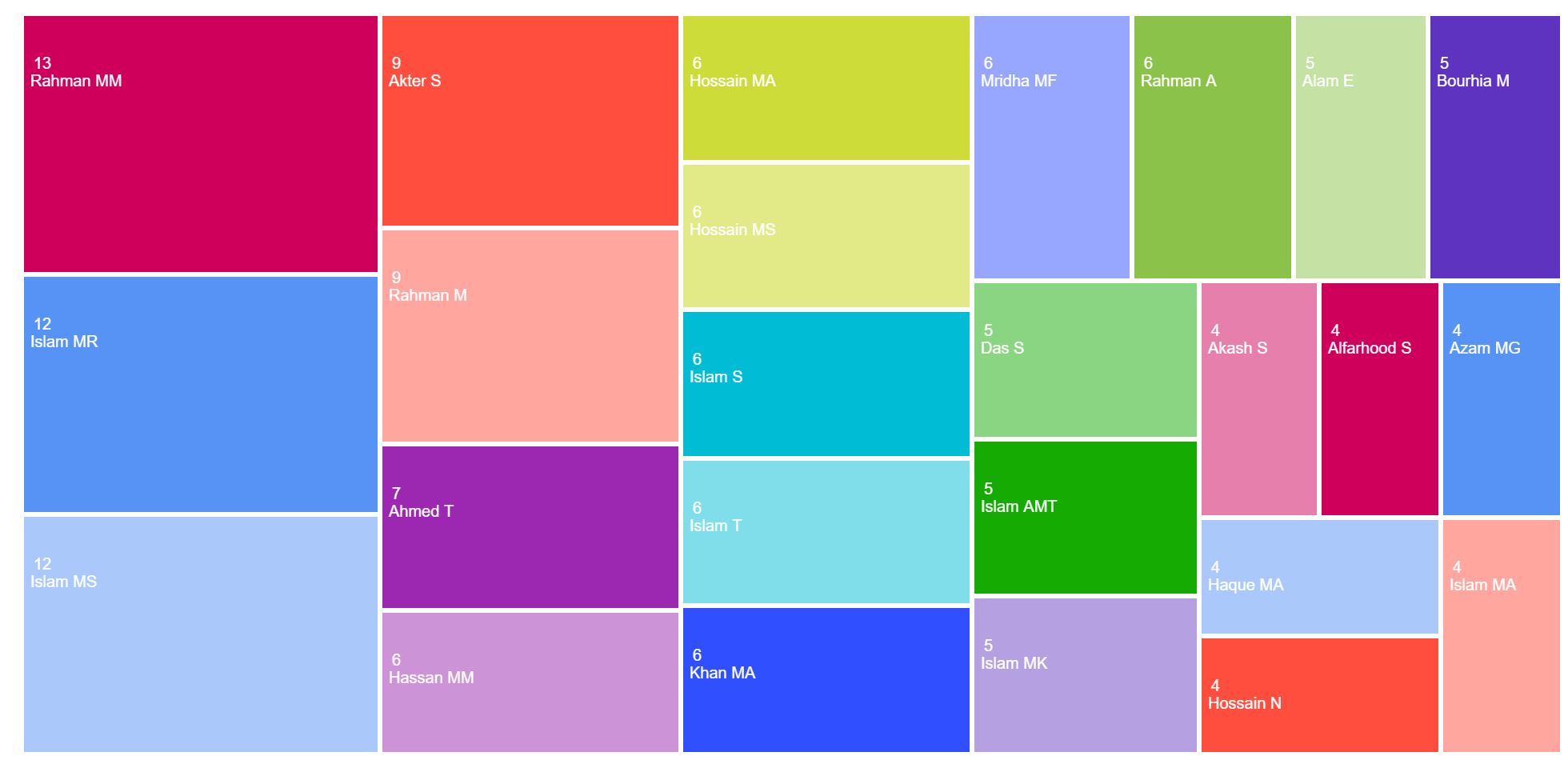
Researcher profiles (Top 25):
| Researcher | Record Count | % of 247 |
|---|---|---|
| Tahmeed Ahmed | 7 | 2.834% |
| Dr. M. F Mridha | 6 | 2.429% |
| Alam, Edris | 5 | 2.024% |
| Bourhia, Mohammed | 5 | 2.024% |
| Islam, Abu | 5 | 2.024% |
| Kumer, Ajoy | 4 | 1.619% |
| Sarker, Prof. Umakanta | 4 | 1.619% |
| Firdausi Qadri | 4 | 1.619% |
| Alfarhood, Sultan | 4 | 1.619% |
| Safran, Mejdl | 4 | 1.619% |
| Senjuti Saha | 4 | 1.619% |
| Azam, Mohammad Golam | 4 | 1.619% |
| Islam, Kamrul | 4 | 1.619% |
| IUT, Nazmul Hossain | 4 | 1.619% |
| Akash, Shopnil | 4 | 1.619% |
| Sarkar, Md Abdur Rouf | 3 | 1.215% |
| Islam, Aznarul | 3 | 1.215% |
| Benjamin Arnold | 3 | 1.215% |
| Hassan, Md Mehedi | 3 | 1.215% |
| Patil, Rajesh | 3 | 1.215% |
| Islam, Md. Rabiul | 3 | 1.215% |
| Waheed, Yasir | 3 | 1.215% |
| Ahsan, Amimul | 3 | 1.215% |
| Hossain, M. Khalid | 3 | 1.215% |
| Chisti, Mohammod J | 3 | 1.215% |
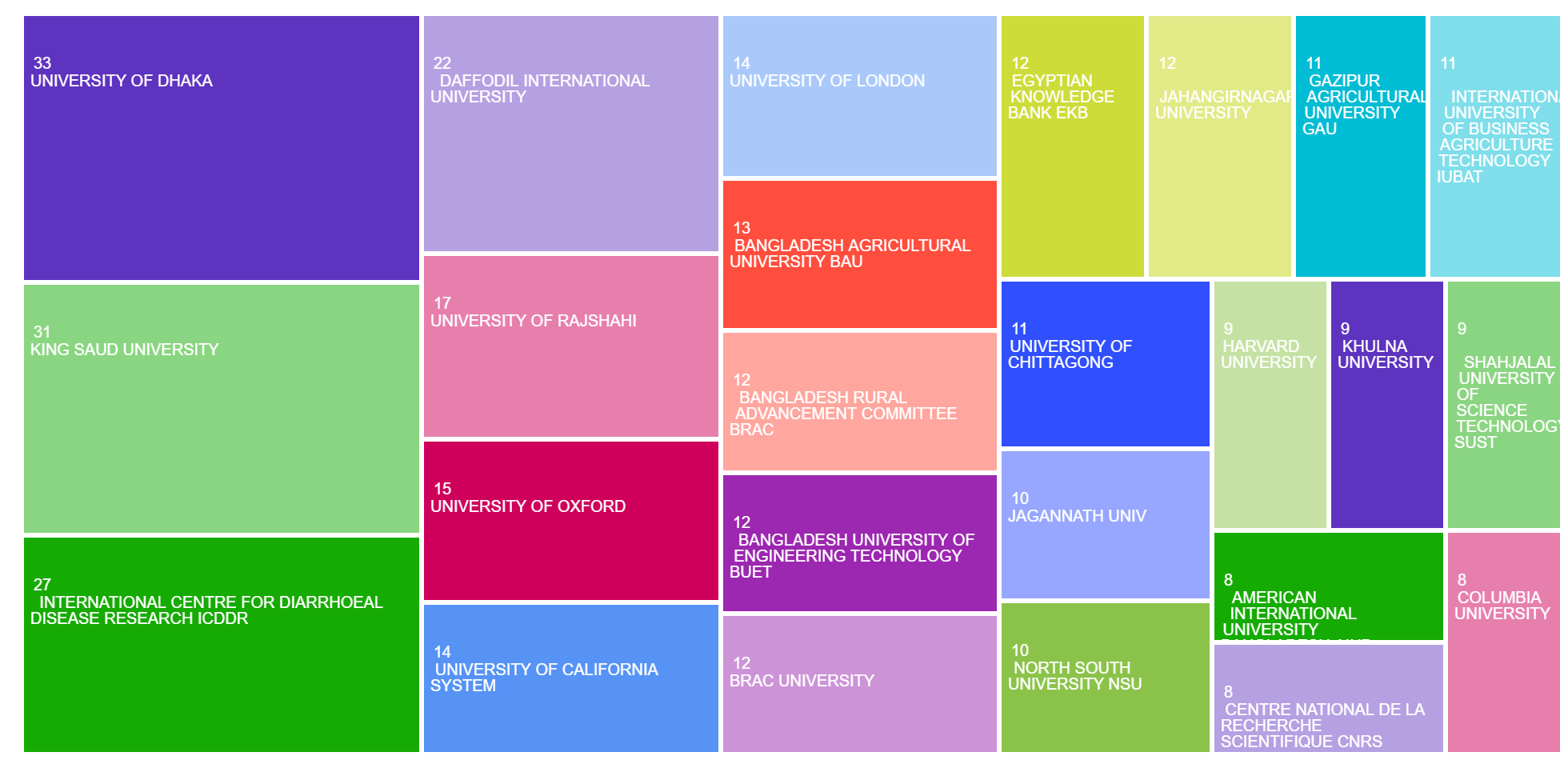
Research-affiliated institutes:
Research collaboration countries:
| Country | Record Count | % of 247 |
|---|---|---|
| Bangladesh | 247 | 100.000% |
| USA | 81 | 32.794% |
| Saudi Arabia | 61 | 24.696% |
| India | 48 | 19.433% |
| Australia | 46 | 18.623% |
| England | 38 | 15.385% |
| People’s R China | 35 | 14.170% |
| Japan | 31 | 12.551% |
| Canada | 22 | 8.907% |
| Malaysia | 22 | 8.907% |
| South Korea | 18 | 7.287% |
| Sweden | 18 | 7.287% |
| France | 17 | 6.883% |
| Thailand | 17 | 6.883% |
| Germany | 16 | 6.478% |
| Netherlands | 16 | 6.478% |
| Spain | 16 | 6.478% |
| Brazil | 15 | 6.073% |
| Pakistan | 15 | 6.073% |
| Egypt | 12 | 4.858% |
| Italy | 12 | 4.858% |
| Nigeria | 12 | 4.858% |
| Philippines | 12 | 4.858% |
| U Arab Emirates | 12 | 4.858% |
| Ethiopia | 11 | 4.453% |
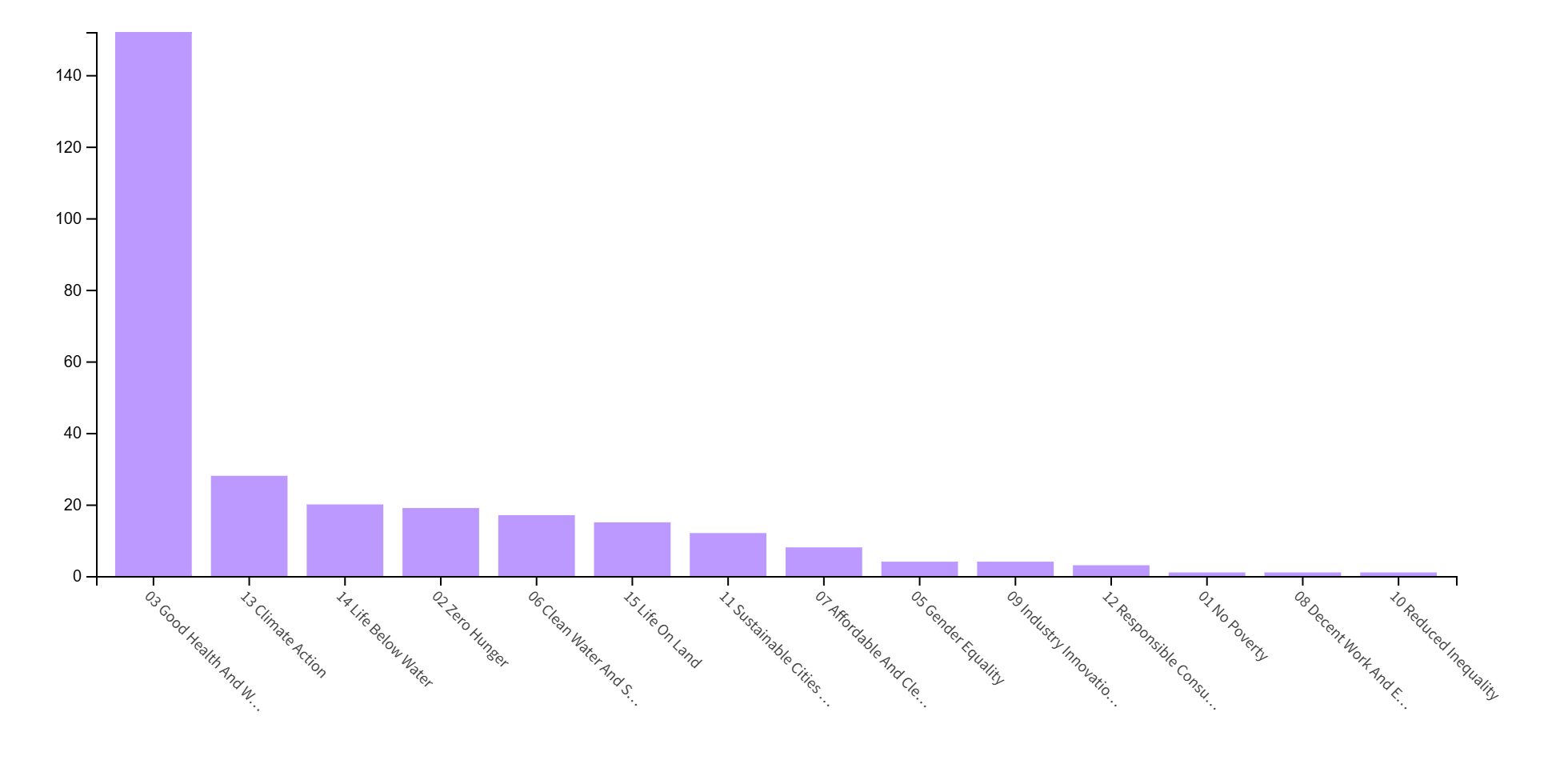
Sustainable Development Goals:
Web of Science Index:
| Index | Record Count | % of 247 |
|---|---|---|
| Science Citation Index Expanded (SCI-EXPANDED) | 247 | 100.000% |
| Social Sciences Citation Index (SSCI) | 6 | 2.429% |
Research highlights of NATURE PORTFOLIO publications from Bangladesh:
| Category | Count |
|---|---|
| Review Article | 2 |
| Early Access | 1 |
| Open Access | 237 |
| Enriched Cited References | 195 |
Observations:
-
The dominance of Multidisciplinary Sciences indicates a strategic focus on broad-impact research areas.
-
Collaboration with developed countries suggests strong international networking and knowledge exchange.
-
A few key researchers contributed disproportionately, signaling concentrated research leadership.
Questions:
-
How much of this research was funded or co-led by Bangladeshi institutions versus international partners?
-
What percentage of these publications involved female or early-career Bangladeshi researchers?
-
Could diversification beyond multidisciplinary sciences further enhance Bangladesh’s scientific portfolio?
Bangladesh’s growing footprint in Nature Portfolio journals highlights the nation’s evolving research ecosystem and increasing relevance in global science—an encouraging trajectory that calls for sustained institutional support and capacity building.