

The 2024 publication profile of Bangladesh in the Public Library of Sciences journals shows a strong research footprint, with all 329 papers involving Bangladeshi affiliations and substantial global collaboration. The most represented categories include Multidisciplinary Sciences (nearly 80%) and Public Environmental & Occupational Health (over 11%), indicating Bangladesh’s heavy engagement in broad scientific inquiry and public health research. Articles dominate the publication type (99%), while major contributors include researchers such as Rahman MM and institutions like ICDDR,B, University of Dhaka, and BRAC University. International collaborations span the USA, Australia, England, India, China, and many others, reflecting Bangladesh’s integration into global scientific networks. Overall, the dataset highlights a vibrant research ecosystem with diverse disciplines, strong institutional participation, and expanding international linkage. Web of Science
The areas of research publication categories in the TreeMap:
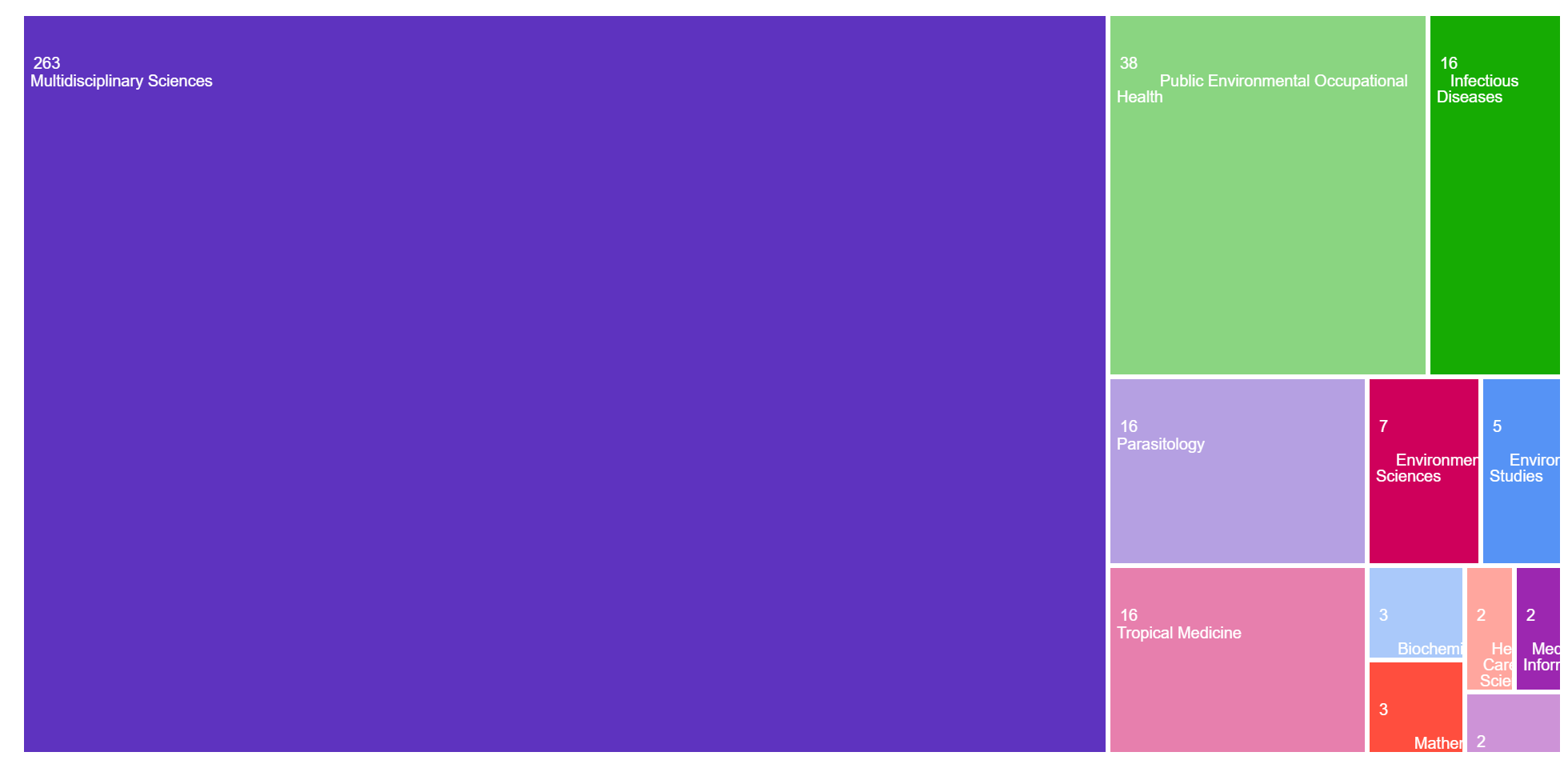
Research contributions in the field:
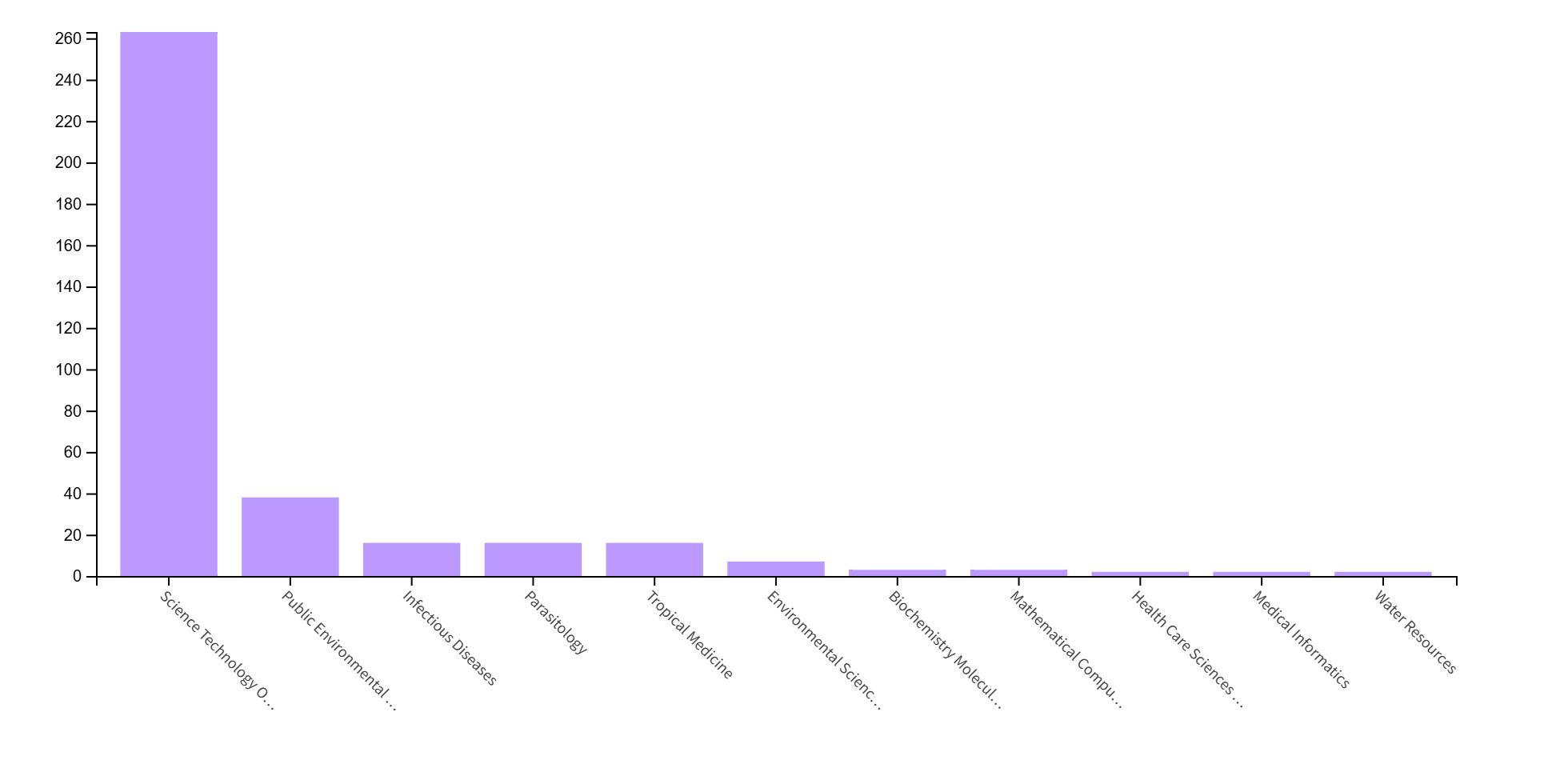
| Categories | Record Count | % of 329 |
|---|---|---|
| Multidisciplinary Sciences | 263 | 79.939% |
| Public Environmental Occupational Health | 38 | 11.550% |
| Infectious Diseases | 16 | 4.863% |
| Parasitology | 16 | 4.863% |
| Tropical Medicine | 16 | 4.863% |
| Environmental Sciences | 7 | 2.128% |
| Environmental Studies | 5 | 1.520% |
| Biochemical Research Methods | 3 | 0.912% |
| Mathematical Computational Biology | 3 | 0.912% |
| Health Care Sciences Services | 2 | 0.608% |
| Medical Informatics | 2 | 0.608% |
| Water Resources | 2 | 0.608% |
Research areas:
Types of published documents:
| Types | Record Count | % of 329 |
|---|---|---|
| Article | 326 | 99.088% |
| Retracted Publication | 7 | 2.128% |
| Review Article | 2 | 0.608% |
| Correction | 1 | 0.304% |
| Publication With Expression Of Concern | 1 | 0.304% |
Authors’ infographic (Top 25):
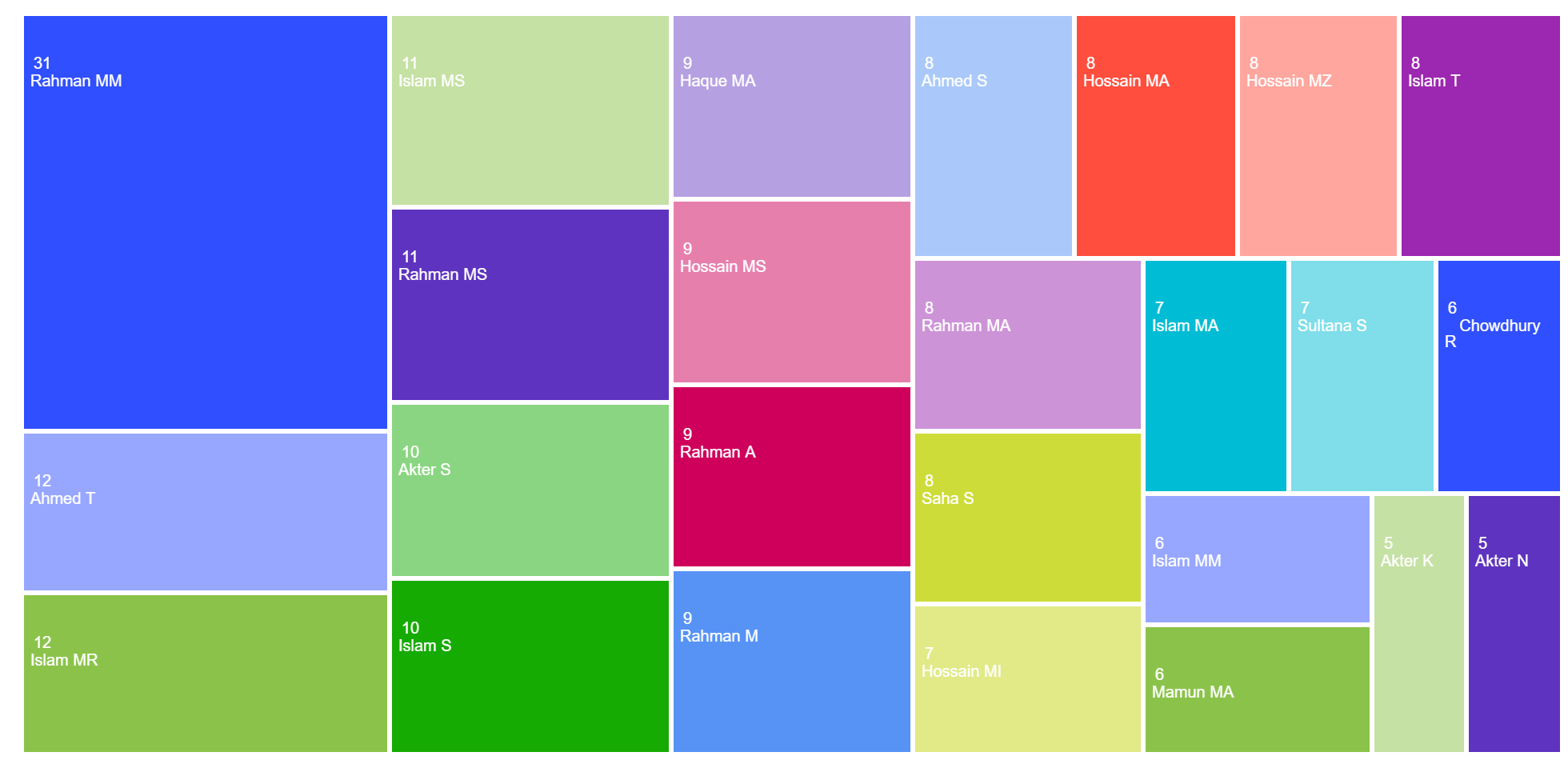
Researcher profiles (Top 25):
| Researcher | Record Count | % of 329 |
|---|---|---|
| Moin, Abu Tayab | 7 | 2.128% |
| Tahmeed Ahmed | 7 | 2.128% |
| Rahman, Md. Sahidur | 5 | 1.520% |
| Patil, Rajesh | 5 | 1.520% |
| Seruwagi, Gloria | 4 | 1.216% |
| Khan, Nuruzzaman | 4 | 1.216% |
| Mamun, Mohammed | 4 | 1.216% |
| Uddin, Md Palash | 4 | 1.216% |
| Mike English | 4 | 1.216% |
| Dr. M. F Mridha | 4 | 1.216% |
| Mollah, Nurul Haque | 4 | 1.216% |
| Senjuti Saha | 4 | 1.216% |
| Stephen P Luby | 4 | 1.216% |
| Firdausi Qadri | 4 | 1.216% |
| Kohenour Akter | 4 | 1.216% |
| Mohammad Hawlader | 4 | 1.216% |
| Islam, Md. Rabiul | 4 | 1.216% |
| Tofazzal Islam | 4 | 1.216% |
| Rahman, Md. Tanvir, PhD (UK) | 4 | 1.216% |
| Khandaker, Mayeen Uddin | 4 | 1.216% |
| El Arifeen, Shams | 4 | 1.216% |
| Shawar, Yusra Ribhi | 4 | 1.216% |
| Djellouli, Nehla | 4 | 1.216% |
| Chisti, Mohammod J | 4 | 1.216% |
| Kabir, Eva | 3 | 0.912% |
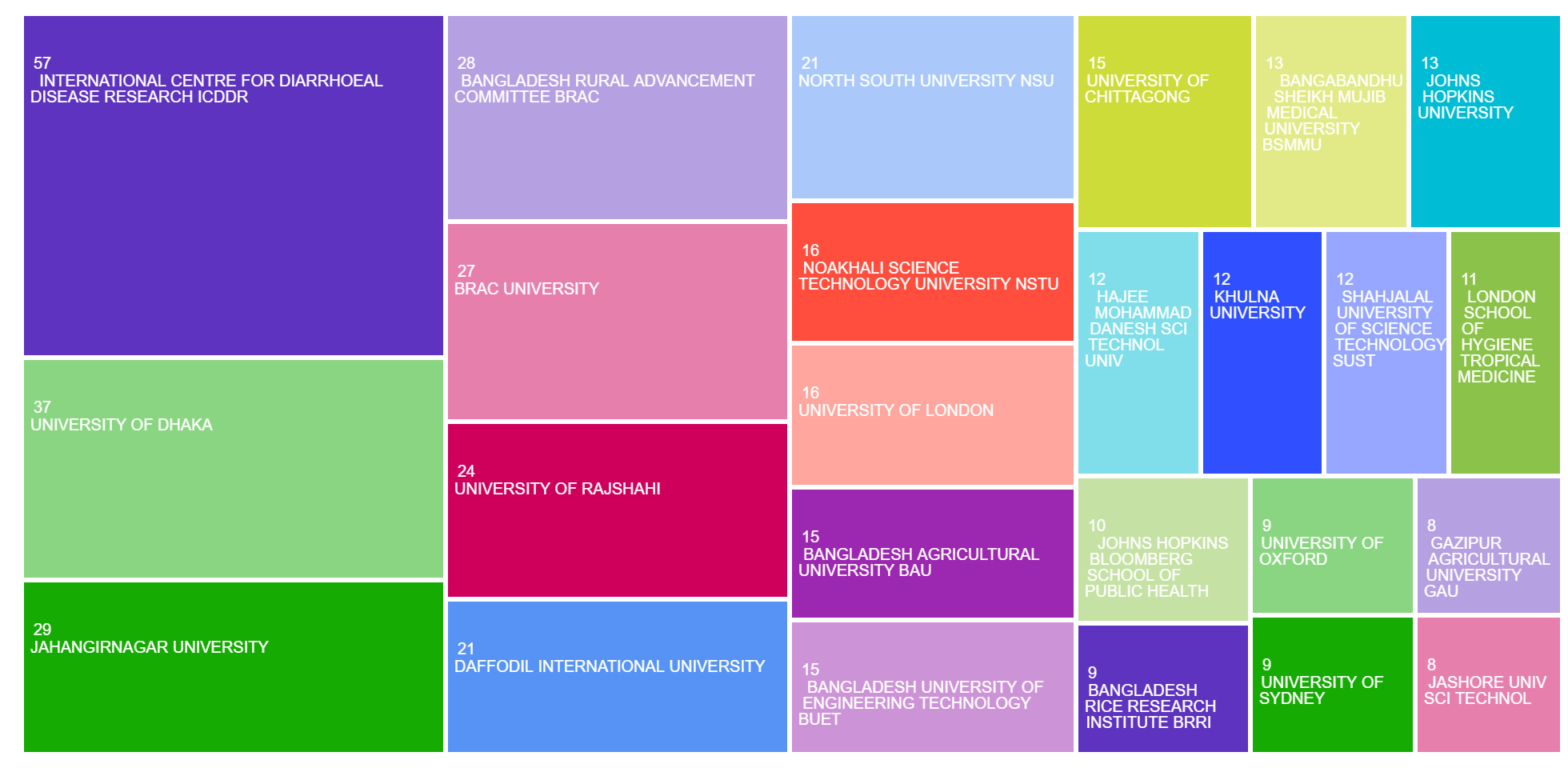
Research-affiliated institutes:
Research collaboration countries:
| Countries/Regions | Record Count | % of 329 |
|---|---|---|
| Bangladesh | 329 | 100.000% |
| USA | 76 | 23.100% |
| Australia | 45 | 13.678% |
| England | 39 | 11.854% |
| India | 24 | 7.295% |
| Peoples R China | 18 | 5.471% |
| Canada | 14 | 4.255% |
| Saudi Arabia | 14 | 4.255% |
| Malaysia | 12 | 3.647% |
| South Korea | 12 | 3.647% |
| South Africa | 10 | 3.040% |
| France | 9 | 2.736% |
| Netherlands | 8 | 2.432% |
| Nigeria | 8 | 2.432% |
| Pakistan | 8 | 2.432% |
| Thailand | 7 | 2.128% |
| Uganda | 7 | 2.128% |
| Ethiopia | 6 | 1.824% |
| Japan | 6 | 1.824% |
| Kenya | 6 | 1.824% |
| U Arab Emirates | 6 | 1.824% |
| Germany | 5 | 1.520% |
| Malawi | 5 | 1.520% |
| Nepal | 5 | 1.520% |
| Spain | 5 | 1.520% |
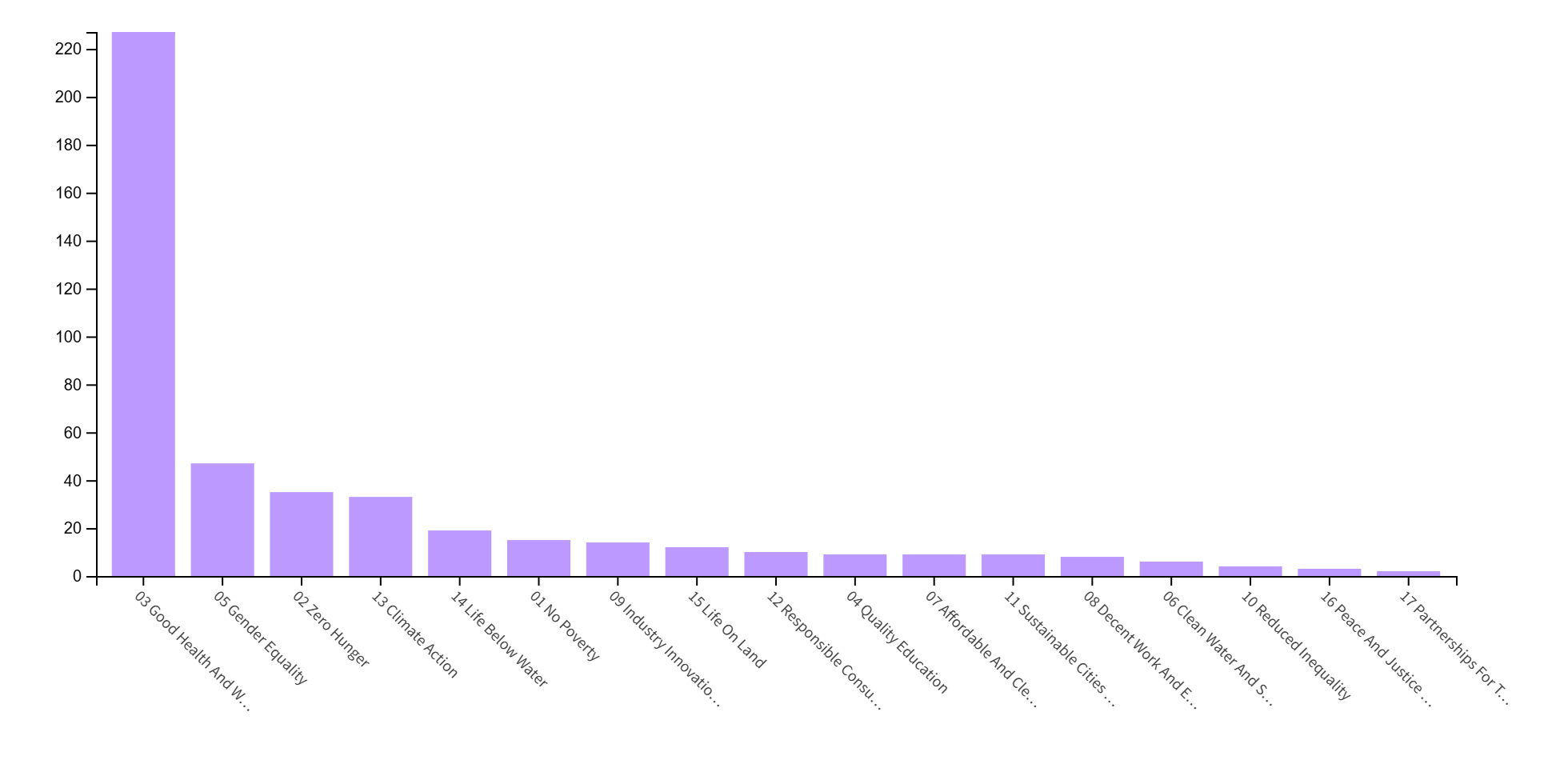
Sustainable Development Goals:
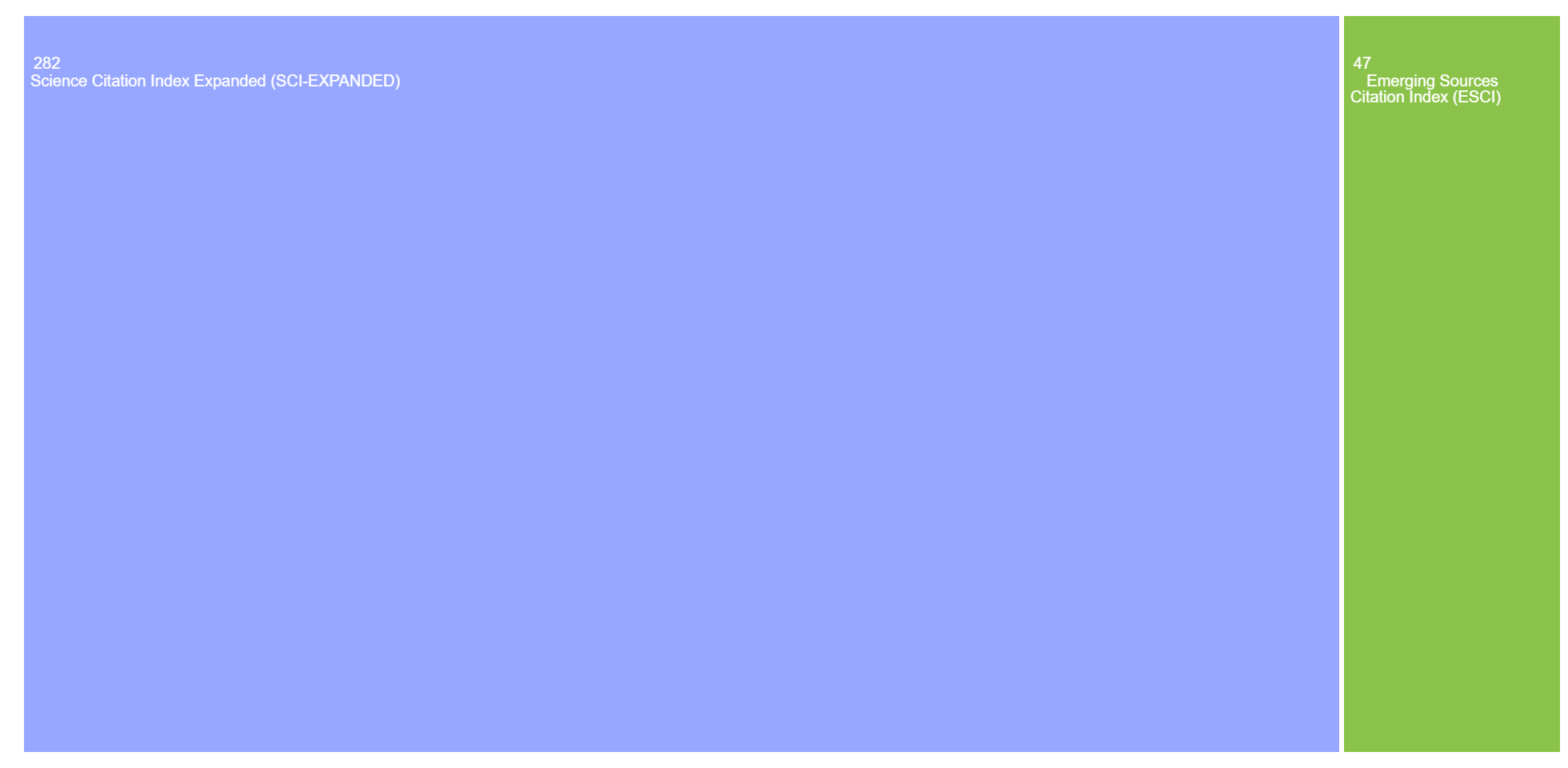
Web of Science Index:
Research highlights of Public Library Science publications from Bangladesh:
| Type | Result |
|---|---|
| Review Article | 2 |
| Open Access | 329 |
| Enriched Cited References | 196 |