
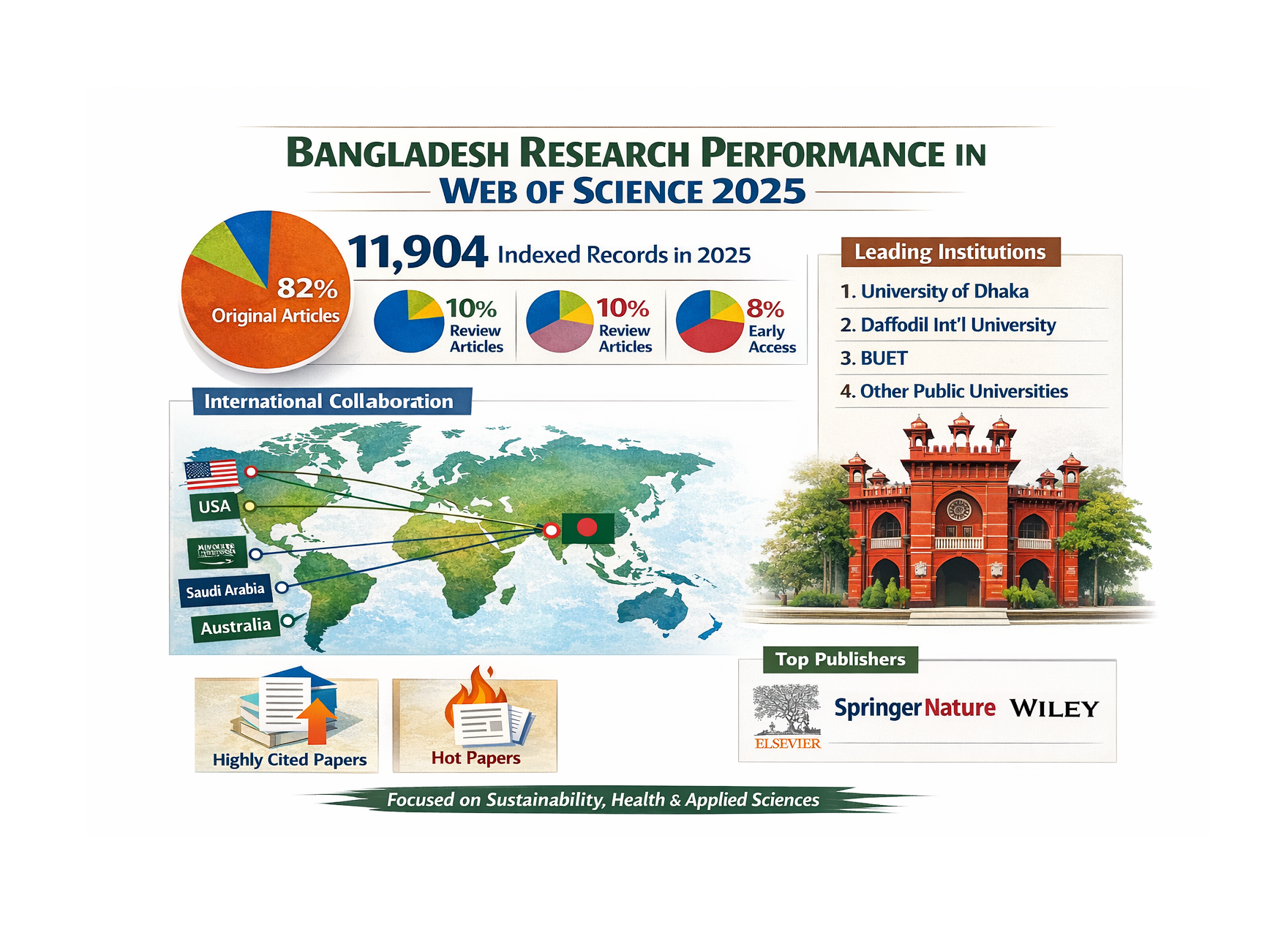
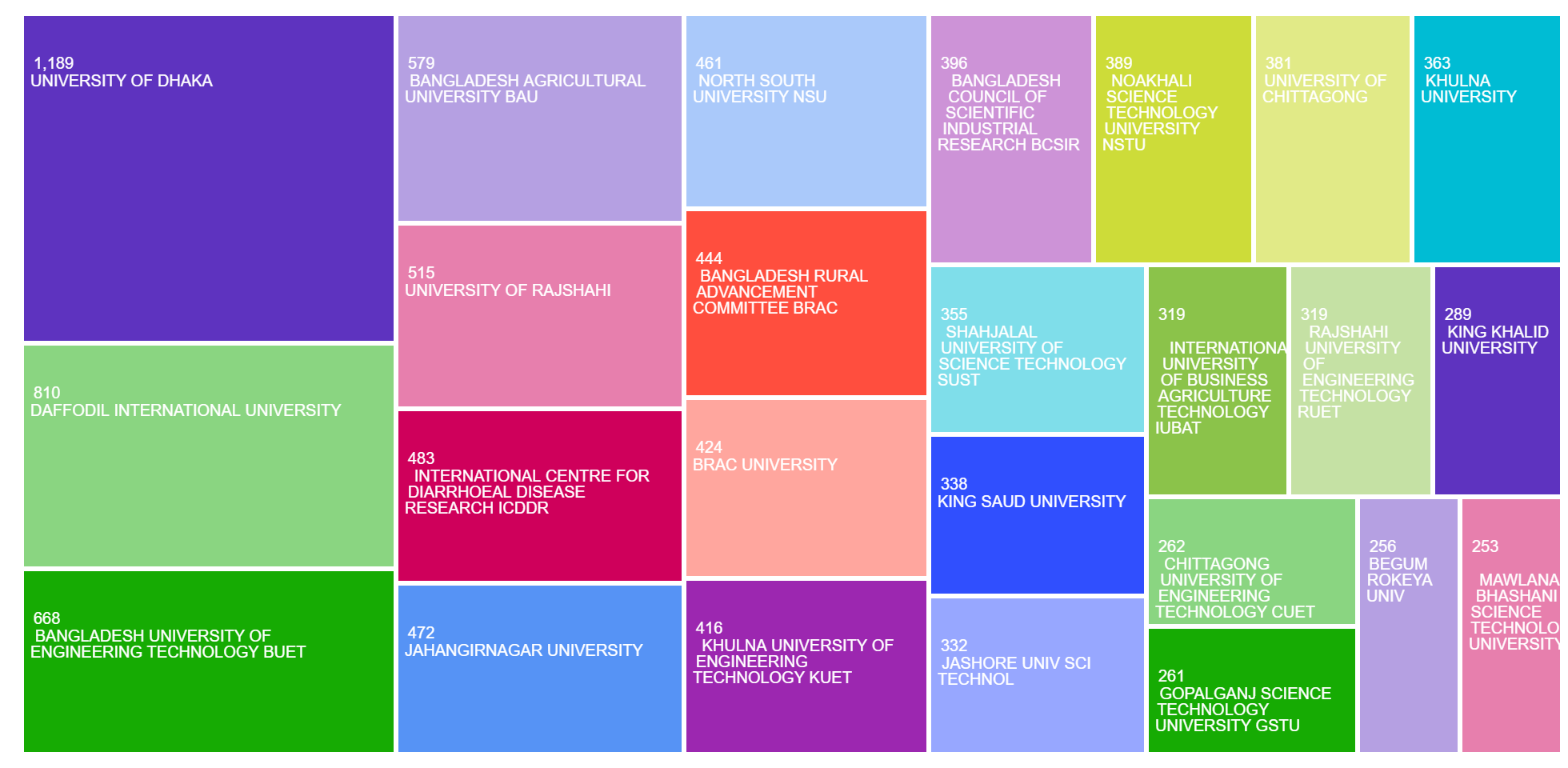
In 2025, Bangladesh demonstrated a strong presence in Web of Science master-listed journals, with 11,904 indexed records dominated by original research articles (over 82%) and a substantial volume of review articles and early-access publications, indicating both productivity and engagement with emerging research fronts. The output was heavily concentrated in environmental sciences, multidisciplinary sciences, public and occupational health, materials science, and engineering-related fields, reflecting national research priorities linked to sustainability, health, and applied sciences. University of Dhaka emerged as the leading affiliation, followed by Daffodil International University, BUET, and other major public universities, while international collaboration was evident through significant co-authorship links with the USA, Saudi Arabia, Australia, and other countries. Elsevier, Springer Nature, and Wiley accounted for the majority of publications, and the presence of highly cited and hot papers suggests growing global visibility, although the overall contribution remains geographically concentrated within Bangladesh. Web of Science
The areas of research publication categories in the TreeMap:
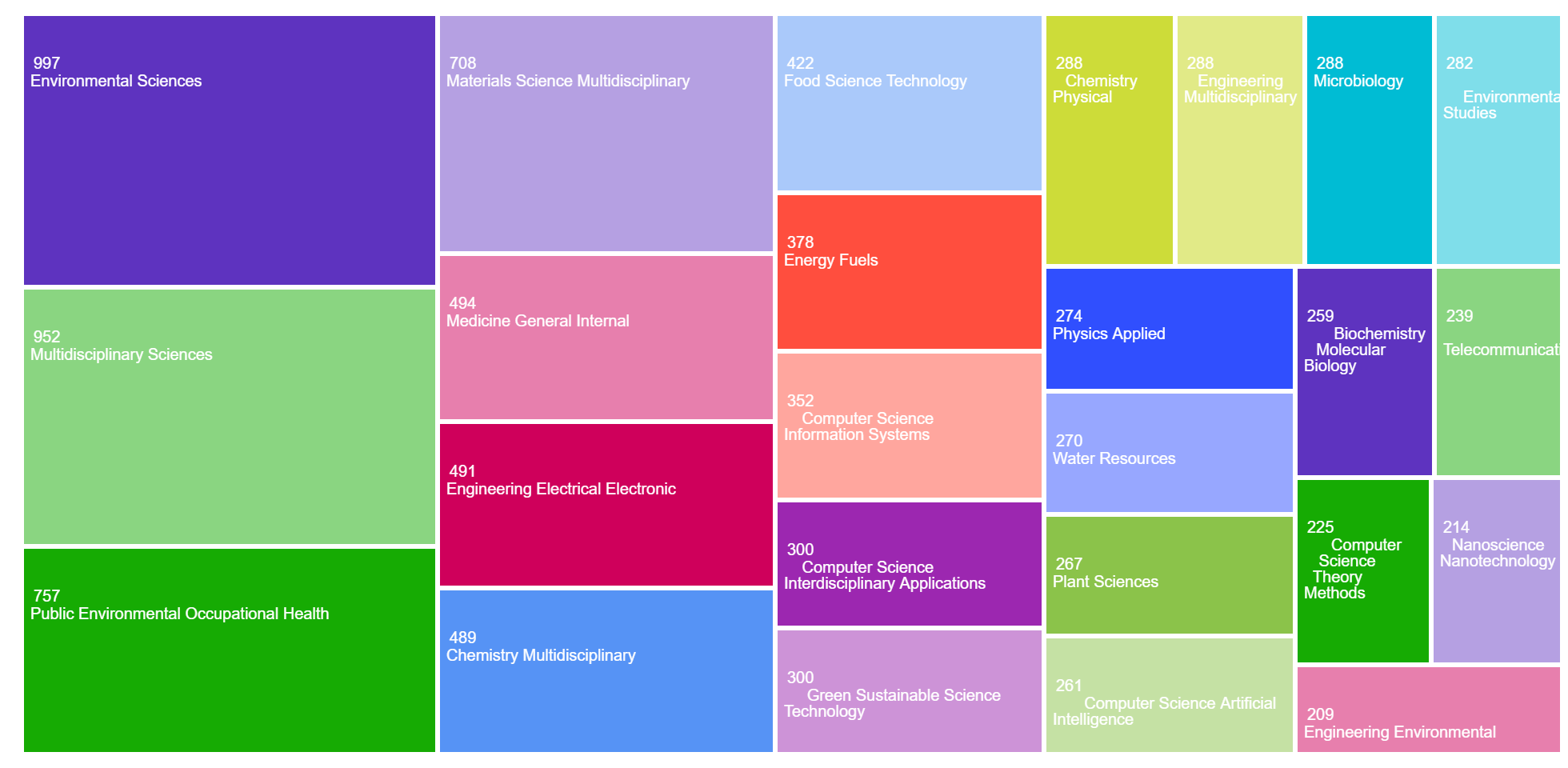
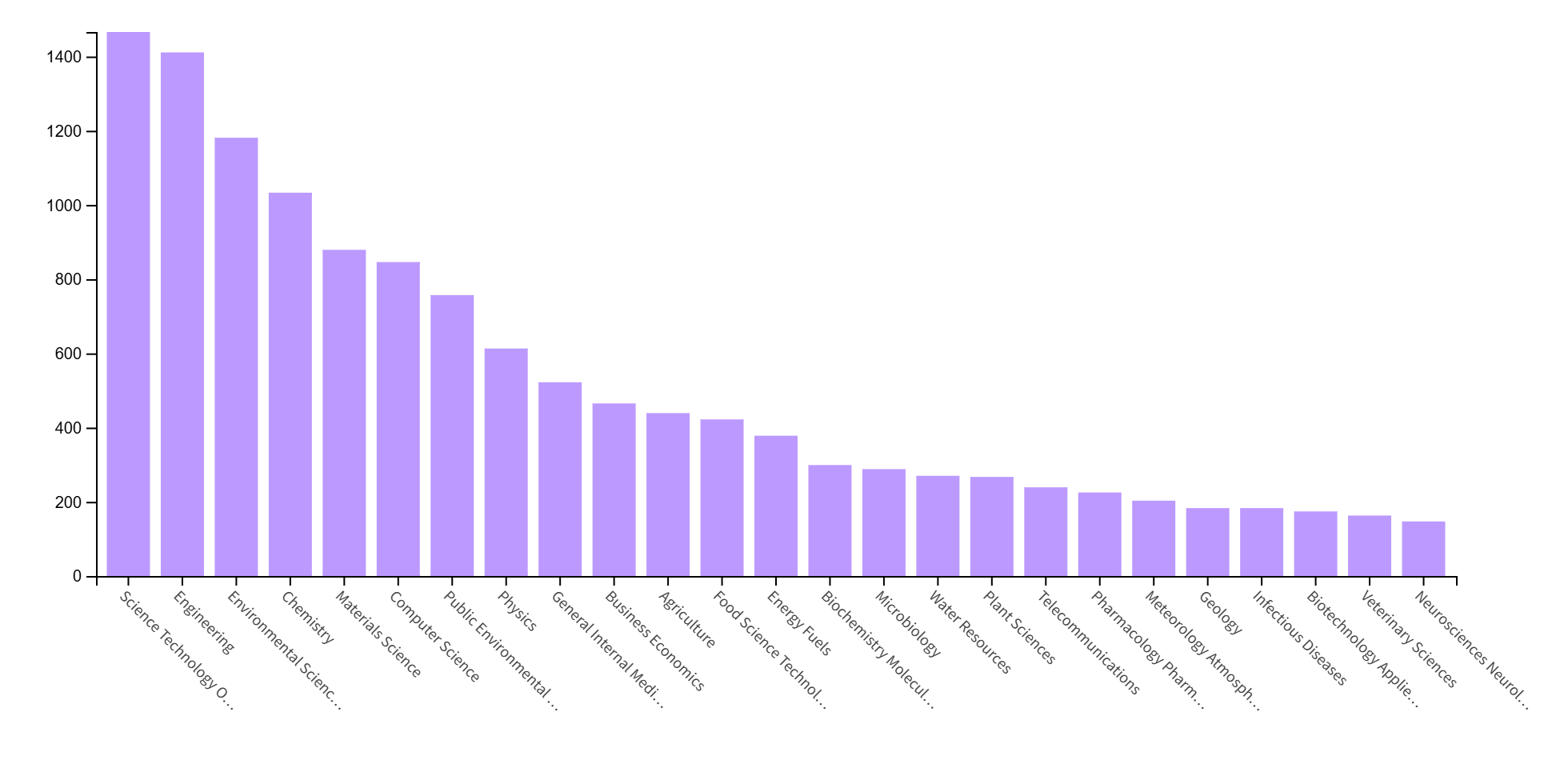
Research contributions in the field:
| Categories | Record Count | % of 11,904 |
|---|---|---|
| Environmental Sciences | 997 | 8.375% |
| Multidisciplinary Sciences | 952 | 7.997% |
| Public Environmental Occupational Health | 757 | 6.359% |
| Materials Science Multidisciplinary | 708 | 5.948% |
| Medicine General Internal | 494 | 4.150% |
| Engineering Electrical Electronic | 491 | 4.125% |
| Chemistry Multidisciplinary | 489 | 4.108% |
| Food Science Technology | 422 | 3.545% |
| Energy Fuels | 378 | 3.175% |
| Computer Science Information Systems | 352 | 2.957% |
| Computer Science Interdisciplinary Applications | 300 | 2.520% |
| Green Sustainable Science Technology | 300 | 2.520% |
| Chemistry Physical | 288 | 2.419% |
| Engineering Multidisciplinary | 288 | 2.419% |
| Microbiology | 288 | 2.419% |
| Environmental Studies | 282 | 2.369% |
| Physics Applied | 274 | 2.302% |
| Water Resources | 270 | 2.268% |
| Plant Sciences | 267 | 2.243% |
| Computer Science Artificial Intelligence | 261 | 2.193% |
| Biochemistry Molecular Biology | 259 | 2.176% |
| Telecommunications | 239 | 2.008% |
| Computer Science Theory Methods | 225 | 1.890% |
| Nanoscience Nanotechnology | 214 | 1.798% |
| Engineering Environmental | 209 | 1.756% |
Research areas:
Types of published documents:
| Types | Record Count | % of 11,904 |
|---|---|---|
| Article | 9,829 | 82.569% |
| Review Article | 1,133 | 9.518% |
| Early Access | 990 | 8.317% |
| Proceeding Paper | 263 | 2.209% |
| Meeting Abstract | 227 | 1.907% |
| Editorial Material | 162 | 1.361% |
| Letter | 148 | 1.243% |
| Correction | 95 | 0.798% |
| Data Paper | 35 | 0.294% |
| Book Review | 30 | 0.252% |
| Retraction | 13 | 0.109% |
| Retracted Publication | 10 | 0.084% |
| Meeting | 1 | 0.008% |
| News Item | 1 | 0.008% |
| Poetry | 1 | 0.008% |
| Publication With Expression Of Concern | 1 | 0.008% |
| Reprint | 1 | 0.008% |
Authors’ infographic (Top 25):
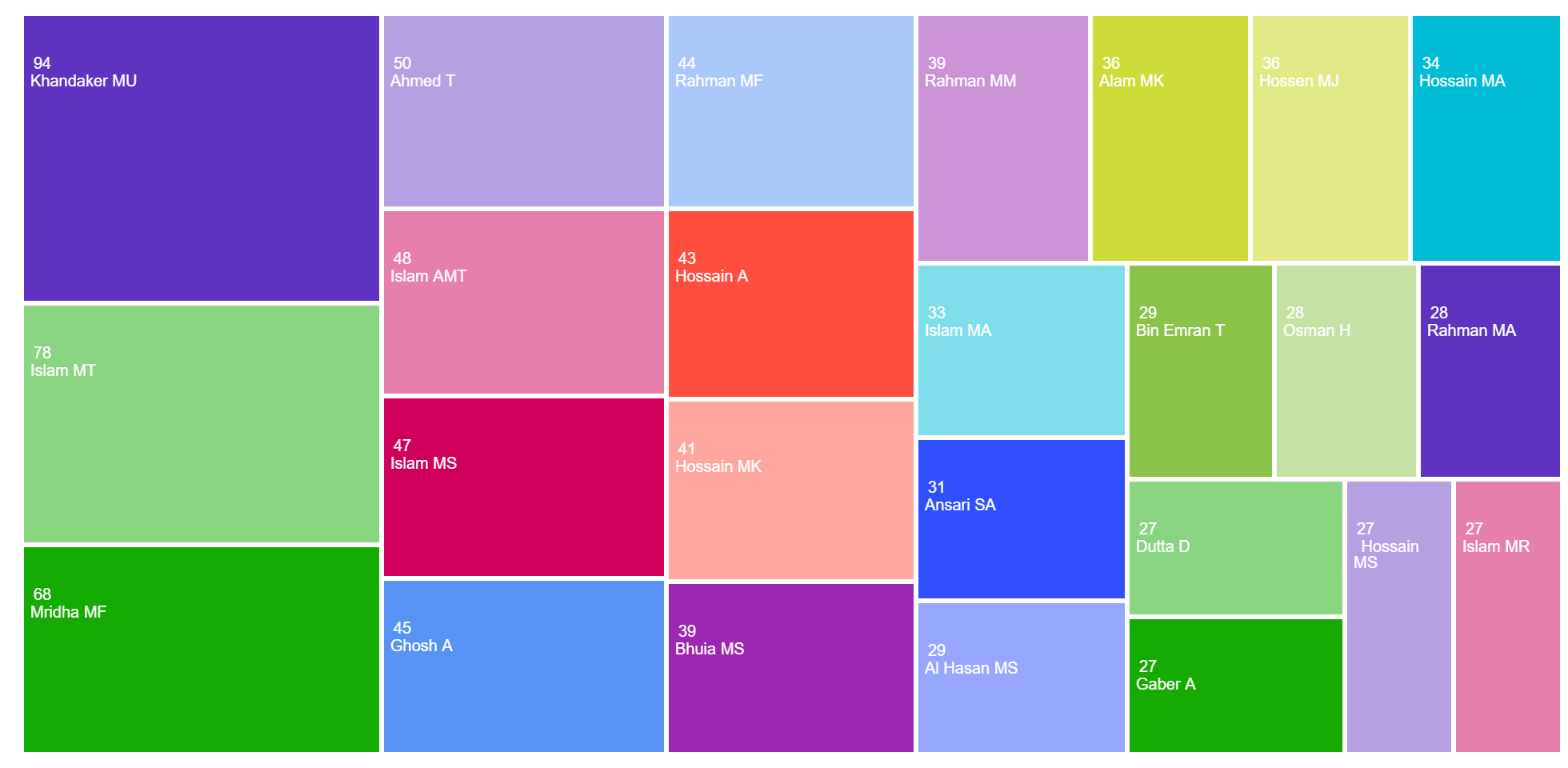
Researcher profiles (Top 25):
| Researcher | Record Count | % of 11,904 |
|---|---|---|
| Khandaker, Mayeen Uddin | 94 | 0.790% |
| Mridha, M. F | 67 | 0.563% |
| Emran, Talha Bin | 52 | 0.437% |
| Islam, Abu Reza Md. Towfiqul | 51 | 0.428% |
| Siddique Akber Ansari | 45 | 0.378% |
| Tahmeed Ahmed | 44 | 0.370% |
| Rahman, Md. Ferdous | 42 | 0.353% |
| Ghosh, Avijit | 42 | 0.353% |
| Hossain, Akbar | 39 | 0.328% |
| Bhuia, Md. Shimul | 37 | 0.311% |
| Alam, Mohammad Khursheed | 36 | 0.302% |
| Kamrul-Hasan, A.B.M. | 36 | 0.302% |
| jakir hossen | 36 | 0.302% |
| Hossain, M. Khalid | 36 | 0.302% |
| Hossain, Md. Sahadat | 32 | 0.269% |
| Alam, Edris | 30 | 0.252% |
| Osman, Hamid | 30 | 0.252% |
| M. Nazmul Hoque | 30 | 0.252% |
| Arafat, S M Yasir | 30 | 0.252% |
| Shams El Arifeen | 30 | 0.252% |
| Hossain, Nayem | 29 | 0.244% |
| Qadri, Firdausi | 29 | 0.244% |
| Islam, Tarikul | 29 | 0.244% |
| Shirin, Tahmina | 27 | 0.227% |
| Gopinath, Subash | 26 | 0.218% |
Research-affiliated institutes:
Research collaboration countries:
| Countries/Regions | Record Count | % of 11,904 |
|---|---|---|
| Bangladesh | 11,874 | 99.748% |
| USA | 2,376 | 19.960% |
| Saudi Arabia | 1,411 | 11.853% |
| Australia | 1,290 | 10.837% |
| India | 1,223 | 10.274% |
| Peoples R China | 1,047 | 8.795% |
| Malaysia | 1,025 | 8.611% |
| England | 866 | 7.275% |
| Japan | 781 | 6.561% |
| South Korea | 601 | 5.049% |
| Canada | 515 | 4.326% |
| Pakistan | 515 | 4.326% |
| Germany | 306 | 2.571% |
| Egypt | 285 | 2.394% |
| Thailand | 264 | 2.218% |
| Italy | 237 | 1.991% |
| Sweden | 226 | 1.899% |
| Indonesia | 214 | 1.798% |
| United Arab Emirates | 212 | 1.781% |
| Türkiye | 204 | 1.714% |
| Spain | 179 | 1.504% |
| Brazil | 174 | 1.462% |
| Nigeria | 172 | 1.445% |
| Nepal | 170 | 1.428% |
| Netherlands | 169 | 1.420% |
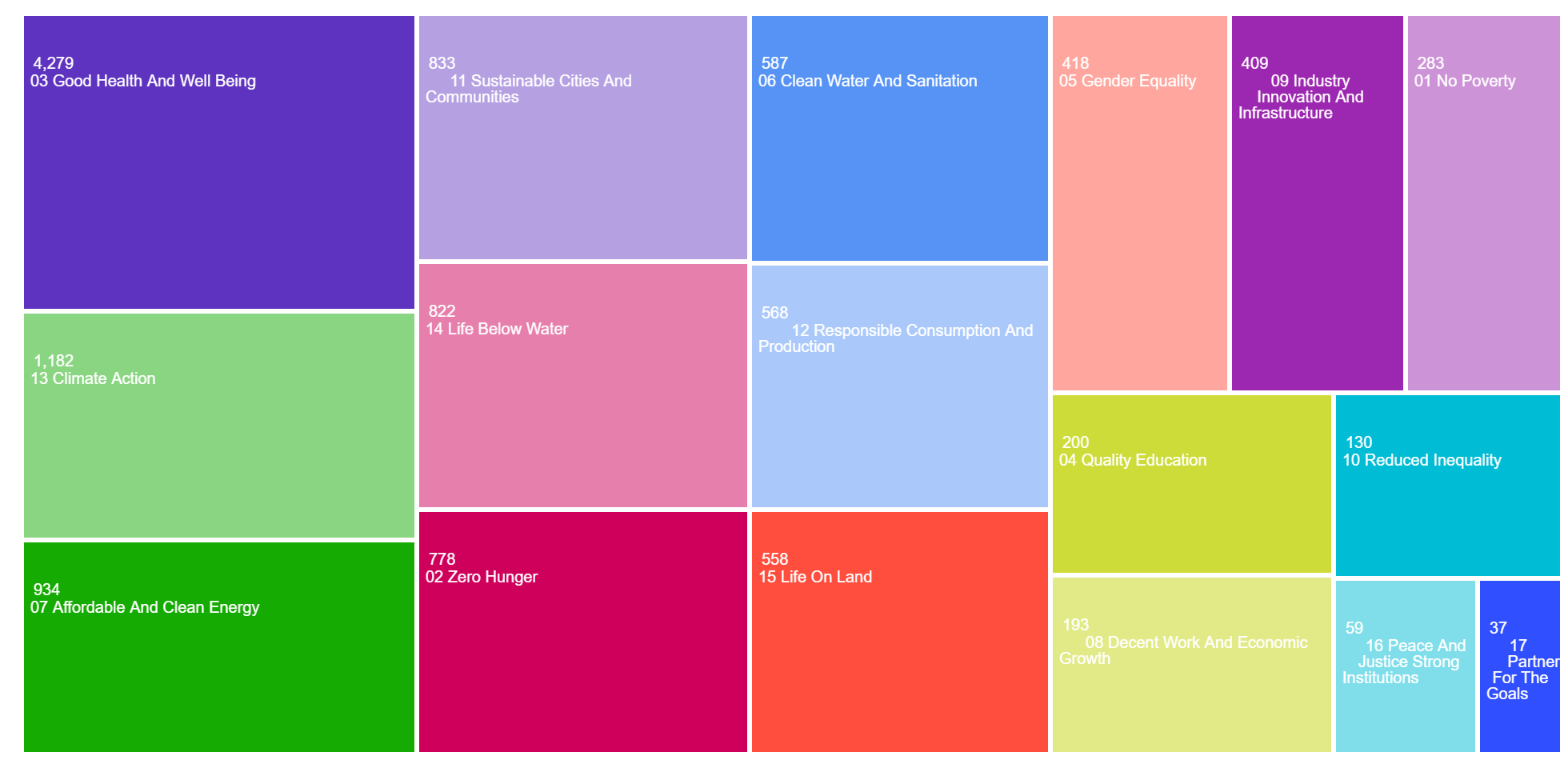
Sustainable Development Goals:
Publishers:
| Publishers | Record Count | % of 11,904 |
|---|---|---|
| Elsevier | 3,098 | 26.025% |
| Springer Nature | 1,749 | 14.693% |
| Wiley | 1,449 | 12.172% |
| Mdpi | 563 | 4.730% |
| Taylor & Francis | 465 | 3.906% |
| Public Library Science | 410 | 3.444% |
| Nature Portfolio | 389 | 3.268% |
| IEEE | 369 | 3.100% |
| Sage | 261 | 2.193% |
| Emerald Group Publishing | 243 | 2.041% |
| Royal Soc Chemistry | 239 | 2.008% |
| Lippincott Williams & Wilkins | 218 | 1.831% |
| Frontiers Media Sa | 173 | 1.453% |
| Oxford Univ. Press | 135 | 1.134% |
| Bmj Publishing Group | 127 | 1.067% |
| Amer Chemical Soc | 112 | 0.941% |
| Springer Int Publ Ag | 105 | 0.882% |
| Iop Publishing Ltd | 100 | 0.840% |
| Amer Soc Microbiology | 91 | 0.764% |
| AIP Publishing | 85 | 0.714% |
| European Publishing | 56 | 0.470% |
| Keai Publishing Ltd | 55 | 0.462% |
| Cambridge Univ. Press | 45 | 0.378% |
| Bentham Science Publ. Ltd. | 42 | 0.353% |
| World Scientific | 40 | 0.336% |
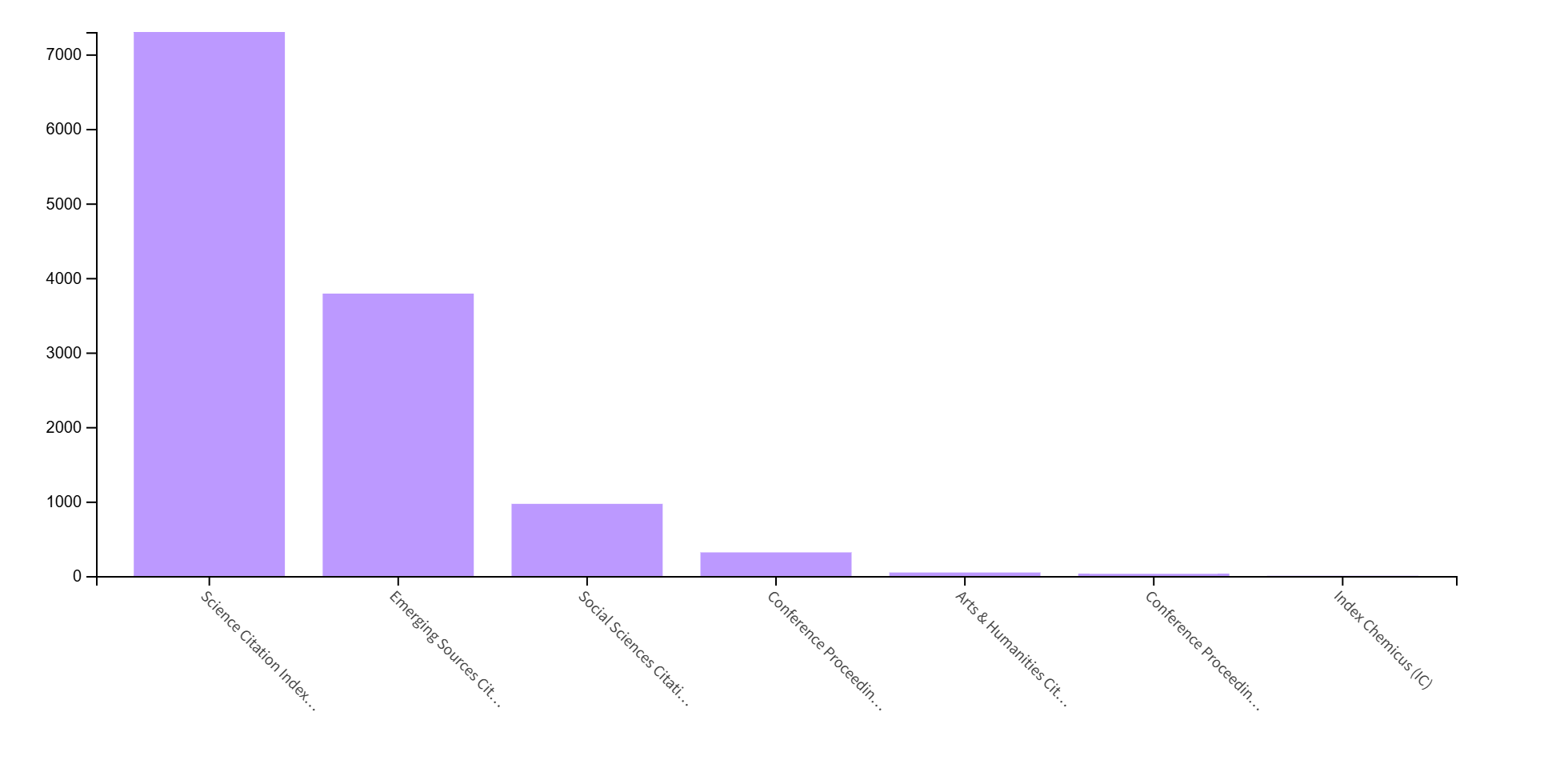
Web of Science Index:
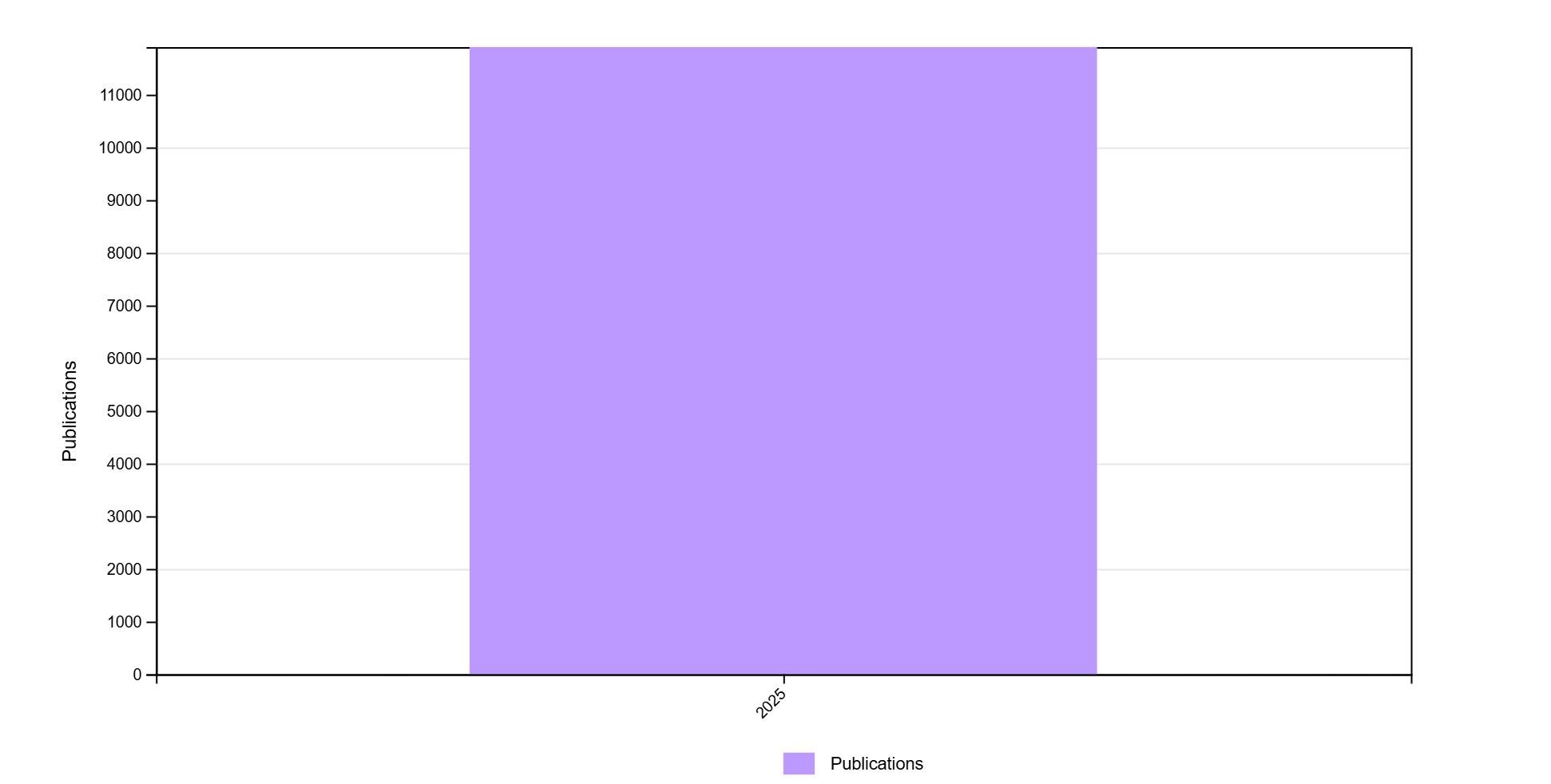
Web of Science Citation:

Research highlights of scientific publications from Bangladesh in the Web of Science:
| Type | Result |
|---|---|
| Highly Cited Papers | 72 |
| Hot Papers | 10 |
| Review Article | 1,133 |
| Early Access | 990 |
| Open Access | 7,405 |
| Enriched Cited References | 6,407 |
| Open publisher-invited reviews | 222 |