
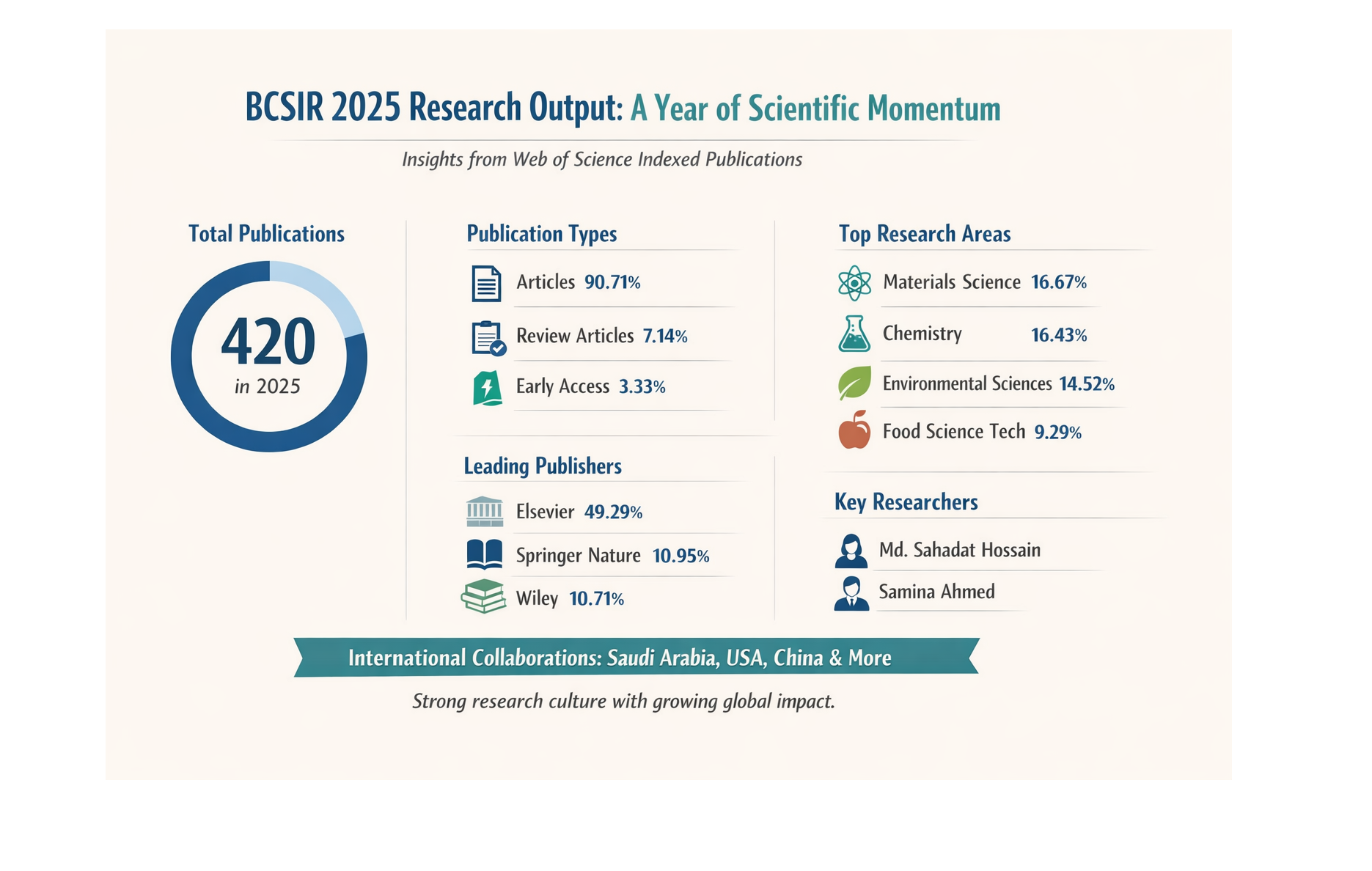
In 2025, the Bangladesh Council of Scientific and Industrial Research (BCSIR) recorded a total of 420 publications indexed in the Web of Science. The research output was overwhelmingly dominated by articles (90.71%), with review articles (7.14%) and early access papers (3.33%) contributing modestly. The primary research areas were multidisciplinary, led by Materials Science Multidisciplinary (16.67%) and Chemistry Multidisciplinary (16.43%), alongside strong contributions in Environmental Sciences (14.52%) and Food Science Technology (9.29%). Elsevier was the leading publisher, accounting for 49.29% of publications, followed by Springer Nature and Wiley. Most authors were based in Bangladesh, with notable international collaborations from Saudi Arabia, the USA, and China. Highly cited researchers included Md. Sahadat Hossain and Samina Ahmed, reflecting a growing influence in key scientific domains. Web of Science
The areas of research publication categories in the TreeMap:
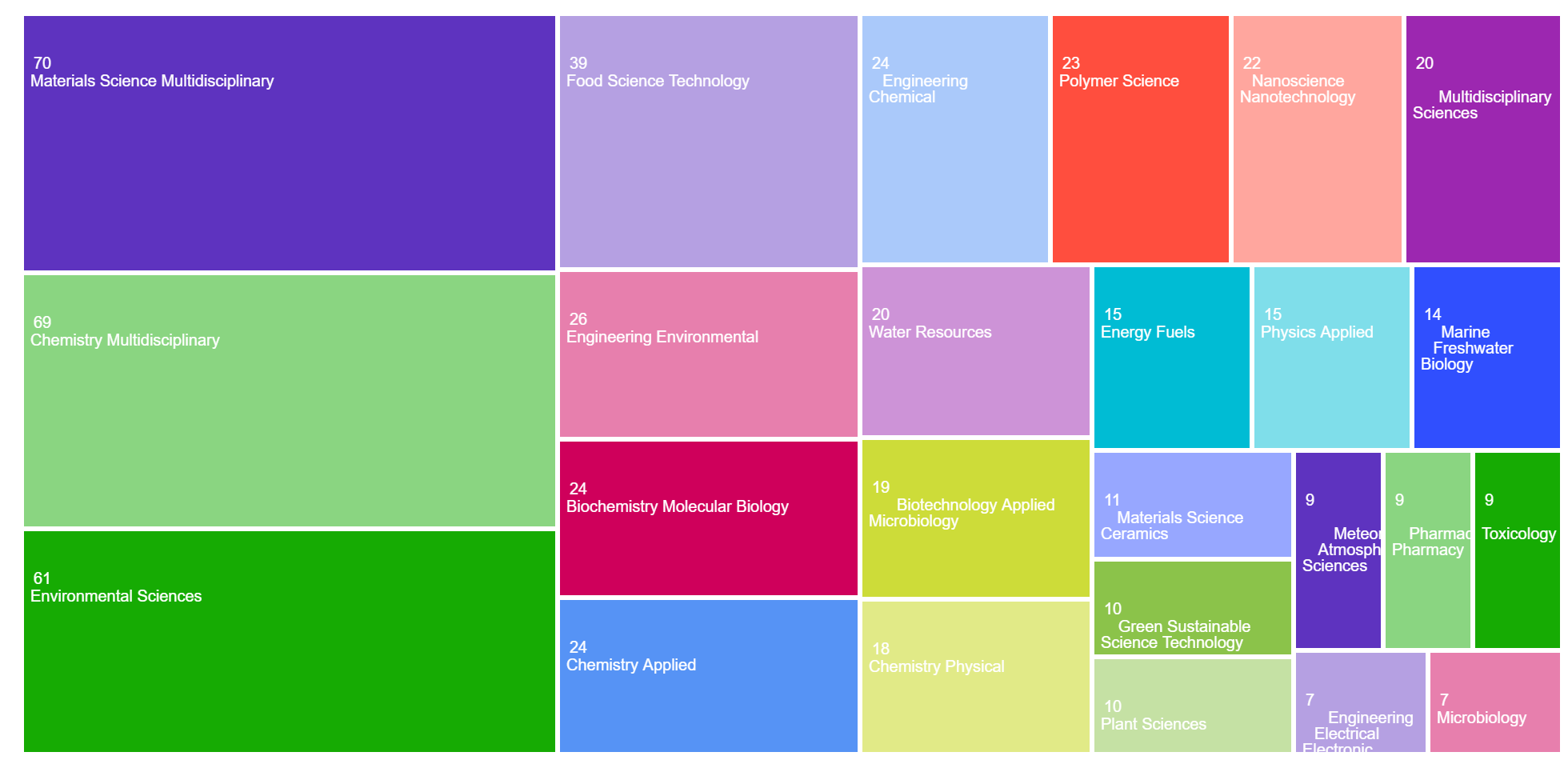
Research contributions in the field:
| Category | Record Count | % of 420 |
|---|---|---|
| Materials Science Multidisciplinary | 70 | 16.67% |
| Chemistry Multidisciplinary | 69 | 16.43% |
| Environmental Sciences | 61 | 14.52% |
| Food Science Technology | 39 | 9.29% |
| Engineering Environmental | 26 | 6.19% |
| Biochemistry Molecular Biology | 24 | 5.71% |
| Chemistry Applied | 24 | 5.71% |
| Engineering Chemical | 24 | 5.71% |
| Polymer Science | 23 | 5.48% |
| Nanoscience Nanotechnology | 22 | 5.24% |
| Multidisciplinary Sciences | 20 | 4.76% |
| Water Resources | 20 | 4.76% |
| Biotechnology Applied Microbiology | 19 | 4.52% |
| Chemistry Physical | 18 | 4.29% |
| Energy Fuels | 15 | 3.57% |
| Physics Applied | 15 | 3.57% |
| Marine Freshwater Biology | 14 | 3.33% |
| Materials Science Ceramics | 11 | 2.62% |
| Green Sustainable Science Technology | 10 | 2.38% |
| Plant Sciences | 10 | 2.38% |
| Meteorology Atmospheric Sciences | 9 | 2.14% |
| Pharmacology Pharmacy | 9 | 2.14% |
| Toxicology | 9 | 2.14% |
| Engineering Electrical Electronic | 7 | 1.67% |
| Microbiology | 7 | 1.67% |
Research areas:
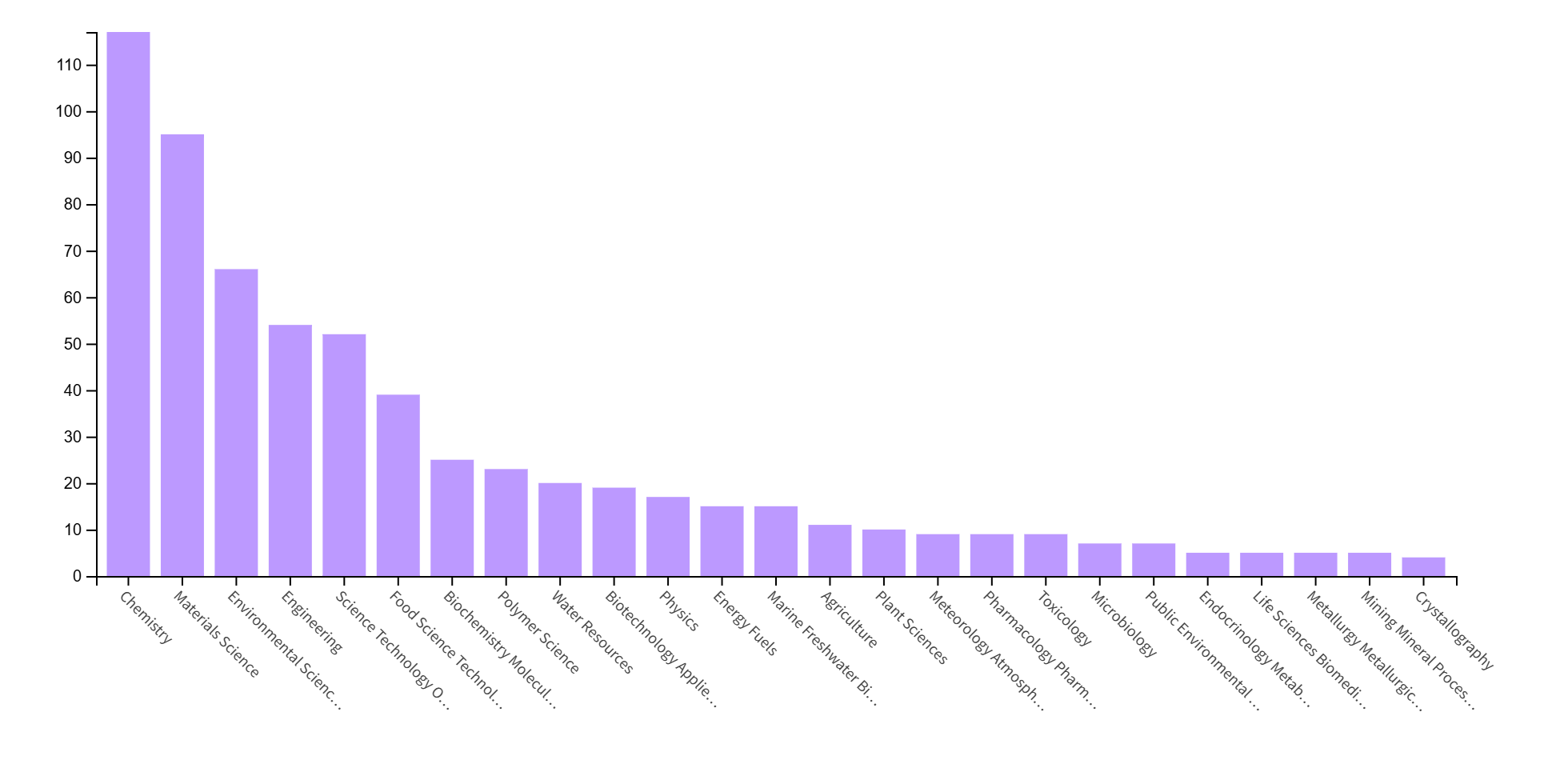
Types of published documents:
| Type | Record Count | % of 420 |
|---|---|---|
| Article | 381 | 90.71% |
| Review Article | 30 | 7.14% |
| Early Access | 14 | 3.33% |
| Correction | 5 | 1.19% |
| Letter | 2 | 0.48% |
| Data Paper | 1 | 0.24% |
| Meeting Abstract | 1 | 0.24% |
| Retraction | 1 | 0.24% |
Authors’ infographic (Top 25):
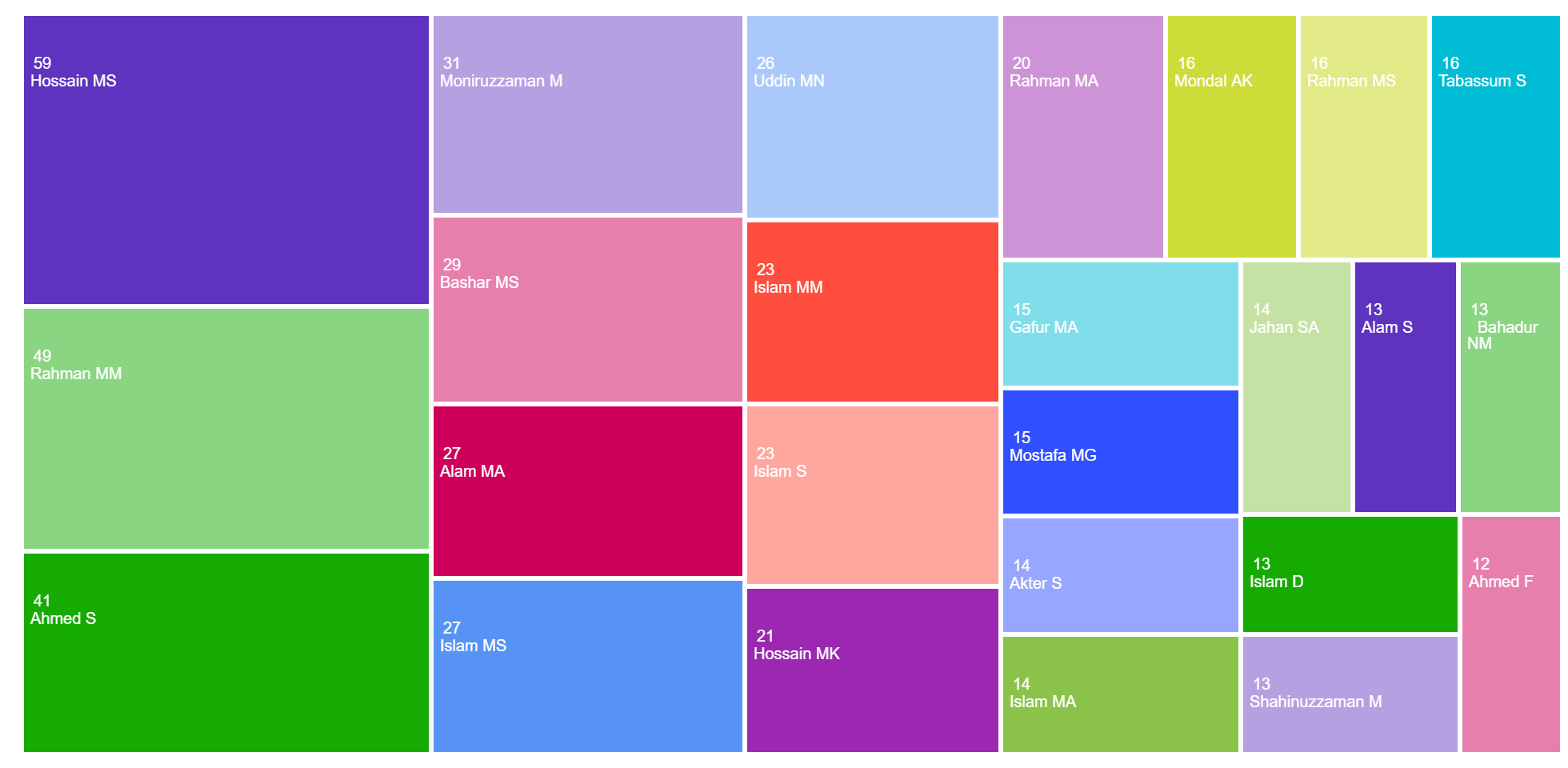
Researcher profiles (Top 25):
| Researchers | Record Count | % of 420 |
|---|---|---|
| Hossain, Md. Sahadat | 38 | 9.05% |
| Ahmed, Samina | 31 | 7.38% |
| Bashar, M. S. | 24 | 5.71% |
| Mondal, Ajoy Kanti | 16 | 3.81% |
| Gafur, M. A. | 15 | 3.57% |
| Jahan, Shirin Akter | 14 | 3.33% |
| Bahadur, Newaz Mohammed | 13 | 3.10% |
| Mostafa, Md. Golam | 13 | 3.10% |
| Islam, Dipa | 13 | 3.10% |
| Alam, Safaet | 12 | 2.86% |
| Siddique, Md. Abu Bakar | 12 | 2.86% |
| Dey, Subarna Sandhani | 12 | 2.86% |
| Mohammad Moniruzzaman | 12 | 2.86% |
| Ahmed, Ferdous | 11 | 2.62% |
| Alam, Dr. Md. Ashraful | 11 | 2.62% |
| Hossain, Md Kamal | 11 | 2.62% |
| Rahman, Mahmudur | 11 | 2.62% |
| Hossain, Hemayet | 11 | 2.62% |
| Uddin, Md Ripaj | 11 | 2.62% |
| Ghos, Bijoy Chandra | 11 | 2.62% |
| Roney, Miah | 11 | 2.62% |
| Tabassum, Sumaya | 10 | 2.38% |
| Ahmed, Md. Farid | 10 | 2.38% |
| Shahin, Khondoker | 10 | 2.38% |
| Hayatullah | 10 | 2.38% |
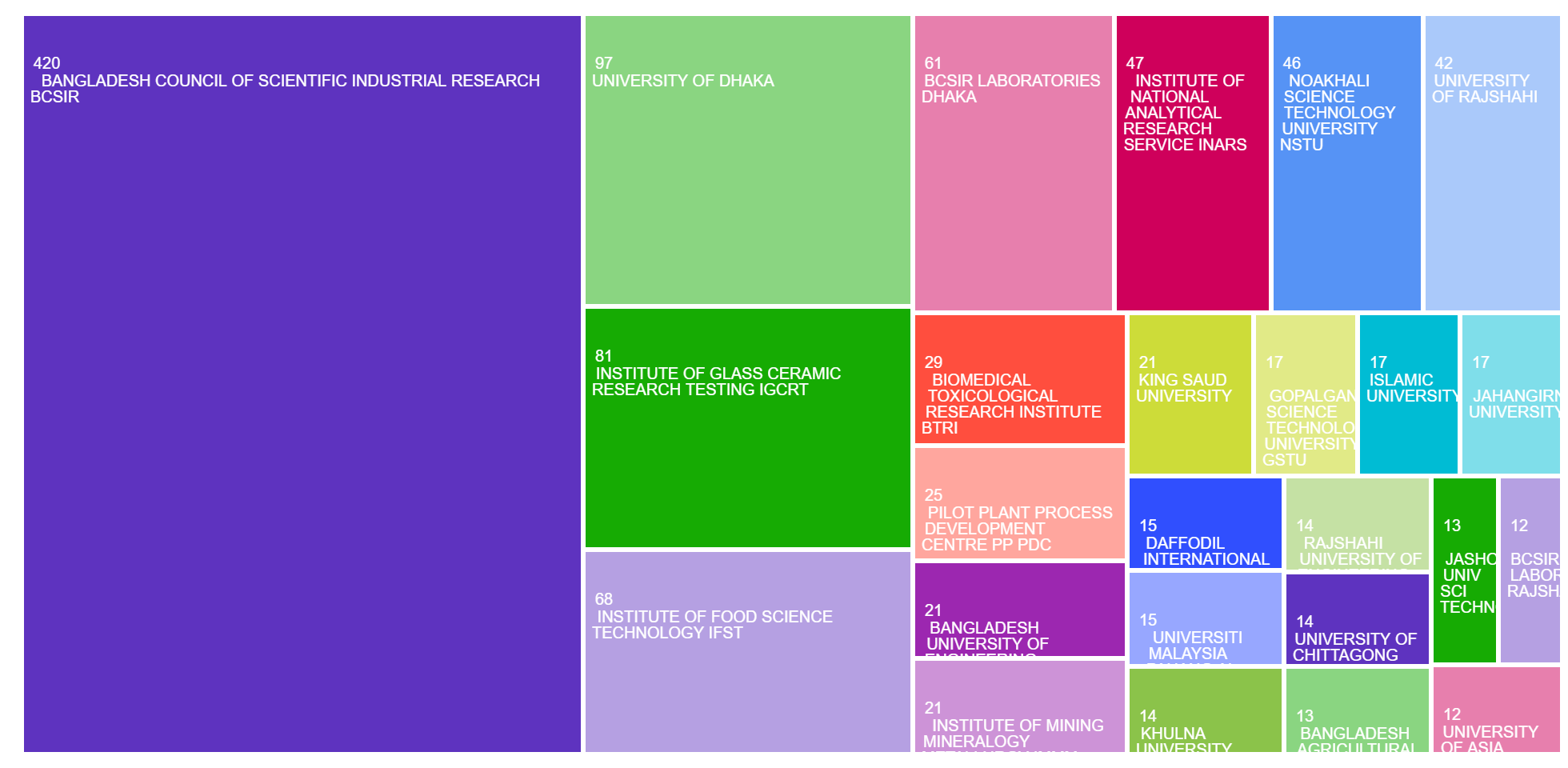
Research-affiliated institutes:
Research collaboration countries:
| Country/Region | Record Count | % of 420 |
|---|---|---|
| Bangladesh | 420 | 100.00% |
| Saudi Arabia | 39 | 9.29% |
| USA | 38 | 9.05% |
| Peoples R China | 37 | 8.81% |
| Malaysia | 34 | 8.10% |
| Australia | 30 | 7.14% |
| India | 12 | 2.86% |
| Japan | 11 | 2.62% |
| Canada | 10 | 2.38% |
| Brunei | 9 | 2.14% |
| South Korea | 8 | 1.91% |
| Thailand | 8 | 1.91% |
| England | 5 | 1.19% |
| Brazil | 4 | 0.95% |
| Germany | 4 | 0.95% |
| Indonesia | 4 | 0.95% |
| Ireland | 3 | 0.71% |
| Norway | 3 | 0.71% |
| South Africa | 3 | 0.71% |
| Türkiye | 3 | 0.71% |
| Czech Republic | 2 | 0.48% |
| Egypt | 2 | 0.48% |
| Finland | 2 | 0.48% |
| Iraq | 2 | 0.48% |
| Italy | 2 | 0.48% |
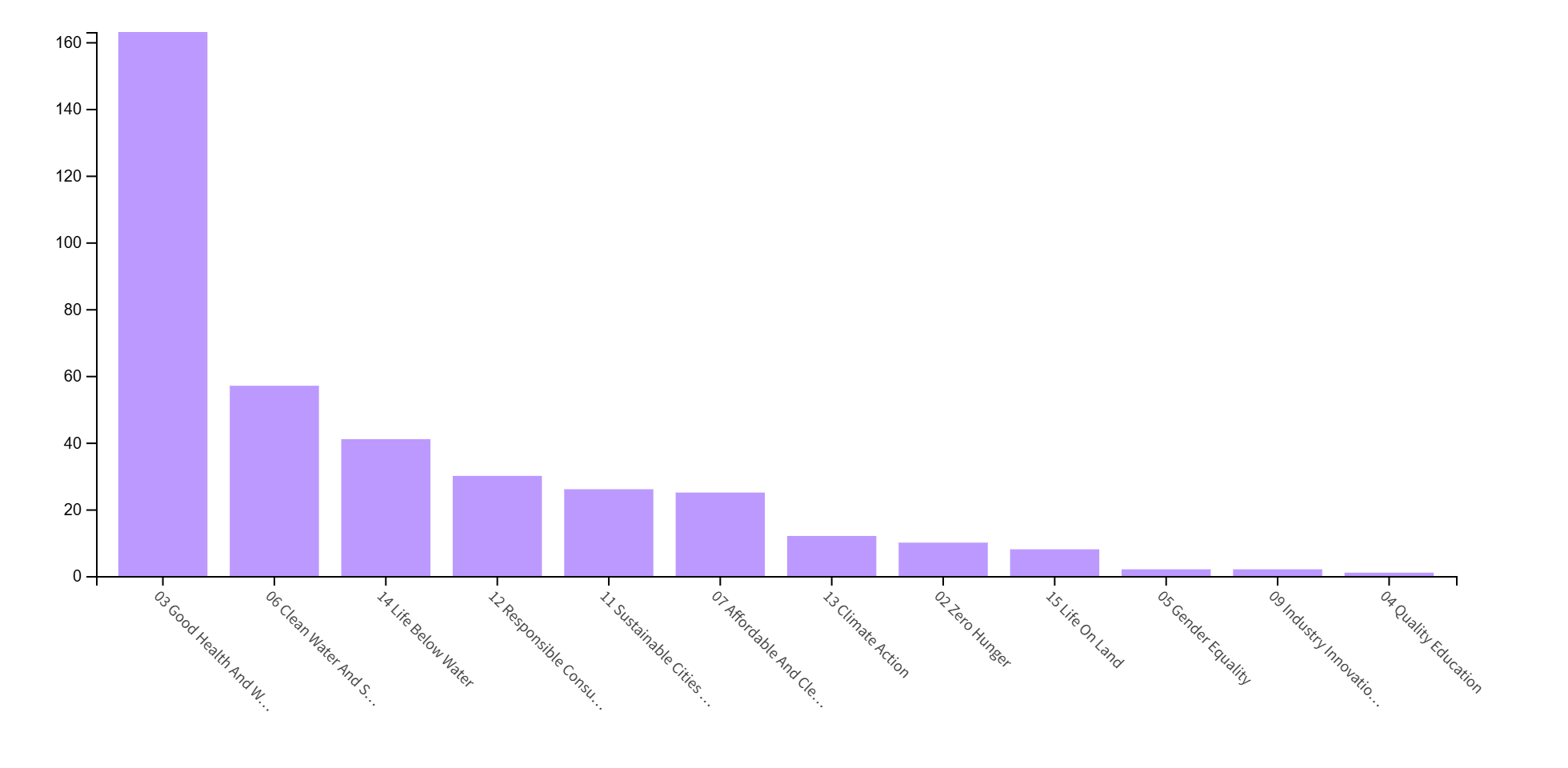
Sustainable Development Goals:
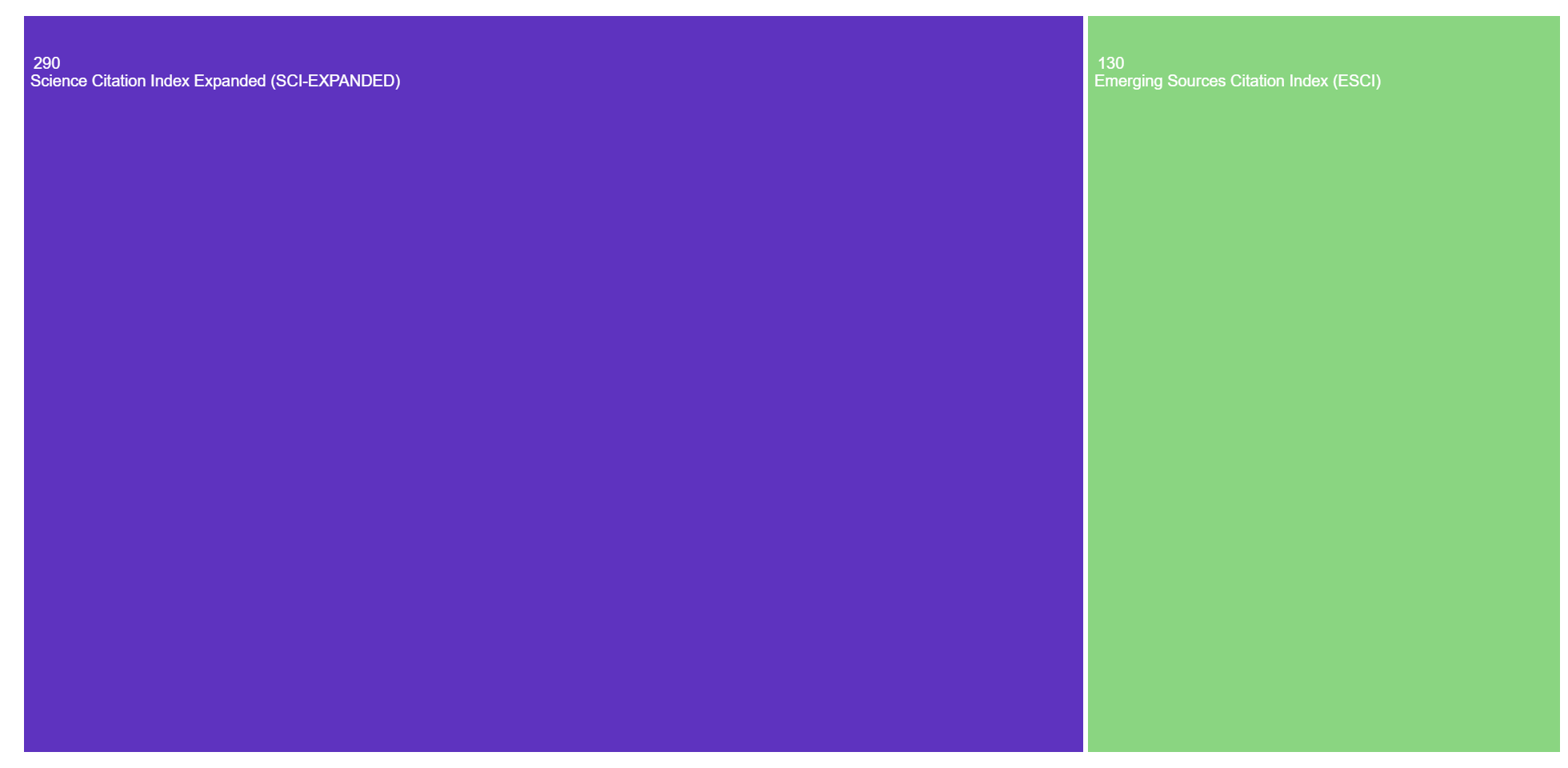
Web of Science Index:
Research highlights of BCSIR:
| Category | Count |
|---|---|
| Highly Cited Papers | 3 |
| Review Article | 30 |
| Early Access | 14 |
| Open Access | 242 |
| Enriched Cited References | 210 |
| Open Publisher-Invited Reviews | 16 |
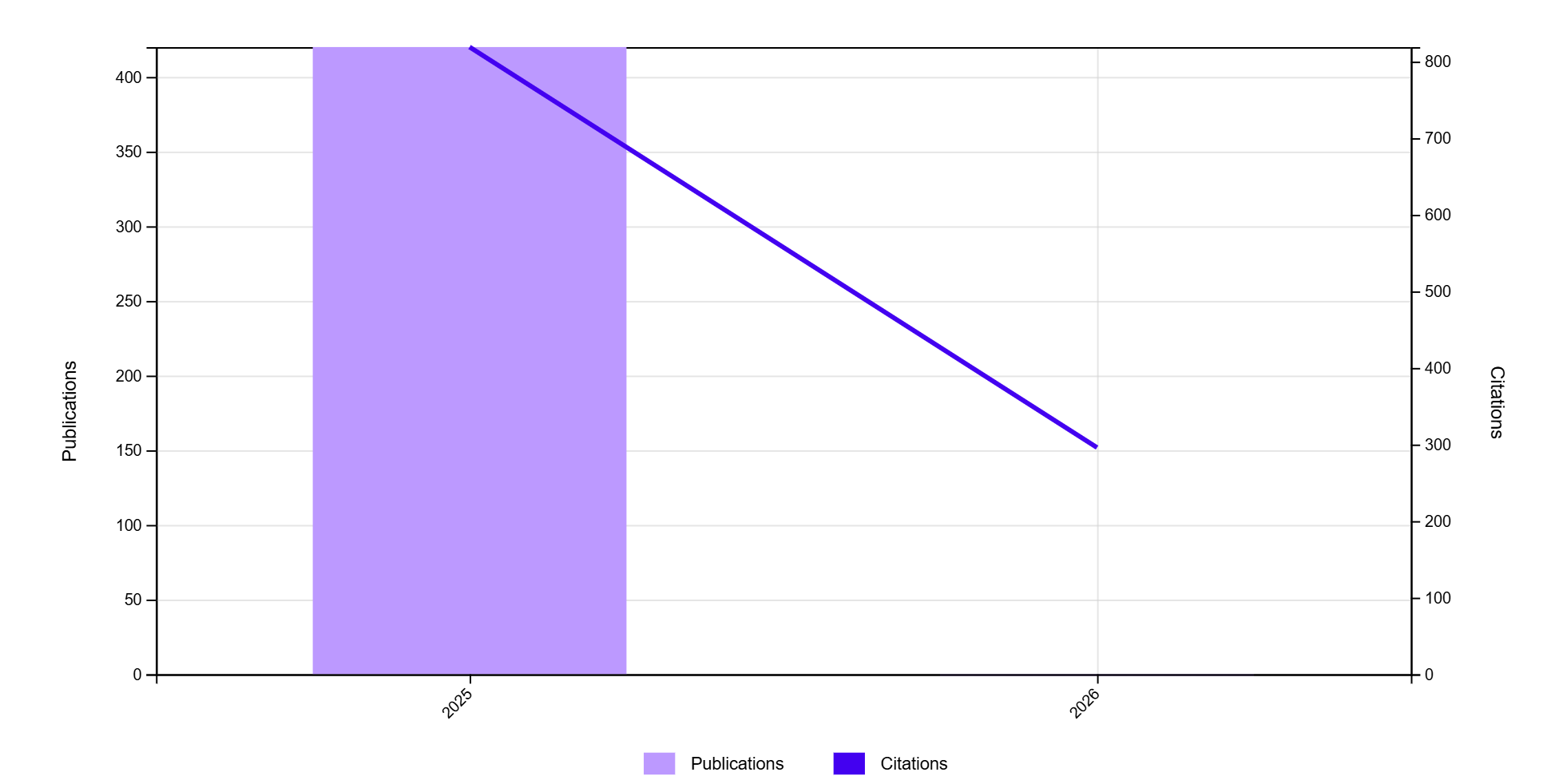
Citation Index:
Publishers:
| Publisher | Record Count | % of 420 |
|---|---|---|
| Elsevier | 207 | 49.29% |
| Springer Nature | 46 | 10.95% |
| Wiley | 45 | 10.71% |
| Royal Soc Chemistry | 42 | 10.00% |
| Taylor & Francis | 11 | 2.62% |
| NATURE PORTFOLIO | 10 | 2.38% |
| Amer Chemical Soc | 9 | 2.14% |
| Public Library Science | 9 | 2.14% |
| SPRINGER INT PUBL AG | 6 | 1.43% |
| Mdpi | 4 | 0.95% |
| Bangladesh Botanical Soc | 3 | 0.71% |
| Sage | 3 | 0.71% |
| Frontiers Media Sa | 2 | 0.48% |
| Tech Assoc Pulp Paper Ind Inc | 2 | 0.48% |
| AIP Publishing | 1 | 0.24% |
| Acad Sci Czech Republic Inst Rock Structure & Mechanics | 1 | 0.24% |
| Amer Assoc Advancement Science | 1 | 0.24% |
| Dove Medical Press Ltd | 1 | 0.24% |
| Editura Acad Romane | 1 | 0.24% |
| Horizon E-Publishing Group | 1 | 0.24% |
| Humana Press Inc | 1 | 0.24% |
| Iop Publishing Ltd | 1 | 0.24% |
| Karger | 1 | 0.24% |
| Keai Publishing Ltd | 1 | 0.24% |
| Korean Institute Chemical Engineers | 1 | 0.24% |
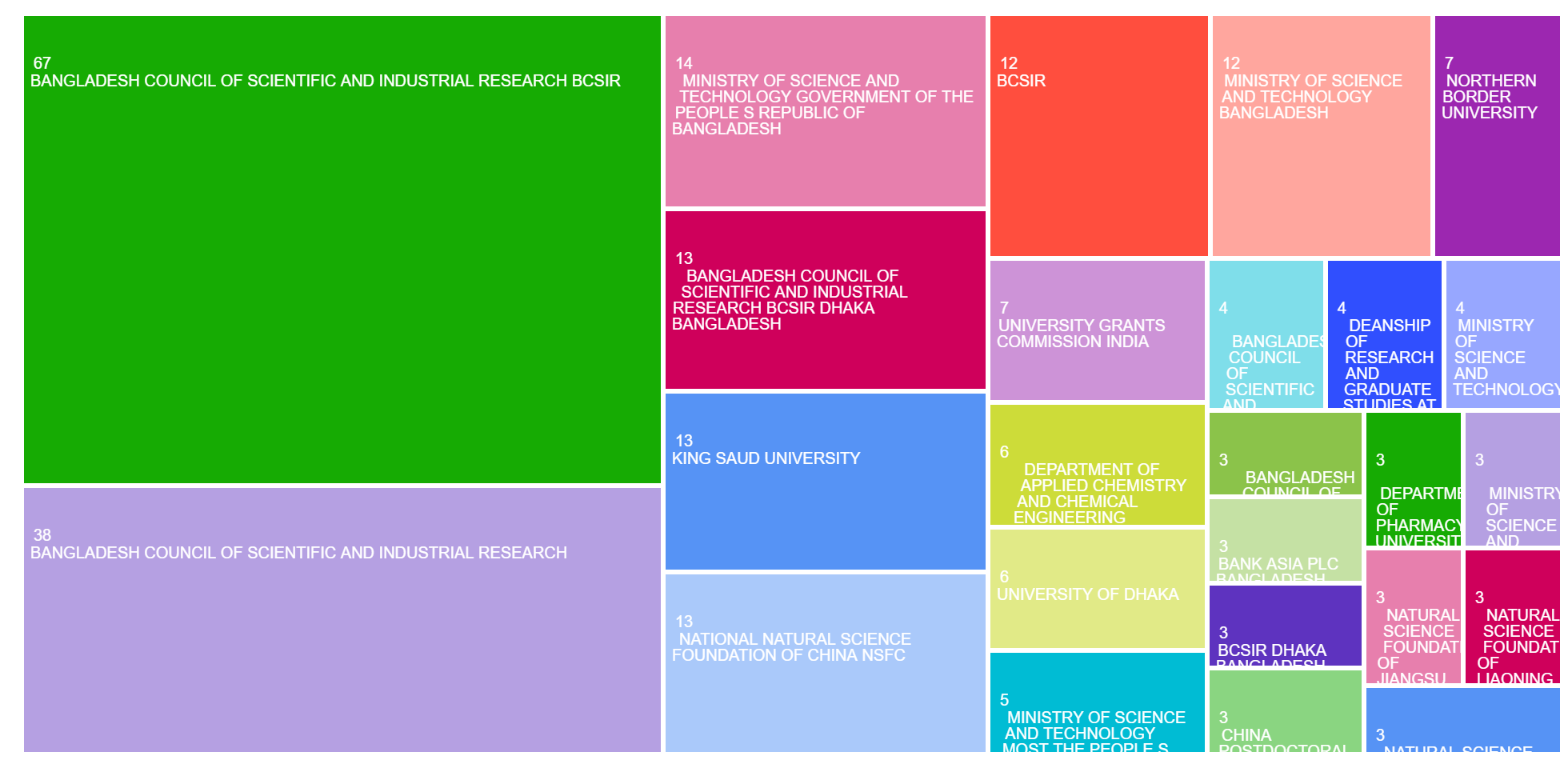
Funding Agencies:
Observations:
-
A significant concentration of publications in Materials Science and Chemistry suggests BCSIR’s core expertise areas.
-
Nearly half of the publications were published through Elsevier, highlighting strong engagement with leading international journals.
-
Despite being Bangladesh-based, BCSIR maintained collaborations with countries like Saudi Arabia, USA, and China, showing growing global connectivity.
Questions:
-
What strategies could BCSIR adopt to increase publications in emerging areas like Nanotechnology and Biotechnology?
-
How can international collaborations be expanded to further enhance research impact and citation rates?
-
What measures can be taken to increase the number of review articles and early access papers to strengthen the visibility of BCSIR research?
BCSIR’s 2025 performance demonstrates a robust research culture with a strong international footprint, yet there is potential to diversify research areas and increase high-impact collaborations to further boost global recognition.