

BUBT published 100 Web of Science-indexed publications in 2025, with 83% comprising original research articles, demonstrating a strong emphasis on primary research. The university’s research output was predominantly concentrated in computer science and engineering, particularly Computer Science Information Systems (28%) and Engineering Electrical & Electronic (25%), while also contributing to multidisciplinary sciences, artificial intelligence, telecommunications, and materials science. Research activities were led by authors such as Mridha MF (28 publications) and supported by extensive international collaborations, especially with the USA (35%), Malaysia (15%), Saudi Arabia (12%), Australia (10%), and South Korea (10%). Most publications appeared in leading publishers, with Elsevier (31%) and IEEE (26%) accounting for more than half of the total output, reflecting BUBT’s growing international visibility and strong focus on high-quality research in computing and engineering. Web of Science
The areas of research publication categories in the TreeMap:
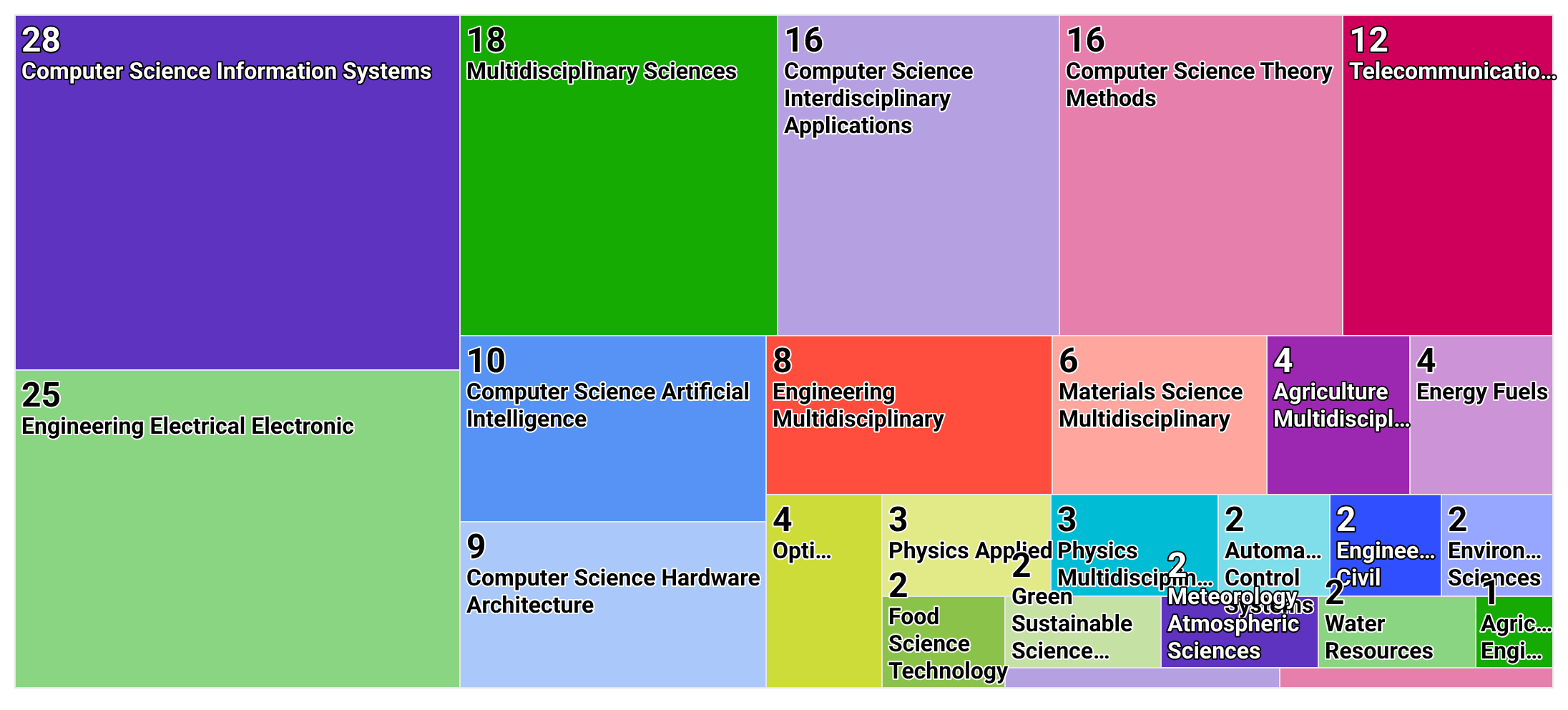
Research contributions in the field:
| Categories | Record Count | % of 100 |
|---|---|---|
| Computer Science Information Systems | 28 | 28.000% |
| Engineering Electrical Electronic | 25 | 25.000% |
| Multidisciplinary Sciences | 18 | 18.000% |
| Computer Science Interdisciplinary Applications | 16 | 16.000% |
| Computer Science Theory Methods | 16 | 16.000% |
| Telecommunications | 12 | 12.000% |
| Computer Science Artificial Intelligence | 10 | 10.000% |
| Computer Science Hardware Architecture | 9 | 9.000% |
| Engineering Multidisciplinary | 8 | 8.000% |
| Materials Science Multidisciplinary | 6 | 6.000% |
| Agriculture Multidisciplinary | 4 | 4.000% |
| Energy Fuels | 4 | 4.000% |
| Optics | 4 | 4.000% |
| Physics Applied | 3 | 3.000% |
| Physics Multidisciplinary | 3 | 3.000% |
| Automation Control Systems | 2 | 2.000% |
| Engineering Civil | 2 | 2.000% |
| Environmental Sciences | 2 | 2.000% |
| Food Science Technology | 2 | 2.000% |
| Green Sustainable Science Technology | 2 | 2.000% |
| Meteorology Atmospheric Sciences | 2 | 2.000% |
| Water Resources | 2 | 2.000% |
| Agricultural Engineering | 1 | 1.000% |
| Agronomy | 1 | 1.000% |
| Biochemistry Molecular Biology | 1 | 1.000% |
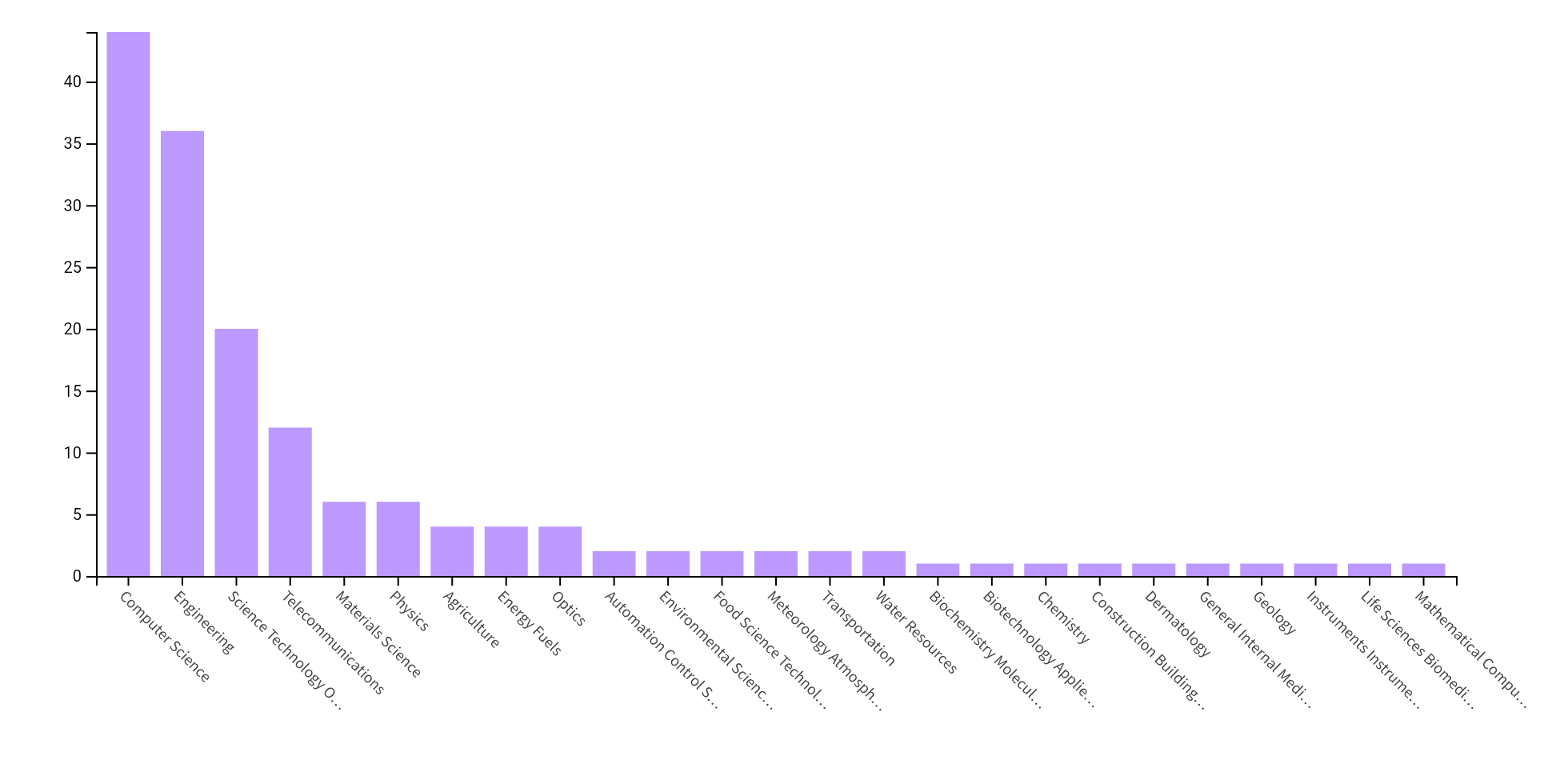
Research areas:
Types of published documents:
| Types | Record Count | % of 100 |
|---|---|---|
| Article | 83 | 83.000% |
| Review Article | 9 | 9.000% |
| Proceeding Paper | 8 | 8.000% |
| Data Paper | 2 | 2.000% |
| Early Access | 1 | 1.000% |
Authors’ infographic (Top 25):
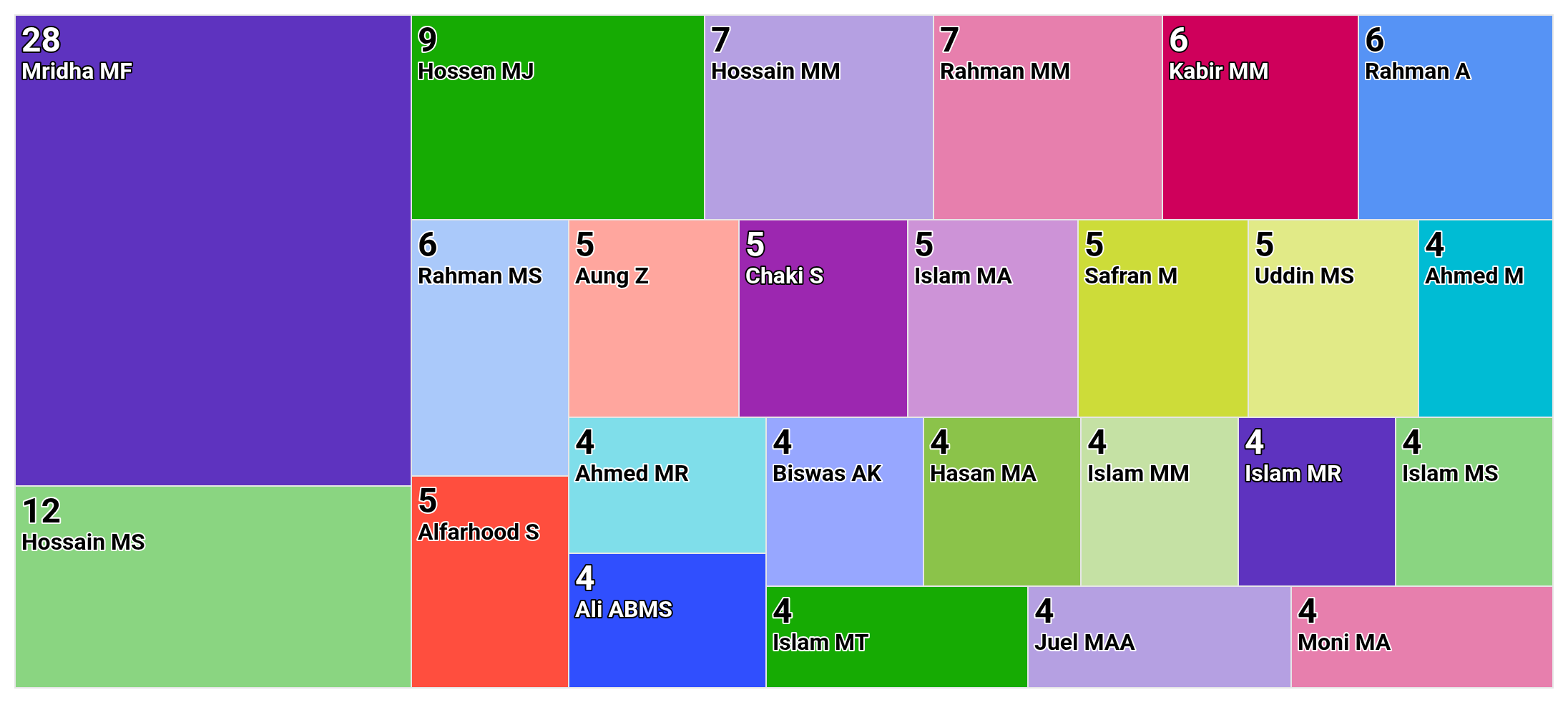
Researcher profiles (Top 25):
| Authors | Record Count | % of 100 |
|---|---|---|
| Mridha MF | 28 | 28.000% |
| Hossain MS | 12 | 12.000% |
| Hossen MJ | 9 | 9.000% |
| Hossain MM | 7 | 7.000% |
| Rahman MM | 7 | 7.000% |
| Kabir MM | 6 | 6.000% |
| Rahman A | 6 | 6.000% |
| Rahman MS | 6 | 6.000% |
| Alfarhood S | 5 | 5.000% |
| Aung Z | 5 | 5.000% |
| Chaki S | 5 | 5.000% |
| Islam MA | 5 | 5.000% |
| Safran M | 5 | 5.000% |
| Uddin MS | 5 | 5.000% |
| Ahmed M | 4 | 4.000% |
| Ahmed MR | 4 | 4.000% |
| Ali ABMS | 4 | 4.000% |
| Biswas AK | 4 | 4.000% |
| Hasan MA | 4 | 4.000% |
| Islam MM | 4 | 4.000% |
| Islam MR | 4 | 4.000% |
| Islam MS | 4 | 4.000% |
| Islam MT | 4 | 4.000% |
| Juel MAA | 4 | 4.000% |
| Moni MA | 4 | 4.000% |
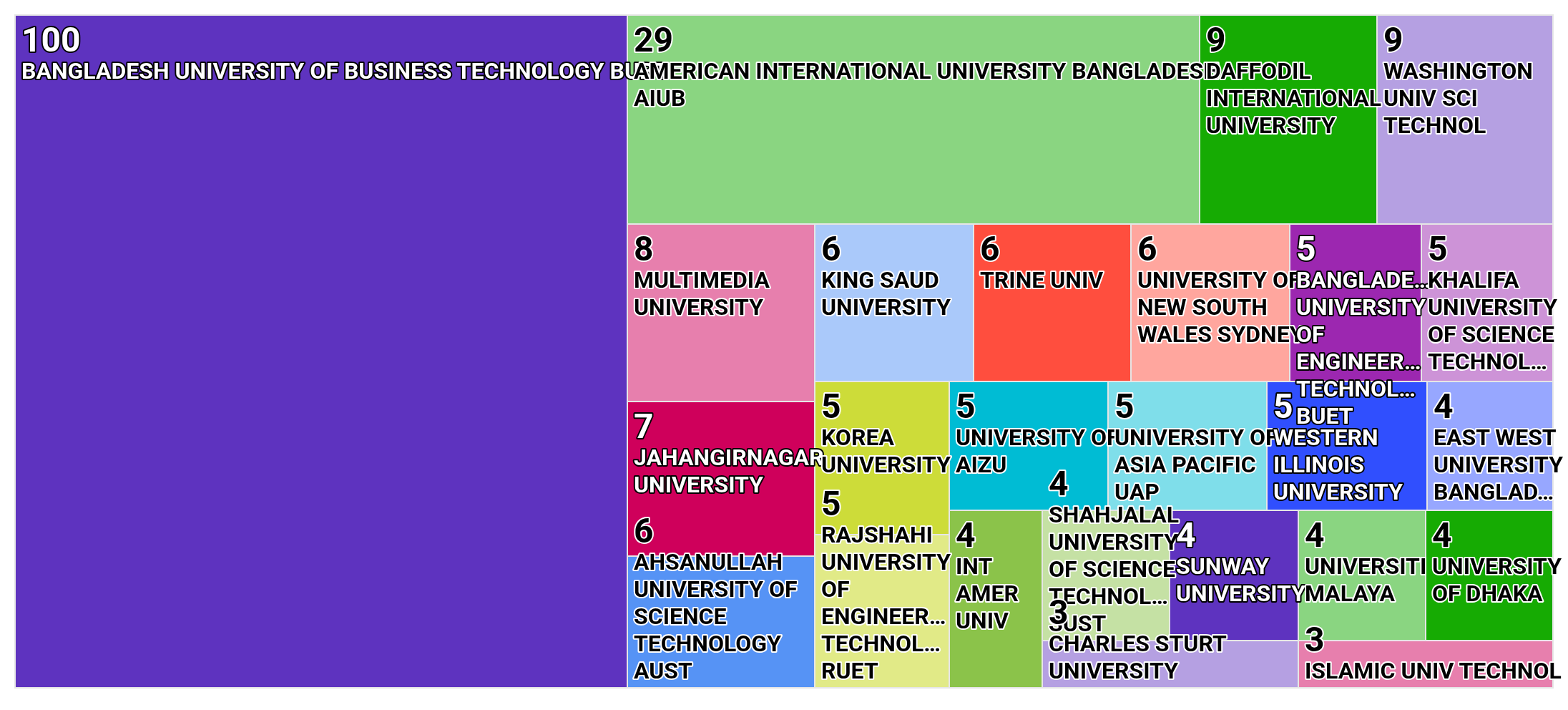
Research-affiliated institutes:
Research collaboration countries:
| Countries/Regions | Record Count | % of 100 |
|---|---|---|
| BANGLADESH | 100 | 100.000% |
| USA | 35 | 35.000% |
| MALAYSIA | 15 | 15.000% |
| SAUDI ARABIA | 12 | 12.000% |
| AUSTRALIA | 10 | 10.000% |
| SOUTH KOREA | 10 | 10.000% |
| JAPAN | 9 | 9.000% |
| INDIA | 7 | 7.000% |
| U ARAB EMIRATES | 5 | 5.000% |
| PEOPLES R CHINA | 3 | 3.000% |
| CANADA | 2 | 2.000% |
| EGYPT | 2 | 2.000% |
| ENGLAND | 2 | 2.000% |
| NORWAY | 2 | 2.000% |
| SPAIN | 2 | 2.000% |
| SWEDEN | 2 | 2.000% |
| COLOMBIA | 1 | 1.000% |
| GERMANY | 1 | 1.000% |
| ITALY | 1 | 1.000% |
| NETHERLANDS | 1 | 1.000% |
| SCOTLAND | 1 | 1.000% |
| THAILAND | 1 | 1.000% |
| VIETNAM | 1 | 1.000% |
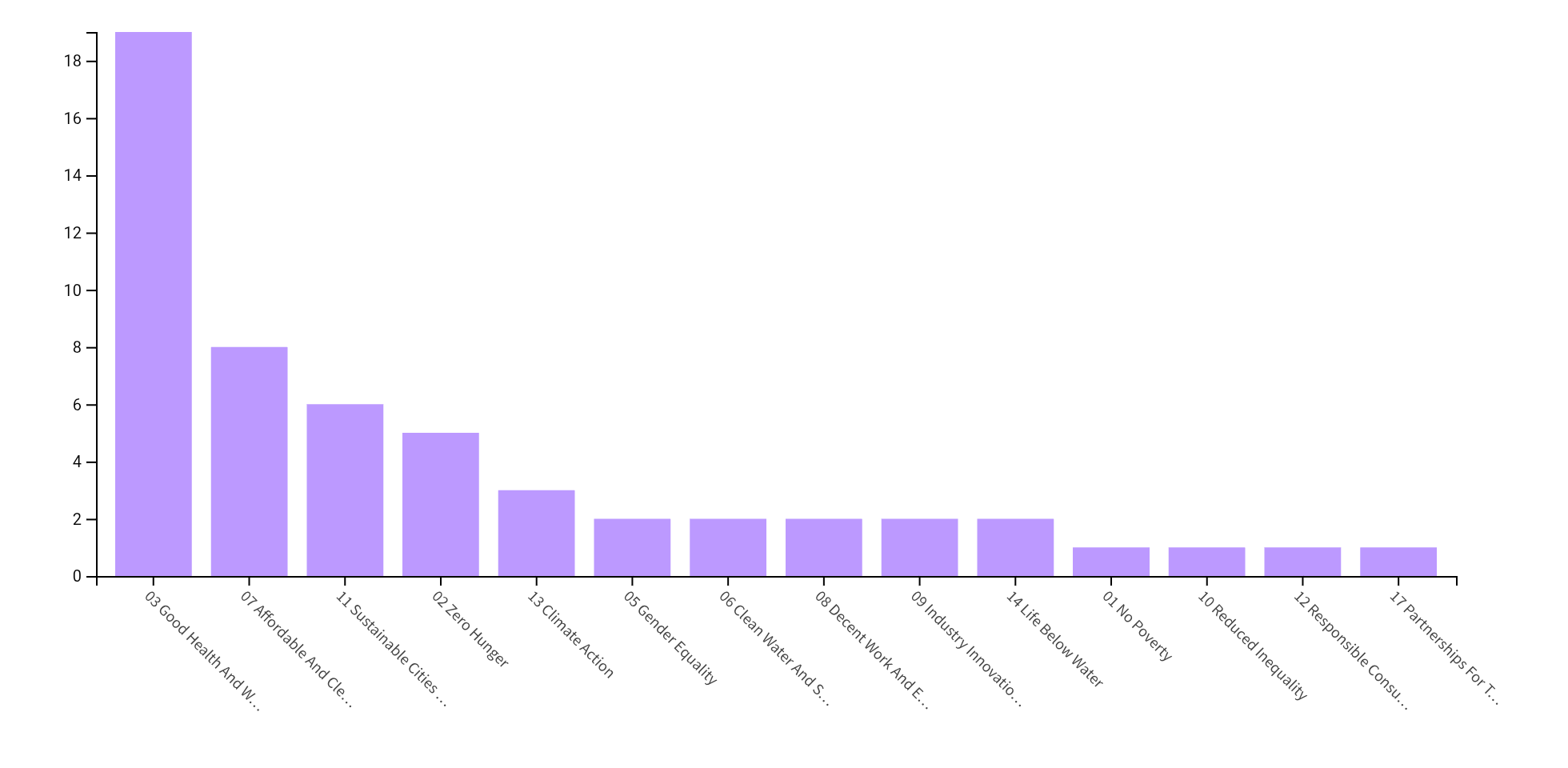
Sustainable Development Goals:
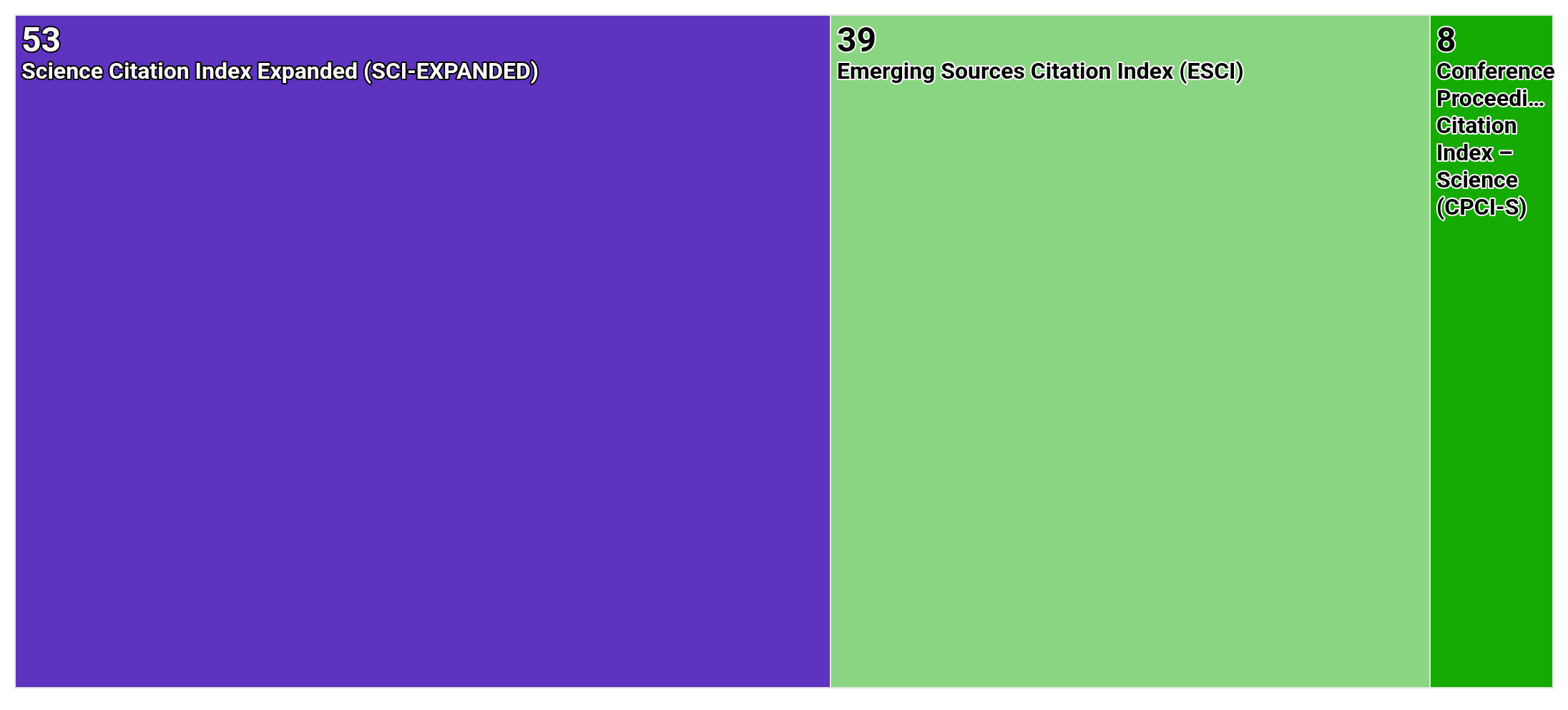
Web of Science Index:
Research highlights of BUBT:
| Types | Results |
|---|---|
| Review Article | 9 |
| Early Access | 1 |
| Open Access | 71 |
| Enriched Cited References | 40 |
| Open publisher-invited reviews | 2 |
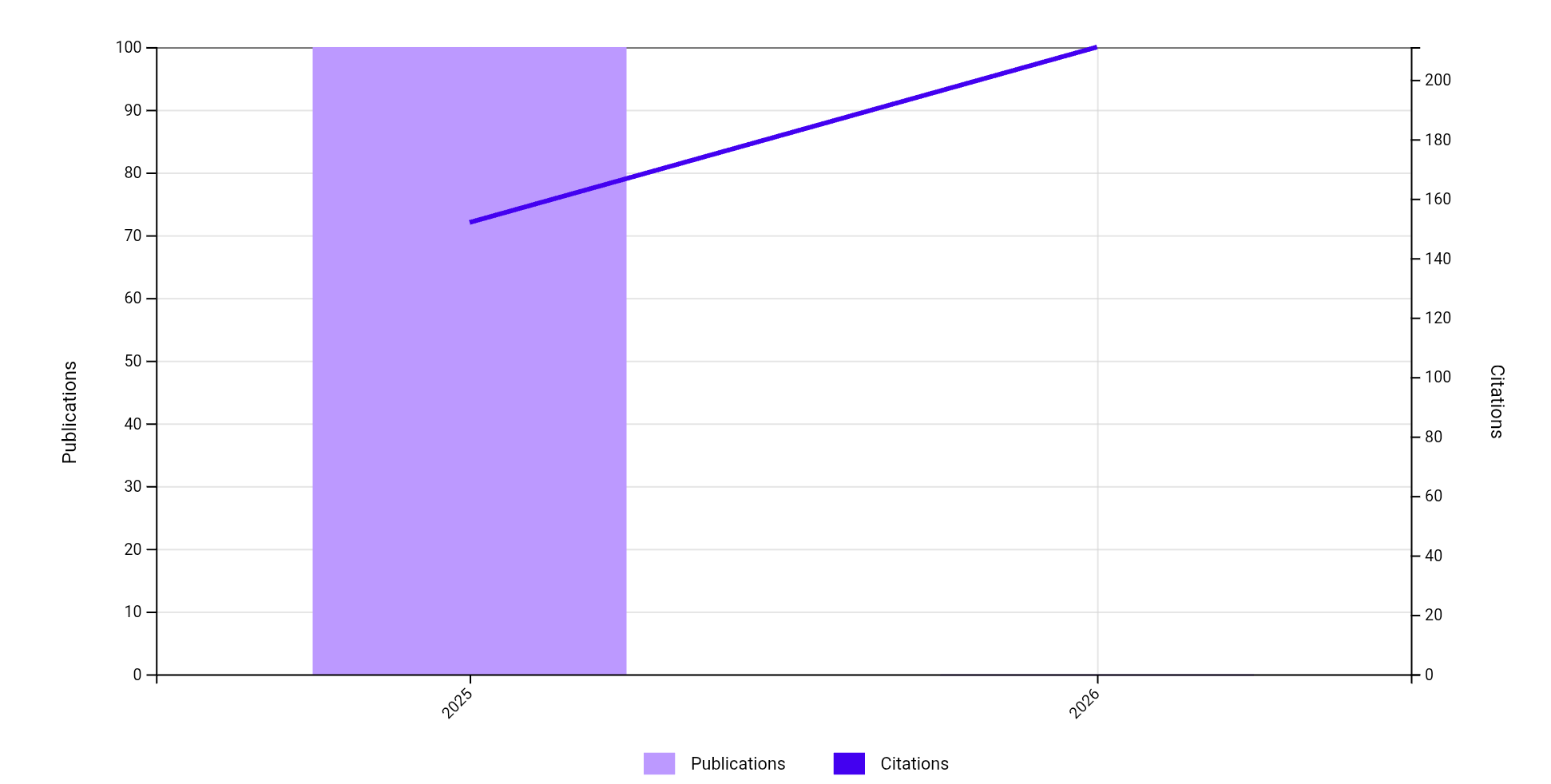
Citation Index:
Publishers:
| Publishers | Record Count | % of 100 |
|---|---|---|
| Elsevier | 31 | 31.000% |
| IEEE | 26 | 26.000% |
| Springer Nature | 9 | 9.000% |
| NATURE PORTFOLIO | 8 | 8.000% |
| Wiley | 5 | 5.000% |
| Keai Publishing Ltd | 3 | 3.000% |
| Frontiers Media Sa | 2 | 2.000% |
| Iop Publishing Ltd | 2 | 2.000% |
| Amer Chemical Soc | 1 | 1.000% |
| Asme | 1 | 1.000% |
| Assoc Computing Machinery | 1 | 1.000% |
| Indian Assoc Cultivation Science | 1 | 1.000% |
| Mdpi | 1 | 1.000% |
| Optica Publishing Group | 1 | 1.000% |
| PLEIADES PUBLISHING LTD | 1 | 1.000% |
| Peerj Inc | 1 | 1.000% |
| Public Library Science | 1 | 1.000% |
| SPRINGER INT PUBL AG | 1 | 1.000% |
| Sage | 1 | 1.000% |
| Science & Information Sai Organization Ltd | 1 | 1.000% |
| Taylor & Francis | 1 | 1.000% |
| Tech Science Press | 1 | 1.000% |
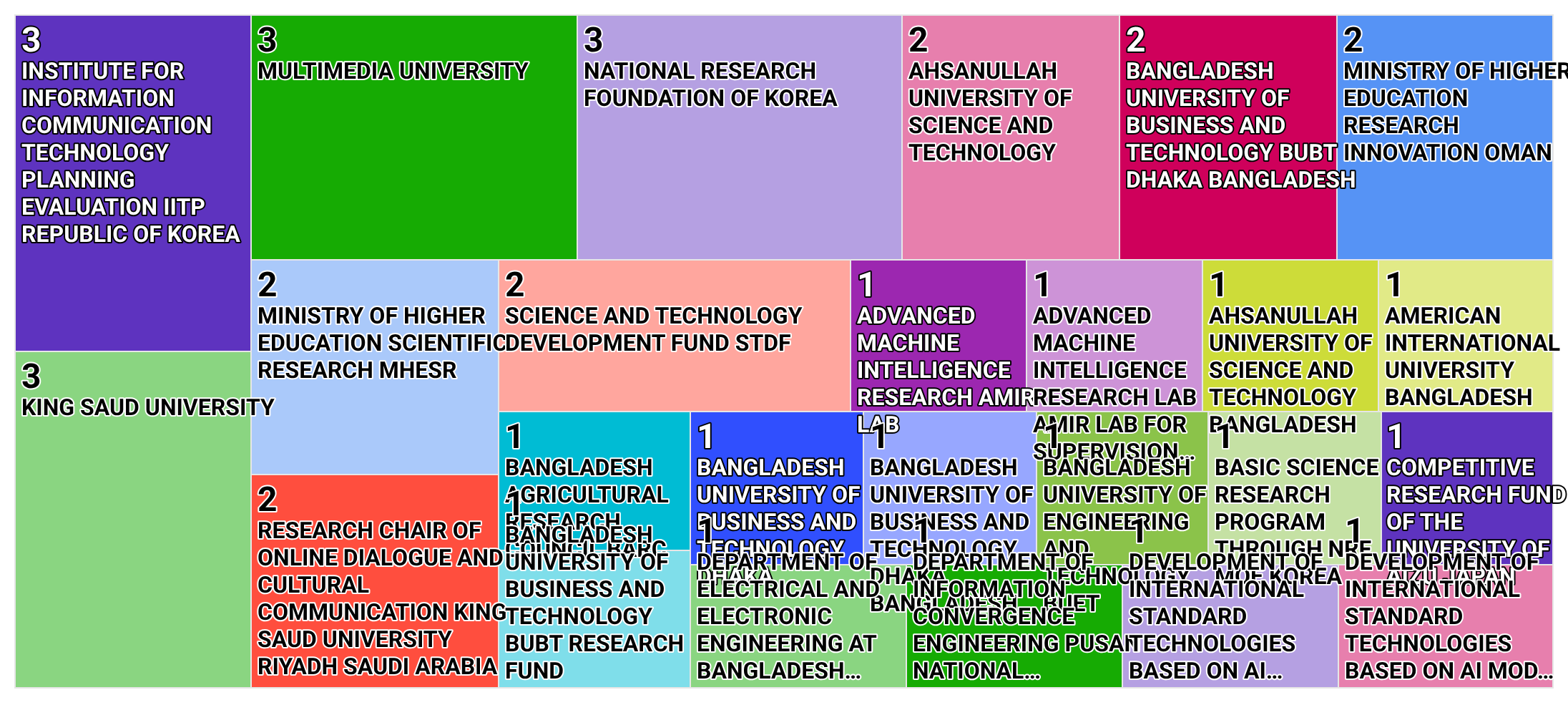
Funding Agencies:
Observations:
1. Computer science and engineering dominate BUBT’s research output, with Computer Science Information Systems (28%) and Engineering Electrical & Electronic (25%) being the most represented subject areas, indicating a strong focus on computing and technology.
2. Research is primarily published as journal articles (83%), while review articles (9%) and conference proceedings (8%) make up a smaller proportion, reflecting an emphasis on original research.
3. International collaboration is notable, particularly with the USA (35%), Malaysia (15%), Saudi Arabia (12%), Australia (10%), and South Korea (10%). Publications are mainly disseminated through Elsevier (31%) and IEEE (26%), highlighting strong engagement with leading international publishers.
Questions:
1. How can BUBT increase its research output in emerging interdisciplinary fields such as sustainability, biotechnology, and environmental sciences?
2. What strategies can further strengthen international collaborations beyond the current major partner countries?
3. How can the university increase publications in higher-impact journals while maintaining its strong output in computer science and engineering?
The 2025 Web of Science publication profile demonstrates that BUBT has established a strong research presence in computer science and engineering, supported by international collaborations and publications in reputable global publishers. Expanding interdisciplinary research and increasing collaboration with a wider range of international institutions could further enhance the university’s global research impact and visibility.