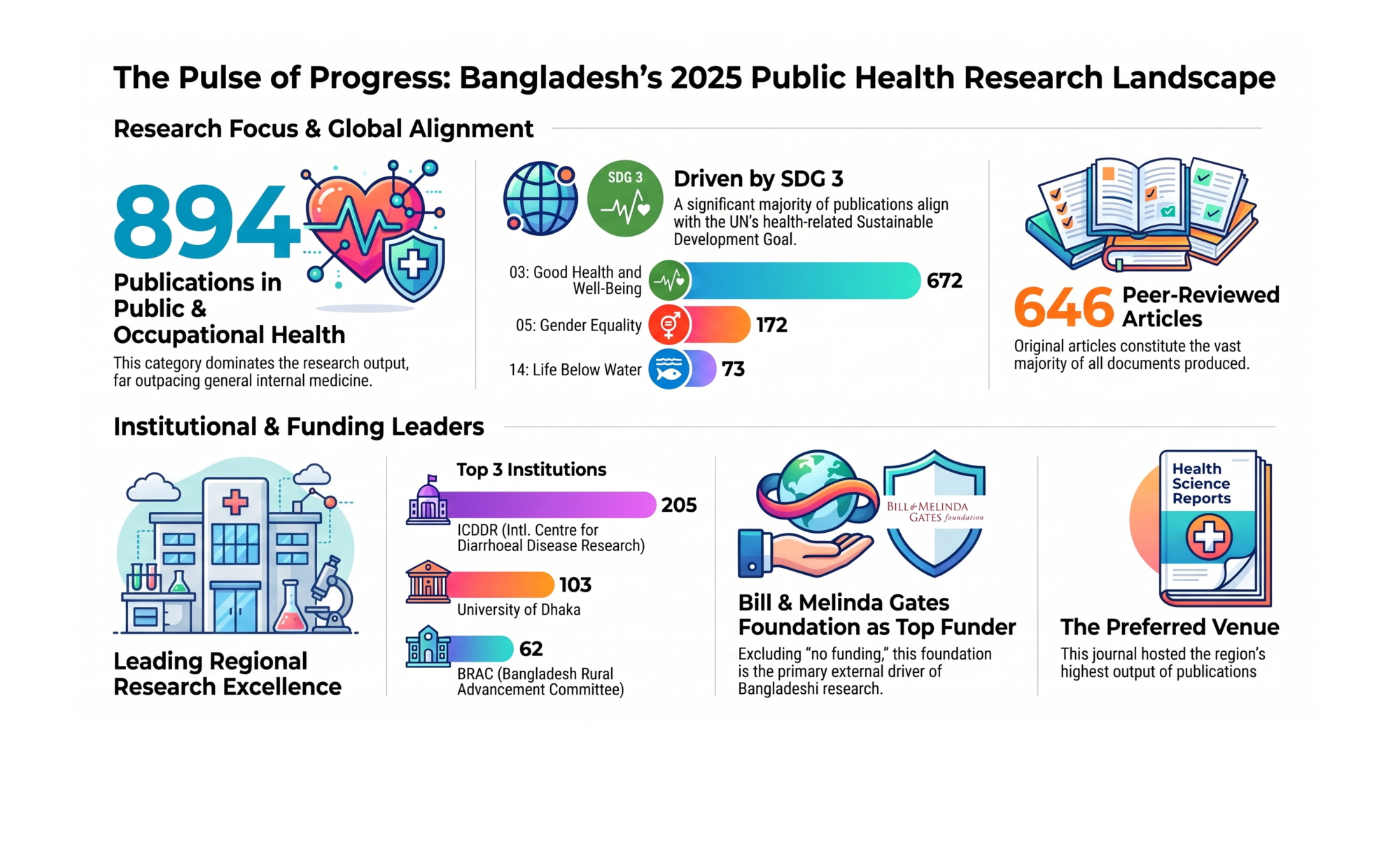
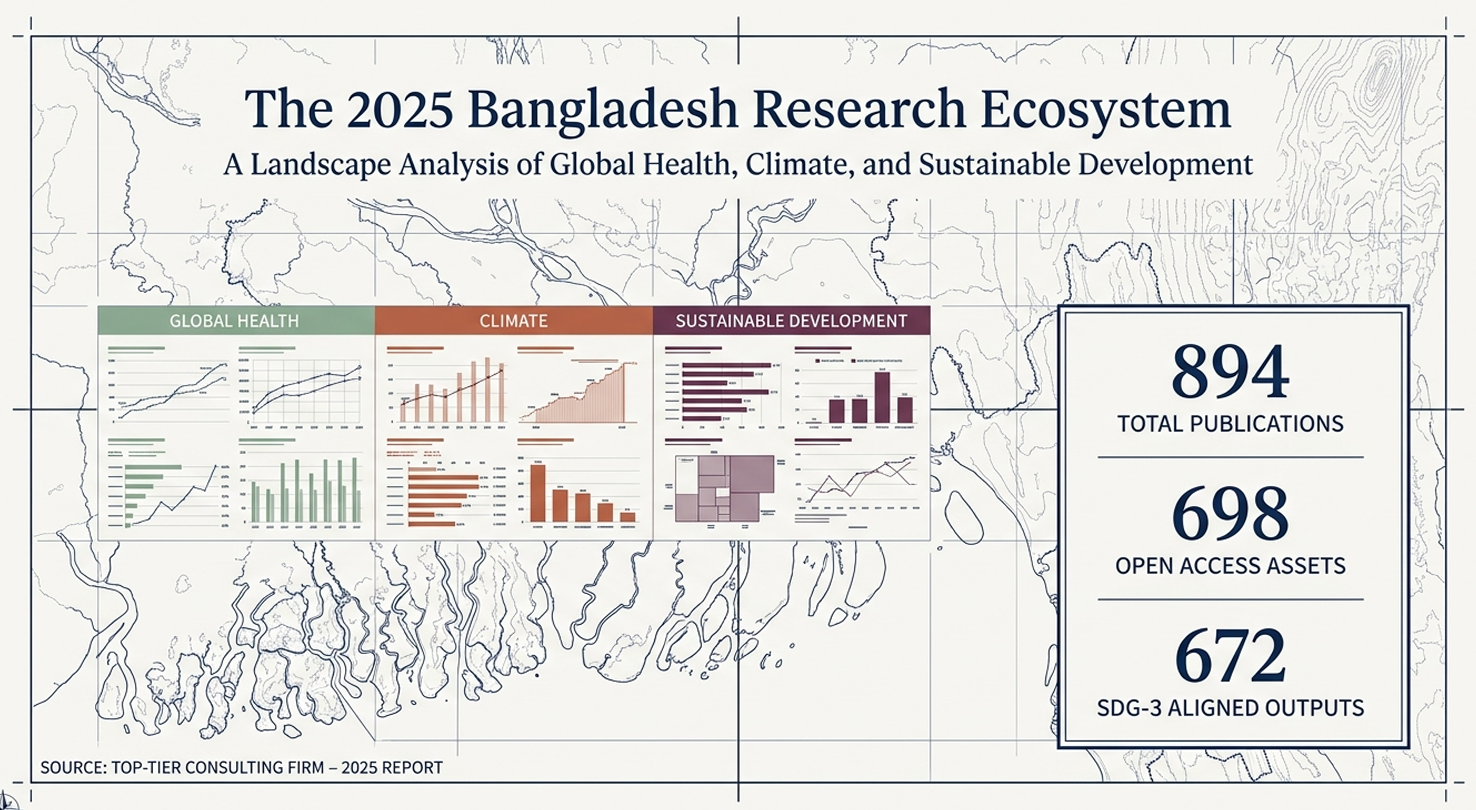
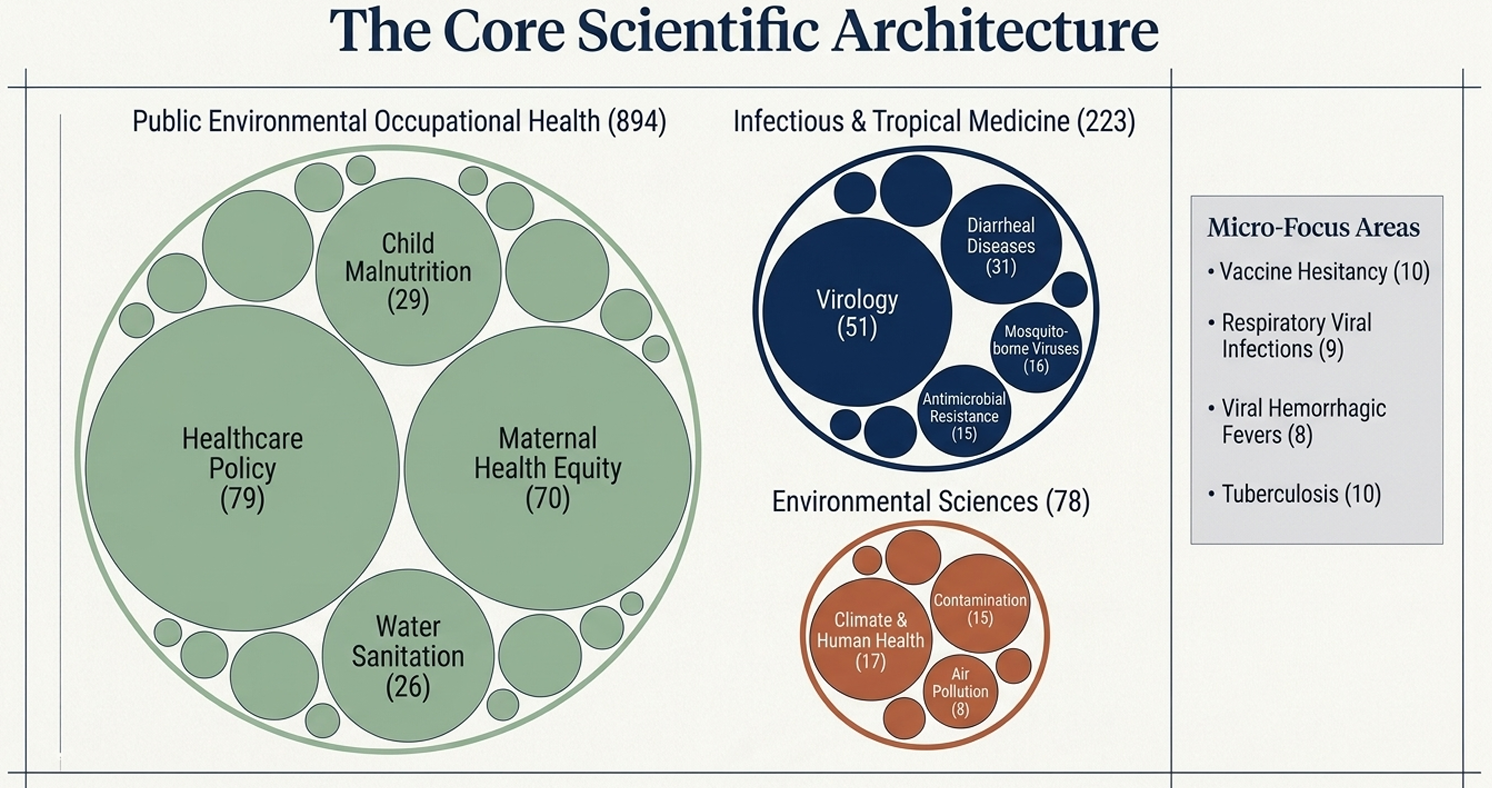
A bibliometric analysis of 894 Web of Science-indexed publications from Bangladesh in 2025 shows a research landscape strongly concentrated on public, environmental, and occupational health, with SDG 3 (Good Health and Well-Being) serving as the dominant development framework. The publication portfolio reflects Bangladesh’s major health priorities, including infectious and diarrheal diseases, maternal and child health, nutrition, gender-related health disparities, water and sanitation, and the health consequences of environmental and climate-related pressures. The research is anchored by major Bangladeshi institutions—particularly the International Centre for Diarrhoeal Disease Research, Bangladesh (icddr,b) and the University of Dhaka—while extensive collaboration with researchers and institutions in the United States, England, Australia, India, Sweden, Canada, and other countries demonstrates the international character of Bangladesh’s public-health research. Web of Science
Research Focus and SDG Alignment
The dominant Web of Science research category was Public, Environmental & Occupational Health, accounting for 894 publications in the dataset. This concentration indicates that Bangladesh’s 2025 health research was primarily oriented toward population-level health rather than narrowly clinical research.
Major SDG areas represented in Bangladesh’s 2025 public-health publications
| SDG | Sustainable Development Goal | Publications |
|---|---|---|
| SDG 03 | Good Health and Well-Being | 672 |
| SDG 05 | Gender Equality | 172 |
| SDG 14 | Life Below Water | 73 |
| SDG 11 | Sustainable Cities and Communities | 64 |
| SDG 02 | Zero Hunger | 46 |
| SDG 13 | Climate Action | 46 |
| SDG 06 | Clean Water and Sanitation | 44 |
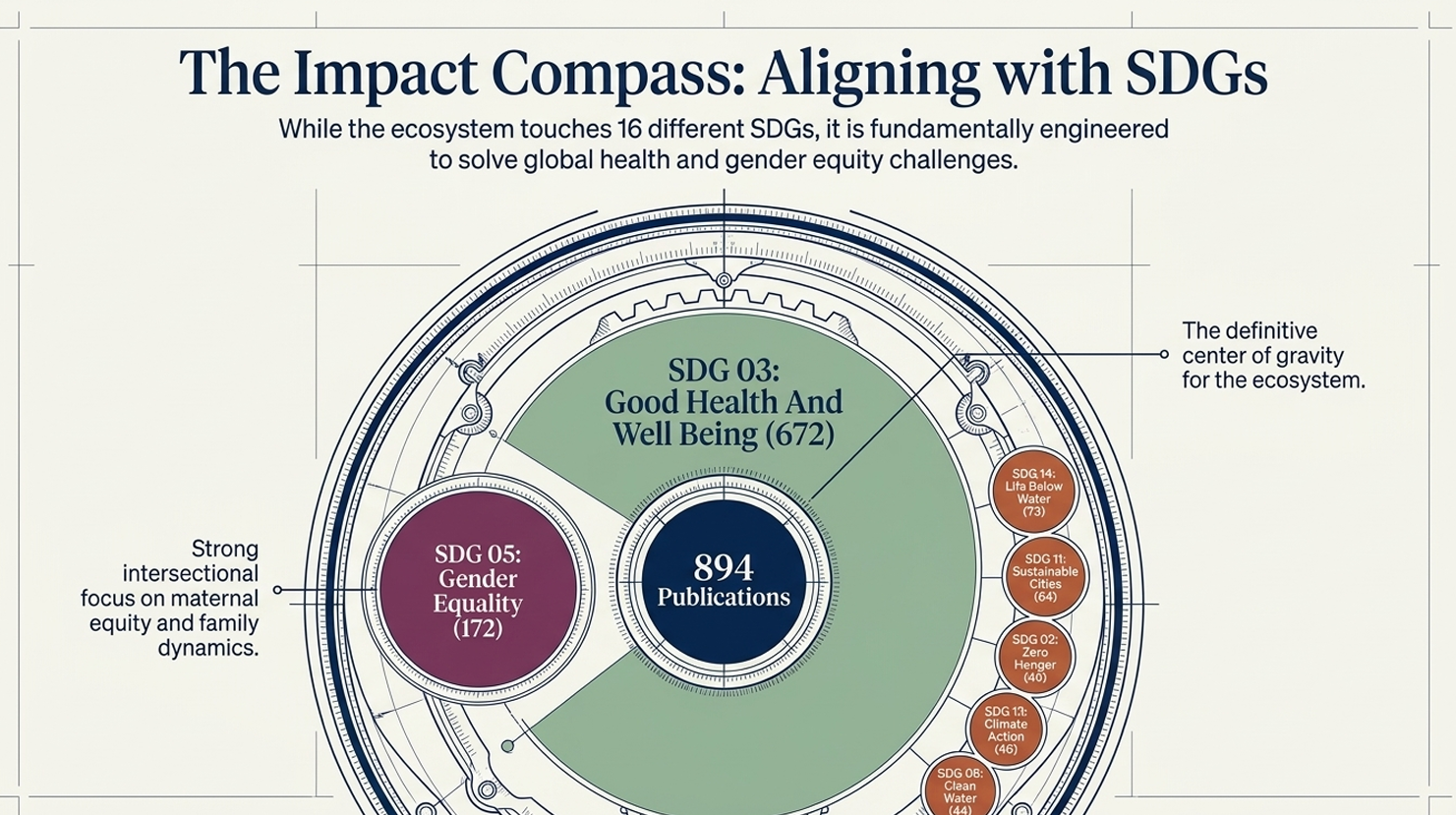
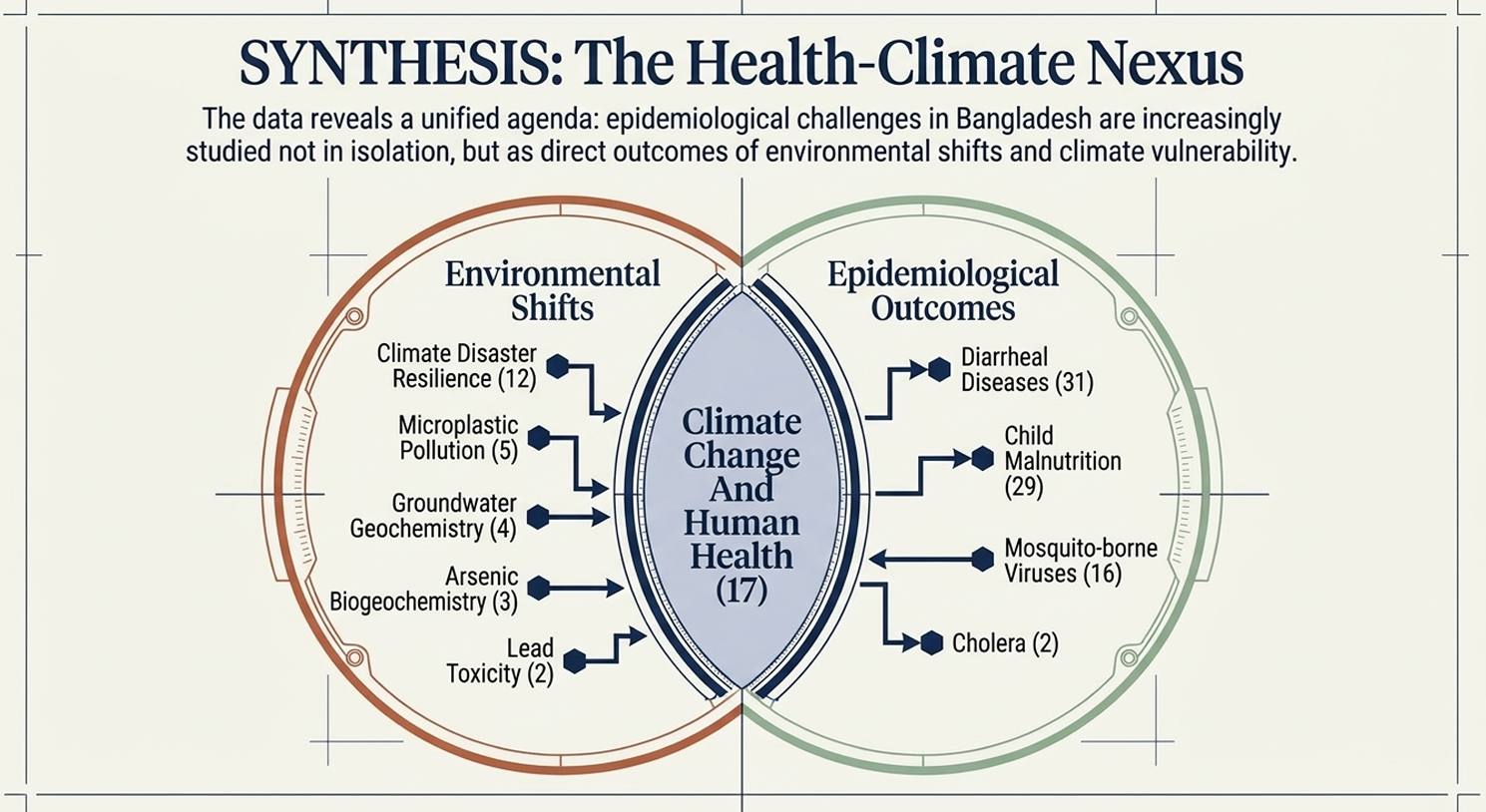
The prominence of SDG 3 demonstrates the centrality of health and well-being to this research portfolio. The substantial representation of SDG 5 also indicates significant attention to gender-related health issues, including maternal health and health inequities. Climate-related health research is particularly relevant to Bangladesh because of the country’s exposure to flooding, coastal hazards, changing environmental conditions, and infectious-disease risks. The appearance of SDG 13 (Climate Action) alongside SDG 6 (Clean Water and Sanitation) suggests an increasing intersection between environmental change and public health.
Top 10 institutions and affiliations
| Rank | Institution / Affiliation | Publications |
|---|---|---|
| 1 | International Centre for Diarrhoeal Disease Research, Bangladesh (icddr,b) | 205 |
| 2 | University of Dhaka | 103 |
| 3 | Bangladesh Rural Advancement Committee (BRAC) | 62 |
| 4 | BRAC University | 55 |
| 5 | Daffodil International University | 55 |
| 6 | University of London | 52 |
| 7 | North South University | 46 |
| 8 | Jahangirnagar University | 43 |
| 9 | Johns Hopkins University | 41 |
| 10 | Vital Strategies | 36 |
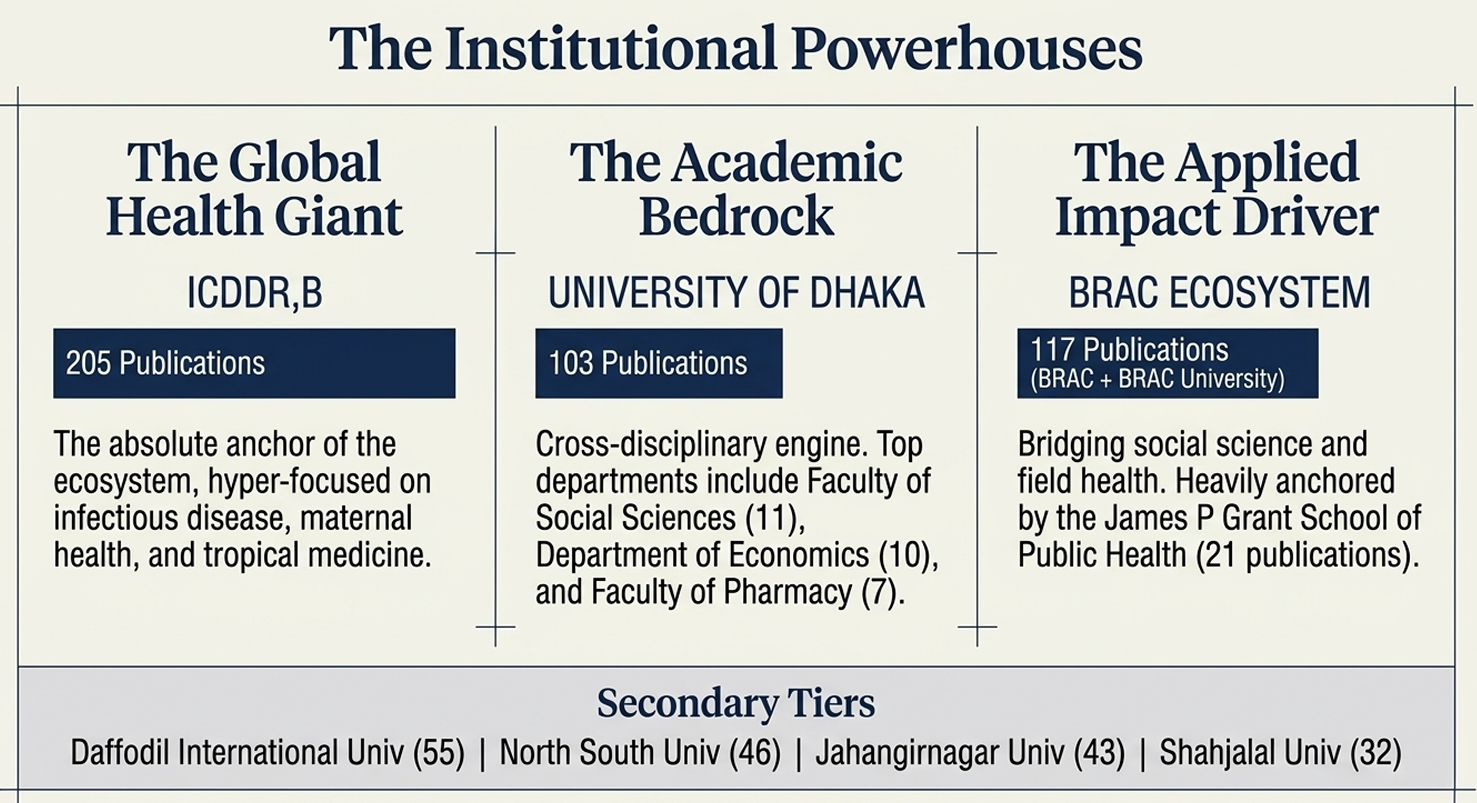
The icddr,b is particularly prominent, appearing in 205 publications, substantially more than any other individual affiliation in the dataset. Its position reflects Bangladesh’s established international role in research on infectious disease, maternal and child health, nutrition, epidemiology, and health systems. The University of Dhaka occupies the second position, while BRAC and BRAC University together demonstrate the importance of Bangladesh’s development-sector institutions in producing and supporting health research.
Leading researchers by publication count
| Rank | Researcher | Publications |
|---|---|---|
| 1 | Shams El Arifeen | 26 |
| 2 | Syed Mahbubul Alam | 24 |
| 3 | Firdausi Qadri | 18 |
| 4 | Tahmeed Ahmed | 18 |
| 5 | Ahmed Ehsanur Rahman | 17 |
| 6 | Farhana Zaman | 16 |
| 7 | Syed Masudur Rahman Dewan | 14 |
| 8 | Anisuddin Ahmed | 13 |
| 9 | Tahmina Shirin | 12 |
| 10 | R. Haque / Rumana Huque / Mahbubur Rahman / Safayet Jamil / S. M. Yasir Arafat | 12 each |
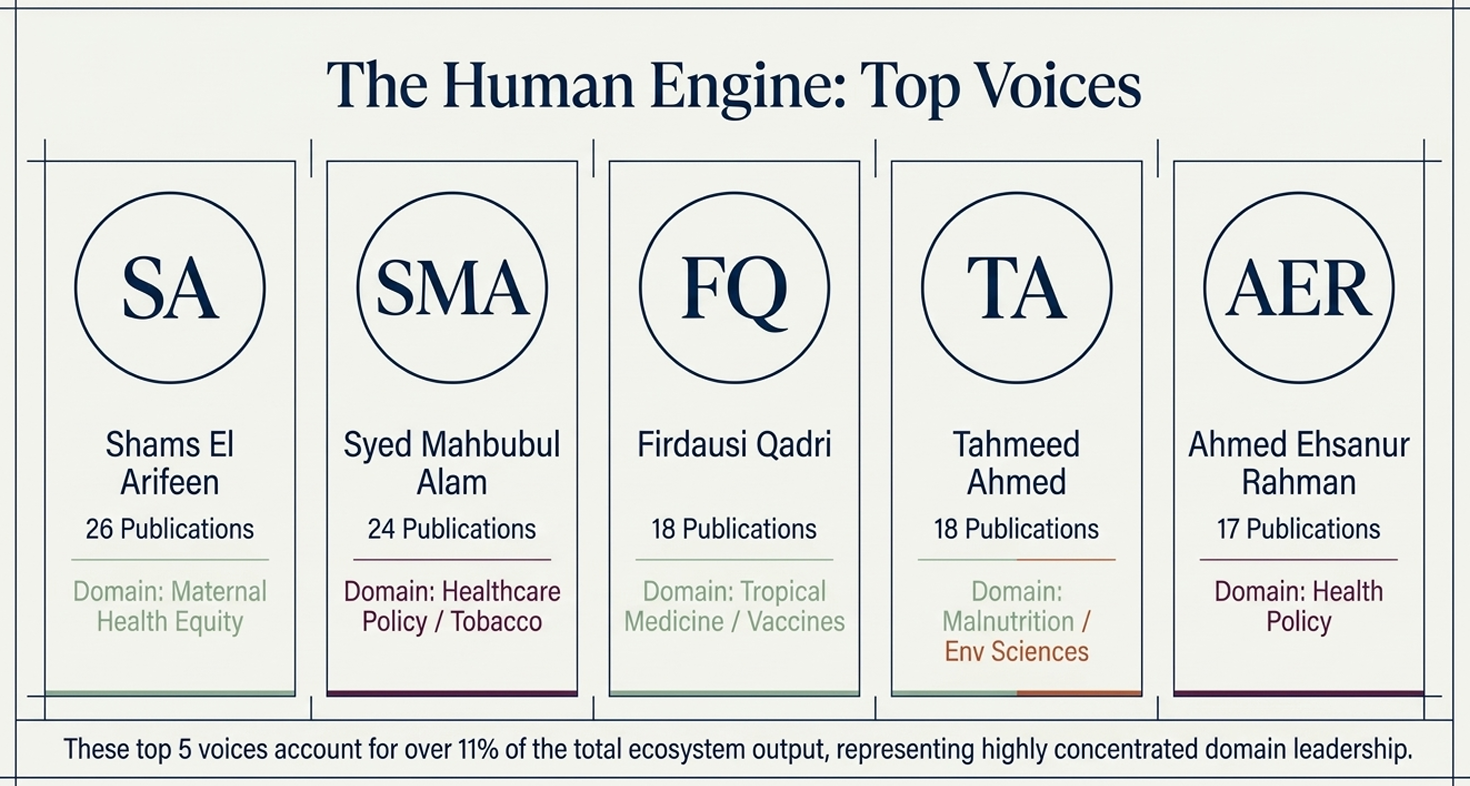
The leading researchers collectively illustrate the multidisciplinary nature of Bangladesh’s public-health research, spanning epidemiology, infectious diseases, nutrition, maternal and child health, health systems, and related population-health questions.
Leading collaborating countries and regions
| Rank | Country / Region | Publications |
|---|---|---|
| 1 | Bangladesh | 893 |
| 2 | USA | 260 |
| 3 | England | 129 |
| 4 | Australia | 114 |
| 5 | India | 69 |
| 6 | Sweden | 57 |
| 7 | Canada | 51 |
| 8 | People’s Republic of China | 41 |
| 9 | Pakistan | 40 |
| 10 | Saudi Arabia | 31 |
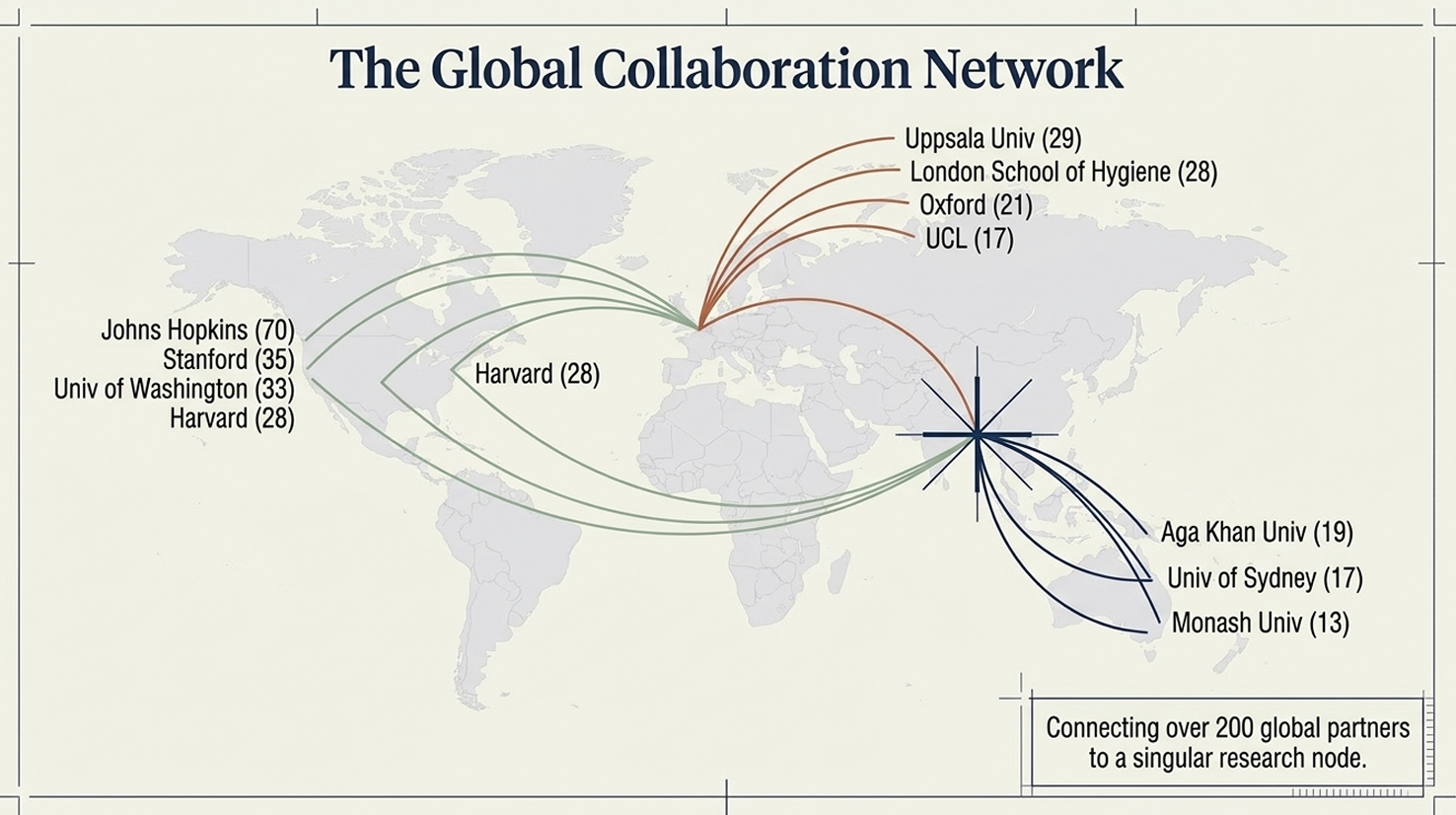
The collaboration pattern combines high-income research systems—particularly the USA, England, Australia, Sweden, and Canada—with important South Asian partnerships such as India and Pakistan. Notably, institutions such as Johns Hopkins University, the University of Oxford, and Uppsala University contribute to the international research network, connecting Bangladeshi researchers to broader global-health research programs.
Leading funding sources
| Rank | Funding agency | Publications |
|---|---|---|
| 1 | No specific funding declared | 51 |
| 2 | Bill & Melinda Gates Foundation | 42 |
| 3 | CGIAR | 32 |
| 4 | U.S. Department of Health & Human Services | 22 |
| 5 | National Institutes of Health (NIH), USA | 19 |
| 6 | USAID | 14 |
| 7 | UK Research & Innovation (UKRI) | 13 |
| 8 | National Institute for Health and Care Research (NIHR) | 11 |
| 9 | Medical Research Council, UK | 10 |
| 10 | Wellcome Trust | 9 |
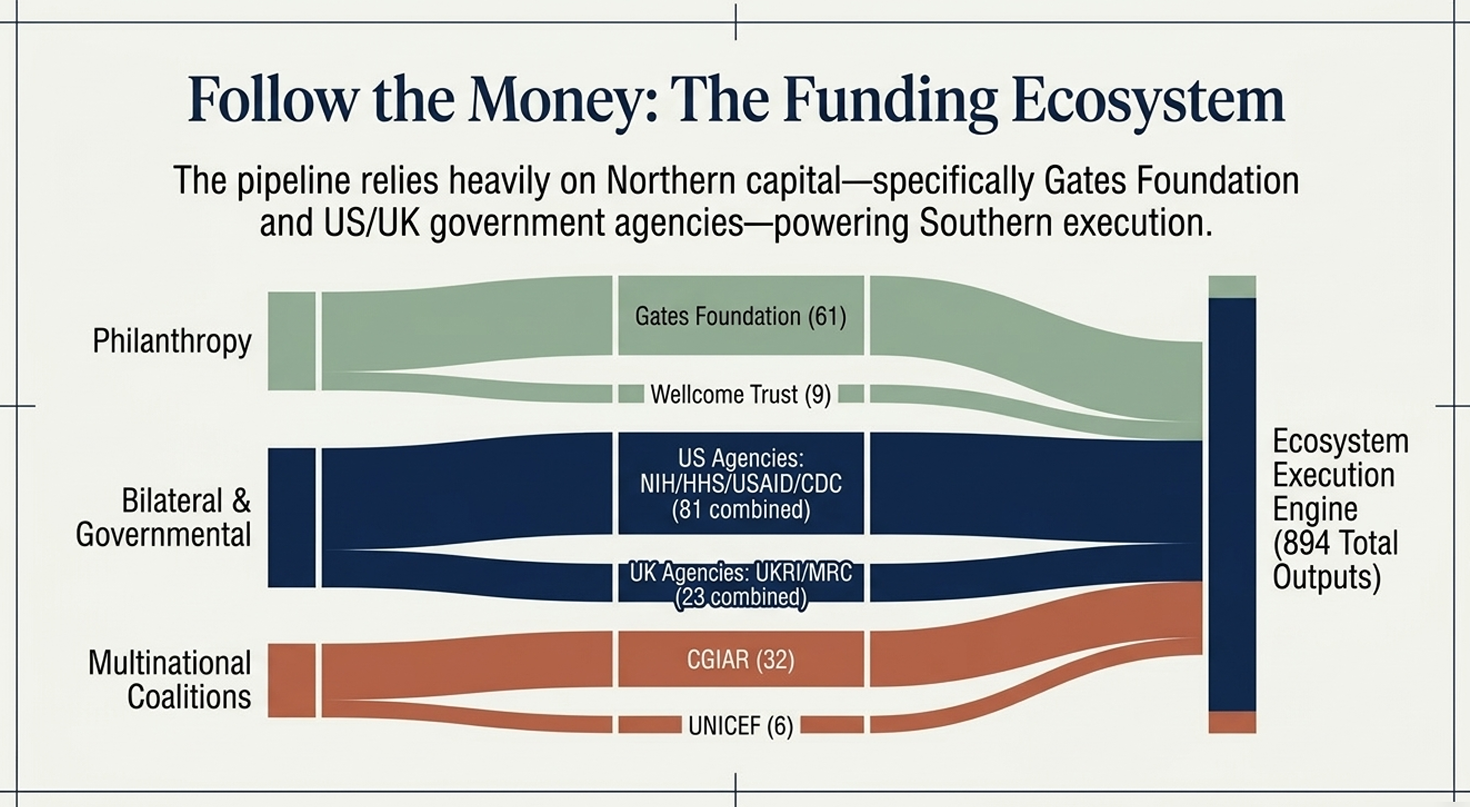
The Bill & Melinda Gates Foundation appears prominently, with 42 publications, while an additional 19 publications were associated with its Grand Challenges Explorations program in the supplied dataset. Major governmental and research-funding organizations from the United States and United Kingdom also appear among the leading sponsors. The presence of CGIAR is particularly relevant to research connecting health with food systems, agriculture, nutrition, environmental conditions, and development.
Document types
| Document type | Publications |
|---|---|
| Articles | 646 |
| Meeting Abstracts | 121 |
| Review Articles | 67 |
| Editorial Material | 37 |
| Letters | 18 |
| Early Access | 10 |
Articles account for the largest component, indicating that the dataset is primarily composed of original research outputs rather than reviews or editorial publications.
Major publication journals
| Rank | Journal | Publications |
|---|---|---|
| 1 | Health Science Reports | 134 |
| 2 | American Journal of Tropical Medicine and Hygiene | 75 |
| 3 | BMC Public Health | 56 |
| 4 | Tobacco Induced Diseases | 56 |
| 5 | PLOS Global Public Health | 41 |
| 6 | Discover Public Health | 36 |
| 7 | Journal of Global Health | 30 |
| 8 | BMJ Global Health | 28 |
The journal distribution demonstrates a mixture of broad public-health outlets and specialized global-health and tropical-medicine journals. Health Science Reports has the largest number of publications in the supplied dataset, followed by the American Journal of Tropical Medicine and Hygiene and BMC Public Health.
Leading publishers
| Publisher | Publications |
|---|---|
| Wiley | 173 |
| Springer Nature | 172 |
| Elsevier | 148 |
| American Society of Tropical Medicine & Hygiene | 75 |
| European Publishing | 56 |
Open access is another major characteristic of this research output.
Open-access availability
| Open-access indicator | Publications |
|---|---|
| Open Access | 698 |
| Gold Open Access | 625 |
Thus, approximately 78% of the 894 publications were classified as Open Access, while approximately 70% were classified as Gold Open Access. This relatively high level of accessibility is important for public-health research because findings can reach researchers, healthcare professionals, policymakers, and practitioners beyond institutions with subscription access.
Overall Research Ecosystem
The supplied bibliometric data reveal a research ecosystem with three interconnected characteristics:
- Strong domestic institutional foundations: icddr,b, the University of Dhaka, BRAC, BRAC University, and other Bangladeshi universities provide a substantial share of the research infrastructure.
- Extensive international integration: The USA, England, Australia, India, Sweden, Canada, China, Pakistan, and Saudi Arabia are among the major collaborating countries, while international universities and organizations contribute to the research network.
- Strong health and development orientation: SDG 3 dominates the dataset, complemented by research connected to gender equality, nutrition, climate action, water and sanitation, sustainable communities, and aquatic ecosystems.
Key bibliometric indicators
| Indicator | Result |
|---|---|
| Total publications | 894 |
| Dominant research category | Public, Environmental & Occupational Health |
| Leading SDG | SDG 3 – Good Health and Well-Being (672) |
| Leading institution | icddr,b (205) |
| Leading researcher | Shams El Arifeen (26) |
| Leading collaborating country outside Bangladesh | USA (260) |
| Leading funding organization | Bill & Melinda Gates Foundation (42) |
| Most common document type | Articles (646) |
| Leading journal | Health Science Reports (134) |
| Leading publisher | Wiley (173) |
| Open-access publications | 698 |
| Gold Open Access | 625 |
Bangladesh’s 894 Web of Science-indexed public-health publications in 2025 demonstrate a research system strongly oriented toward population health and the country’s major development challenges. SDG 3 dominates the portfolio, while gender equality, nutrition, climate action, water and sanitation, and sustainable communities form important complementary themes. The icddr,b occupies a central institutional position, supported by universities, development organizations, and international partners. The extensive participation of researchers and institutions from the USA, England, Australia, India, Sweden, Canada, and other countries demonstrates that Bangladesh’s public-health research operates within a highly international collaborative network. At the same time, the substantial presence of Gates Foundation, NIH, USAID, UKRI, NIHR, MRC, Wellcome, and other funders indicates strong external investment in health and development research. Finally, the high proportion of Open Access publications (698 of 894) suggests that a large part of this research is positioned for broad dissemination beyond the academic community.